
Many backyard cooks wrap their ribs in foil during the cook. It is a common method. It speeds up the process and keeps the meat moist. But it is not the only way. Some cooks prefer to learn how to smoke ribs without wrapping. They leave the meat in the smoke from start to finish. This method takes longer. It asks for more care. But it rewards the cook with a firm, dark bark and a deeper smoke flavor. This guide walks through the whole process in plain steps.
Why Smoking Without Wrapping Matters
Wrapping ribs in foil or butcher paper is called the Texas crutch. It traps steam around the meat. Steam softens the bark. It also speeds the cook by pushing the ribs through the stall, the period when the meat seems to stop heating. Many people like soft, fall-off-the-bone ribs. For them, wrapping is a fine choice.
Smoking ribs unwrapped gives a different result. The surface of the meat stays in dry heat the whole time. The rub sets into a firm crust. That crust is called bark. Bark is chewy and full of flavor. It does not turn soft. The smoke also has more time to touch the meat. This builds a stronger smoke ring, the pink layer just under the surface. Many old-school barbecue cooks judge ribs by the bark and the smoke ring. For them, unwrapped ribs taste more like true barbecue.
There is a trade. Unwrapped ribs can dry out if the cook rushes. The meat must stay moist through spritzing and steady heat. The cook must also watch the time. A rack that dries out will taste tough. But with care, the result is rich and well worth the wait.
What You Need to Smoke Ribs Without Wrapping: How to Smoke Ribs Without Wrapping
Good results start with simple tools. You do not need a large setup. But you do need a few key items.
A Smoker or Grill
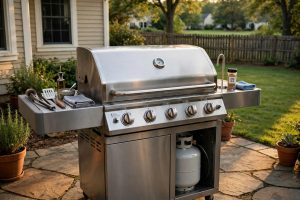
Any cooker that holds steady low heat will work. Offset smokers, pellet smokers, kettle grills, and kamado cookers all work well. What matters most is control. You want to hold the heat between 225 and 250 degrees for many hours. If you are new to the craft, guides like the best smoker for beginners under 300 can help you pick a cooker that holds heat well. A thin, leaky cooker will fight you all day.
A Reliable Thermometer
A probe thermometer tells you the truth. Guessing the heat leads to dry ribs. Use one probe for the grate and one for the meat if you can. Wireless models let you watch the cook from the house. Reviews at Consumer Reports can help you compare build quality and accuracy before you buy.
Wood or Fuel
Use wood chunks, wood chips, or pellets that suit your cooker. Oak, hickory, and fruit woods like apple and cherry work well with pork. Hickory gives strong smoke. Fruit woods give sweet, mild smoke. Avoid soft woods like pine. They make bitter smoke and bad flavors.
A Spray Bottle
A simple spray bottle keeps the ribs moist. Fill it with apple juice, apple cider vinegar, or plain water. You will spritz the ribs every hour or so. This slows the drying and builds bark at the same time.
How to Choose the Right Ribs
Two cuts dominate pork ribs. Baby back ribs come from the top of the rib cage. They are lean and tender. Spare ribs come from the belly side. They are larger and have more fat. St. Louis style ribs are spare ribs trimmed to a neat rectangle.
For unwrapped smoking, spare ribs and St. Louis style ribs often win. They have more fat. Fat keeps the meat moist during a long cook. Baby backs also work. They just finish faster and need closer watch.
At the store, look for racks that are firm and even. The meat should look pink and fresh. Avoid racks with large tears or odd smells. A rack with even thickness cooks more evenly. A very thin rack will dry out fast without a wrap.
Step-by-Step: How to Smoke Ribs Without Wrapping
Follow these steps in order. Take your time. Rushing is the enemy of good ribs.
Step 1: Prep the Ribs
Take the ribs out of the wrap. Pat them dry with paper towels. Turn the rack bone side up. You will see a thin membrane on the bones. This is the silver skin. Slide a butter knife under one corner to lift it. Grab it with a paper towel and pull it off. The membrane is tough. Removing it lets the smoke and rub reach the meat.
Trim loose fat and small flaps. Do not trim too much. Fat is flavor and moisture. If you work with spare ribs, you can square them into St. Louis style. Cut off the breastbone section and trim the edges. Save the trimmings for later or discard them.
Step 2: Apply the Rub
Rub the ribs with a thin coat of yellow mustard or olive oil. This is the binder. It helps the rub stick. Then coat both sides of the rack with a pork rub. Use salt, black pepper, paprika, garlic powder, and a little brown sugar. Keep the coat even but not too thick. A homemade bbq rub for ribs lets you control the salt and sweetness. Let the seasoned ribs sit at room temperature for 30 to 45 minutes while the smoker heats up.
Step 3: Set Up the Smoker
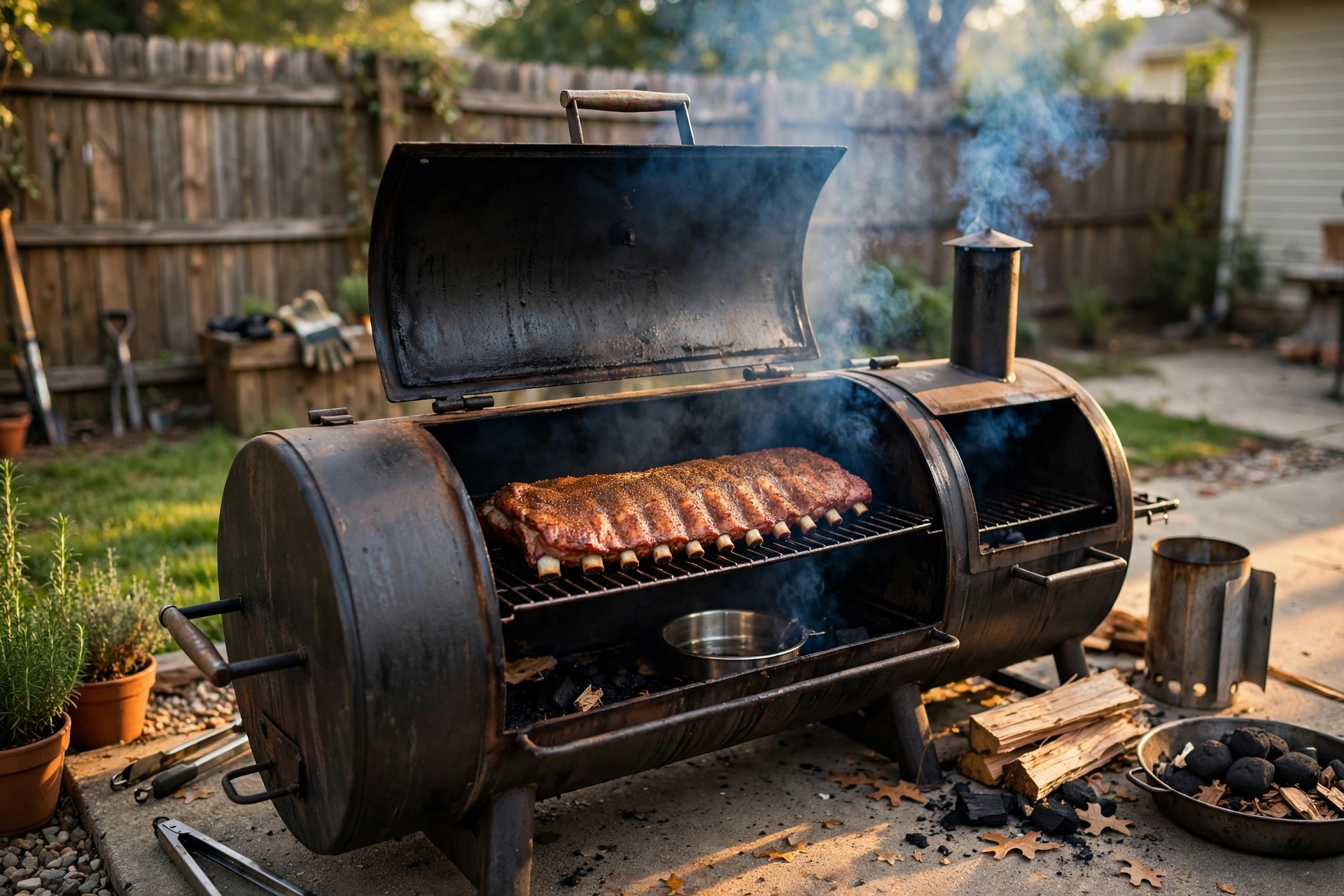
Bring the cooker to 225 to 250 degrees. Set up for indirect heat if you use a grill. The ribs must not sit over direct flame. Add your wood. You want thin, blue smoke. Thick white smoke tastes bitter. Thin blue smoke tastes clean and sweet. Let the cooker settle at a steady heat for 15 to 20 minutes before the meat goes on.
Step 4: Smoke the Ribs
Place the ribs bone side down on the grate. Close the lid. Leave them alone for the first two hours. Let the smoke do its work. After two hours, check the heat and the ribs. Start spritzing with apple juice or vinegar every 45 to 60 minutes. Spray a light mist. Do not soak the meat. Each spritz cools the surface a little. This helps the bark set instead of burn.
Step 5: Test for Doneness
Unwrapped ribs take time. Baby backs often take 5 to 6 hours at 225 degrees. Spare ribs often take 6 to 7 hours. Do not cook by the clock alone. Use these tests instead.
First, the bend test. Lift the rack in the middle with tongs. The rack should bend and start to crack on the surface. If it breaks apart, it is overcooked. If it stays stiff, it needs more time.
Second, the probe test. Push a toothpick or probe into the meat between the bones. It should slide in with little fight, like soft butter. If you meet hard pushback, give the ribs more time.
Third, the look test. The meat should pull back from the ends of the bones by about a quarter inch. The bark should be dark and firm.
Step 6: Rest the Ribs
Pull the ribs off the heat. Wrap them loosely in foil or butcher paper now, for rest only. Let them rest 20 to 30 minutes. Resting lets the juices settle. Cut the rack into single bones and serve. If you like sauce, brush it on in the last 20 minutes of the cook. Or serve sauce on the side.
Times and Temperatures
Heat and time are the heart of this method. Keep the smoker between 225 and 250 degrees. Lower heat takes longer but gives more smoke time. Many cooks settle at 225 for the full cook. As rough guides: baby backs take 5 to 6 hours, while spare ribs and St. Louis style take 6 to 7 hours. Every rack and cooker is different, so treat these as guides, not rules.
Watch for the stall. Around 150 to 165 degrees inside the meat, the cook slows. Moisture leaving the meat cools it, much like sweat cools skin. Without a wrap, the stall lasts longer. Do not raise the heat to fight it. Just wait. Spritz, hold steady, and let the ribs push through on their own.
Types of Smokers and Grills That Work Well
Different cookers give different results with the no-wrap method.
Charcoal kettle grills give strong smoke and a great bark. But they need steady care. The cook must tend the coals for many hours. Guides on how to smoke ribs on a charcoal grill show how to bank coals for long indirect cooks.
Pellet smokers are easy. They feed pellets and hold heat on their own. The smoke flavor is milder than charcoal. But the steady heat suits the no-wrap method well. Many pellet makers, such as Traeger, publish their own rib guides for low-and-slow cooks.
Offset smokers give deep smoke flavor. They are the classic choice for barbecue. But they ask for skill. The cook must feed the firebox all day.
Kamado cookers hold heat for a long time. They are efficient and steady. Brands like Big Green Egg are known for this style. Charcoal makers such as Char-Broil and Broil King also sell cookers that many cooks trust for ribs.
Cost and Price
Smoking ribs at home costs less than buying barbecue at a restaurant. But the costs add up. A rack of ribs often costs 12 to 25 dollars at the store. Prices shift by region and season. Baby backs usually cost more per pound than spare ribs.
Fuel costs depend on the cooker. A bag of charcoal lasts many cooks. Pellets and wood chunks cost more per cook. Rubs and binders cost little. A simple rub of salt, pepper, and paprika costs pennies per rack. Pre-made rubs cost 8 to 15 dollars a bottle. They last many racks.
Equipment is the big cost. A good beginner smoker can cost 200 to 500 dollars. A quality thermometer costs 30 to 80 dollars. These are one-time buys. Over many cooks, the cost per rack falls fast.
Care and Upkeep
A clean cooker cooks better. After each cook, brush the grates while they are still warm. Ash and old grease cause bad flavors. Empty the ash catcher before each cook. Old ash blocks air flow.
Check seals and vents once a season. Leaky cookers burn more fuel. They also swing in heat. Clean grease from drip pans. Old grease can catch fire. Keep a cover on the cooker when not in use. Rain and sun wear out metal over time.
Care for your thermometers too. Wipe probes clean after each cook. Store them dry. Replace weak batteries before a long cook. A dead thermometer mid-cook is a small crisis you can avoid.
Safety
Smoking is safe when the cook stays careful. Keep the cooker away from the house, deck railings, and low trees. Hot cookers and embers need clear space. Never leave a lit cooker alone for long. Check it on a schedule.
Food safety matters as well. Keep raw ribs cold until they go on the cooker. Do not let them sit out for hours. The meat must move past 140 degrees within a reasonable time. After the cook, rest the ribs and serve them warm. Do not leave cooked ribs at room temperature all afternoon. Store leftovers in the fridge within two hours.
Burn safety is simple but real. Use long tongs and heat-proof gloves. The outside of a smoker gets very hot. Teach children to keep their distance. Keep a fire extinguisher or a bucket of sand near the cooker, just in case.
Frequently Asked Questions
Do ribs cook faster with a wrap?
Yes. Wrapping traps steam and heat around the meat. This pushes the ribs through the stall faster. A wrapped rack can finish an hour or more sooner than an unwrapped one. The trade is softer bark and lighter smoke flavor.
Can I use butcher paper instead of skipping the wrap?
Butcher paper is a middle path. It breathes more than foil. It keeps more bark than foil. But it still speeds the cook a little. If you want full bark, skip the wrap all together.
What wood is best for smoking ribs without wrapping?
Oak and hickory give classic, strong smoke. Apple and cherry give mild, sweet smoke. Many cooks mix hickory with a fruit wood. Use small wood chunks or pellets. Add wood early in the cook, when the meat takes on smoke best. Late in the cook, the bark is set and takes on less smoke.
Why are my unwrapped ribs dry?
Three common causes. First, the heat ran too high. Second, the cook skipped spritzing. Third, the ribs cooked too long. Use a thermometer. Hold 225 to 250 degrees. Spritz every hour. Pull the ribs when they pass the bend test, not when the clock says so.
Should I sauce ribs before or after cooking?
Both ways work. Many cooks brush sauce on in the last 20 minutes. The heat sets the sauce into a glaze. Others serve sauce on the side. Sauce on the side lets the bark and smoke shine. Try both and pick what you like.
Can I smoke ribs without wrapping on a gas grill?
Yes, with care. Set up indirect heat. Place the ribs away from the lit burners. Add a smoker box with wood chips for smoke. Gas grills lose heat fast when the lid opens. Keep the lid closed and check heat through a probe thermometer. Outdoor cooking guides at The Spruce Eats cover gas grill smoking in more detail.
A Short Final Word
Learning how to smoke ribs without wrapping is a skill worth the time. The method is slower. It asks for patience. But the payoff is real. Firm bark. Deep smoke. Rich flavor in every bite. Start with a steady fire and a good thermometer. Trust the process. Your ribs will tell you when they are done.
Buying guides are also published by The Home Depot and AmazingRibs.com.
References
AmazingRibs.com. (n.d.). Barbecue and grilling science. https://www.amazingribs.com Big Green Egg. (n.d.). Kamado grills and outdoor cooking. https://www.biggreenegg.com Broil King. (n.d.). Gas and charcoal grills. https://www.broilkingbbq.com Char-Broil. (n.d.). Gas and charcoal grills. https://www.charbroil.com Consumer Reports. (n.d.). Product reviews and ratings. https://www.consumerreports.org The Home Depot. (n.d.). Home improvement products. https://www.homedepot.com The Spruce Eats. (n.d.). Recipes and cooking guides. https://www.thespruceeats.com Traeger. (n.d.). Wood pellet grills. https://www.traeger.com
Was this guide helpful?

About Lisa Anderson
The My Garden US editorial team writes practical, in-depth home and garden guides for American homeowners — tested advice, no fluff.
You May Also Like
The Best Portable Pellet Grill for Tailgating: A Plain Guide for Game Day
February 6, 2026 0 views
How to Season Cast Iron Grill Grates: A Plain, Step-by-Step Guide
May 13, 2026 0 views
Best Grill Replacement Grates Stainless: A Practical Buying Guide
July 30, 2026 0 views