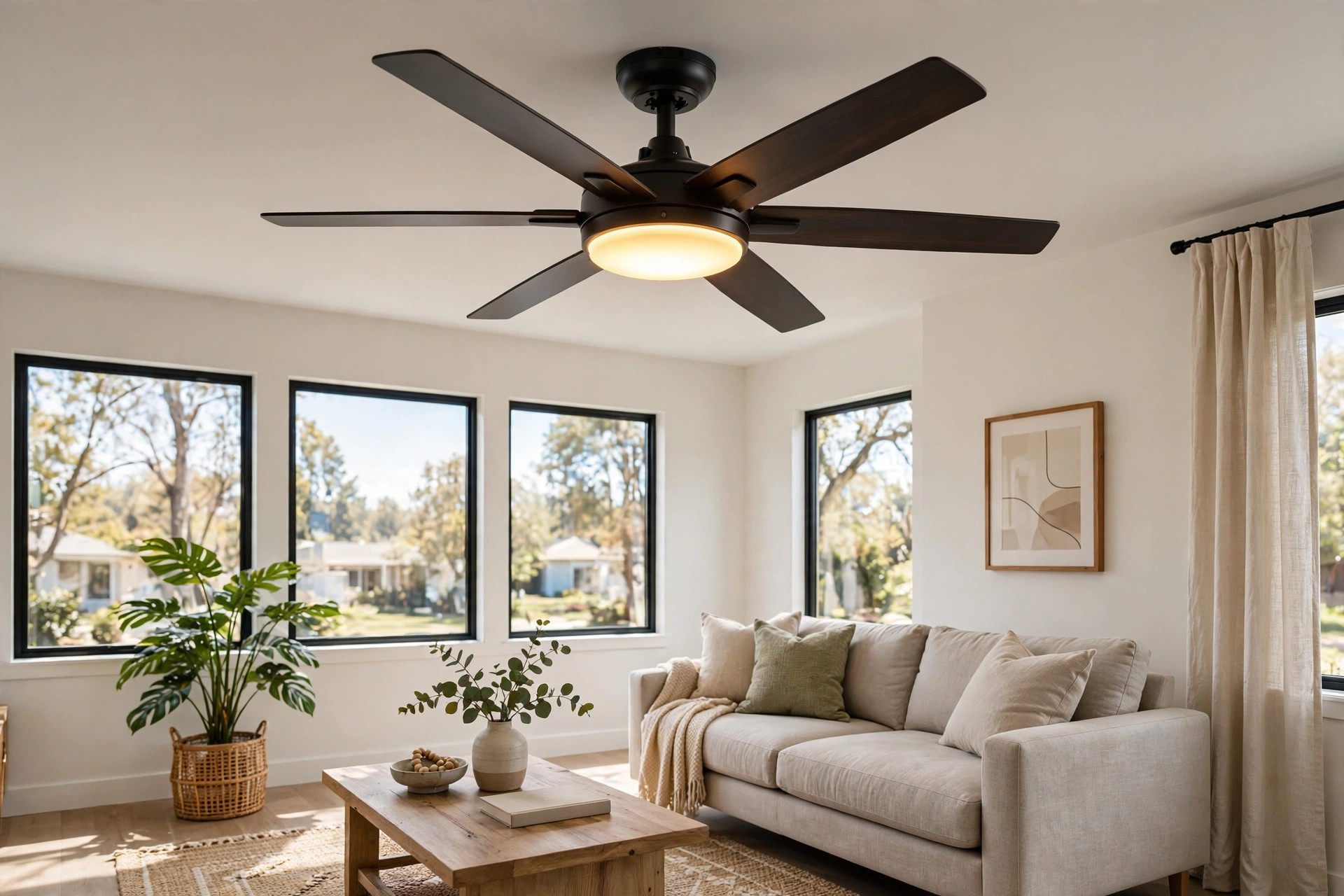
When summer heat fills a room, a good ceiling fan can change the feel of the whole house. Add a light kit, and the fan becomes the main source of light as well as cool air. Many shoppers ask about ceiling fans lights where to buy usa, because the choice of stores is wide and the price range is even wider. This guide walks through the best places to buy, what to check before you pay, and how to care for your fan for years.
A ceiling fan with lights does two jobs at once. It moves air to cool a room or push warm air down in winter. It also lights the space, so you may not need extra lamps. Buying one is simple once you know where to look and what to look for.
Why It Matters to Buy From the Right Place
Not every store treats ceiling fans the same. A large home improvement store carries dozens of models on the shelf. You can see the size, touch the finish, and ask a clerk questions. A small lighting shop may carry fewer models, but the staff often know more about wiring and light output. Online stores offer the largest choice of all, yet you cannot see the fan before it arrives at your door.
Buying from the right place matters for three reasons. First, a trusted seller stands behind the product. If the motor fails in the first year, a good store will help with the warranty. Second, a good seller gives clear facts about the fan: blade span, light brightness, and energy use. Third, the right store saves money. Prices for the same fan can differ by fifty dollars or more from one seller to another.
Many buyers start their search online to compare models. Then they visit a store to see the top choices in person. This two-step method works well. It gives you the wide choice of the internet and the confidence of seeing the fan with your own eyes.
What to Look For Before You Buy: Ceiling Fans Lights Where to Buy Usa
A ceiling fan with lights has more parts than a plain fan. You must check both the air-moving side and the lighting side.
Fan Size and Room Size
Blade span is the distance from one blade tip to the opposite tip. It is the most important size measure. A room up to 75 square feet does well with a 29 to 36 inch fan. A room of 76 to 144 square feet needs a 36 to 42 inch fan. Larger rooms, up to 225 square feet, need a 44 to 50 inch fan. Great rooms over 225 square feet may need a 52 inch fan or two fans.
Measure your room before you shop. Write down the length and width. Take a tape measure and check the ceiling height too. Fans hang lower than most light fixtures, so low ceilings need special care.
Light Output and Bulb Type
Light kits on ceiling fans use different bulbs. Many new fans use built-in LED modules. These last for years and use little power. Older or cheaper models use standard sockets that take regular bulbs. With standard sockets you can choose the bulb type yourself, which gives more control over brightness and color.
Check the lumen rating, which tells you how much light the kit gives. A reading lamp area needs about 300 to 500 lumens. A whole room may need 1,000 lumens or more. Warm white light, around 2700K, feels soft and homelike. Cool white light, around 4000K, feels bright and clean. Some fans let you change the color temperature with a switch or remote.
Motor, Noise, and Controls
The motor is the heart of the fan. DC motors are quiet and use less power than older AC motors. They also allow more speed settings. A good fan should be nearly silent on low speed. Read buyer reviews about noise before you buy, since store displays do not show how a fan sounds at home.
Controls matter more than many buyers think. A pull chain is simple and cheap. A handheld remote is easy to use from the couch or bed. Wall controls look clean and never get lost. Some newer fans connect to smart home systems. If you already use wifi smart bulbs in your home, a smart fan may fit right in.
For a deeper look at features and specs, read our full ceiling fans lights buying guide.
Types of Ceiling Fans With Lights
Shops sell several types of ceiling fans with lights. Each type fits a different room and ceiling.
Downrod fans hang from a metal rod. The rod lowers the fan into the room so air can move freely. These are the most common type and work best with ceilings that are eight feet or higher.
Hugger or low-profile fans mount close to the ceiling. They are made for rooms with ceilings lower than eight feet. Because the blades sit near the ceiling, they move a bit less air, but they are safe for low rooms where a hanging fan would be too close to heads.
Dual-head and directional fans have two small fan heads on arms. You can aim each head where you want air. They suit workshops, kitchens, and large open rooms.
Smart fans connect to WiFi and work with phone apps or voice control. You can set schedules, change speeds from another room, and link the light to other smart bulbs. They cost more, but they add real ease of use.
Damp-rated and wet-rated fans are built for porches, patios, and other outdoor spots. A damp-rated fan can handle moist air. A wet-rated fan can take direct rain. Never hang an indoor-only fan outside, even on a covered porch. Moisture can ruin the motor and create a safety risk.
Many fans also come with the light kit as a separate add-on. If you find a fan you love without a light, check whether the maker sells a matching kit. This opens up more choices, though buying a fan with the light built in is often cheaper.
Where to Buy Ceiling Fans With Lights in the USA
Now to the main question: where should you buy? American shoppers have four main options.
Large home improvement stores are the most common choice. The Home Depot and Lowe’s carry many ceiling fans with lights in store and far more online. You can see display models running, which helps you judge noise and airflow. Both chains offer delivery, in-store pickup, and installation services in many areas. Prices range from budget models under fifty dollars to premium fans over three hundred dollars.
Lighting specialty stores focus on lamps, fixtures, and fans. Lamps Plus has large showrooms in several states and a deep online catalog. Lumens sells modern and designer fans that big-box stores do not carry. Staff in these shops can answer hard questions about wiring, dimmers, and light color. Prices tend to be higher, but the advice and product range are strong.
Manufacturer and brand stores sell direct to buyers. Philips and other lighting brands sell fans and light kits through their own sites. Buying direct can bring the full product line and clear warranty terms. Some brands also run outlet sections with lower prices on last season’s models.
Online marketplaces offer the widest choice and often the lowest prices. The trade-off is that you cannot test the fan before it ships. Stick to sellers with strong return policies and read the review section with care. Check the shipping time, since large fans can take a week or more to arrive.
No matter where you buy, compare the model number across sellers. The same fan often sells at several stores under slightly different names. A quick search of the model number can reveal a lower price elsewhere.
For help with other light fixtures in the same room, our dining room chandeliers buying guide covers matching styles.
Cost and Price
Ceiling fans with lights span a wide price range. Small budget fans start around forty to sixty dollars. These work fine for bedrooms and small rooms, though the light kits may be simple.
Mid-range fans cost about one hundred to two hundred dollars. This is the sweet spot for most buyers. You get a quiet motor, a decent LED light kit, a remote control, and a finish that looks good. Most American homes use fans in this range.
High-end and designer fans run from two hundred fifty to six hundred dollars or more. You pay for larger sizes, premium finishes like brushed brass or matte black, DC motors, smart controls, and strong warranties. These fans often become a focal point of the room.
Do not forget the extra costs. If you are not handy with wiring, professional installation adds about one hundred to two hundred dollars per fan. A downrod extension for a high ceiling costs ten to thirty dollars. Dimmer-compatible bulbs, if not included, add a few dollars more.
Watch for sales. Major holidays bring clear price drops on ceiling fans. Memorial Day, Labor Day, and Black Friday are the best times to buy. End-of-summer clearance sales in August and September can cut prices by thirty percent or more.
Care and Upkeep
A ceiling fan with lights needs only light care to run well for many years.
Dust the blades every month or two. Dust buildup makes the fan wobble and cuts airflow. A pillowcase slipped over each blade traps dust without scattering it. Wipe the light cover with a soft cloth. Many light covers come off with a simple twist, which makes cleaning easy.
Check the mounting screws once a year. Vibration can loosen screws over time. Tighten the screws that hold the blades and the light kit. If the fan wobbles, use the balancing kit that came in the box. Most wobble comes from a blade that sits at a slightly different angle.
Replace bulbs as needed. Built-in LED modules can last fifteen to twenty-five thousand hours, which is many years of normal use. If the module fails, contact the maker for a replacement part. For fans with standard sockets, keep a spare bulb on hand so a burned-out bulb never leaves you in the dark.
In winter, use the reverse switch on the fan. Reversing the blades pushes warm air down from the ceiling. This small step can make a room feel warmer without raising the heat.
Safety
Ceiling fans are safe when installed right, but a few rules matter.
Always turn off the power at the breaker before you touch any wiring. Test with a voltage tester to be sure the power is off. If you are not sure how to wire the fan, hire a licensed electrician. Bad wiring can start a fire.
Make sure the fan is rated for the location. Indoor fans belong indoors only. Outdoor fans must carry a damp or wet rating. The box and the label on the motor both show the rating.
Check the weight rating of the electrical box. A ceiling fan needs a fan-rated box that can hold the moving weight. A standard light fixture box is not strong enough. U.S. Department of Energy guides explain safe home wiring basics, and the ENERGY STAR site lists fans that meet efficiency standards.
Keep blades at least seven feet above the floor and at least eighteen inches from walls. This keeps people safe and lets air move freely. On low ceilings, choose a hugger fan to keep the right clearance.
Safety guides at The Spruce also cover safe mounting heights for fans in homes with children.
Frequently Asked Questions
Where is the cheapest place to buy ceiling fans with lights in the USA? Big-box stores and online marketplaces usually have the lowest prices. Compare the exact model number across sellers before you buy. Holiday sales at The Home Depot and Lowe’s often beat everyday online prices.
Can I install a ceiling fan with lights myself? Many homeowners do it themselves in one to two hours. You need basic tools and some care with wiring. If your ceiling box is not fan-rated, or if the wiring looks old, call an electrician. Safety comes first.
Do ceiling fans with lights use a lot of power? No. Most use between fifteen and seventy-five watts for the fan, plus ten to twenty watts for the LED light. That is far less than an air conditioner. An ENERGY STAR rated fan uses even less.
Can I use a dimmer switch with a ceiling fan light? Only if the fan and the bulbs are marked as dimmable. Many LED light kits work with standard dimmers, but some need a special LED dimmer. Check the manual before you wire a dimmer.
How long do ceiling fan light kits last? Built-in LED kits often last ten years or more. Fans with standard sockets last as long as you keep replacing the bulbs. The fan motor itself can run for fifteen to twenty years with basic care.
What size ceiling fan with lights do I need for a bedroom? Most bedrooms need a 42 to 52 inch fan. Measure the room and match the blade span to the size chart in this guide. A bedroom of twelve by fourteen feet does well with a 52 inch fan.
A Final Word
The question of ceiling fans lights where to buy usa has no single answer. Big-box stores give low prices and display models. Specialty shops give expert advice. Online sellers give the widest choice. Pick the seller that fits your budget and your need for help. Check the size, the light output, and the safety ratings before you buy. Then enjoy a cooler room and better light for years to come.
References
ENERGY STAR. (n.d.). Energy efficient products. https://www.energystar.gov Lamps Plus. (n.d.). Lighting and home decor. https://www.lampsplus.com Lowe’s. (n.d.). Home improvement products. https://www.lowes.com Lumens. (n.d.). Lighting and ceiling fans. https://www.lumens.com Philips. (n.d.). Lighting products. https://www.philips.com The Home Depot. (n.d.). Home improvement products. https://www.homedepot.com The Spruce. (n.d.). Home and garden advice. https://www.thespruce.com U.S. Department of Energy. (n.d.). Energy efficiency and renewable energy. https://www.energy.gov
Was this guide helpful?

About Lisa Anderson
The My Garden US editorial team writes practical, in-depth home and garden guides for American homeowners — tested advice, no fluff.