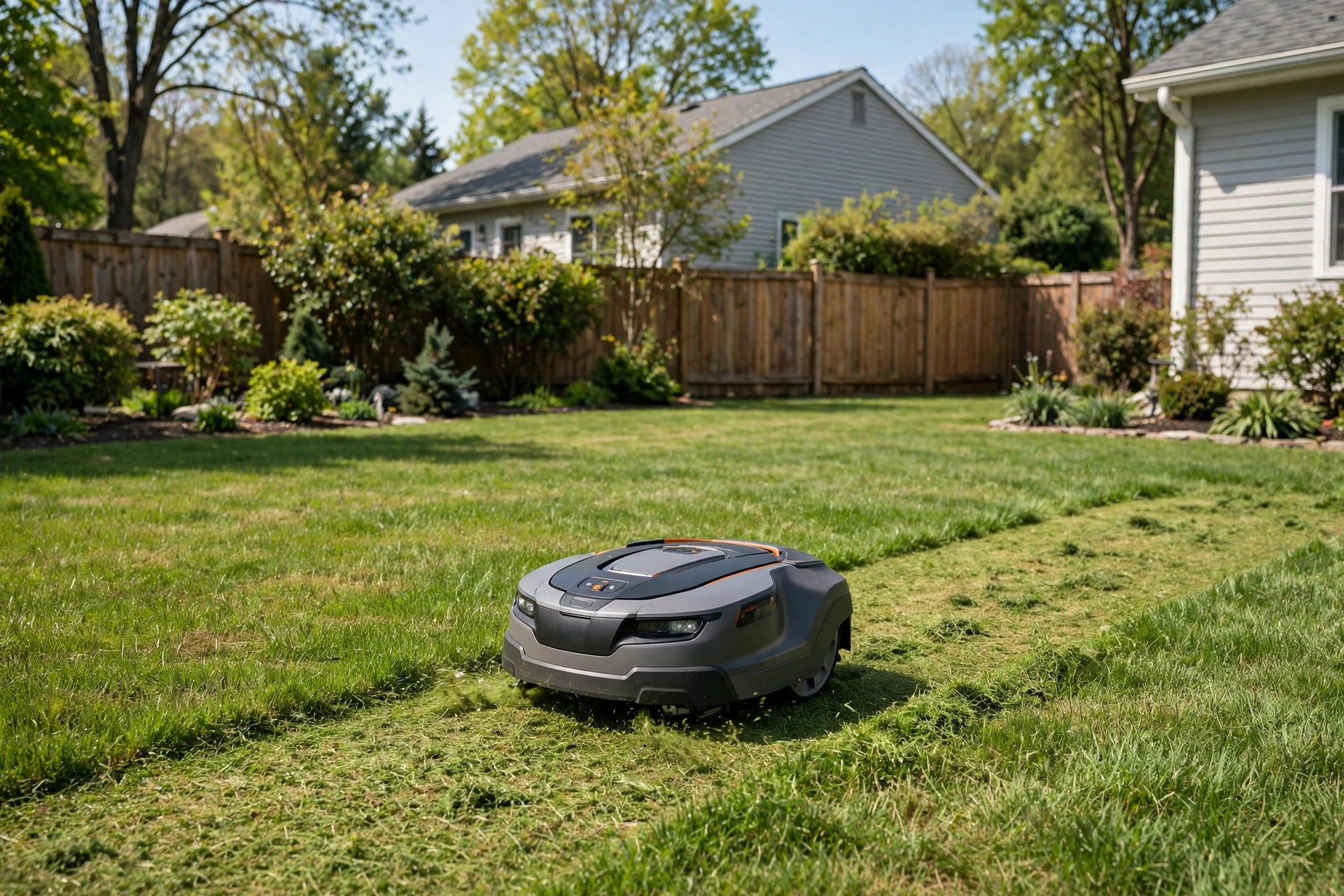
A wire free robot mower is one of the biggest changes to hit lawn care in recent years. In the past, a robot mower needed a wire buried around the edge of the yard. The wire told the mower where to stop. That wire took a whole weekend to install, and it could break without warning. This year’s wire free robot mower reviews 2026 USA show a different picture. New models use GPS, cameras, and smart maps to find their way. No wire. No trenches. No repairs after a shovel cuts the line. This guide looks at what the new models offer, what to look for before you buy, and how much you can expect to pay.
Why Wire-Free Robot Mowers Matter
A lawn needs steady care. Grass cut often stays thick and green. Grass cut once in a while grows weak. A robot mower cuts a little bit every day. It never gets tired. It never waits for the weekend.
The old wire models worked well once the wire was down. But the wire was the weak point. Dogs dug it up. Lawn crews cut it by accident. When the wire broke, the mower stopped working until someone found the break. Many owners never found it.
Wire-free models solve this by mapping the yard in software. You walk the edge of the lawn once with the mower or with a phone app. The mower saves the map. From then on it knows the shape of your yard. Reviews this year say the best wire free robot mower models hold their maps well and cut in clean, straight lines.
There is another gain. Many homes now link yard care to the rest of the house. A mower that joins your smart home system can run on a schedule set from your phone. Some owners set their mower to run while they are away. A setup like the ones described in smart home routines for vacation mode works well with a mower that runs itself.
What to Look For When You Choose One: Wire Free Robot Mower Reviews 2026 Usa
Robot mower reviews 2026 show big gaps between models. The cheapest model may cut a small flat yard just fine. A large yard with slopes and trees needs a stronger machine. The list below covers the points that matter most.
Navigation System
The mower needs to know where it is. Most wire-free models use GPS with RTK correction. RTK uses a fixed base station in the yard to sharpen the GPS signal. The result is very close to a survey-grade fix. Some models add cameras to see edges and dodge toys, pets, and garden beds.
Look for a model that can handle tree cover. Heavy shade can weaken GPS. Camera-based models or those with vision assist tend to do better under trees.
Battery Life and Cutting Area
Battery size sets how much grass the mower can cut in one session. Small models cover up to a quarter acre. Large models cover half an acre or more and return to their charger on their own.
Check the slope rating too. Many yards have gentle hills. Most models handle slopes up to 20 percent. Some handle more. If your yard is steep, confirm the rating before you buy.
Mowing Width and Height
A wider cutting deck finishes the job faster. Deck widths run from about seven inches to about nine inches on home models. Cut height adjusts from about one inch to four inches. Tall grass needs a higher setting.
App and Smart Home Control
A good app shows the map, lets you set no-go zones, and lets you start or stop the mower from anywhere. Some apps support voice control or work with home hubs. If your home already runs on smart gear, check that the mower fits in. For more ideas on tying yard gear to your home system, see our guide to the best smart garage door opener reviews usa.
No-go zones deserve extra care. A flower bed, a new tree, or a play area can all be blocked off in the app. The mower then treats that zone as a wall. Some apps let you draw zones with your finger. Others let you drive the mower around the zone once, the same way you mapped the yard. Test this feature early. A model with clumsy zone tools can waste your time all season.
Voice control is common on mid-range and high-end models. You can say, “Mow the front yard,” and the mower starts. This works best when the brand supports your home platform. Check the box or the brand’s site for the list of supported platforms before you buy.
Multi-Zone Support
Many yards have two or three separate grass areas. The front yard may sit across a walkway from the back yard. A good wire-free model stores more than one map. You carry the mower to the next zone, or it follows a path you taught it. Cheaper models store only one map. If your yard has clear separate zones, pick a model that stores at least three.
Noise Level
Robot mowers are quiet compared to gas mowers. Most run at 55 to 65 decibels. A gas mower runs at 90 decibels or more. The quiet run means you can mow early in the morning or late at night without bothering neighbors. If you live in a tight neighborhood, a quiet model is worth the extra cost.
Types and Options
Wire-free robot mowers fall into three rough groups.
Compact models suit small lawns up to a quarter acre. They are light, quiet, and easy to move. Prices stay low. They are a good first pick for town lots.
Mid-range models cover up to half an acre. They add camera vision, stronger motors, and better app controls. Most buyers land here.
Large models cover half an acre to over an acre. Some run in teams of two for very large yards. These cost more but save many hours of work each month.
Some models mow in random patterns. Others cut in straight stripes like a pro service. Stripe cutting looks better and avoids missed spots. Reviews this year favor the stripe cutters.
A few models add extra sensors for rain. When rain starts, they return to the charger and wait. Wet grass cuts poorly and clumps. This feature is worth having in the American South and Midwest.
Floating decks are another feature worth knowing. A floating deck moves up and down as the mower crosses bumps. This keeps the cut height even on rough ground. Fixed decks can scalp high spots and miss low spots. If your yard is uneven, a floating deck gives a cleaner result.
Edge cutting is a weak point for many robot mowers. The blades sit inside the body, so the mower leaves a strip of uncut grass along walls and fences. Some models add a side blade or an edge mode to trim closer. Others need you to edge by hand once a month. Check the edge-cut width in the specs. A mower that cuts to within an inch of the edge saves real time.
Cost and Price
Prices for wire-free robot mowers vary widely in 2026. Entry models start near 800 dollars. Mid-range models run from 1,200 to 2,500 dollars. Large models run from 2,500 to 5,000 dollars.
The price buys more than the mower. It buys the GPS base station, the charger, and the app. Some brands charge a yearly fee for advanced map features or cloud services. Ask about fees before you buy. A low sticker price with a yearly fee can cost more over time.
Think about the savings too. A lawn service costs 50 to 200 dollars per visit in most of the USA. A robot mower pays for itself in one to two seasons for many owners. Reviews on sites like Consumer Reports and CNET often compare long-term cost, not just the buy price.
Care and Upkeep
A robot mower needs less care than a riding mower, but it still needs care. The blades are small and dull quickly. Change them every one to two months in the cutting season. A fresh blade cuts clean and keeps the grass healthy.
Clean the mower often. Grass packs under the deck and around the wheels. A brush and a damp cloth are enough. Do not use a hose. Water can reach the motors and the GPS board.
In winter, store the mower in a garage or shed. Charge the battery to about half before long storage. A battery left dead all winter may not wake up in spring.
The GPS base station needs a clear view of the sky. Do not mount it under a metal roof or deep in trees. Most brands say it needs a view of at least 120 degrees of open sky.
Software updates matter. Brands add features through updates. Connect the mower to Wi-Fi so it gets them. Outlets for the charger should be on a protected circuit. A UPS can help in storm areas. For tips on keeping home gear powered, read our look at the best ups for home network equipment usa.
Safety
Robot mowers are safer than blade mowers, but rules still apply. Keep children and pets away while the mower runs. Most models stop the blades when lifted or tilted. The U.S. Consumer Product Safety Commission tracks mower injuries, and their guidance on safe lawn equipment is worth a read at the CPSC site.
Lock the mower with a PIN if you can. Some models have theft alerts and GPS tracking. A mower is small and easy to carry, so lock it in a shed at night.
Check local rules. A few towns limit mower noise or run times. Most robot mowers run quiet, around 60 decibels, which is about the level of normal talk.
FAQ
Do wire-free robot mowers work on all lawn shapes? Most do. You map the yard once, and the mower follows the map. Odd shapes, side yards, and front strips all work. Very narrow paths under two feet wide can be a problem for some models.
How long does setup take? Most owners finish in one to two hours. The GPS base station needs a spot with open sky. Then you walk the mower around the lawn edge once to draw the map. No wire to bury.
Will it cut in the rain? Most models stop when rain starts and return to charge. A few keep going in light rain. Wet cutting gives poor results, so a rain sensor is a plus.
What happens if someone steals it? Many models have a PIN lock, an alarm, and GPS tracking through the app. A stolen mower that cannot run is worth little. Still, store it out of sight at night.
Do I need Wi-Fi across the whole yard? Wi-Fi helps for updates and remote control, but GPS does the actual mowing. Many owners only need Wi-Fi near the charger. If you plan smart routines while away, steady Wi-Fi helps. Tech coverage of smart yard gear appears often on The Verge and PCMag.
Can it handle leaves and sticks? Small leaves are fine. Sticks can stop the blades or break them. Walk the yard and pick up sticks before the first run of the week.
A Final Word
Wire free robot mower reviews 2026 USA point to a clear trend. The wire is going away. GPS and vision systems are good enough for most yards now. Pick a model that fits your yard size, check the slope rating, and read the fee terms. Then let the little mower do the weekly work.
Smart homes keep growing. A mower that joins your system is part of that growth. Home tech sites like the Google Store hub pages show how yard tools fit beside doorbells, cameras, and locks. Security brands such as Ring, SimpliSafe, and ADT focus on the house itself, but the same apps and phones now run the yard too. A wire free robot mower is a simple way to bring the outside of your home into the smart age.
References
ADT. (n.d.). Home security and automation. https://www.adt.com CNET. (n.d.). Technology news and reviews. https://www.cnet.com Consumer Reports. (n.d.). Product reviews and ratings. https://www.consumerreports.org Google Store. (n.d.). Smart home devices. https://store.google.com PCMag. (n.d.). Technology product reviews. https://www.pcmag.com Ring. (n.d.). Smart home security devices. https://www.ring.com SimpliSafe. (n.d.). Home security systems. https://www.simplisafe.com The Verge. (n.d.). Technology news and reviews. https://www.theverge.com U.S. Consumer Product Safety Commission. (n.d.). Product safety information. https://www.cpsc.gov
Was this guide helpful?

About Robert Taylor
The My Garden US editorial team writes practical, in-depth home and garden guides for American homeowners — tested advice, no fluff.