
What Is an NVR Security System?
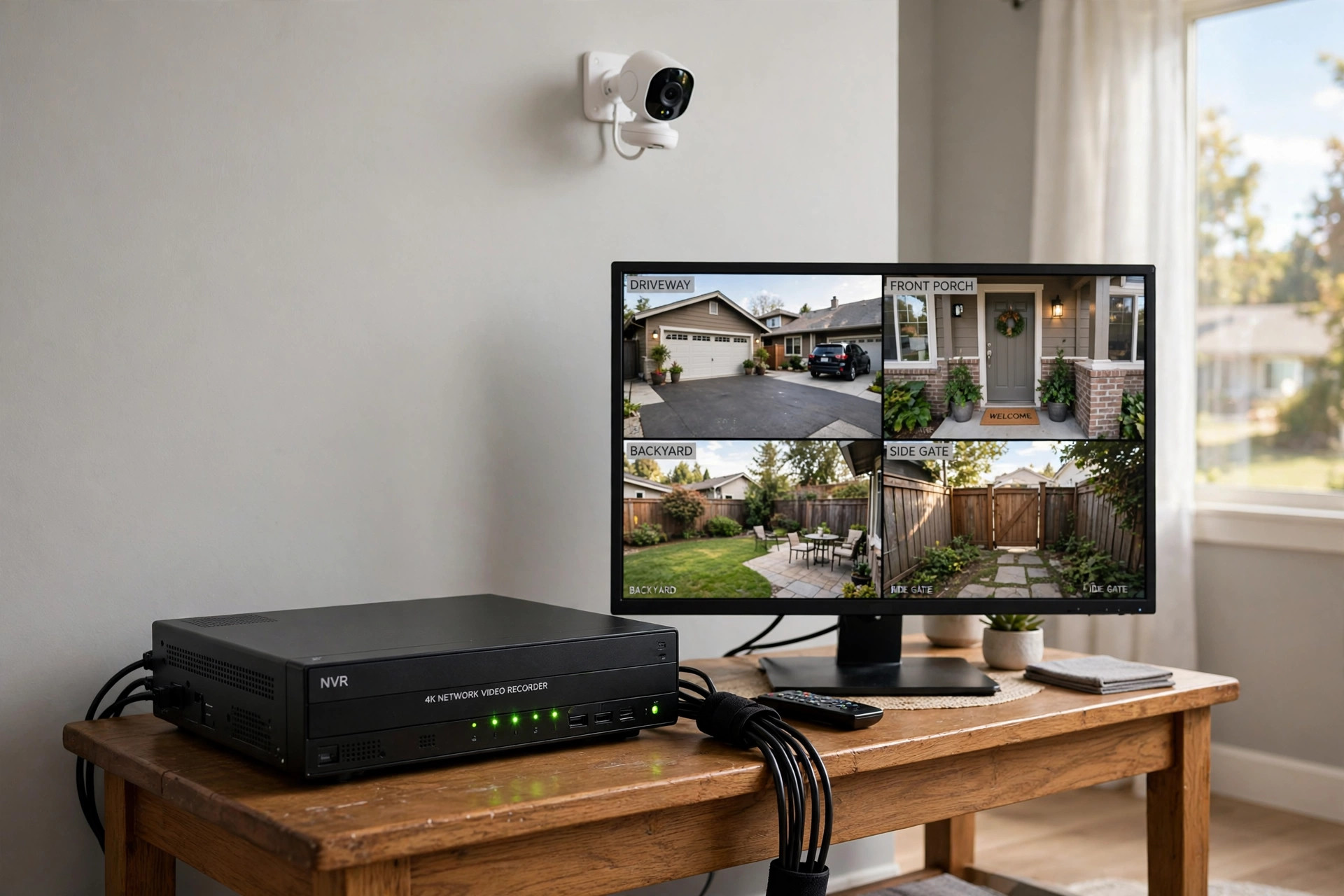
When a shopper searches for the best nvr security system for home usa use, they want one simple thing. They want a camera system that records every minute and keeps the footage safe. NVR stands for network video recorder. It is the box at the center of a home camera system. Each camera sends its video across the home network to this box. The box stores the video on a hard drive inside it.
An NVR system differs from a DVR system in one key way. DVR cameras are older analog cameras. NVR cameras are digital IP cameras. They send clearer video. They carry both video and power through one cable in most setups. That cable type is called PoE, or power over ethernet. You can read more about that wiring style in our guide to best PoE security camera system reviews usa.
NVR systems have grown popular in the USA for a clear reason. They do not need a monthly cloud plan. The video stays on the drive in your own home. No subscription is required to watch your own footage. For many families, that local storage is the whole point. Independent testers at Consumer Reports often note that local storage gives owners more control over their own recordings.
Why an NVR System Matters for Your Home: Best Nvr Security System for Home Usa
A break-in can happen in a few short minutes. A doorbell camera may catch the face. But a full NVR system catches the whole event from several angles. The front door camera sees the approach. The driveway camera sees the car. The back door camera sees the exit. When police need evidence, several angles tell a fuller story.
Insurance is another reason. Some home insurance policies give a small discount for a monitored or recorded security system. The savings vary by state and by company. The real value is proof. If a package is stolen, you have video with a date stamp. If a tree falls on the fence, you have video of the storm.
NVR systems also matter because they keep working when the internet drops. Cloud cameras stop recording when the Wi-Fi fails. An NVR box keeps recording from its wired cameras no matter what. The footage stays on the local drive. You can watch it later once the network is back.
How to Choose: What to Look For
Shopping for the best nvr security system for home usa buyers recommend starts with the camera count. Most starter kits come with four cameras. Larger kits come with eight or sixteen. Count your entry points first. A typical home needs the front door, the back door, the garage or driveway, and one side yard. Buy a recorder with more channels than you need. An eight-channel box for six cameras leaves room to grow.
Next, check the video resolution. Many kits now offer 4K cameras. That means about 3840 by 2160 pixels. The detail is strong enough to read a license plate in good light. Lower kits offer 2K or 1080p. Our page on 4k security camera system for home reviews explains what that sharpness means in daily use. Keep in mind that 4K video fills a hard drive faster. A 4K kit needs a larger drive than a 1080p kit.
Storage is the third point. Look at the hard drive size and whether you can add more. A 1TB drive holds a few days of four-camera 4K footage. A 4TB drive holds several weeks. Many boxes accept a second drive. Some support up to 10TB or more. Ask how the box handles a full drive. Most overwrite the oldest video first. That is the setting you want.
Night vision matters more than most buyers think. Most break-ins happen after dark. Infrared cameras see in black and white at night for up to 100 feet. Newer color night vision cameras use a bright built-in light to keep color at night. Color night vision helps identify clothing and cars. Check the night range in the specs before you buy.
Weather rating is next. Outdoor cameras should carry an IP66 or IP67 rating. That means dust and heavy rain will not harm them. The USA has hot summers and cold winters. Check the temperature range on the box. A camera rated to minus 4 degrees Fahrenheit will survive most winters.
Types of NVR Security Systems
Wired PoE Systems
Wired PoE systems are the most common home NVR kits. Each camera connects by one ethernet cable. The cable carries power and video together. The setup is tidy and reliable. The signal never drops like Wi-Fi can. The main cost is the labor of running cable through walls or along eaves. Many handy owners do this work themselves over a weekend.
Wireless Wi-Fi NVR Systems
Wireless NVR kits use Wi-Fi cameras that still record to an NVR box. They are easier to install because no video cable runs are needed. They still need power, so each camera needs an outlet or a battery plan. Wi-Fi cameras can stutter when the signal is weak. They work best in small homes with a strong router. Tech reviewers at PCMag often test these kits for signal reliability.
Battery-Powered Camera Kits
Some kits pair battery cameras with a base station that acts like a simple NVR. These are the easiest to mount. No wires at all. The trade is battery life. Batteries last a few months and must be recharged. They also record in shorter clips to save power. They suit renters and small homes.
Professional Installed Systems
Companies such as ADT sell and install full camera systems with an NVR. A technician runs the cable and sets up the app. You pay more, but the work is clean and fast. This route suits buyers who do not want to climb ladders or drill holes.
Cost and Price in the USA
A four-camera 1080p NVR kit often costs between 200 and 400 dollars. A four-camera 4K PoE kit often costs between 400 and 700 dollars. An eight-camera 4K kit with a large drive can run 700 to 1,200 dollars. Brand-name kits from well-known makers sit at the higher end. Store brands sit at the lower end.
Installation adds cost if you hire help. A professional camera installer may charge 100 to 200 dollars per camera for labor. A full eight-camera install can add 800 to 1,500 dollars. Many buyers save this money by doing the work themselves. PoE cable and basic tools cost little.
There is no monthly fee for most NVR kits. That is a key selling point against cloud cameras. Some brands offer an optional cloud backup plan. That plan costs extra per month. Most home users skip it. The local drive is enough. Buyers comparing lorex vs swann security system comparison usa will see both brands follow this no-fee model.
Watch for hidden costs. A bigger hard drive costs more up front. Long cable runs may need extra cable. A PoE switch adds cost if the recorder has too few PoE ports. Budget a little extra for mounting hardware and cable clips.
Setup: How Installation Usually Goes
Start by planning camera spots on paper. Mark each entry door, the driveway, and dark corners. Walk the house at night. Note where the dark spots fall. Mount cameras eight to ten feet high. That height keeps them out of easy reach but close enough for clear faces.
Run one ethernet cable from the NVR box to each camera spot. Keep cable away from power lines to avoid noise. Leave a little slack at each end. Connect each camera and power up the box. The NVR should find the cameras on its own in most kits.
Set the recording mode next. Continuous recording catches everything but fills the drive fast. Motion recording saves space and is enough for most homes. Many owners choose motion recording with a short pre-record buffer. That buffer keeps the seconds before the motion started.
Aim each camera and check the view on a phone or TV. Make sure the front door camera shows faces, not just the top of heads. Tilt the driveway camera to catch cars and plates. Test the night view after dark. Adjust angles before you seal the cable holes.
Secure the NVR box itself. Put it in a locked closet or cabinet. A thief who finds the box can take the footage with it. Some owners hide the box in an attic or basement. Bolt it down if you can.
Care and Upkeep
NVR systems need little care, but they are not care-free. Check the hard drive health every few months. Most NVR menus show a drive status screen. Replace a failing drive before it dies. Keep a spare drive if your footage matters.
Clean the camera lenses twice a year. Dust and spider webs blur the image. A soft cloth and a little water do the job. Trim bushes that grow into the camera view. A branch waving in the wind can trigger endless motion alerts.
Update the firmware when the maker releases it. Updates fix bugs and close security holes. Set a strong password on the NVR and on the phone app. Never keep the default password. Default passwords are the top way hackers reach home cameras. Security writers at The Verge have covered this risk for years.
Test the system after any power outage. Make sure each camera came back online. Check that the date and time are right. Wrong timestamps can hurt the value of footage as evidence.
Safety Notes for Home Camera Systems
Camera systems are electrical gear. Follow basic safety rules. Use outdoor-rated cable for outdoor runs. Keep connections dry with weatherproof boxes. The CPSC tracks recalls of electrical products, so check that your kit has no open recall before you install it.
Mount cameras firmly. A loose camera can fall and hurt someone. Use the right anchors for brick, wood, or vinyl siding. Keep ladders on firm ground when you mount high cameras.
Think about privacy too. Point cameras at your own property. Avoid aiming them into a neighbor’s windows. Laws on audio recording vary by state. Some states require all parties to consent to audio recording. If your state is one of them, turn off audio recording or post clear notice. Guides at CNET often remind buyers to check local rules.
NVR vs. Other Security Options
An NVR system is not the only way to protect a home. Video doorbells from makers like Ring cover the front door well and cost less. They use cloud storage with a monthly fee. Smart home hubs from the Google Store pair cameras with voice control. All-in-one alarm kits from SimpliSafe add professional monitoring with police dispatch.
The NVR wins on local storage and camera count. It loses on easy setup. A renter may prefer a simple wireless kit. A homeowner with a big yard may prefer a wired PoE NVR. Match the system to the home, not the other way around.
Frequently Asked Questions
Do NVR systems need the internet to work?
No. Wired cameras record to the NVR box through the local network. The internet is only needed for remote viewing on your phone. If the internet drops, recording continues as normal.
How long does the video stay on the drive?
It depends on the drive size, the camera count, and the resolution. A 2TB drive with four 4K cameras on motion recording can hold two to four weeks. Continuous recording shortens that time. Larger drives hold more.
Can I watch the cameras on my phone?
Yes. Nearly every modern NVR kit includes a free phone app. You scan a code on the box to link it. Then you can watch live video and play back old clips from anywhere.
Is 4K worth it over 1080p?
For most homes, yes, if the budget allows. 4K gives sharper faces and readable plates. It needs more storage and a stronger network. If the budget is tight, good 1080p cameras still do a fine job.
Can I add cameras later?
Yes, if you bought a box with spare channels. An eight-channel NVR with four cameras leaves four open slots. Buy cameras that match the brand or support the same standard. Mixing brands can cause setup trouble.
Do NVR cameras work in a power outage?
They stop unless you add backup power. A small UPS battery unit keeps the NVR and cameras running for a few hours. This is a smart add-on in areas with frequent outages.
A Short Final Word
The best nvr security system for home usa shoppers is the one that fits the home, the budget, and the skill of the owner. Count your cameras. Pick the right resolution. Buy enough storage. Mount the cameras well and lock the recorder away. Do that, and the system will watch over the home for years with no monthly bill.
References
ADT. (n.d.). Home security and automation. https://www.adt.com CNET. (n.d.). Technology news and reviews. https://www.cnet.com Consumer Reports. (n.d.). Product reviews and ratings. https://www.consumerreports.org Google Store. (n.d.). Smart home devices. https://store.google.com PCMag. (n.d.). Technology product reviews. https://www.pcmag.com Ring. (n.d.). Smart home security devices. https://www.ring.com SimpliSafe. (n.d.). Home security systems. https://www.simplisafe.com The Verge. (n.d.). Technology news and reviews. https://www.theverge.com U.S. Consumer Product Safety Commission. (n.d.). Product safety information. https://www.cpsc.gov
Was this guide helpful?

About Jennifer Lee
The My Garden US editorial team writes practical, in-depth home and garden guides for American homeowners — tested advice, no fluff.
You May Also Like
Vivint vs ADT Reviews for Homeowners USA
January 6, 2026 0 views
Solar Generator for Home Backup Reviews USA: A Complete Guide
January 21, 2026 0 views
Whole House Surge Protector Installation Cost: What You Should Know
February 26, 2026 0 views