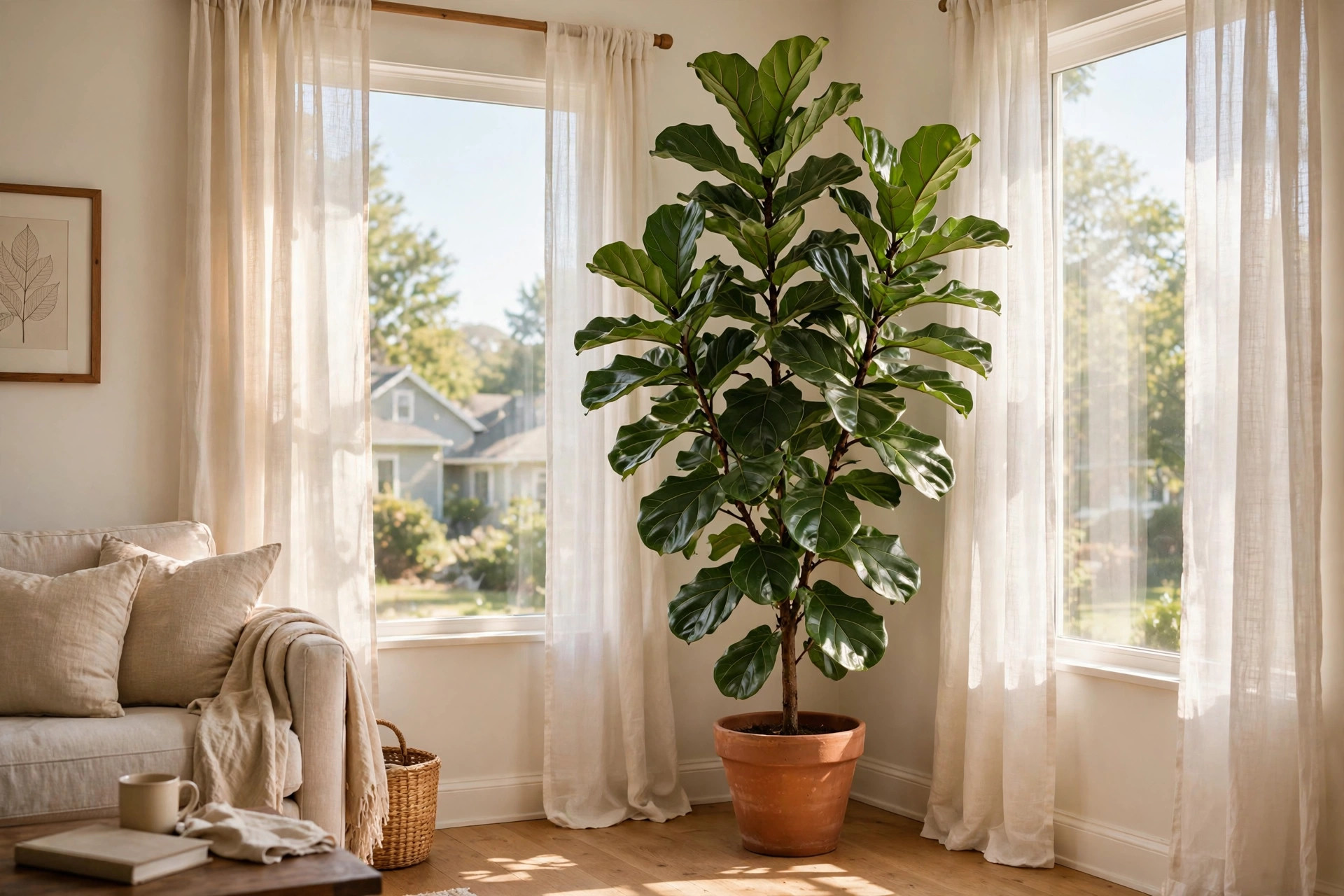
The fiddle leaf fig is one of America’s most loved indoor trees, and fiddle leaf figs Texas homes USA shoppers see in every garden center prove how well it fits the state. Its broad, violin-shaped leaves give any room a bold presence. Many owners buy one on impulse, then watch it drop leaves. This tree is not hard, but it is picky. It wants bright light, steady water, and a stable spot. What it cannot stand is shock: cold drafts, sudden moves, and dry furnace air. This guide covers every step, from picking a strong plant to keeping it green through Texas summers and winters.
Why Fiddle Leaf Figs Suit Texas Homes
The fiddle leaf fig comes from the warm forests of West Africa. Indoors it still wants warmth and light, and Texas delivers both. The state has long, bright growing seasons, and indoor rooms stay warm enough even through North Texas winters.
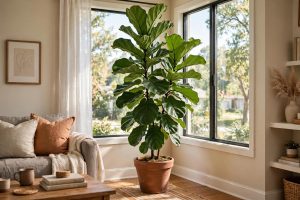
Light is the biggest reason this plant thrives here. Texas homes often have large windows and bright, open rooms. A tree near an east or south window gets the bright indirect light it needs. Six or more hours of bright light a day keeps leaves deep green and stems strong. In dim rooms it grows thin and leggy, reaching for light.
Warmth is the second reason. The tree grows best between sixty and eighty degrees, the range most Texas homes hold year round. It also likes humidity. Gulf Coast homes have plenty of natural moisture. In dry West Texas, a humidifier or a water tray near the pot helps.
How to Choose a Healthy Fiddle Leaf Fig: Fiddle Leaf Figs Texas Homes Usa
A strong start matters most. When you shop with a fiddle leaf fig buying guide, look past the price tag and study the plant. Leaves should be deep green, firm, and free of large brown spots. View the plant from all sides. A good tree is full and even. A bare side means it already lost leaves to stress.
Check the trunk. It should feel firm and stand upright. Smell the soil. It should smell fresh, not sour. If the nursery allows it, slip the plant from its pot. Healthy roots are white or tan. Dark, mushy roots mean overwatering.
Small plants in six-inch pots cost less and grow into their space. Large plants give instant impact but are harder to move. For most rooms, a tree three to five feet tall fills a corner without crowding it. If you are still comparing, this guide to fiddle leaf figs for sale helps you weigh sizes and prices.
Types and Options for Your Home
Most fiddle leaf figs sold in America are the same species, Ficus lyrata. Nurseries offer a few forms, each suiting a different home.
The standard tree form is most common: one strong trunk with a full crown of leaves on top. It fits beside a sofa or in a dining corner. The bush form has several stems from the base and suits smaller rooms. Compact types like Bambino stay under three feet and work well in bedrooms. Column forms grow straight up and suit narrow spots.
Measure your ceiling and corner before you shop. A tall tree in a low room feels crowded. A small bush in a grand living room looks lost. Also think about weight. A large pot with wet soil can weigh forty pounds or more. A rolling stand is worth the cost if you plan to move the plant for cleaning.
Cost and Price: What Texans Can Expect
Texas garden centers and big stores carry this tree year round, which keeps prices fair. A small plant in a six-inch pot, one to two feet tall, usually costs twenty to forty dollars. A medium plant in a ten-inch pot, three to four feet tall, usually costs fifty to ninety dollars. This is the sweet spot for most buyers: full right away, yet easy to carry.
Large specimen trees, five to seven feet tall, can cost one hundred to two hundred fifty dollars, often from specialty nurseries. Delivery can add twenty to fifty dollars.
Count the extra costs too. A good potting mix, a proper pot with drainage holes, and a moisture meter may add thirty to sixty dollars. Fertilizer for the growing season costs about ten to fifteen dollars. A healthy plant at a fair price costs less than replacing a weak one twice.
Light and Placement in a Texas Home
Light makes or breaks this plant. Place it near your brightest window, but out of harsh direct sun. An east window is ideal: gentle morning sun, then bright light all day. A south window works if the plant sits a few feet back from the midday rays. A west window gives strong afternoon sun, which a sheer curtain can soften. North windows are weakest. A simple LED grow light fixes a dim corner and uses little power.
Do not move the plant often. Fiddle leaf figs hate change. When the tree first arrives, it may drop a few leaves as it adjusts. Give it two to three weeks to settle. Do not repot, feed, or prune during this time.
Texas summers bring a special warning. Window glass gets very hot in July and August, and leaves touching it can burn. Keep the plant six to twelve inches from the glass. In winter, cold drafts from doors and thin windows can shock the tree. Keep it away from entry doors, drafty halls, and heating vents.
Watering: The Skill That Matters Most
Most fiddle leaf figs die from bad watering, not bad luck. The rule is simple. Water deeply, then let the top of the soil dry before watering again.
Push your finger two inches into the soil. Dry means it is time to water. Damp means wait a few more days. A moisture meter costs under fifteen dollars and removes the guesswork. In a warm, bright Texas home you may water weekly in summer. In winter, every ten to fourteen days may be enough.
When you water, water well. Pour slowly until water runs from the drainage holes, then empty the saucer. Never let the pot sit in standing water. Soggy soil causes root rot, which shows as brown spots, sour-smelling soil, and leaves that fall while still green.
Tap water is fine in most Texas cities. If your water is very hard, let it sit in a jug overnight before use. Cold water straight from the tap can shock warm roots. Water on the plant’s schedule, not the calendar. Check the soil every few days and learn your plant’s rhythm.
Soil, Pots, and Feeding
This tree needs soil that drains fast but holds some moisture. A quality indoor potting mix works well. Many growers add perlite or bark to open it up.
Every pot must have drainage holes. Pretty pots without holes trap water and rot roots. If you love a decorative pot, use it as a cover. Keep the plant in a plain nursery pot inside it, and lift it out to water.
Repot only when the plant truly needs it: roots circling the pot bottom, or water running straight through dry soil. Move up just one pot size, about two inches wider. Spring is the best time, when growth restarts.
Feed during the growing season, spring through early fall. Use a balanced liquid houseplant fertilizer at half strength, once a month. Too much burns roots and browns leaf edges. In winter, stop feeding. The plant rests.
Plain-language guides from Gardening Know How and The Spruce cover these basics well. For seasonal timing in your part of the state, the planting calendars at The Old Farmer’s Almanac are a useful check. For deeper plant science, NIFA research programs offer sound background reading.
Pruning, Shaping, and Propagation
Prune in spring, just as new growth begins. Use clean, sharp shears. Cut just above a leaf node, the small bump where a leaf meets the stem. New branches often sprout below the cut. This is how a tall, bare stem becomes a fuller tree.
Never remove more than a third of the plant at once. Heavy pruning shocks the tree and can stall it for months. Step back after each cut and study the shape.
Wipe the leaves every month or two. Dust blocks light and slows growth. Use a damp cloth, supporting the leaf from behind so it does not tear.
You can grow new plants from cuttings. Take a stem piece with at least one leaf and one node. Stand it in a jar of clean water in bright indirect light and change the water weekly. Roots usually appear in four to six weeks. When they reach two inches, plant the cutting in moist mix.
For strong starter plants, trusted nurseries such as Monrovia, White Flower Farm, and Proven Winners share care sheets. Sellers like Burpee, Park Seed, and Gurney’s also carry indoor plant supplies and growing advice.
Common Problems and Simple Fixes
Brown edges often mean dry air or irregular watering. Set a steadier routine and add humidity. Large dark spots can mean root rot from overwatering. Check the roots and repot into fresh soil if they look dark. Pale patches on the window side mean sunburn. Move the plant back a few feet.
A few fallen leaves after a move are normal. Steady loss over weeks is not. The usual causes are too little light, too much water, or cold drafts. Fix one thing at a time, starting with light. Move the plant closer to a bright window and wait two weeks before changing anything else.
Tall bare stems with leaves only at the top mean the plant is reaching for light. Prune the top in spring and give it more light. Yellow leaves often point to overwatering. Check the soil and the pot holes.
Pests are rare indoors but possible. Spider mites leave fine webs and stippled leaves. Mealybugs look like small white cotton balls in the leaf joints. Wipe them off with a damp cloth and treat with insecticidal soap. Quarantine new plants for two weeks before placing them near your fig.
Safety in Homes With Kids and Pets
The fiddle leaf fig is mildly toxic if eaten. Its sap can irritate the mouth, skin, and stomach. Wash your hands after pruning and keep sap away from your eyes. With small children, place the plant out of reach. A tall tree in a heavy pot is hard to knock over, which helps. Teach children not to chew the leaves.
Pets face more risk. Cats and dogs that chew leaves can suffer mouth pain, drooling, and vomiting. Keep the plant where pets cannot reach it. If a pet eats a large amount, call your veterinarian. Wear gloves when pruning, since the milky sap can irritate skin.
Fiddle Leaf Figs and Other Indoor Plants
Many Texas plant lovers pair their fig with other bold indoor plants. The monstera is a natural partner. Its split leaves contrast with the fig’s solid leaves, and it likes the same bright indirect light. A monstera buying guide can help you pick a healthy one. Keep the two plants a few feet apart so air moves freely between them.
Snake plants and ZZ plants suit the same rooms but need less water. They fit the dimmer corners where a fig would struggle. Do not water every plant on the same day out of habit. Check each pot on its own, and group plants with the same light needs together.
Frequently Asked Questions
How fast do fiddle leaf figs grow in Texas homes? In bright light with steady care, one to two feet per year. Growth is fastest from spring through early fall and slows in winter. Less than six inches a year usually means the plant needs more light.
Why are the leaves turning brown? Brown edges usually mean dry air or uneven watering. Dark spots in the middle can mean overwatering or root trouble. Check watering first. Let the top two inches of soil dry between waterings. Then check light and drafts. Give the plant two weeks to respond before trying something new.
Can I put my fiddle leaf fig outside in a Texas summer? Yes, with care. A shaded patio or covered porch works well. Keep it out of direct afternoon sun. Bring it inside when nights drop below fifty-five degrees. Move it gradually, starting in deep shade and adding light over a week or two.
How often should I repot? Every two to three years. Repot in spring when roots fill the pot or circle the holes. Move up only one pot size. Water well after repotting and keep the plant out of strong sun for a week.
Is the fiddle leaf fig hard to keep alive? It is not hard, but it is strict. It wants bright light, careful watering, and a stable spot. Owners who check the soil before watering and leave the plant in one place do well. Learn its needs once, and it becomes an easy houseplant.
What is the best spot in a Texas home? Near an east or south window, a few feet back from the glass, away from vents and doors. The spot should give bright light most of the day without hot direct sun on the leaves.
A Final Word
The fiddle leaf fig asks for attention, not expertise. Give it bright light, water only when the soil tells you to, and let it stay in one place. Texas homes, with their bright windows and warm rooms, are a natural fit. Choose a healthy plant, set it in a good spot, and be patient through the first weeks.
References
Burpee. (n.d.). Seeds, plants, and gardening supplies. https://www.burpee.com Gardening Know How. (n.d.). Gardening guides and plant care. https://www.gardeningknowhow.com Gurney’s Seed & Nursery Co. (n.d.). Seeds, plants, and garden supplies. https://www.gurneys.com Monrovia. (n.d.). Plants for home gardens. https://www.monrovia.com National Institute of Food and Agriculture. (n.d.). Agricultural research and extension. https://www.nifa.usda.gov Park Seed. (n.d.). Seeds, plants, and gardening supplies. https://www.parkseed.com Proven Winners. (n.d.). Plants and gardening inspiration. https://www.provenwinners.com The Old Farmer’s Almanac. (n.d.). Gardening calendars and advice. https://www.almanac.com The Spruce. (n.d.). Home and garden advice. https://www.thespruce.com White Flower Farm. (n.d.). Plants, bulbs, and garden supplies. https://www.whiteflowerfarm.com
Was this guide helpful?

About Robert Taylor
The My Garden US editorial team writes practical, in-depth home and garden guides for American homeowners — tested advice, no fluff.