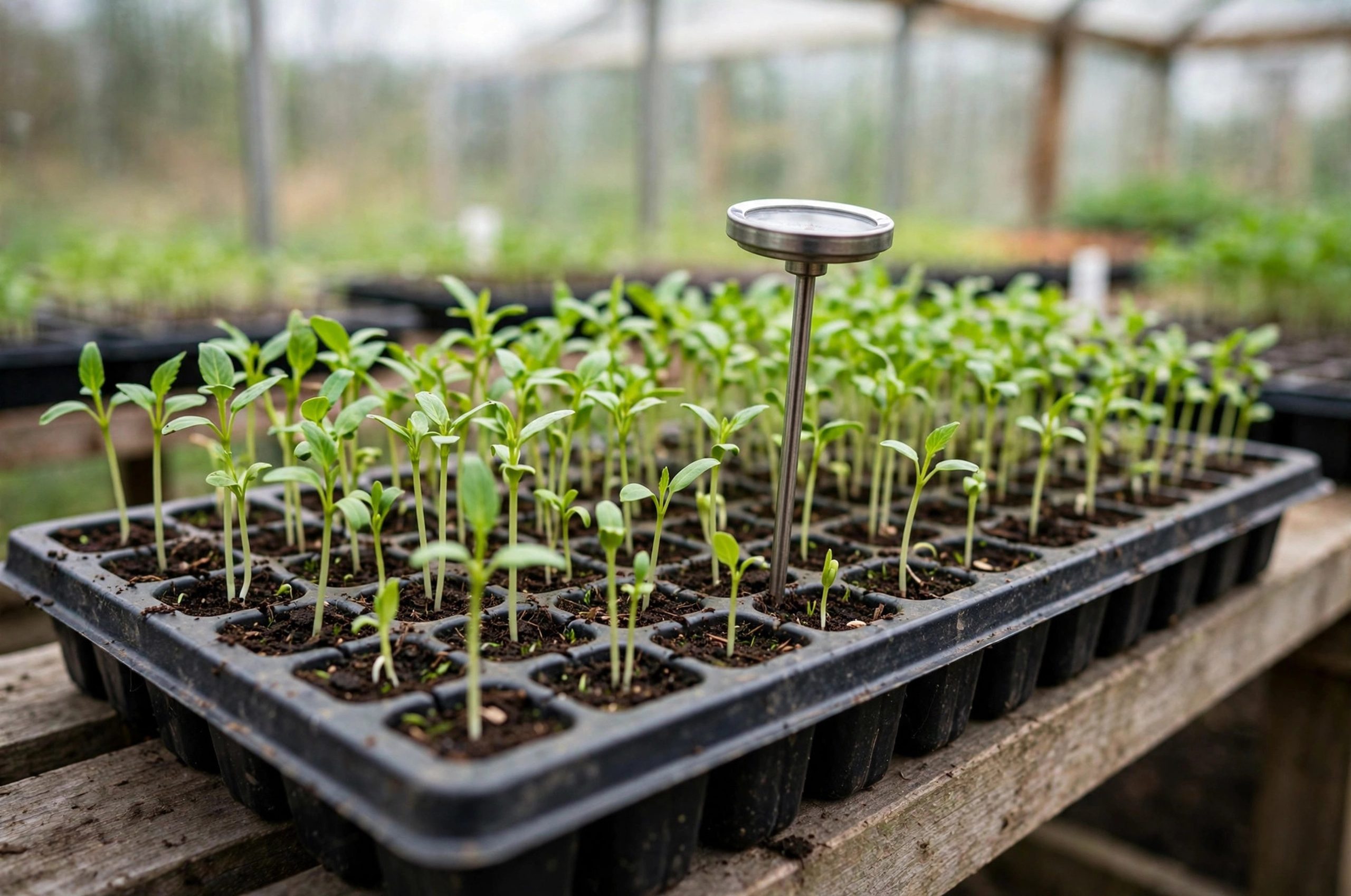
Seeds do not read calendars. They read temperature. A tomato seed sown in cold soil sits and sulks; the same seed in warm soil pops up in days. Every vegetable has a temperature window where its seed germinates fast and strong, and planting outside that window is one of the most common reasons for patchy, disappointing stands. This guide gives you the numbers for common vegetables, explains what they mean, and shows how to measure and manage soil warmth like a pro. The rest of this guide covers seed germination temperature in plain language.
Table of Contents
Table of Contents
- Seed Germination Temperature: Why Soil Temperature Matters More Than Air Temperature
- Understanding the Three Numbers
- The Germination Temperature Chart
- Cool-Season Crops: Sow Into Cold Soil
- Warm-Season Crops: Wait for Real Warmth
- How to Measure Soil Temperature
- Warming the Soil Up
- Cooling the Soil Down
- Pairing Temperature With Good Technique
- Quick Reference by Season
- How Temperature Changes Germination Speed
- The Bottom Line
- References
Seed Germination Temperature: Why Soil Temperature Matters More Than Air Temperature
When it comes to seed germination temperature, getting the details right makes all the difference.

Many homeowners find that seed germination temperature is easier than they expected once they know the basics.
Air temperature gets all the attention, but seeds live in soil. A sunny 65-degree afternoon can still leave seedbed soil in the fifties, too cold for warm-season crops. Soil warms and cools more slowly than air, which is both a blessing and a trap: it protects seed from overnight swings, but it also lags days behind a warm spell.
Temperature controls the speed of the chemistry inside the seed. Near the optimum, enzymes work fast and seedlings emerge in days. Near the minimum, the same seed may take weeks, if it sprouts at all, and every extra day in cold, wet soil is another day for rot to find it. That is why experienced gardeners check the soil, not the sky, before sowing (University of Wisconsin-Madison Extension).
Understanding the Three Numbers
Many homeowners find that seed germination temperature is easier than they expected once they know the basics.
The key to seed germination temperature is choosing the right approach for your space and budget.
Germination charts list three temperatures for each crop. Here is what each one means:
- Minimum: the coldest soil in which the seed will sprout at all. Germination is slow and uneven here. Treat this as a warning line, not a target.
- Optimum range: the sweet spot. Seeds sprout fastest and most uniformly. Aim for this whenever you can.
- Maximum: the warmest soil the seed tolerates. Above this, germination stalls or fails. Lettuce and spinach famously refuse to sprout in hot soil.
The classic data behind most charts comes from controlled trials run at the University of California, Davis, and published through extension services (Oregon State University Extension).
The Germination Temperature Chart
The key to seed germination temperature is choosing the right approach for your space and budget.
With a little planning, seed germination temperature can fit even a busy schedule.
Temperatures are soil temperatures in degrees Fahrenheit, measured about two inches deep in the morning.
| Crop | Minimum | Optimum Range | Maximum | |---|---|---|---| | Lettuce | 35 | 40-80 | 85 | | Spinach | 35 | 45-75 | 85 | | Onion | 35 | 50-95 | 95 | | Pea | 40 | 40-75 | 85 | | Carrot | 40 | 45-85 | 95 | | Radish | 40 | 45-90 | 95 | | Beet | 40 | 50-85 | 95 | | Parsley | 40 | 50-85 | 90 | | Cabbage | 40 | 45-95 | 100 | | Corn | 50 | 60-95 | 105 | | Tomato | 50 | 60-85 | 95 | | Bean | 60 | 60-85 | 95 | | Cucumber | 60 | 60-95 | 105 | | Pepper | 60 | 65-95 | 95 | | Squash | 60 | 70-95 | 100 | | Eggplant | 60 | 75-90 | 95 | | Melon | 60 | 75-95 | 100 |
A few patterns jump out. Cool-season crops like lettuce, spinach, peas, and onions sprout in soil as cold as the mid thirties and actually struggle when it gets hot. Warm-season crops like peppers, eggplant, squash, and melons want real warmth, with minimums around 60 degrees and optimums in the seventies and eighties (Oregon State University Extension, UC Master Gardener Program).
For greenhouse and transplant growers, the University of Delaware's transplant production guide adds detail on optimum germination temperatures paired with day and night growing temperatures for each crop (University of Delaware Extension).
Cool-Season Crops: Sow Into Cold Soil
With a little planning, seed germination temperature can fit even a busy schedule.
Before you start, it helps to understand how seed germination temperature works in real homes.
Lettuce, spinach, peas, radishes, carrots, beets, and onions are built for chilly soil. They germinate reliably in the forties and fifties, which is why they lead off the spring garden. But heat is their enemy at the other end: lettuce seed goes dormant above the mid eighties, and spinach quits not far above that. For summer sowings of these crops, shade the seedbed or wait for a cool stretch (UC Master Gardener Program).
Warm-Season Crops: Wait for Real Warmth
Before you start, it helps to understand how seed germination temperature works in real homes.
A good plan for seed germination temperature saves time, money, and frustration.
Tomatoes, peppers, eggplant, cucumbers, squash, melons, and beans all share a minimum near 60 degrees, but their optimums climb higher. Peppers and eggplant are the divas: they germinate fastest with soil in the eighties, and in cool soil they can sit for three weeks doing nothing. Beans are the cautionary tale: sown into cold, wet soil, they rot instead of sprouting, which is why patient gardeners wait for genuinely warm soil (St. Clare Heirloom Seeds).
If you start these crops indoors, a seedling heat mat is the simplest way to hold the mix in the optimum range. Pair it with a humidity dome tray and germination speeds up dramatically.
How to Measure Soil Temperature
A good plan for seed germination temperature saves time, money, and frustration.
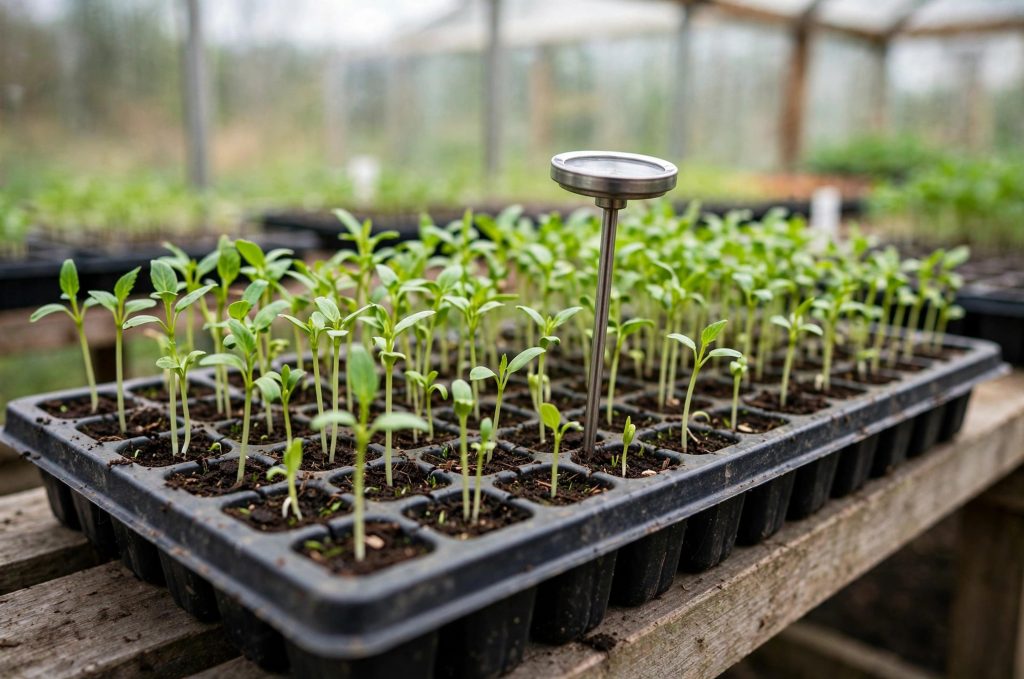
You need one tool: a probe-type soil thermometer. They are cheap and last for years.
1. Push the probe about two inches deep into the seedbed in the morning, when soil is coolest. 2. Wait a minute for the reading to settle. 3. Take readings for several days in a row and average them.
Morning readings matter because they show the coldest point of the daily cycle. If the morning average sits inside your crop's optimum range, sow with confidence. The University of Wisconsin's planting guide recommends exactly this check before any direct sowing (University of Wisconsin-Madison Extension).
Warming the Soil Up
For most people, seed germination temperature comes down to a few smart choices.
When the soil is almost warm enough, you can nudge it along:
- Black plastic or landscape fabric laid over the bed for a week or two absorbs sun and warms the top inches.
- Raised beds warm faster than flat ground because they catch sun on their sides and drain freely.
- Cold frames and cloches trap daytime heat around the seedbed.
- Clear plastic laid directly on the soil works like a mini greenhouse; remove it the moment seedlings emerge.
Cooling the Soil Down
If you are new to seed germination temperature, start with the simplest option and build from there.
For late sowings of cool-season crops, heat is the problem. Water the bed deeply the evening before sowing, since wet soil resists warming. Sow in the shade of a taller crop, or drape shade cloth over the row until seedlings are up. Some gardeners pre-chill lettuce seed in the fridge for a few days before sowing into warm soil (UC Master Gardener Program).
Pairing Temperature With Good Technique
When it comes to seed germination temperature, getting the details right makes all the difference.
Warm soil cannot save bad technique. Sow at the depth the packet says, keep the seedbed evenly moist but not soggy, and use a fine, sterile mix for indoor starts. A simple homemade mix of coconut coir and perlite gives seeds the airy, even moisture they need at any temperature (Gardening Know How). Give seedlings strong light the moment they emerge; our seed starting light setup shows how. And review the classic seed starting mistakes so temperature is not the only thing you get right. Even thrifty starts like egg carton sowing work fine once warmth is handled.
Quick Reference by Season
Think of the garden in two waves. The cool wave, lettuce through onions, goes in while the soil is still chilly and actually prefers it that way. The warm wave, beans through melons, waits until the soil holds real warmth. Sowing each wave into its preferred temperature is the closest thing to a germination guarantee that gardening offers. For seed that carries over between seasons, our seed storage guide shows how to keep it vigorous until its season comes.
How Temperature Changes Germination Speed
Temperature does not just decide whether seeds sprout. It decides how fast. A pea sown into fifty-degree soil may take two weeks to show. The same pea in seventy-degree soil pops up in about a week. Carrots tell the story even more clearly: near-freezing soil can leave them sitting for over a month, while warm spring soil brings them up in days. That speed gap is why gardeners who sow by the thermometer get fuller stands. Fast sprouts outrun damping off, crusting soil, and hungry insects. Slow sprouts sit exposed to every hazard the garden holds.
The flip side matters too. Some seeds stall or quit in soil that is too hot. Lettuce and spinach are famous for it. Sow them into summer-hot soil and they may never come up at all. Shade cloth, a board laid over the row for a few days, or simply waiting for a cool stretch can make the difference. The optimum range in the chart is not a suggestion. It is the zone where each crop germinates fast enough to beat the risks.
The Bottom Line
Check the soil temperature before you sow, match each crop to its optimum range, and give warmth-lovers bottom heat indoors when spring is slow. It is a five-minute habit that pays off in faster, fuller, more even stands all season long. Keep this guide handy the next time seed germination temperature comes up.
References
Gardening Know How. (n.d.). How to make the perfect DIY seed-starting mix: Easy recipes. https://www.gardeningknowhow.com/garden-how-to/seeds/diy-seed-starting-mix
Oregon State University Extension. (n.d.). Make your own seed-starting mix for winter prep. https://extension.oregonstate.edu/news/make-your-own-seed-starting-mix-winter-prep
Oregon State University Extension. (n.d.). Soil temperature conditions for vegetable seed germination. http://extension.oregonstate.edu/catalog/soil-temperature-conditions-vegetable-seed-germination
St. Clare Heirloom Seeds. (n.d.). Soil temperature guide for vegetable seed germination: Minimum, optimum, and maximum ranges. https://www.stclareseeds.com/vegetable-seed-germination-soil-temperature-guide/
SuperSeeds. (n.d.). The germination explanation: How long do seeds last? https://www.superseeds.com/blogs/know-your-roots/the-germination-explanation-how-long-do-seeds-last
UC Master Gardener Program. (n.d.). Seed germination temperature and timing. https://ucanr.edu/program/uc-master-gardener-program/seed-germination-temperature-and-timing
University of Delaware Extension. (n.d.). Times and temperatures for vegetable transplant production. https://sites.udel.edu/weeklycropupdate/?p=24042
University of Wisconsin-Madison Extension. (n.d.). When is the right time to plant vegetable seeds? Check soil temperature. https://hort.extension.wisc.edu/articles/when-is-the-right-time-to-plant-vegetable-seeds-check-soil-temperature/
Was this guide helpful?

About My Garden US
The My Garden US editorial team writes practical, in-depth home and garden guides for American homeowners — tested advice, no fluff.