
Every spring, gardeners open last year’s seed packets and ask the same question. Are these seeds still good? Many throw them away and buy new packets. That waste is easy to avoid. When you know how to store garden seeds long term, a packet bought this year can still grow fine five years from now.
Seed is alive. It rests in a deep sleep called dormancy and waits for warmth and moisture. Your job is to keep it asleep. The enemies are heat, damp, and light. The rest of this guide shows the full method, step by step, in plain words.
Why Good Seed Storage Matters
Seed prices keep rising. A single packet of hybrid tomato seed can cost more than a full meal. If you garden for three or four years, leftover seed adds up. Good storage turns each packet into a multi-year supply. You buy less. You waste less.
Storage also protects rare and heirloom types. Some old varieties are sold only by small growers. If you lose a year to bad weather, stored seed lets you try again. Gardeners who save their own seed from open-pollinated plants face the same need. A seed you saved by hand took real work. It deserves a dry jar and a cool shelf.
What Seeds Need to Stay Alive: How to Store Garden Seeds Long Term
A seed is a small machine built for waiting. It burns almost no energy while it sleeps. Three things wake it or kill it: heat, water, and light. Control those three and you control storage life.
Keep Them Cool
Warm air shortens seed life. Cold air stretches it. As a rough rule, every ten degrees cooler doubles how long seed stays alive. A closet at room temperature works for a year or two. A cool basement stretches that further. The refrigerator is the best tool most homes own. Kept between 35 and 45 degrees Fahrenheit, most vegetable seeds last years longer than they would on a shelf.
Avoid spots with big swings in temperature. A garage that bakes in summer and freezes in winter is a poor choice. Seeds do better in one steady, cool place than in a place that changes every week.
Keep Them Dry
Moisture is the fastest seed killer. A seed that takes up water starts to wake. If it then dries out, it may die. Relative humidity near the seed should stay low. Aim for air at or below 40 percent humidity. Many gardeners drop a small packet of silica gel in each jar. The gel pulls damp from the air and keeps the seed dry for months.
Never store damp seed. If you save your own seed, dry it well before it goes into a jar. Spread it on paper in a dry room for a week or more. When a bean snaps instead of bending, it is dry enough.
Keep Them Dark
Long light exposure can weaken some seed coats. An opaque tin, a cardboard box, or a dark drawer solves the problem. Clear jars are fine if they sit inside a closed cabinet.
How to Store Garden Seeds Long Term, Step by Step
Follow these steps once and they become habit. The whole job takes under an hour.
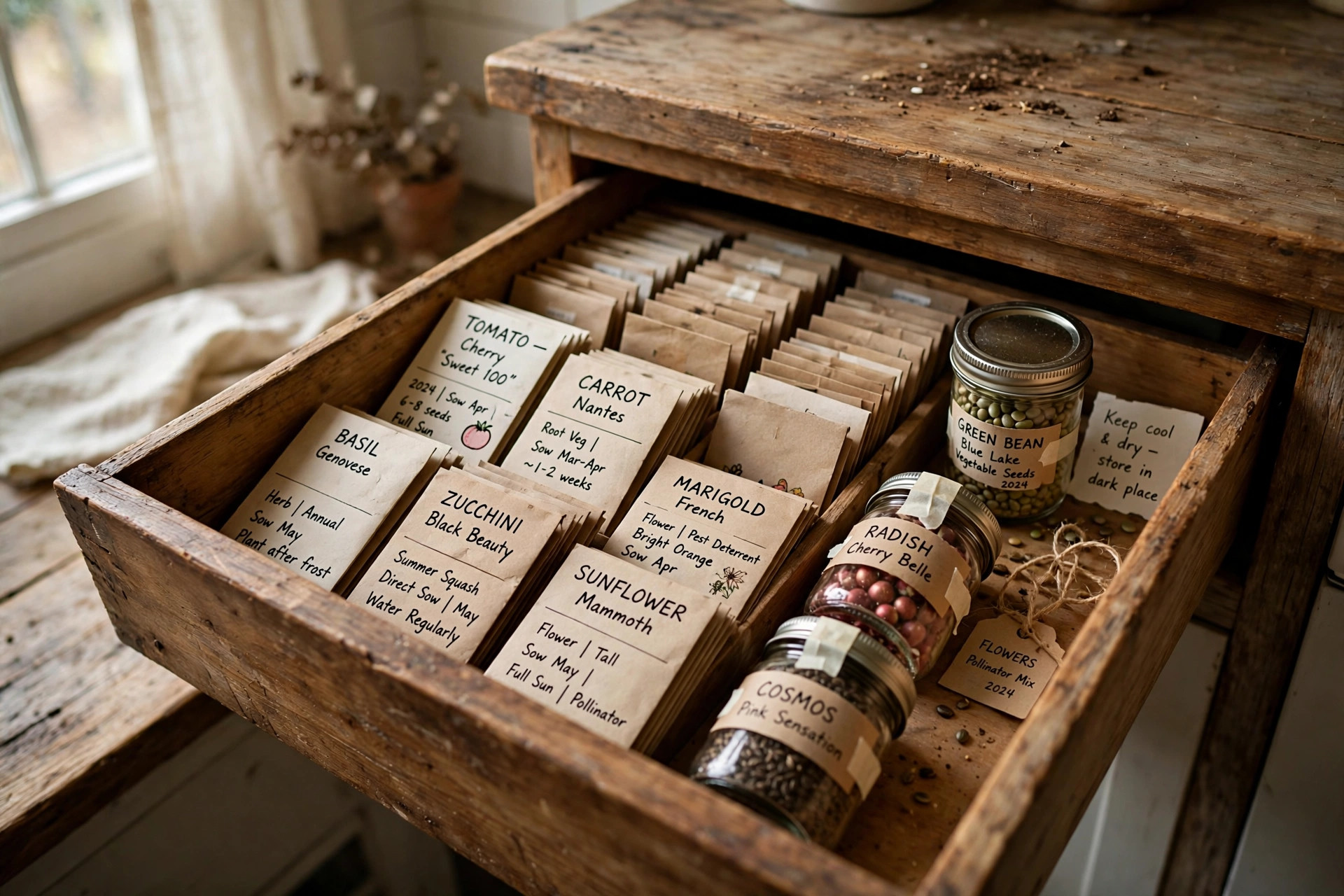
1. Gather the seed. Collect leftover packets from this year and any seed you saved yourself. Set aside any packet that got wet or moldy. Wet seed is not worth saving. 2. Check the dates. Read the “packed for” date on each packet. Write the current year on packets that lack a date. Old seed is not bad seed, but you should know its age. 3. Dry the seed again. Even store-bought seed picks up moisture in a humid house. Spread packets and loose seed in a dry room for a few days before sealing them up. If the room feels damp, run a fan or a dehumidifier. 4. Choose airtight containers. Small glass jars with screw lids work best. Short wide-mouth canning jars are ideal. Zip-top bags are second best. Press out extra air before sealing. 5. Add a drying packet. Toss one silica gel packet into each jar. If you have no gel, a small cloth bag of dry rice works in a pinch. Change it each year. 6. Label everything. Write the plant name, the variety, the year, and the source on each jar. Use a marker or a paper label. Trust memory less than ink. 7. Put the jars in one cool, dark place. The refrigerator is the top choice for long term storage. Let jars warm to room temperature for a day before opening them. Opening a cold jar in warm air pulls moisture onto the seed. 8. Log the stock. Keep a simple list on paper or a card. Note what you have and where it sits. A list stops you from buying seed you already own.
The Best Containers for Long Term Seed Storage
Not all containers are equal. The best one for you depends on how much seed you hold and where you store it.
Glass Jars
Glass is airtight, cheap, and easy to find. Short canning jars hold many packets at once. They stack well in a refrigerator. Wrap each jar with a rubber band and a paper label so jars do not slide.
Metal Tins
Old cookie tins and tea tins block light and seal well. They suit seed kept in a dark basement or closet. Make sure the lid fits tight. Add silica gel as you would with glass.
Zip-Top Bags
Bags are light and cheap. They are a good choice for large amounts of bulky seed such as beans and corn. They let out less air than jars, so double-bag the seed and press the air out flat. Store bags inside a larger box so mice cannot reach them.
Paper Envelopes Inside Jars
Many gardeners use both. Loose seed goes in a paper envelope. The envelope goes inside a sealed jar. The paper soaks up small amounts of damp. The jar blocks outside air. This two-layer method is old and trusted.
Avoid thin grocery bags and open bowls. They give no protection from air or pests. If you want the best way to keep seeds fresh for years, sealed glass or tins in the refrigerator beat every open method.
Where to Keep Your Seeds
The right spot depends on your home. Here are the common choices, ranked from best to worst.
– Refrigerator: Best for most gardeners. Steady cold, dark, and closed. Keep jars in the main section, not the door. The door swings and warms. – Cool basement: Good if it stays under 60 degrees all year and stays dry. Many older homes have such a corner. Put jars on a shelf, never on a concrete floor that sweats. – Interior closet: Fine for seed you will use within two years. Pick a closet on a north wall, away from heat vents. – Freezer: Works for truly long storage, five years or more. Only freeze seed that is very dry, at about 6 to 8 percent moisture. Seal it in a vapor-proof bag. Let it warm a full day before opening. – Garage or shed: Poor. Summer heat and winter damp shorten seed life fast. Use these only as a last resort.
If you store leftover seeds from packets you bought at the store, the refrigerator jar method is the safest bet. It costs nothing extra and adds years to every packet.
How Long Seeds Last
Every kind of seed has its own clock. The table below gives rough storage life for common garden seeds kept cool and dry. These are not promises. They are guides based on years of garden practice.
– Onion, leek, parsnip: 1 to 2 years. These fade fastest. Buy fresh each year if you can. – Sweet corn, pepper, spinach: 2 to 3 years. – Bean, pea, carrot, lettuce: 3 to 4 years. – Beet, radish, squash, turnip: 4 to 5 years. – Tomato, cucumber, eggplant, melon: 5 to 6 years. – Cabbage family, brassicas: 4 to 5 years.
Hard-coated seeds such as beans and peas often outlive soft ones such as onions. Hybrid seed loses vigor faster than open-pollinated seed. When in doubt, test old seed before planting day. Lay ten seeds on a damp paper towel, roll it up, and keep it warm for a week. If eight or more sprout, the lot is fine. If only three sprout, plant thick or buy fresh.
What It Costs
Long term seed storage is one of the cheapest parts of gardening. Small canning jars cost a dollar or two each at hardware stores and reuse for decades. Silica gel packets cost pennies when bought in bulk. Labels cost almost nothing.
Compare that with buying new seed each spring. A gardener who grows twenty kinds of vegetables might spend forty to sixty dollars a year on seed. Storing seed well can cut that bill in half. The savings grow each year. One jar set, bought once, protects seed worth hundreds of dollars over its life.
Free options work too. Baby food jars, clean jam jars, and old pill bottles all seal well. Ask at a restaurant or deli for their empty jars. The container matters less than the seal. If it closes tight, it stores seed.
Care and Upkeep: Checking Seeds Each Year
Storage is not a one-time task. Once a year, spend twenty minutes on upkeep.
Open each jar and check for damp or mold. Sniff the seed. Musty smell means trouble. Look at the silica gel. Many gels change color when they fill with moisture. Recharge or replace them. Old gel can be dried in a low oven and used again.
Review your log. Mark which seeds are near the end of their expected life. Plan to use those first next spring. Test a few lots with the paper towel method. Throw out any seed that is dead or moldy. Dead seed takes up jar space that live seed needs.
A fresh pack in every jar each year keeps the whole system working.
Safety Notes
Seed storage is safe work, but a few cautions apply.
Some seeds are treated with pink or blue fungicide powder. Do not eat treated seed. Do not let children handle it. Wash your hands after touching it. Keep treated seed in marked jars, away from food storage.
Silica gel packets are not food. They often carry a “do not eat” warning. Keep them away from small children and pets. If a packet breaks, wipe up the beads. They are not highly toxic, but they do not belong in a mouth.
Mice and insects love stored seed. Keep jars sealed and off the floor. If you store bags in a shed, set traps nearby. A mouse can chew through a paper envelope in a night.
If you freeze seed, remember the warm-up rule. Cold jars opened in warm air draw damp onto the seed. Always let a cold container reach room temperature before you break the seal. This one step prevents the most common freezer storage mistake.
Frequently Asked Questions
Can I store seeds in the freezer? Yes, for the longest storage. The seed must be very dry first. Seal it in a vapor-proof bag or jar. Keep the freezer temperature steady. Let the container warm to room temperature for a full day before you open it. Freezer storage can keep most vegetable seeds alive for eight to ten years.
How long do vegetable seeds last in the refrigerator? Most last three to six years in the refrigerator, about twice as long as on a shelf. Onions and parsnips are the shortest-lived at one to two years. Tomatoes and cucumbers are among the longest at five to six years. Dry seed in a sealed jar with silica gel lasts the longest.
Should I keep seeds in their original packets? Yes, when you can. The packet carries the variety name and the packed-for date. Slip the whole packet into your jar. If a packet is torn, move the seed to a paper envelope and copy the label by hand.
Do I need silica gel to store seeds? You do not need it, but it helps a great deal. Silica gel keeps the air inside the jar dry even when room air is humid. Dry rice in a cloth bag is a fair substitute. Whichever you use, replace it each year.
What is the best temperature for storing garden seeds? Between 35 and 45 degrees Fahrenheit is ideal for most home gardeners. That is the range of a normal refrigerator. Cooler is better down to freezing, but only for very dry seed. Avoid warm rooms above 75 degrees for long term storage.
Can old seeds still grow? Often, yes. Age alone does not kill seed. Test old seed with the damp paper towel method before planting. If most seeds sprout, plant as normal. If few sprout, sow them thick or replace the lot. Many gardeners grow fine crops from seed that is five years old or more.
A Final Word
Learning how to store garden seeds long term is a quiet skill. It asks for jars, labels, and a cool shelf. It gives back years of good seed, lower costs, and the freedom to plant on your own terms. Start this season. Seal your leftover packets, write the year on each jar, and put them in the refrigerator. Next spring, when the catalogs call, you will already own what you need. For related reading, see our guides on how to start seeds indoors, the right raised garden bed soil mix, and how to sharpen garden tools before the season begins. Trusted resources for tools and supplies include Gardeners, Burpee, and Corona Tools; for reviews and repair know-how see Consumer Reports, Bob Vila, Family Handyman, and The Spruce; and for jars, tins, and storage gear see Lowe’s and Home Depot.
References
Bob Vila. (n.d.). Home improvement advice. https://www.bobvila.com Burpee. (n.d.). Seeds, plants, and gardening supplies. https://www.burpee.com Consumer Reports. (n.d.). Product reviews and ratings. https://www.consumerreports.org Corona Tools. (n.d.). Garden and landscape tools. https://www.corona-tools.com Family Handyman. (n.d.). DIY home repair and maintenance. https://www.familyhandyman.com Gardener’s Supply Company. (n.d.). Gardening tools and supplies. https://www.gardeners.com Lowe’s. (n.d.). Home improvement products. https://www.lowes.com The Home Depot. (n.d.). Home improvement products. https://www.homedepot.com The Spruce. (n.d.). Home and garden advice. https://www.thespruce.com
Was this guide helpful?

About Robert Taylor
The My Garden US editorial team writes practical, in-depth home and garden guides for American homeowners — tested advice, no fluff.
You May Also Like
Best Garden Soil for Tomatoes Reviews: What Actually Grows the Best Crop
June 30, 2026 0 views
Best Garden Cart With No Flat Tires: A Complete Buying Guide
July 12, 2026 0 views
How to Grow Herbs Indoors Year Round: A Complete Guide
June 21, 2026 0 views