A good raised garden bed soil mix recipe is the single most important step in raised bed gardening. The bed frame, the fence, and the water all matter, but none of them can fix poor soil. Roots live in the soil. If the soil is heavy and soggy, roots rot. If it is light and dry, roots starve. A sound mix gives roots air, water, and food at the same time. This guide walks through a proven raised garden bed soil mix recipe, explains why each part is there, and shows how to adapt it to your own yard.
Why the Soil Mix Matters More Than the Bed
Raised beds give gardeners a blank page. The native soil in the yard may be clay, sand, or rubble. A raised bed lets you skip that problem and start fresh. But many beginners fill their beds with plain bagged topsoil or, worse, dirt dug from another part of the yard. The first season is often disappointing. Seedlings stall. Tomatoes yellow. Carrots fork into strange shapes.
The fault is rarely the plant. Bagged topsoil is dense. It packs down hard in a bed, holds too much water, and holds too few nutrients. A raised garden bed soil mix recipe built from several parts solves this. Each part has a job. Together they make a bed that drains yet holds moisture, that feeds plants yet stays loose. Many guides on the web suggest mixing compost and topsoil and calling it done. That works for a season, but a fuller recipe works for years. For more on picking the right base, see best soil for raised vegetable beds.
What Goes Into a Raised Garden Bed Soil Mix Recipe
A classic mix uses three groups of parts. Most recipes call them the base, the food, and the air. The base makes up the bulk. The food feeds plants. The air keeps the mix loose.
The Classic 3-2-1 Recipe
The most trusted raised garden bed soil mix recipe follows a 3-2-1 ratio by volume:
– 3 parts topsoil — the base. It gives body and holds minerals. – 2 parts compost — the food. It gives nutrients and feeds soil life. – 1 part aeration — the air. Perlite, vermiculite, or coarse sand keeps the mix open.
Measure by volume, not weight. A five-gallon bucket makes a fine measure. For a standard 4-by-8-foot bed that is 12 inches deep, you need about 32 cubic feet of mix, which is roughly 32 bags of one-cubic-foot product or 16 wheelbarrow loads. A raised bed soil calculator can work out the exact amount for beds of any size before you buy.
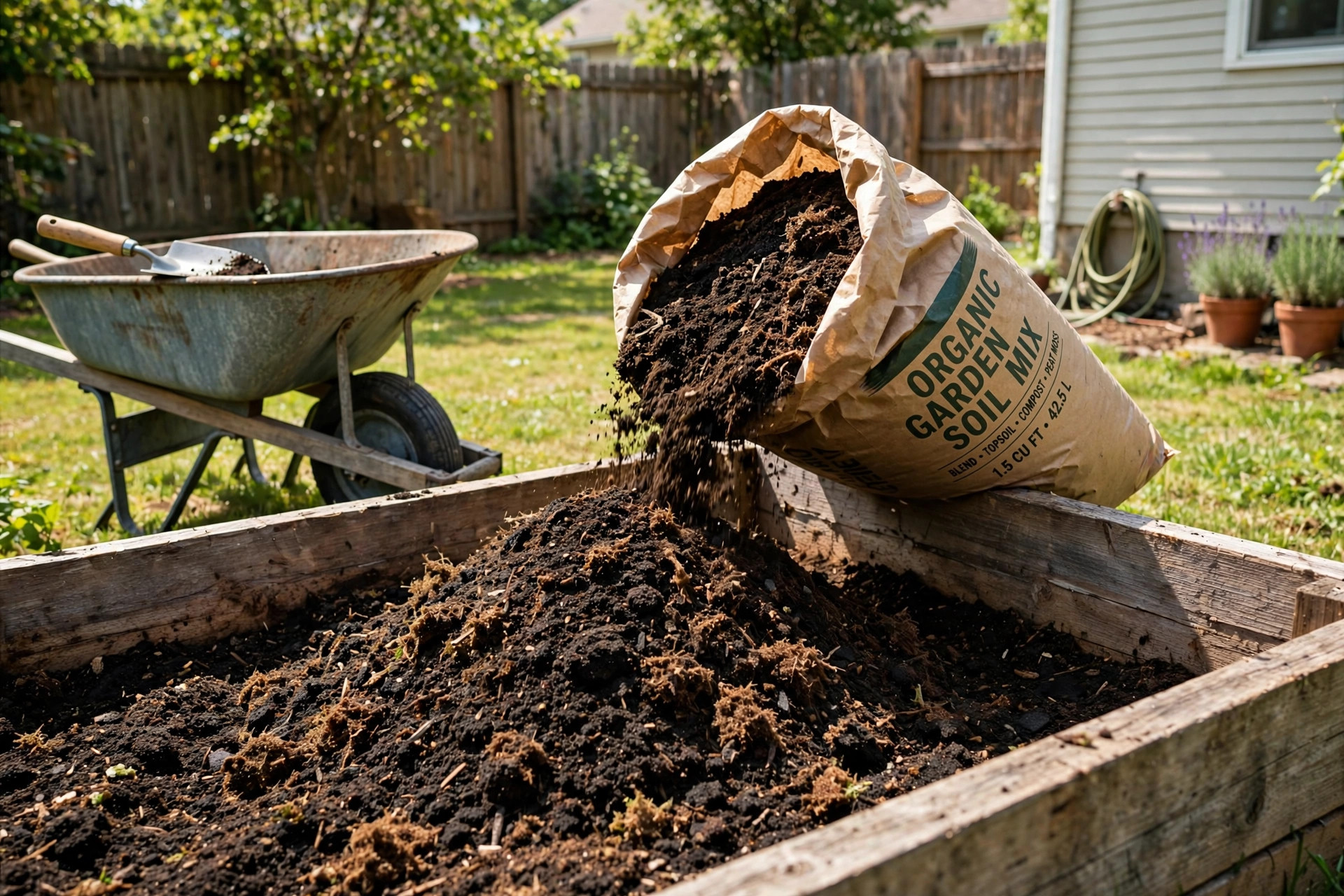
Mix the parts on a tarp before they go into the bed. Rake them together until the color is even. Fill the bed in layers, watering each layer lightly so it settles. Then let the bed rest for a week before planting. New mix settles by an inch or two as water works through it.
Why Each Part Earns Its Place
Topsoil gives weight and trace minerals. Buy screened topsoil that has no glass, no large stones, and no smell of chemicals. Avoid soil labeled “fill dirt,” which can carry seeds and debris.
Compost is the heart of the raised garden bed soil mix recipe. It feeds plants slowly and feeds the tiny living things in the soil that keep it healthy. Use more than one kind of compost if you can. Leaf compost, aged cow manure, mushroom compost, and worm castings all differ. A blend covers more needs than one bag alone. Homemade compost is fine too, if it is fully broken down and smells like forest soil.
The aeration part keeps the mix from packing down. Perlite is light volcanic rock that holds air. Vermiculite is similar but also holds water, which helps in hot, dry places. Coarse washed sand works where drainage is the main worry. Do not use fine play sand. Fine sand makes heavy mixes worse, not better.
Some gardeners add a small amount of peat moss or coconut coir to hold moisture. A bag or two per bed is enough. These hold water well, but too much makes the mix spongy and sour. If you use peat, note that it is mildly acidic, which most vegetables accept.
Adapting the Recipe to Your Plants
The classic recipe suits most vegetables. A few plants do better with a small change.
– Root crops like carrots and beets like looser soil. Add one extra part of sand or perlite. Stones and hard lumps force roots to fork, so screen the mix well. – Tomatoes and peppers are heavy feeders. Add an extra part of compost at the top of the bed each spring. – Herbs like rosemary and thyme like sharp drainage. Cut the compost back a little and add more coarse sand. – Leafy greens do well in the standard mix but grow fast with steady feeding. A side dressing of compost halfway through the season keeps them going.
If you grow only in containers or small beds, best potting soil for container gardens — though that is a separate article, the same idea applies: match the mix to the roots.
How Much Does a Raised Garden Bed Soil Mix Cost?
Cost depends on bed size and where you buy. A small 4-by-4-foot bed one foot deep needs about 16 cubic feet of mix. Buying all bagged parts at a home center runs about 60 to 100 dollars. A large 4-by-8-foot bed needs about 32 cubic feet and runs about 120 to 200 dollars.
Costs drop when you buy in bulk. Landscape yards sell topsoil and compost by the cubic yard. One cubic yard is 27 cubic feet. A cubic yard of good compost may cost half as much as the same amount in bags. Delivery adds a fee, but for large beds bulk buying saves real money. Municipal compost programs in some towns give away finished compost for free or at low cost. Call your city office and ask.
The mix is a one-time cost. Unlike bagged potting soil, a raised bed does not need a full refill each year. Top up with one or two inches of compost each spring, and the bed stays productive. Over five years, the yearly cost is small. Guides at the home center and the garden supply store often carry price tables for bulk parts.
Filling the Bed Step by Step
1. Place the bed. Set the frame on level ground in full sun, at least six hours a day. 2. Block the weeds. Lay cardboard or landscape cloth at the base to stop weeds and grass from pushing up. The cardboard breaks down in one season. 3. Add the coarse base. If your bed is deeper than 12 inches, fill the bottom third with sticks, leaves, and straw. This method, called hugelkultur, cuts soil cost and feeds the bed as wood breaks down. 4. Mix the parts. Combine three parts topsoil, two parts compost, and one part aeration on a tarp. Rake until even. 5. Fill in layers. Add six inches of mix, water it well, and let it settle. Repeat until full. 6. Top with compost. Spread one inch of compost over the surface. This feeds young seedlings right away. 7. Rest and plant. Wait several days for settling, then plant.
After filling, the bed will settle again during the first heavy rains. Top up with mix so the surface stays within two inches of the frame top.
Common Mistakes to Avoid
Using garden soil from the yard. Native soil in a bed brings weed seeds, pests, and the same drainage problems the bed was meant to avoid.
Skipping the compost. Topsoil alone is too poor. Plants in poor soil grow slowly and attract pests. Compost is the cheapest fix.
Packing the bed by walking in it. Build beds narrow enough to reach the center from the sides. Four feet wide is the common limit. Stepping on the mix crushes the air spaces.
Overwatering new beds. Fresh mix holds water well. Stick a finger two inches into the soil. Water only when it feels dry at that depth.
Using hot manure. Fresh manure burns roots and can carry germs. Use only aged or composted manure. Bagged cow manure is safe. Advice from Burpee and The Spruce agrees that aged manure is the safe choice for food beds.
Care and Upkeep of Bed Soil
Bed soil improves with age if you treat it well. Each spring, pull back mulch and spread two inches of fresh compost over the bed. Work it into the top three inches with a hand fork. Do not deep-till the whole bed. Deep tilling breaks the soil structure you built.
Test the soil every two or three years. A home test kit shows pH and the main nutrients. Most vegetables like pH between 6.0 and 7.0. If pH drifts low, a light dusting of garden lime brings it up. If nitrogen runs low, aged manure or blood meal adds it back. A good garden fork or hand cultivator from Fiskars makes spring work fast.
Rotate crops in the bed. Do not plant tomatoes in the same spot every year. Rotation breaks pest cycles and keeps nutrient use balanced. Follow heavy feeders like corn and tomatoes with light feeders like beans and peas. Beans put nitrogen back into the soil.
Mulch the surface with straw or shredded leaves once plants are up. Mulch holds moisture, cools roots, and stops weeds. It breaks down over the season and becomes part of the soil. Guides from Bob Vila and Family Handyman show mulch cutting watering needs by a third in hot summers.
Safety Notes
Choose parts marked safe for food gardens. Some bagged products carry chemicals meant for lawns, not food beds. Read the label. If it says “not for edible gardens,” skip it.
Wear gloves when mixing. Compost and manure carry bacteria. Wash hands after working with soil. Keep treated lumber away from food beds unless it is rated safe for garden use. Cedar and redwood frames last years without treatment.
Keep pets and small children from eating soil or compost. Most garden parts are safe, but cocoa-shell mulch and some fertilizers can harm dogs. Consumer Reports lists garden product safety notes worth checking before buying.
If you buy bulk compost, ask how it was made. Good compost reaches high heat during making, which kills weed seeds and germs. Cool, unfinished compost can bring weeds into the bed.
FAQ
Can I use only compost in my raised bed? No. Pure compost holds water too well and packs down over time. It also lacks the mineral base that topsoil gives. The raised garden bed soil mix recipe works because each part does a job. A bed of pure compost shrinks and drowns roots.
How deep should the soil be? Twelve inches suits most vegetables. Shallow greens can grow in six inches. Deep root crops like carrots want at least 12 inches of loose mix. Beds deeper than 18 inches cost more to fill with no added gain for most crops.
Do I need to replace the soil each year? No. Good bed soil lasts for years. Add two inches of compost each spring and mulch during the season. Replace soil only if it stays soggy, smells sour, or carries disease year after year.
Can I make the mix without buying topsoil? Yes, if you have good garden soil on hand. Mix two parts of your soil with two parts compost and one part aeration. Test your soil first. If it is heavy clay or full of weed seeds, buy screened topsoil instead.
Is peat moss required in the recipe? No. The classic recipe works without it. Peat helps hold water in dry places, but compost and vermiculite do the same job. Coconut coir is a renewable swap for peat if you want one.
What is the cheapest way to fill a large bed? Use the hugelkultur method for the bottom third: sticks, logs, leaves, and straw. Then buy topsoil and compost in bulk from a landscape yard. Check your town for free municipal compost. Shoppers at Gardener’s Supply find bed kits that lower frame costs too.
Final Word
A raised garden bed soil mix recipe is simple: three parts topsoil, two parts compost, one part aeration. Mix it well, fill the bed in layers, and top with compost each spring. The bed will pay you back with strong plants and good harvests for many seasons. Start with the classic mix, watch how your plants grow, and adjust a little each year. Good soil is a habit, not a purchase. For more on soil choices, see best garden soil for raised beds.
References
Bob Vila. (n.d.). Home improvement advice. https://www.bobvila.com Burpee. (n.d.). Seeds, plants, and gardening supplies. https://www.burpee.com Consumer Reports. (n.d.). Product reviews and ratings. https://www.consumerreports.org Corona Tools. (n.d.). Garden and landscape tools. https://www.corona-tools.com Family Handyman. (n.d.). DIY home repair and maintenance. https://www.familyhandyman.com Fiskars. (n.d.). Garden and cutting tools. https://www.fiskars.com Gardener’s Supply Company. (n.d.). Gardening tools and supplies. https://www.gardeners.com Lowe’s. (n.d.). Home improvement products. https://www.lowes.com The Home Depot. (n.d.). Home improvement products. https://www.homedepot.com The Spruce. (n.d.). Home and garden advice. https://www.thespruce.com
Was this guide helpful?

About Robert Taylor
The My Garden US editorial team writes practical, in-depth home and garden guides for American homeowners — tested advice, no fluff.