A Simple Start
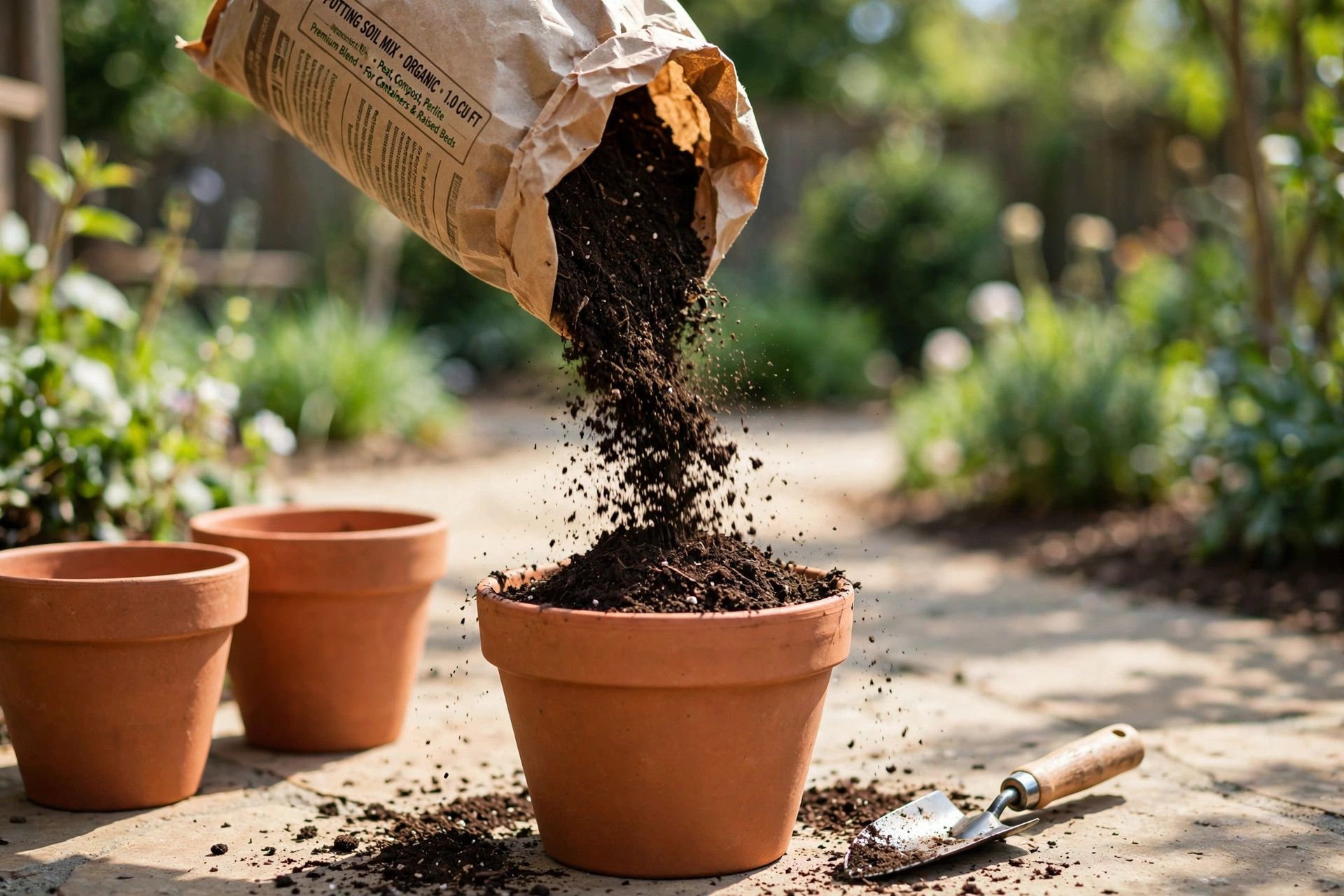
The best potting soil for container gardens is not garden dirt from the yard. It is a light, loose mix made for pots. Plants in pots live in a small space. Their roots cannot spread far. The mix must hold water, let air reach the roots, and drain well. When the mix is right, plants grow strong with less work from the gardener. This guide explains how to pick a good mix, what it should cost, and how to keep it working year after year.
Why the Right Mix Matters: Best Potting Soil for Container Gardens
A pot is a closed world. In the ground, soil has worms and deep layers that fix many problems. In a pot, no such help exists. The mix you pour in is all the plant will ever have.
Heavy soil causes the most harm. It packs down and holds too much water. Roots sit wet and begin to rot. The plant turns yellow and dies. Light soil brings a different trouble. It drains too fast and dries out in a day. Roots starve for water.
A good mix finds the middle ground. It holds moisture like a sponge but lets extra water run out the bottom. It stays loose so roots can push through it. It also feeds the plant. Most bagged mixes carry enough food for the first month or two. After that, the gardener adds more.
Container gardens reward care. Tomatoes, peppers, herbs, and flowers all grow well in pots when the mix suits them. Pot size matters too. A small pot dries out fast, even with a fine mix. Give thirsty plants a roomy pot, at least five gallons for a tomato. A bigger pot holds more mix, and more mix holds more water between waterings. This single choice can save a garden in a hot week. Readers who grow herbs may enjoy a guide to growing thyme in indoor pots, which pairs well with the advice here.
What to Look for When You Choose
Walk down the garden aisle and you will see many bags. The labels promise much. A few plain checks will tell you more than the labels do.
Drainage
Good drainage is the first test. Open the bag and look at the mix. It should be dark and crumbly. You should see bits of bark, perlite, or vermiculite. Perlite is the small white stone-like piece. Vermiculite is the gold or brown flake. Both keep the mix open.
Squeeze a handful. It should clump for a moment, then break apart when you poke it. If it stays in a hard ball, it is too heavy for pots. If it will not hold together at all, it may dry too fast. Consumer Reports has published independent tests of bagged soils that show how wide the quality range can be.
Nutrients
Most mixes include a starter charge of plant food. Check the bag for the three numbers that show nitrogen, phosphorus, and potassium. A balanced mix such as 5-5-5 or 10-10-10 serves most plants well. Slow-release pellets feed plants for weeks. Organic mixes use composted bark, manure, or worm castings instead.
For heavy feeders like tomatoes, the starter food runs out fast. Plan to add liquid or granular fertilizer after four to six weeks. Burpee, the seed company, offers clear feeding schedules for container vegetables on its site.
Weight
Lift the bag. A good container mix feels light for its size. Heavy bags often hold real soil or sand. Those belong in the ground, not in pots. Light mixes move air around roots and make large pots easier to carry. On a balcony or deck, weight matters even more. Gardener’s Supply Company sells planters and tools designed for light mixes on decks and small spaces.
Types of Potting Mix
All-Purpose Mix
This is the workhorse. It suits flowers, herbs, and most vegetables. It blends peat moss or coconut coir with bark, perlite, and compost. It holds water well and drains clean. For a first container garden, start here. Read the ingredient list on the back of the bag. Better mixes name real parts like aged bark and sphagnum peat. Cheaper mixes list wood waste and filler. The named parts cost more, but they hold their shape longer through a full season.
Organic Mix
Organic mixes leave out man-made fertilizers. They feed plants with compost, manure, and natural minerals. They suit gardeners who grow food and want a natural approach. Organic mixes cost more per bag. They also break down faster, so top them up each season. The Spruce keeps a helpful library of container gardening basics for new growers.
Cactus and Succulent Mix
This mix drains fast. It holds coarse sand, pumice, or extra perlite. It suits cacti, succulents, and herbs like rosemary that hate wet feet. Do not use it for thirsty plants. Tomatoes and basil will dry out and suffer.
Seed-Starting Mix
Seed-starting mix is finer and lighter than regular potting soil. It holds moisture around tiny seeds. It carries almost no plant food, because seeds bring their own. Start seeds in this mix, then move young plants to regular potting soil. Gardeners who start seeds early often build a DIY seedling grow light stand to give young plants enough light indoors.
Cost and Price
Potting soil costs less than most people fear. A standard 1.5 cubic foot bag runs about five to fifteen dollars at big stores such as Home Depot and Lowe’s. That one bag fills several medium pots. Store brands cost less and often work fine for flowers. Name brands cost more and tend to have steadier quality from bag to bag.
Special mixes cost more. Organic bags add a few dollars. Cactus mix and seed-starting mix sell in smaller bags at a higher price per quart. Buying in bulk saves money for large projects. Some garden centers sell potting mix by the cubic yard. That suits a gardener filling raised beds and dozens of pots at once.
Watch for sales in late winter. Stores clear shelf space before spring. A bag bought in February costs less than the same bag in May. Check the bag date when you can. Mix that sat outside for a year may have lost some of its plant food.
Care and Upkeep
Potting soil is not a one-time purchase. It needs care through the season and between seasons.
Water from the top until it runs out the drainage holes. Then wait. Stick a finger two inches deep. Water again only when it feels dry. This simple test prevents most root problems. Mulch the surface with bark or straw. Mulch slows drying and keeps soil from splashing onto leaves.
Feed on a schedule. Slow-release fertilizer at planting time covers the first two months. After that, add liquid fertilizer every two weeks for heavy feeders. Flowers in hanging baskets dry fast and eat fast. They may need feeding every week.
At season end, do not throw the mix away. Dump it into a bin or pile. Pull out old roots. Mix in fresh compost. Compost makers can learn how to make leaf mold compost to refresh old mix for free. After two or three seasons, replace the mix fully. Old mix packs down and holds salts from fertilizer.
Store open bags in a dry place. Tie the top shut or move the mix into a bin with a lid. Wet bags grow mold and lose food value. Keep bags off cold concrete floors through winter.
Once a month, flush each pot with plain water. Pour slowly until water runs clear from the bottom. This washes out salt left by fertilizer. Salt buildup shows as a white crust on the mix surface and brown leaf tips. A monthly flush keeps salts from harming roots. It takes only a few minutes and costs nothing.
Safety Notes
Bagged mixes are safe for most gardeners, but a few cautions apply.
Wear gloves. Mix can carry bacteria and fungi that irritate cuts. Wash hands after handling soil. This matters most for people with weak immune systems.
Work in open air or wear a dust mask when pouring dry mix. Peat dust and perlite dust bother the lungs. Wet the mix lightly before handling to keep dust down.
Read the fertilizer label. Keep bags away from children and pets. Some mixes include bone meal or blood meal. Dogs find the smell tempting and may dig in pots. Store bags where pets cannot reach them. Family Handyman publishes plain safety advice for common home and garden products.
Check local rules before dumping old mix. Most towns allow it in yard waste or compost. Do not dump mix with plant disease into woods or streams. Bag it and throw it away instead.
Keep a first-aid habit. Soil under fingernails can carry tetanus risk for unvaccinated gardeners. Keep tetanus shots current if you garden often. Clean tools after use so old soil does not sit on blades through winter.
Frequently Asked Questions
Can I use garden soil in pots? No. Garden soil packs down in pots and drains poorly. It may also carry weeds, insects, and disease. Use a mix made for containers.
How much potting soil do I need? A 10-inch pot holds about one gallon, or roughly four quarts, of mix. A 1.5 cubic foot bag fills about nine such pots. Hanging baskets take less. Large tubs and half-barrels take much more, sometimes a full bag each. Measure your pots before you shop, and buy one extra bag. Running out mid-planting is a common and avoidable headache.
Should the mix be wet or dry when I plant? Moisten it first. Pour the mix into a tub, add water, and stir until it feels like a wrung-out sponge. Plant into damp mix, not dry dust and not mud.
Can I reuse potting soil next year? Yes, with care. Remove old roots, mix in one part fresh compost to three parts old mix, and add slow-release fertilizer. Replace it fully every two to three years.
Why does water run straight through my pot? The mix dried out and turned water-repellent. Peat-based mixes do this when bone dry. Set the pot in a tub of water for thirty minutes. The mix will soak up water from the bottom and work again.
Is expensive potting soil worth it? Sometimes. Cheap mixes vary more from bag to bag. Mid-price mixes from known makers give steady results. For a few pots of flowers, a store brand works well. For a full vegetable garden in pots, the steadier mix pays for itself in bigger harvests. Think of it as the foundation of the whole garden. A weak foundation limits everything grown on top of it. Tool makers such as Fiskars and Corona Tools also note that good tools last longer when used with proper soil and care, and Bob Vila offers buying guides that compare soil and tool brands side by side.
A Final Word
The best potting soil for container gardens is light, clean, and balanced. It drains well, feeds young plants, and gives roots room to breathe. Pick a mix that suits your plants, feed on schedule, and refresh the mix each year. Do these small things and your containers will thrive.
References
Bob Vila. (n.d.). Home improvement advice. https://www.bobvila.com Burpee. (n.d.). Seeds, plants, and gardening supplies. https://www.burpee.com Consumer Reports. (n.d.). Product reviews and ratings. https://www.consumerreports.org Corona Tools. (n.d.). Garden and landscape tools. https://www.corona-tools.com Family Handyman. (n.d.). DIY home repair and maintenance. https://www.familyhandyman.com Fiskars. (n.d.). Garden and cutting tools. https://www.fiskars.com Gardener’s Supply Company. (n.d.). Gardening tools and supplies. https://www.gardeners.com Lowe’s. (n.d.). Home improvement products. https://www.lowes.com The Home Depot. (n.d.). Home improvement products. https://www.homedepot.com The Spruce. (n.d.). Home and garden advice. https://www.thespruce.com
Was this guide helpful?

About Sarah Mitchell
The My Garden US editorial team writes practical, in-depth home and garden guides for American homeowners — tested advice, no fluff.