
Every fall, American yards drop a free harvest. Oak, maple, and hickory leaves cover the lawn by the millions. Most people bag them and drag them to the curb. But those who know how to make leaf mold compost see them as something else. They see free soil food.
Leaf mold is not the same as kitchen compost. It is slower. It is simpler. It asks almost nothing of you except time and a little water. In return, it gives one of the finest soil amendments a home gardener can find.
Why Leaf Mold Matters
Good garden soil is hard to buy. Bagged soil from the store costs money, and it runs out fast. Leaf mold improves soil in ways that few store products can match.
Leaf mold holds water. A handful of finished leaf mold can hold several times its own weight in moisture. That matters in summer, when rain is scarce and the hose is running.
Leaf mold also feeds soil life. Fungi, worms, and tiny creatures thrive in it. These living things break down dead matter and feed plants in turn. A garden with living soil grows stronger plants.
There is a third reason. It is free. Leaves fall on your land every year. Turning them into leaf mold turns a chore into a resource. Nothing is bought. Nothing is hauled away.
What Leaf Mold Is and What It Is Not: How to Make Leaf Mold Compost
Many gardeners mix up leaf mold and compost. They are related, but they are not the same thing.
Leaf mold comes only from leaves. Fungi break the leaves down over many months. The end product is dark, sweet-smelling, and crumbly. It has no leaf shapes left in it.
Regular compost comes from many materials. Kitchen scraps, grass clippings, and paper go in, along with leaves. Bacteria do most of the work. A hot compost pile can finish in a few months. Leaf mold takes longer, often a full year or more.
Leaf mold is also gentler. It is low in plant food compared with manure or fertilizer. That is not a fault. It means leaf mold is almost impossible to overuse. You can spread it thick on beds without fear of burning roots.
If you want a fast source of plant food, make compost. If you want a slow, steady soil conditioner, learn how to make leaf mold compost. Many good gardeners keep both going at once.
What You Will Need
The list is short. Most of it you already own.
– Fallen leaves, as many as you can gather – A rake and a leaf shredder or lawn mower – A simple bin, a wire ring, or a few black plastic bags – Water from a hose or can – Patience
Tools matter at one step only. Whole leaves mat down and take very long to rot. Shredded leaves rot far faster. A lawn mower with a bag attachment shreds leaves well. Run the mower over dry leaves until they are in small bits. If you do a lot of garden work, tools from makers like Fiskars and Corona make raking and chopping easier.
Some leaves rot faster than others. Maple, ash, and fruit tree leaves break down in a year. Oak and beech leaves are thick and take closer to two years. Pine needles work too, but they are slow and slightly sour. Mixing types gives the best result.
How to Make Leaf Mold Compost, Step by Step
The method has four moves. Gather. Shred. Pile. Wait.
Step 1: Gather the Leaves
Collect leaves in fall when they are dry. Wet leaves are heavy and hard to shred. Rake them off the lawn and paths. Leaves from the street are fine, but skip any that smell of oil or road salt.
Aim for a big pile. Leaf mold shrinks a great deal. A pile four feet high may finish as one foot of mold. Do not worry about a huge pile. The more leaves you gather, the more mold you earn.
Step 2: Shred the Leaves
Shredding is the one step you should not skip. Whole leaves pack tight and trap no air. Shredded leaves let air and water move through the pile. The difference in speed is large.
Run a mower over the leaves several times. A shredder or chipper does the same job faster if you have one. Aim for bits no larger than a coin. Small bits rot fast and give a fine, even mold.
Step 3: Build the Pile
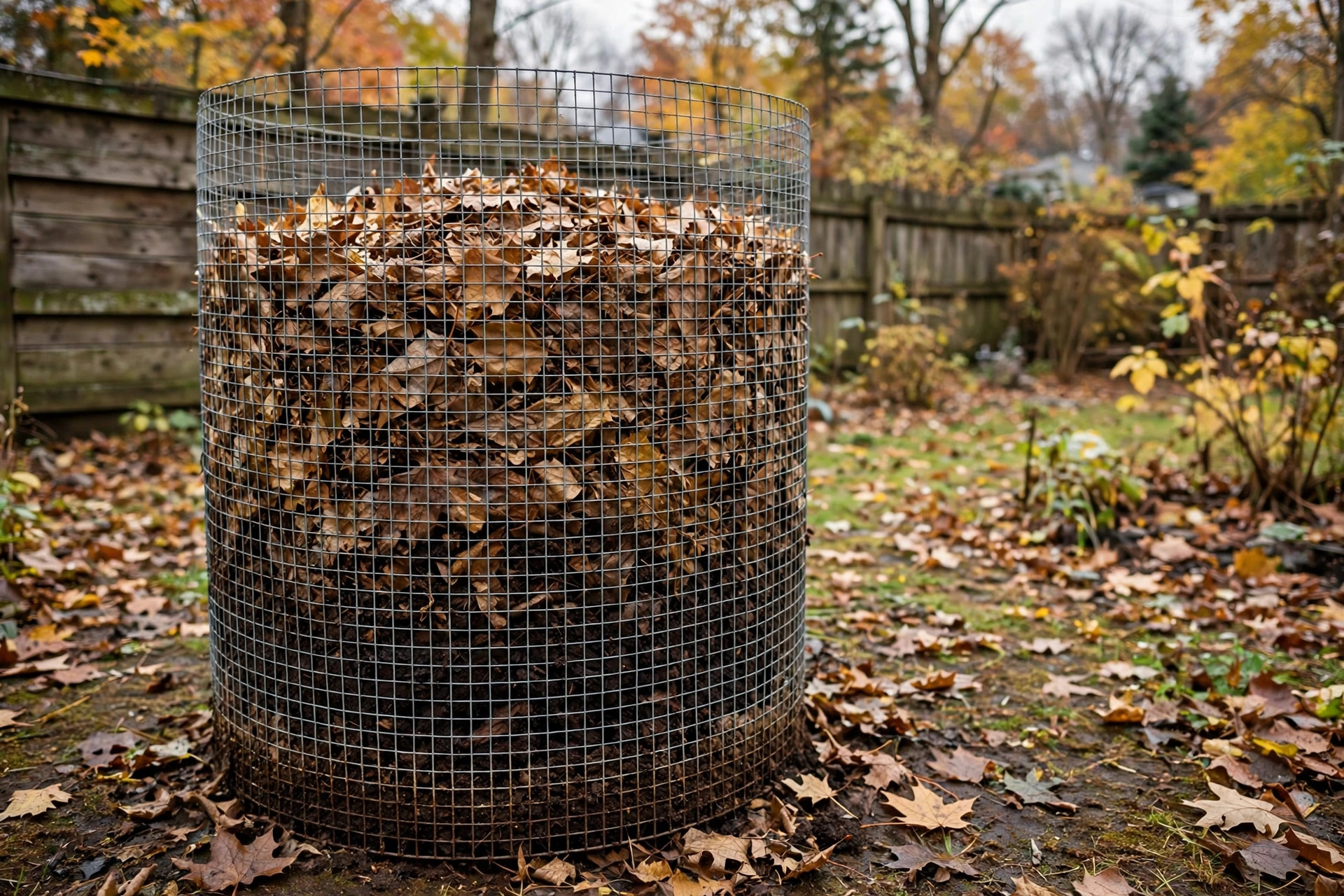
Put the shredded leaves in a bin. A ring of wire fence, three or four feet across, works well. Wooden pallets nailed into a square work too. You can even use a simple heap on the ground with no bin at all. The bin just keeps things tidy.
Pile the leaves as high as you like. Soak them well as you build. Dry leaves repel water, so soak each layer as it goes on. A wet pile starts working right away.
Some gardeners bag leaves in black plastic bags instead. Poke holes in the bag, add water, and tie it shut. Bags are handy if you have no room for a bin. The mold finishes a little slower in bags, but it still finishes.
Step 4: Keep It Moist
Leaf mold needs water, not food. Fungi cannot work on dry leaves. Check the pile every few weeks. If the leaves feel dry, soak them again.
You do not need to turn the pile. Leaf mold is a cold process. Turning helps little. Leave it alone and let the fungi do their quiet work. Covering the pile with a tarp helps hold moisture in dry states. In wet states, no cover is needed.
How Long It Takes
Honesty is needed here. Leaf mold is slow.
Shredded leaves may finish in nine to twelve months. Whole leaves may take eighteen months to two full years. Oak leaves sit at the slow end. Maple and ash sit at the fast end.
You will know it is done when you can no longer see leaf shapes. Finished leaf mold looks like dark chocolate cake crumbs. It smells sweet, like a forest floor after rain. If it smells sour, it needs more air. If leaf shapes remain, it needs more time.
Start a new pile each fall. After the first year, you will have a finished pile ready every autumn. That is the rhythm of it. Many gardeners run two or three bins in rotation, which keeps a steady supply going. For small yards, a garden bench with storage near the bins keeps tools close at hand during the season.
Using Leaf Mold in the Garden
Finished leaf mold has many uses.
Spread two to three inches over garden beds as mulch. It keeps soil cool and moist. It stops weeds. It breaks down further and feeds the soil.
Mix it into potting soil. One part leaf mold to three parts potting mix makes a fine seed-starting blend. Seedlings grow strong in it.
Use it around trees and shrubs. A ring of leaf mold, kept a few inches from the trunk, feeds roots through the season. This is the same job that forest floors do on their own.
Leaf mold also improves heavy clay and poor sand. Clay holds too much water. Sand holds too little. Leaf mold helps both. It opens clay and helps sand hold water. Few amendments work in both directions like this.
Care and Upkeep of Your Leaf Pile
A leaf mold pile asks little, but it is not zero work.
Water is the main task. In dry months, soak the pile every two or three weeks. In rainy months, leave it be. A pile that stays damp all year finishes fastest.
Check for mats. Even shredded leaves can mat where water runs through. If a layer packs tight, poke holes with a fork. Do not turn the whole pile. A few fork holes are enough.
Keep weeds out. Weed seeds rarely survive in a cold leaf pile, but roots can grow into it from below. Set the bin on bare soil or on a bed of cardboard. This also lets worms move in, which helps.
Add new leaves each fall. The fresh pile heats nothing, so it does not hurt the old pile. Just build on top or start a new bin beside the first.
Common Problems and Simple Fixes
Most troubles have simple answers.
The pile is dry and nothing is happening. Soak it deeply. Dry leaves sit still for months. Water wakes them up.
The leaves mat into a solid block. The leaves were too whole. Next time, shred finer. For now, fork holes into the mat and water through them.
The pile smells sour. Air cannot reach the center. Fork the pile loose. Mix in dry leaves to open it up.
Animals dig in the pile. Leaf mold piles rarely attract animals, since there is no food in them. A wire lid or a few boards on top keeps out cats looking for a soft bed. For pest advice, the EPA publishes plain guidance on wildlife around the home.
You have far too many leaves. This is a good problem. Bag the extra in black bags, poke holes, and stack them behind the shed. They will make mold on their own over two years. Gardeners with big lawns sometimes use a hand rake for small beds to clear what the mower misses.
Cost and Price
Leaf mold costs almost nothing. The leaves are free. Water from the sky is free. The only costs are tools you may already own.
If you buy a bin, a wire ring costs a few dollars in fencing. Plastic bags cost pennies. A leaf shredder is the one real expense, often between one and three hundred dollars. A mower with a bagging attachment does the job for free if you own one.
Compare that with bagged soil conditioner from the store. A two-cubic-foot bag may cost ten dollars or more. One fall pile can make the same amount as dozens of bags. Over years, the savings grow large. Consumer Reports and Bob Vila both note that homemade amendments beat store prices by a wide margin for steady gardeners.
Safety
Leaf mold is one of the safest garden projects. Still, a few plain rules apply.
Wear a dust mask when handling dry leaves and shredded piles. Leaf dust and mold spores can bother lungs, especially for people with asthma. Dampen leaves before you work them.
Wear gloves. Old leaf piles can hide thorns, broken glass, or rusty nails blown in from the yard. A good pair of gloves costs little.
Keep the pile away from wooden fences and house siding. A wet pile pressed against wood can rot the wood over time. Leave a foot of air space.
Check local rules before burning or dumping leaves. Many towns now ban leaf burning and fine residents who dump leaves in streets. Composting leaves into mold keeps you inside the rules everywhere.
Frequently Asked Questions
Can I use leaves from any tree?
Almost any leaves work. Maple, ash, oak, beech, birch, and fruit tree leaves all make fine mold. Black walnut leaves carry a natural chemical that slows other plants. If you use black walnut, let the mold age a full two years before use. Skip leaves soaked in road salt or oil.
Do I need to add anything to the pile?
No. Leaf mold needs no greens, no manure, and no starters. Leaves plus water plus time is the whole recipe. Some gardeners add a little finished mold to a new pile to seed it with fungi. This may help a little, but it is not needed.
Can I make leaf mold in a small yard?
Yes. A single wire bin takes about four square feet. Bag methods take even less room. One bin still makes enough mold to top-dress several raised beds. Balcony gardeners can make a small batch in a sturdy bag, though a yard is easier.
Is leaf mold the same as mulch?
Not quite. Fresh or half-rotted leaves used on top of soil are mulch. Fully finished leaf mold is a soil amendment. It has broken down into crumbly bits. You can use half-finished leaf mold as mulch, and it will finish on the bed. Both jobs help the garden.
Will leaf mold burn my plants?
No. Leaf mold is very gentle. It carries little soluble plant food, so it cannot burn roots the way fresh manure can. Spread it as thick as you like. The worst case is that you wasted effort on beds that did not need it.
How do I store finished leaf mold?
Keep it in the bin or in bags, slightly damp, in the shade. It keeps for years. If it dries out, soak it before use. Finished mold is light and easy to carry. Many gardeners keep a small greenhouse for beginners nearby and store their finished mold inside it over winter.
A Final Word
Learning how to make leaf mold compost is one of the quiet skills of gardening. It does not impress neighbors. It does not show results in a week. But year after year, it builds the dark, living soil that good gardens stand on.
Start this fall. Rake the leaves. Shred them fine. Pile them high and wet them well. Then forget them until next year. When you open that bin and find black gold where leaves once were, you will understand why old gardeners call leaf mold the gardener’s gold. For more plain garden know-how, the guides at The Spruce, The Home Depot, and Lowe’s cover tools, timing, and soil care in simple terms.
Related guides on this site include best pruning shears for rose bushes, how to sharpen garden tools properly, and best garden hose for large yards.
References
Bob Vila. (n.d.). Home improvement advice. https://www.bobvila.com Burpee. (n.d.). Seeds, plants, and gardening supplies. https://www.burpee.com Consumer Reports. (n.d.). Product reviews and ratings. https://www.consumerreports.org Corona Tools. (n.d.). Garden and landscape tools. https://www.corona-tools.com Family Handyman. (n.d.). DIY home repair and maintenance. https://www.familyhandyman.com Fiskars. (n.d.). Garden and cutting tools. https://www.fiskars.com Gardener’s Supply Company. (n.d.). Gardening tools and supplies. https://www.gardeners.com Lowe’s. (n.d.). Home improvement products. https://www.lowes.com The Home Depot. (n.d.). Home improvement products. https://www.homedepot.com The Spruce. (n.d.). Home and garden advice. https://www.thespruce.com U.S. Environmental Protection Agency. (n.d.). Protecting human health and the environment. https://www.epa.gov
Was this guide helpful?

About Lisa Anderson
The My Garden US editorial team writes practical, in-depth home and garden guides for American homeowners — tested advice, no fluff.
You May Also Like
How to Start Seeds Indoors Guide for Strong Spring Plants
February 20, 2026 0 views
How to Build a Compost Bin Cheap: A Simple Guide for Any Yard
May 8, 2026 0 views
Best Garden Tool Set for Kids: A Safe Start in the Garden
April 11, 2026 0 views