
The best garden sprayer for organic gardening is one of the simplest tools a home gardener can own. Organic growers feed their soil with compost tea, fish emulsion, and liquid kelp. They fight pests with neem oil, insecticidal soap, and horticultural oil. All of these mixes must be applied evenly over leaves and soil. A hand watering can wastes mix. A garden hose dilutes it too much. A good sprayer solves the problem. It turns liquid into a fine mist and puts it exactly where it is needed. This guide will help you choose the right one.
Why a Good Sprayer Matters for Organic Gardens
Organic gardening works with nature instead of against it. There are no harsh chemicals that kill every bug in sight. Instead, the grower uses mild natural mixes. These mixes only work if they touch the plant. A weak spray that drips off the leaves will not do the job. A strong spray that runs off into the soil is wasted money.
A proper sprayer gives you control. You can change the nozzle from a fine mist to a steady stream. You can spray the tops of leaves in the morning and the undersides in the evening. Many pests hide under leaves. A sprayer with a curved wand reaches these spots with ease.
Health of the soil matters too. Organic mixes like compost tea add helpful microbes to the garden. When you spray these mixes over the beds, you feed the soil food web. A fine mist covers more surface. This means your tea goes further and works better.
There is also the matter of safety. Organic mixes are safe, but they can still sting eyes or stain clothes. A sprayer with a shutoff valve lets you stop the flow at once. A long wand keeps your face away from the mist. Small details like these protect you each time you work in the garden.
What to Look for in an Organic Garden Sprayer: Best Garden Sprayer for Organic Gardening
Not all sprayers are built the same. Some are made for strong weed killers. Others are made for paint or concrete sealer. An organic gardener needs a sprayer that handles mild mixes and stays easy to clean. Here are the key points to check before you buy.
Tank Size and Material
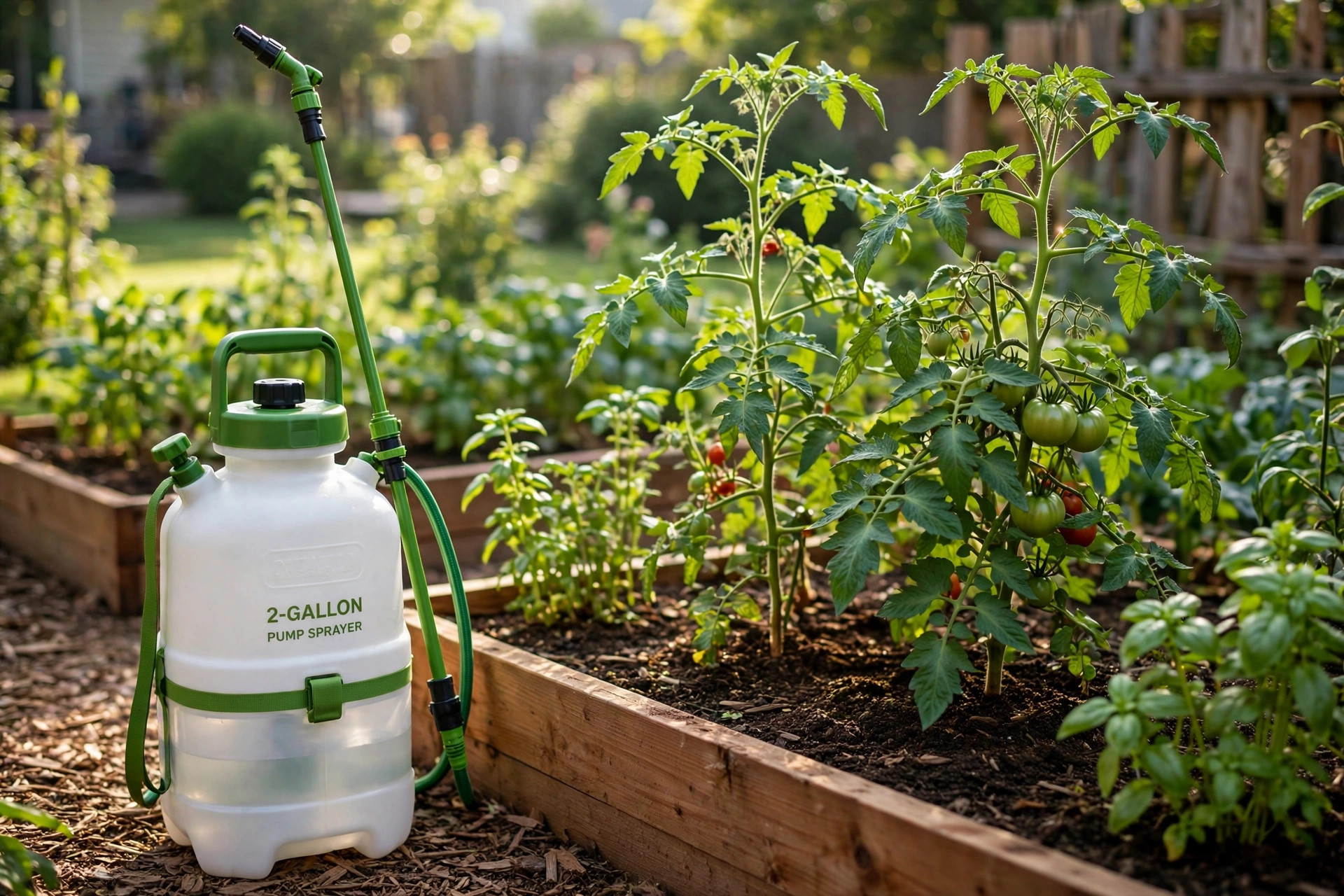
Most home gardeners do well with a one to two gallon tank. A one gallon sprayer is light and easy to carry. It suits small beds and container plants. A two gallon sprayer covers a larger yard with fewer refills. Anything larger is heavy when full. Water weighs about eight pounds per gallon, so a three gallon tank can tire your arm fast.
Look for a tank made of thick polyethylene plastic. This material resists stains and odors. Some organic mixes, like fish emulsion, smell strong. A cheap thin tank will hold that smell for weeks. A quality tank rinses clean. Clear or translucent tanks help you see the liquid level. This saves you from running dry mid-job.
Pump Style and Pressure
There are two main pump styles. A piston pump is simple and cheap. A diaphragm pump costs more but handles thick mixes better. Compost tea and kelp mixes can clog a piston pump. If you plan to spray compost tea often, choose a diaphragm model.
Pressure control matters as well. Some sprayers build up high pressure and blast out mix in one burst. This can damage tender leaves. A sprayer with a pressure relief valve is safer. It lets extra pressure escape. You can also look for a model with a lockable trigger. This saves your hand during long spraying sessions.
Nozzle and Wand
The nozzle is the heart of the sprayer. Good nozzles give you several patterns. A fan pattern covers wide beds. A cone pattern gives a fine mist for leaf feeding. A stream pattern reaches distant plants. Brass nozzles last longer than plastic ones. They also resist wear from gritty mixes.
A long wand, at least twenty inches, keeps spray away from your face. Some wands bend or telescope for hard spots. A curved wand helps you reach under leaves where aphids and mites hide. The folks at Gardener’s Supply Company carry many wand styles and explain the differences well.
Straps, Handles, and Seals
You will carry this sprayer around the yard. A padded shoulder strap makes the work much easier. Check that the strap clips are strong. Cheap clips snap under a full tank. The pump handle should fit your grip. A wide T-handle is easier to pump than a narrow rod.
Seals and gaskets take the most wear. Viton seals last longer than basic rubber. They resist the acids in vinegar-based weed killers and the oils in neem sprays. When seals wear out, the sprayer leaks. A model with replaceable seals will last for years.
Types of Garden Sprayers
There are four main types on the market. Each suits a different garden and budget.
Pump sprayers are the most common. You fill the tank, pump the handle to build pressure, and pull the trigger. They come in one to three gallon sizes. They cost little and need no batteries. For most organic gardeners, a pump sprayer is the best choice.
Backpack sprayers strap to your back like a pack. They hold three to four gallons. They suit large gardens and small farms. The weight sits on your shoulders and hips, so your arm stays free. They cost more than hand pump models but save time on big jobs.
Battery sprayers use a small electric pump. You press a button instead of pumping by hand. This is a blessing for older gardeners or anyone with wrist pain. They cost more and need charging. The battery adds weight, so most models stay in the one to two gallon range.
Hose-end sprayers attach to your garden hose. They mix as you spray. They are cheap and simple. But they give you little control over the mix rate. They also waste water. They suit quick jobs like feeding a lawn, not careful organic work on food crops. If you are still shopping for a long garden hose for yard work, a hose-end sprayer may pair with it for simple feeding tasks.
For organic food gardens, a one or two gallon pump sprayer is the sweet spot. It is light, cheap, and easy to clean. Testers at Consumer Reports review sprayers each season and note that simple pump models often outlast fancy electric ones.
How Much a Good Sprayer Costs
Prices are friendly. A basic one gallon pump sprayer costs between fifteen and thirty dollars at most stores. It will last a season or two with care. A mid-range two gallon model with a brass nozzle and good seals costs thirty to sixty dollars. This is where most organic gardeners should look.
Premium backpack sprayers run eighty to one hundred fifty dollars. Battery models sit in the sixty to one hundred twenty dollar range. These are worth it only if you spray large areas or have trouble pumping by hand.
Do not forget the cost of replacement parts. Nozzles, seals, and wands wear out. A brand that sells parts is worth more than a brand that does not. A ten dollar seal kit can add years to a good sprayer. Check The Home Depot or your local garden center for spare parts before you buy.
One smart rule: buy the best sprayer you can afford, then take care of it. A sixty dollar sprayer that lasts eight years is cheaper than a twenty dollar sprayer you replace every year. It also sprays better the whole time.
Care and Upkeep
A sprayer that is cleaned after each use will last for years. A sprayer left dirty will clog and leak. Cleaning takes five minutes. Here is a simple routine.
First, empty the tank. Spray any leftover mix onto the compost pile or an unused bed. Never pour leftover mix down a storm drain. Then fill the tank halfway with clean water. Pump it up and spray the water through the nozzle for thirty seconds. This flushes the hose and nozzle.
Next, take off the nozzle and soak it in warm soapy water. Use a soft brush to clear any clogs. Never poke a nozzle with a wire or pin. This scratches the opening and ruins the spray pattern.
Once a month, check the seals. Look for cracks or swelling. Rub a thin coat of petroleum jelly on the pump O-ring. This keeps it soft and airtight. If the pump feels weak, the O-ring is often the cause. The guides at Family Handyman show this simple fix with clear photos.
Store the sprayer in a dry place out of direct sun. Sunlight breaks down plastic over time. Release the pressure before storage. A sprayer left under pressure will stress its seals all winter.
One more tip for organic growers: keep a sprayer just for organic mixes. Do not share one tank between organic feeds and chemical weed killers. Residue from harsh chemicals can harm your plants and ruin the organic balance of your soil. Label your sprayer with a marker so no one mixes them up. If you also maintain a compost bin for kitchen scraps, rinse the sprayer near the bin so drips feed the pile instead of staining the patio.
Safety Tips
Organic does not mean risk-free. Neem oil can irritate eyes. Vinegar weed killer can burn skin. Fish emulsion smells bad enough to attract every cat in the neighborhood. Follow these rules each time you spray.
Wear gloves and eye protection. A simple pair of safety glasses costs a few dollars. Long sleeves keep mist off your arms. Spray in the early morning or late evening when bees are not active. This protects pollinators and keeps the spray from drying too fast in hot sun.
Keep children and pets away from the area until the spray dries. Most organic mixes are safe once dry, but wet leaves can still irritate skin. Store mixed liquids out of reach. Never store a sprayer full of mix. Mix only what you need for the day.
Read the label on every product you spray, even natural ones. The label tells you the safe mix rate. More is not better. A mix that is too strong can burn leaves. The safety pages at Fiskars remind gardeners that good habits matter with every garden tool, not just sharp ones. The same care you give when you learn how to sharpen garden tools properly applies to safe spraying too.
Frequently Asked Questions
Can I use the same sprayer for weed killer and organic fertilizer?
It is not wise. Chemical weed killers leave residue in the tank, hose, and seals. That residue can harm your food plants later. If you must use both, keep two sprayers and label them clearly. Many organic growers keep their organic sprayer a bright color so it never gets mixed up.
How often should I spray neem oil on my vegetables?
Most labels suggest every seven to fourteen days during the growing season. Spray in the evening so the oil does not burn leaves in hot sun. Neem works best as a preventive. Start spraying when plants are young, before pests build up. Always test on a few leaves first and wait a day to check for damage.
Why does my sprayer lose pressure so fast?
The most common cause is a worn pump seal or a loose hose connection. Check that all fittings are tight. Look at the O-ring on the pump shaft. If it is cracked or dry, replace it. A clogged nozzle can also cause odd pressure. Clean the nozzle and strainer screen. If the tank itself is cracked, it is time for a new sprayer.
What size sprayer is best for a small raised bed garden?
A one gallon pump sprayer is plenty for two to four raised beds. It is light when full and easy to store. You can refill it in seconds from a bucket. For a larger yard with fruit trees, step up to a two gallon model. The extra capacity means fewer trips back to the tap.
Can I spray compost tea through a garden sprayer?
Yes, and it works well. Strain the tea through cheesecloth first to remove solids. Use a diaphragm pump sprayer if you can, since it handles thick liquids better. Clean the sprayer right after use. Compost tea left in the tank will turn sour and clog the nozzle. Apply the tea within a few hours of brewing for the best results.
Are battery sprayers worth the extra cost?
They are worth it if you spray large areas or have hand or wrist pain. The electric pump keeps pressure steady, which gives a more even spray. But they cost more, weigh more, and need charging. For a small garden, a hand pump sprayer does the job just fine. Reviews at Bob Vila compare both types side by side each year.
Final Word
The best garden sprayer for organic gardening is the one that fits your garden, your budget, and your hands. For most home growers, that means a one or two gallon pump sprayer with a brass nozzle, good seals, and a comfortable strap. Clean it after each use. Keep it just for organic mixes. Replace worn seals before they fail. Do these simple things and your sprayer will serve you for many seasons.
Organic gardening rewards patience and care. The right sprayer makes that care easy. It turns a chore into a quiet morning walk through the beds. Your plants will show the difference in greener leaves and stronger growth. Start with a good tool, use it well, and enjoy the harvest.
See Corona Tools for more detail. Related guides on this site include best pruning shears for rose bushes.
References
Bob Vila. (n.d.). Home improvement advice. https://www.bobvila.com Consumer Reports. (n.d.). Product reviews and ratings. https://www.consumerreports.org Corona Tools. (n.d.). Garden and landscape tools. https://www.corona-tools.com Family Handyman. (n.d.). DIY home repair and maintenance. https://www.familyhandyman.com Fiskars. (n.d.). Garden and cutting tools. https://www.fiskars.com Gardener’s Supply Company. (n.d.). Gardening tools and supplies. https://www.gardeners.com Lowe’s. (n.d.). Home improvement products. https://www.lowes.com The Home Depot. (n.d.). Home improvement products. https://www.homedepot.com
Was this guide helpful?

About James Carter
The My Garden US editorial team writes practical, in-depth home and garden guides for American homeowners — tested advice, no fluff.
You May Also Like
Best Garden Gloves for Rose Pruning
August 24, 2026 0 views
The Best Garden Sprayer for Lawn Care: A Practical Buying Guide
June 25, 2026 0 views
The Best Garden Dibber for Seed Planting: A Practical Guide
February 13, 2026 0 views