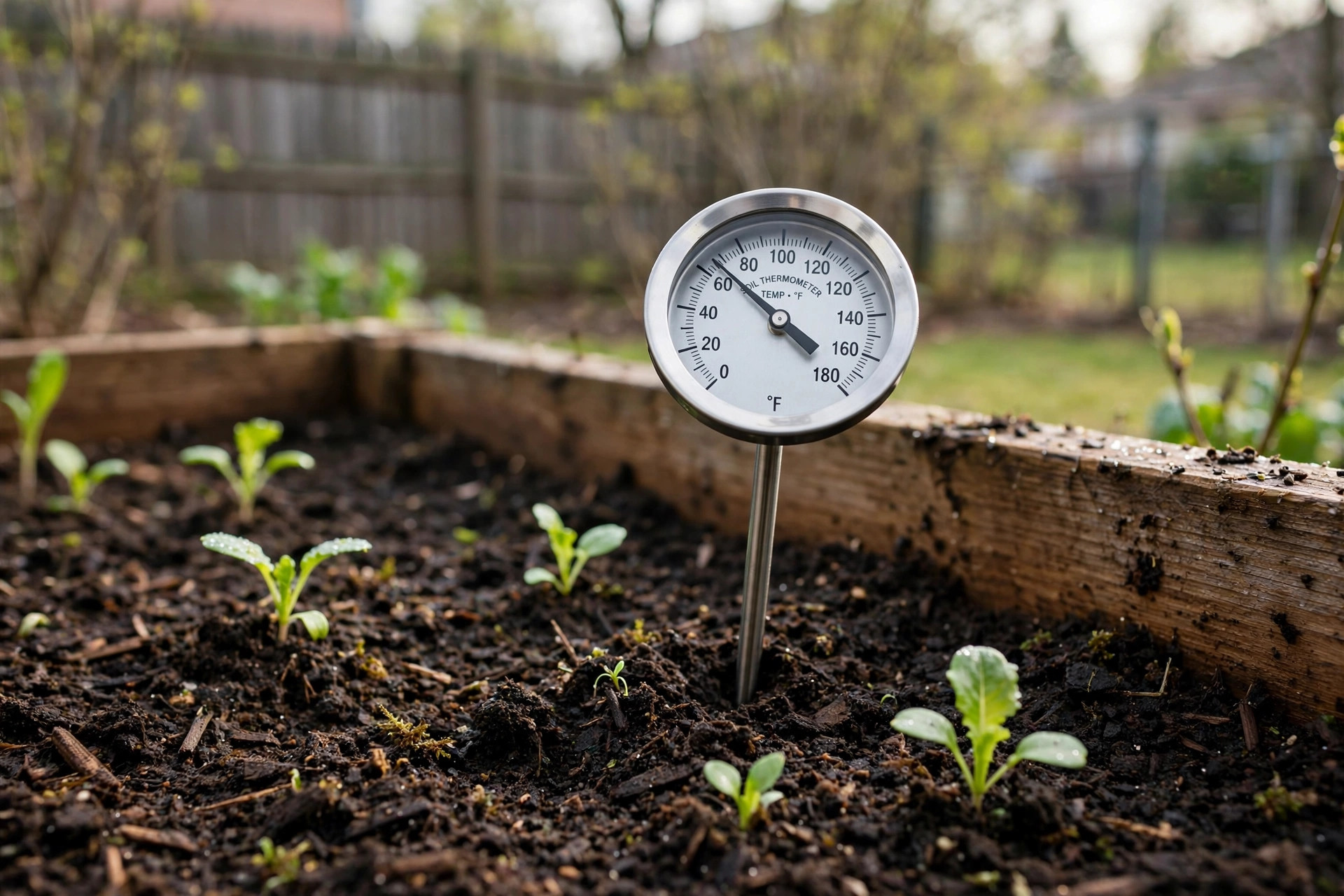
Every spring, gardeners across the United States ask the same question. Is the soil warm enough to plant? The air may feel warm. The sun may feel strong. But the soil often lags behind. Seeds planted in cold soil rot instead of sprout. Transplants sit still and shiver. A good garden soil thermometer takes the guesswork away. It tells you the true warmth of the earth where roots live.
This guide gathers the best garden thermometer for soil reviews into one plain place. It explains why soil temperature matters. It shows what to look for when you buy. It covers the main types, fair prices, simple care, and safe use. It also shows how to read reviews with a careful eye. By the end, you will know how to choose a tool that serves you for many seasons.
Why Soil Temperature Matters
Plants do not check the calendar. They respond to the warmth of the ground. Each crop has a lowest soil temperature for safe germination. Peas and spinach wake up in cool soil, near 40 degrees Fahrenheit. Tomatoes, peppers, and cucumbers want warmer ground, near 60 to 70 degrees. Corn waits for soil near 60 degrees before it trusts the earth.
When soil is too cold, seeds fail. They may rot in the damp earth. They may sprout so slowly that birds and pests find them first. Seed packets print the right soil temperature on the back. A soil thermometer lets you honor those numbers.
Soil temperature also guides fertilizer timing. Cool-season lawns wake from winter when soil reaches about 55 degrees. Warm-season grasses start strong growth near 65 degrees. Gardeners who apply fertilizer too early feed weeds, not grass. Those who wait for the right reading get stronger lawns for less money.
Compost piles need warmth too. A pile that heats to 130 to 150 degrees is working well. A pile that stays cold may need more greens, more water, or more turning. A thermometer probe pushed into the center of the heap tells you the truth in seconds.
What to Look for in a Soil Thermometer: Best Garden Thermometer for Soil Reviews
Accuracy
Accuracy is the first virtue of a garden soil thermometer. Look for a range of about 20 to 180 degrees Fahrenheit. Check that the markings are clear and spaced so you can read them at a glance. Reviews often praise tools that read true when tested in ice water. That simple test, 32 degrees in a glass of ice water, is the home test of truth.
Probe Length
The probe must reach where the roots live. A probe of five to six inches suits most seed beds and vegetable rows. A longer probe, nine to twelve inches, serves compost piles and deep mulch beds. Short kitchen thermometers cannot reach deep enough. They give you the temperature of the surface, not the root zone.
Build Quality
A soil thermometer lives a hard life. It pushes through soil, gravel, and sometimes roots. It sits in damp earth. It rides in a tool bucket. Look for a strong metal probe, usually stainless steel. Look for a sealed dial or a sturdy digital body. Reviews mark down tools with thin probes that bend and flimsy cases that crack.
Readability
You will use this tool with dirty hands and bright sun. A large dial with bold numbers beats a tiny scale. On digital models, a large display that holds the reading for a moment is a help. Some dials sit at an angle so you can read them without bending double. These small comforts matter in real gardens.
Ease of Use
The best tools need no manual. Push the probe in. Wait. Read. Digital models may need a battery, which adds a small chore. Dial models ask nothing of you beyond a wipe with a cloth. Many reviews favor simple dial thermometers for this honest reason.
Types of Garden Thermometers
Dial or Bimetal Thermometers
The classic soil thermometer is a dial model. A metal stem holds a round dial, often two inches across. The bimetal coil inside moves the needle with the heat. These tools need no batteries. They last for years. They read in about a minute. Gardeners who value simplicity choose these first. Many long-term reviews praise dial models that still work after a decade of springs.
Digital Probe Thermometers
Digital models show the temperature as clear numbers. Some switch between Fahrenheit and Celsius with one button. Many read in ten to twenty seconds. They often cost a bit more. They need a button battery, and the battery door must seal well against damp soil. Reviews like them for speed and for large, clear numbers.
Long-Stem and Compost Thermometers
Compost thermometers carry a long stem, often 18 to 36 inches. The dial sits on top like a small clock. They are made for the center of the heap. Some double as soil thermometers for deep beds. If you keep a compost pile, this type is worth its price alone.
Multi-Purpose Garden Meters
Some tools bundle a thermometer with a moisture meter and a light meter. These three-in-one probes promise a full picture of the bed. Reviews are mixed. The thermometer part often works well. The moisture part is less trusted by serious gardeners. If temperature is your true need, a dedicated thermometer usually serves better.
How to Read the Best Soil Thermometer Reviews
Reviews are a gift when read with care. Here is how to use them well.
First, look for reviews from real gardeners. Consumer Reports tests garden tools with care, and its notes on build quality are worth study. On retail sites, look for reviewers who describe their own garden. A reviewer who says, “I used it in my raised beds for two springs,” is worth ten who write only, “Great product.”
Second, count the pattern, not the single star. One angry review may tell of a rare defect. Twenty reviews with the same complaint tell of a true weakness. Look for repeated praise too. When many gardeners praise a dial that reads true and a probe that never bends, that praise carries weight.
Third, check how old the reviews are. A tool made in 2019 may have changed hands or changed factories since. Recent reviews tell you about the tool on the shelf today. Guides at The Spruce and Bob Vila update their garden tool coverage often, which helps you see what is current.
Fourth, watch for soil-specific testing. A thermometer tested in kitchen water is not the same as one tested in garden soil. The best reviews mention ice-water tests, spring seed beds, and compost piles. Family Handyman often shows tools tested in real yard work, which is the honest test.
Fifth, note the weather of the review. Gardeners in warm states test heat. Gardeners in cold states test spring frosts. A thermometer that works in a mild zone should work anywhere, but reviews from your own climate zone carry extra meaning.
How to Use a Soil Thermometer
Morning is the best time for a true reading. The soil is coolest then, and the reading will not fool you with afternoon sun. Push the probe to the depth you plan to plant. For seeds, four inches is the rule. For transplants, match the depth of the root ball.
Wait for the reading to settle. A dial model needs about a minute. A digital model needs less. Take two or three readings across the bed. Shaded spots run colder than sunny spots. A bed against a north wall lags behind a bed by a south fence.
Write the readings down if you like. A small notebook by the back door serves well. Over a few springs, you will learn the rhythm of your own ground. You will know that your south bed reaches 60 degrees a full week before your north bed. That knowledge is worth more than any tool alone.
Clean the probe after each use. A wipe with a damp cloth is enough. Dry it before you put it away. A little care keeps the markings clear and the probe free of rust.
Cost and Price
Soil thermometers are among the cheapest garden tools. A plain dial model often costs between eight and fifteen dollars. These simple tools serve most home gardeners for years. A digital probe model often costs between twelve and twenty-five dollars. Long compost thermometers with deep stems often cost between twenty and forty dollars.
Price does not always follow quality. A ten-dollar dial that reads true beats a thirty-dollar gadget that drifts. Reviews confirm this again and again. Buy from a seller with a clear return policy, so a bad tool can go back. Home Depot and Lowe’s both carry a wide range, and their stores let you hold the tool before you buy. Gardener’s Supply Company and Burpee offer garden-focused choices with advice from real gardeners.
For gardeners on a tight budget, one good dial thermometer covers seeds, beds, and lawn. There is no need to buy three tools at once. Spend the savings on seeds.
Care and Upkeep
A soil thermometer asks little and gives much. Wipe the probe after each use. Keep the dial dry. Store the tool indoors between seasons, away from frost and hard knocks. A good garden tool lasts longer when stored with care, and the thermometer is no exception.
Check accuracy once a year. Fill a glass with ice and water. Stir. Push the probe in without touching the sides. The dial should read 32 degrees Fahrenheit. If it is off by more than two degrees, adjust the nut on the back of the dial if your model allows it. If it cannot be adjusted, note the error and subtract it in your head, or replace the tool.
Digital models need fresh batteries now and then. Keep a spare battery in the garden shed. Keep the battery door free of soil. Moisture inside the case is the main killer of digital thermometers.
Never force a probe through frozen ground or hard clay. The probe will bend. Wait for a thaw, or loosen the soil first with a trowel. A sturdy kneeler makes this kind of spring bed work easier on the knees while you take your readings.
Safety
Soil thermometers are safe tools, but they deserve respect. The probe is sharp. Keep it sheathed or capped when it rides in the tool bucket. Keep it away from small children. Teach older children to push it straight down, never sideways, so it does not snap.
Wash your hands after handling soil tools. Garden soil can carry germs. A quick wash with soap and water is enough. If the probe touches a diseased plant, clean it before you use it in another bed. A wipe with rubbing alcohol stops the spread of plant sickness.
Compost thermometers with long stems need a firm hand. Push them in straight. Pull them out straight. A bent stem reads wrong and may break off in the pile.
Frequently Asked Questions
What is the best soil temperature for planting vegetable seeds?
It depends on the seed. Cool crops like peas, spinach, and lettuce sprout in soil as cool as 40 to 45 degrees. Warm crops like tomatoes, peppers, beans, and squash want soil of 60 to 75 degrees. Read your seed packet. It lists the right range. A thermometer turns that advice into action.
How deep should I push the probe?
For seeds, push to four inches. That is the depth where the seed will live. For transplants, match the depth of the root ball. For a lawn, two to three inches tells you what the grass roots feel. For compost, push to the center of the pile.
Can I use a meat thermometer for soil?
In a pinch, yes. A meat thermometer reads the same range. But kitchen tools are short and fragile in soil. They lack the length to reach the root zone. They also carry food safety rules that soil breaks. A real soil thermometer costs little and does the job better.
How do I know if my soil thermometer is accurate?
Use the ice-water test. Fill a glass with crushed ice and water. Stir well. Insert the probe without touching the glass. Wait one minute. It should read 32 degrees Fahrenheit. If it reads far off and cannot be adjusted, replace it. Test once each spring.
Do digital soil thermometers work better than dial ones?
Neither is always better. Digital models read faster and show clear numbers. Dial models need no batteries and often last longer. Reviews praise both. Choose the style you will actually use. The best thermometer is the one that leaves the shed.
When should I check soil temperature in spring?
Start when the snow melts and the ground can be worked. Check in the morning for the truest reading. Check every few days. Most gardeners need two to three weeks of readings before the beds are ready. Your garden hose will get its first real work soon after the thermometer says the soil is warm.
A Final Word
The best garden thermometer for soil reviews all point to the same truth. This is a small tool with a large job. It costs less than a bag of fertilizer. It lasts for years. It stops you from planting too early, which is the most common spring mistake.
Choose a dial or digital model with a strong probe and clear markings. Read reviews with a careful eye. Test your tool in ice water each spring. Take your readings in the morning at seed depth. Then plant with confidence.
Gardening rewards those who watch and wait. A thermometer is how you watch the soil itself. The earth will tell you when it is ready. You only need a tool that listens.
References
Bob Vila. (n.d.). Home improvement advice. https://www.bobvila.com Burpee. (n.d.). Seeds, plants, and gardening supplies. https://www.burpee.com Consumer Reports. (n.d.). Product reviews and ratings. https://www.consumerreports.org Family Handyman. (n.d.). DIY home repair and maintenance. https://www.familyhandyman.com Gardener’s Supply Company. (n.d.). Gardening tools and supplies. https://www.gardeners.com Lowe’s. (n.d.). Home improvement products. https://www.lowes.com The Home Depot. (n.d.). Home improvement products. https://www.homedepot.com The Spruce. (n.d.). Home and garden advice. https://www.thespruce.com
Was this guide helpful?

About Emily Rodriguez
The My Garden US editorial team writes practical, in-depth home and garden guides for American homeowners — tested advice, no fluff.