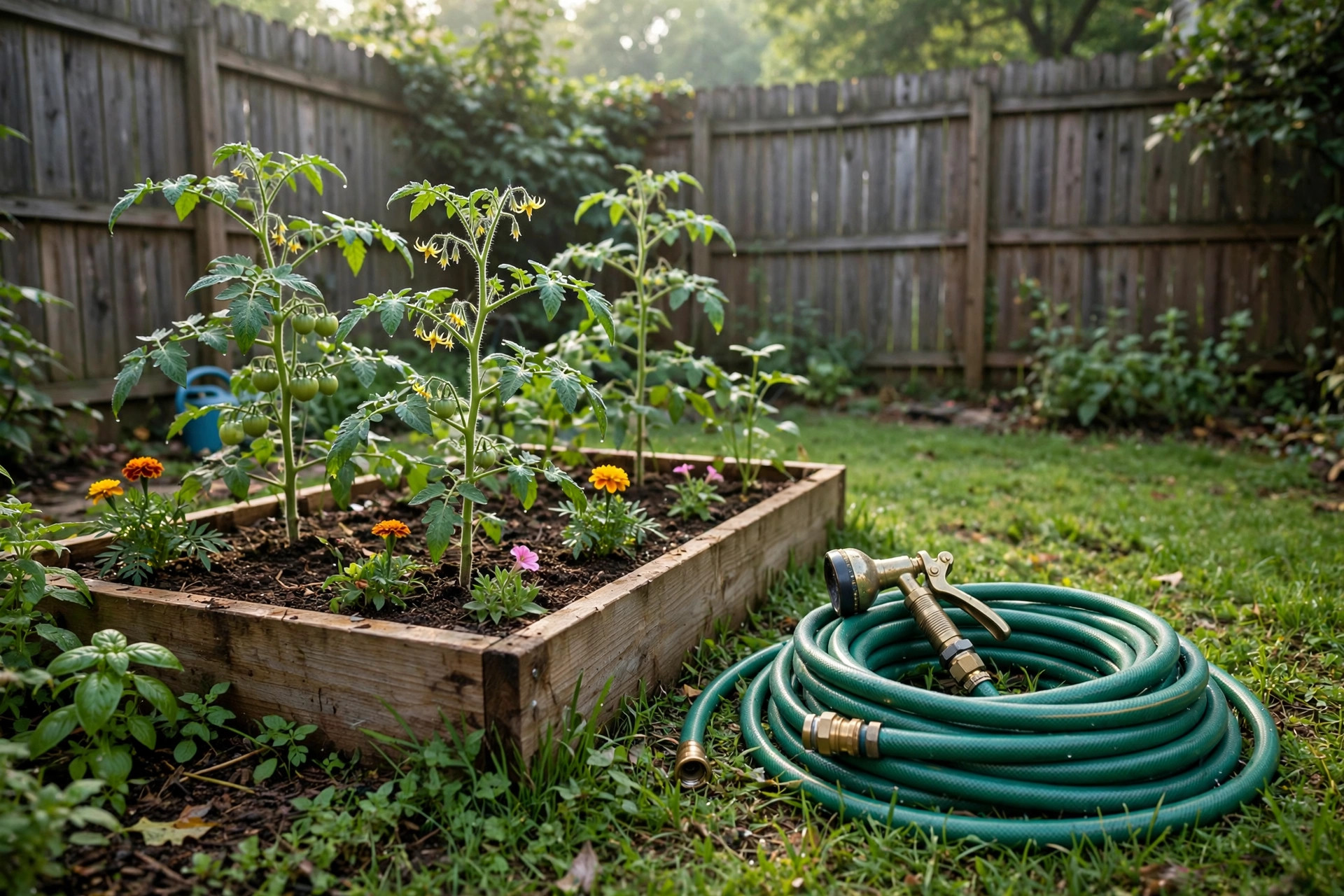

A small garden does not ask for much. A few tomato plants, a bed of flowers, and perhaps a row of herbs by the fence. But it asks for water, and water must come through a hose. Finding the best garden hose for small garden spaces is one of the simplest ways to make daily watering easy. Many people buy the longest hose on the shelf and live with a tangled mess for years. A short, light hose that coils well is a far better match for a small yard.
A hose is a simple tool, but not all hoses are alike. Some are heavy and stiff. Some kink the moment you bend them. Some crack in the sun after one summer. This guide walks through what matters when you shop for a hose for a small garden. It covers materials, lengths, costs, and care. It also covers safe use, since a hose is under water pressure every time you open the tap. By the end, you will know how to pick a hose that fits your garden, your budget, and your hands.
Why the Right Hose Matters in a Small Garden
A small garden has short runs. The tap may be ten steps from the farthest bed. A hose of twenty-five feet often does the job. A hose of seventy-five feet does the same job with three times the weight and three times the tangles. Every extra foot adds weight, and weight adds work. In a small space, a long hose spends its life in a heap on the ground, where feet catch it and plants suffer.
The right hose also saves water. A hose that kinks makes you wait for flow that never comes. You turn the tap higher to make up for the kink, and water sprays where you do not want it. A hose that lies straight and bends around corners without folding gives you a steady, gentle flow. You water each plant and move on. Gardeners who also care about their tools often keep a shed or bench in order. If you prune trees near your beds, our guide on how to prune fruit trees for beginners shows how simple hand tools pair with a good watering routine.
A good hose for a small garden is light enough to carry with one hand. It coils in a small circle and hangs on a simple hook. It does not fight you in the morning when you have five minutes before work. Small gardens run on habit. The hose should make the habit easy.
What to Look for When You Choose: Best Garden Hose for Small Garden
Weight and Flexibility
Pick the hose up in the store if you can. A heavy hose gets heavier when full of water. Vinyl hoses tend to be light. Rubber hoses tend to be heavy. For a small garden, light wins. A flexible hose bends around beds and pots without kinking. Stiff hoses hold their shape and pull pots over when you move them.
Wall Strength and Burst Rating
The label on a hose often lists a burst rating in pounds per square inch. This tells you how much pressure the hose can take before it fails. Most home water pressure runs between forty and eighty pounds per square inch. A burst rating of three hundred or more gives a wide margin. Multi-layer hoses resist bursting better than thin single-wall hoses. The wall should feel firm but not rigid when you squeeze it.
Couplings and Fittings
The metal or plastic ends of the hose are called couplings. Brass couplings last longer than plastic ones and resist crushing if you step on them. The coupling should turn freely on the hose end. Some hoses use a male end on one side and a female end on the other, so two hoses can join. For a small garden, one good length with solid brass couplings is all you need. The watering guides from the Family Handyman offer clear advice on matching fittings to outdoor taps.
Types of Hoses That Suit Small Gardens
Standard Vinyl Hose
The vinyl hose is the common green or black hose sold in every hardware store. It is light and cheap. For a short run in a small garden, a good vinyl hose does fine. Cheaper vinyl can kink and crack in strong sun, so look for one with reinforced layers. A reinforced vinyl hose with brass couplings is a sound, low-cost choice for small spaces.
Reinforced Rubber Hose
Rubber hoses are heavier and tougher. They stand up to hot sun, rough concrete, and daily use. Many gardeners find rubber hoses the most durable type. In a small garden, the weight is less of a problem because the hose is short. If you want a hose that lasts many years and you do not mind the weight, rubber is a strong pick.
Expandable Hose
An expandable hose is light and short when the water is off. It grows to two or three times its length when the tap opens. It then shrinks back when you drain it. Many small-garden owners love these because they store in a tiny space. The weak point is durability. The inner tube can burst, and the fabric cover can tear. Treat an expandable hose gently, and it serves a small garden well. Retailers such as Home Depot stock many expandable models so you can compare them in person.
Soaker Hose
A soaker hose is a flat or round hose with tiny holes along its length. It leaks water slowly into the soil. For a small vegetable bed, a soaker hose is hard to beat. You lay it along the row, turn on the tap, and walk away. Water goes to the roots, not the leaves. Leaves stay dry, which means less disease. Many garden writers praise soaker hoses for small beds, and Gardener’s Supply Company sells them with fittings made for bed watering.
Length and Diameter: Getting the Size Right
Length
Measure the distance from your outdoor tap to the farthest plant. Add ten feet for slack. Buy that length. For most small gardens, twenty-five feet is plenty. Some need fifty. Almost none need seventy-five or one hundred. A shorter hose is lighter, cheaper, and easier to coil. If you buy too long a hose, you will trip over the extra length every day.
Diameter
Hose diameter is measured across the inside of the hose. Common sizes are one-half inch, five-eighths inch, and three-quarters inch. A larger diameter moves more water. For a small garden with one sprayer or sprinkler, one-half inch is enough. It is the lightest size. Five-eighths inch is the most common size and suits most gardens. Three-quarters inch is overkill for a small space and adds needless weight. The simple test advice on The Spruce notes that matching hose size to the task keeps watering simple and efficient.
Cost and Price
A short vinyl garden hose for a small garden often costs between ten and twenty dollars. A reinforced vinyl or rubber hose of the same length may run twenty to forty dollars. Expandable hoses range from twenty to fifty dollars depending on brand and length. A fifty-foot soaker hose usually costs fifteen to thirty dollars.
Price follows length and material. Short hoses cost less than long ones. Brass couplings cost more than plastic but last far longer. A cheap hose that kinks every day is no bargain. It wastes your time and tests your patience. A mid-priced hose with solid couplings and a good burst rating is the sweet spot for a small garden. Check prices at more than one store. Large home centers like Lowe’s and online sellers often run seasonal sales on garden watering gear in spring.
Do not forget the small extras. A spray nozzle costs five to fifteen dollars. A simple wall hook or reel for coiling costs ten to thirty dollars. A set of washers for the couplings costs a dollar or two and stops many leaks. These small items make a big difference in daily use.
Care and Upkeep
Draining After Use
Water left in a hose in winter will freeze and crack the walls. Drain the hose before cold weather. Lay it on a slope or lift one end and walk toward the other, pushing water out. In warm climates, drain the hose before long storage anyway. Standing water can grow algae inside and give the hose a foul smell. A drained hose is lighter to carry and lasts longer.
Storage
Sunlight breaks down hose materials over time. Store the hose out of the sun when you can. Hang it on a wide hook or reel so it keeps a gentle coil. Do not hang it on a nail, which makes a sharp bend that weakens the wall. If you haul plants and soil around the yard, a sturdy cart helps. Our review of the best garden wagon with canopy covers carts that carry hoses, pots, and tools together.
Do not leave a hose pressurized when you finish watering. Turn off the tap and open the nozzle to release pressure. A hose under pressure swells slightly and wears faster. A quick pressure release takes five seconds and adds years of life. Check couplings once a season. Replace worn washers. Tighten loose ends by hand. The tool care tips on the Corona Tools site apply to hose fittings as well as to cutting tools.
Safety
A garden hose is safe when used with care, but a few rules matter. Never drink from a hose that has been sitting in the sun. Heat and old hose materials can add an off taste and unwanted substances to the water. If you need drinking water outdoors, run the hose for a minute first or use a hose rated as drinking-water safe. The home safety articles on Bob Vila’s home advice site remind readers to keep hose water out of children’s mouths.
Keep hose ends clean. A coupling that sat in the dirt can pick up soil and carry it into the tap. Store the hose with the ends capped or joined together. This keeps dirt and insects out. Watch where the hose lies. A hose across a path is a trip hazard. Coil it when you finish. In freezing weather, disconnect the hose from the tap so trapped water does not freeze inside the outdoor faucet and burst the pipe.
Water and pressure demand respect. Do not kink a hose to stop the flow while the tap is open. The pressure builds behind the kink and can blow out a weak spot. Use the nozzle or tap to control flow. If a hose bursts, turn off the tap before you touch it. These habits are simple, and they keep a small chore safe.
Frequently Asked Questions
What length garden hose is best for a small garden?
Twenty-five feet fits most small gardens. Measure from your tap to the farthest bed and add ten feet of slack. A hose that is too long adds weight and tangles. A hose that is just right coils in seconds and hangs on a small hook. If your tap sits far from the garden, fifty feet is the next step up.
Is a soaker hose better than a regular hose for small beds?
For beds of vegetables or flowers, a soaker hose often works better. It delivers water slowly to the roots and keeps leaves dry. Dry leaves mean less fungal disease. You can walk away while it works. A regular hose with a spray nozzle is better for pots, hanging baskets, and spot watering. Many gardeners use both. The seed-starting tips in our guide on seed starting mistakes to avoid also explain why gentle, soil-level watering helps young plants.
How long should a garden hose last?
A well-made hose stored out of the sun can last five to ten years. Cheap vinyl left in the sun may fail in one or two seasons. Draining before winter, releasing pressure after each use, and coiling on a wide hook all add years. Replace the hose when you see cracks, bulges, or leaks at the couplings that new washers cannot fix.
Can I connect two short hoses together?
Yes. Hoses use standard couplings, so a male end screws into a female end. Two twenty-five-foot hoses join into one fifty-foot hose. This is handy if you sometimes water a far corner of the yard. Make sure the washers are fresh so the joint does not leak. For daily small-garden use, one hose of the right length is simpler.
What is the best way to stop a hose from kinking?
Buy a hose labeled kink-resistant and uncoil it fully before first use. When you water, pull the hose straight from the reel instead of dragging loops across the yard. Wide, gentle coils store better than tight loops. Never yank a kinked hose. Walk back to the kink and straighten it by hand. Product testing notes from Fiskars and other tool makers stress that gentle handling extends the life of flexible garden gear. Retail comparisons at Burpee also help you see which hose styles gardeners rate highest for small spaces.
A Final Word
The best garden hose for small garden beds is the one that fits. Short, light, kink-free, with solid brass couplings and a burst rating well above your home water pressure. Vinyl works for a tight budget. Rubber lasts longest. An expandable hose stores in a drawer. A soaker hose waters beds while you do other things. Measure your run, pick your material, and spend the small extra on a good nozzle and a hook. Watering then becomes a quiet part of the day, not a wrestling match with a tangled hose.
References
Bob Vila. (n.d.). Home improvement advice. https://www.bobvila.com Burpee. (n.d.). Seeds, plants, and gardening supplies. https://www.burpee.com Corona Tools. (n.d.). Garden and landscape tools. https://www.corona-tools.com Family Handyman. (n.d.). DIY home repair and maintenance. https://www.familyhandyman.com Fiskars. (n.d.). Garden and cutting tools. https://www.fiskars.com Gardener’s Supply Company. (n.d.). Gardening tools and supplies. https://www.gardeners.com Lowe’s. (n.d.). Home improvement products. https://www.lowes.com The Home Depot. (n.d.). Home improvement products. https://www.homedepot.com The Spruce. (n.d.). Home and garden advice. https://www.thespruce.com
Was this guide helpful?

About Sarah Mitchell
The My Garden US editorial team writes practical, in-depth home and garden guides for American homeowners — tested advice, no fluff.
You May Also Like
Best Garden Tool for Edging Beds: How to Choose the Right One
May 12, 2026 0 views
Best Garden Rake for Gravel Reviews: What to Know Before You Buy
June 1, 2026 0 views
Drip Line for Container Plants Reviews: A Buyer’s Guide
January 11, 2026 0 views