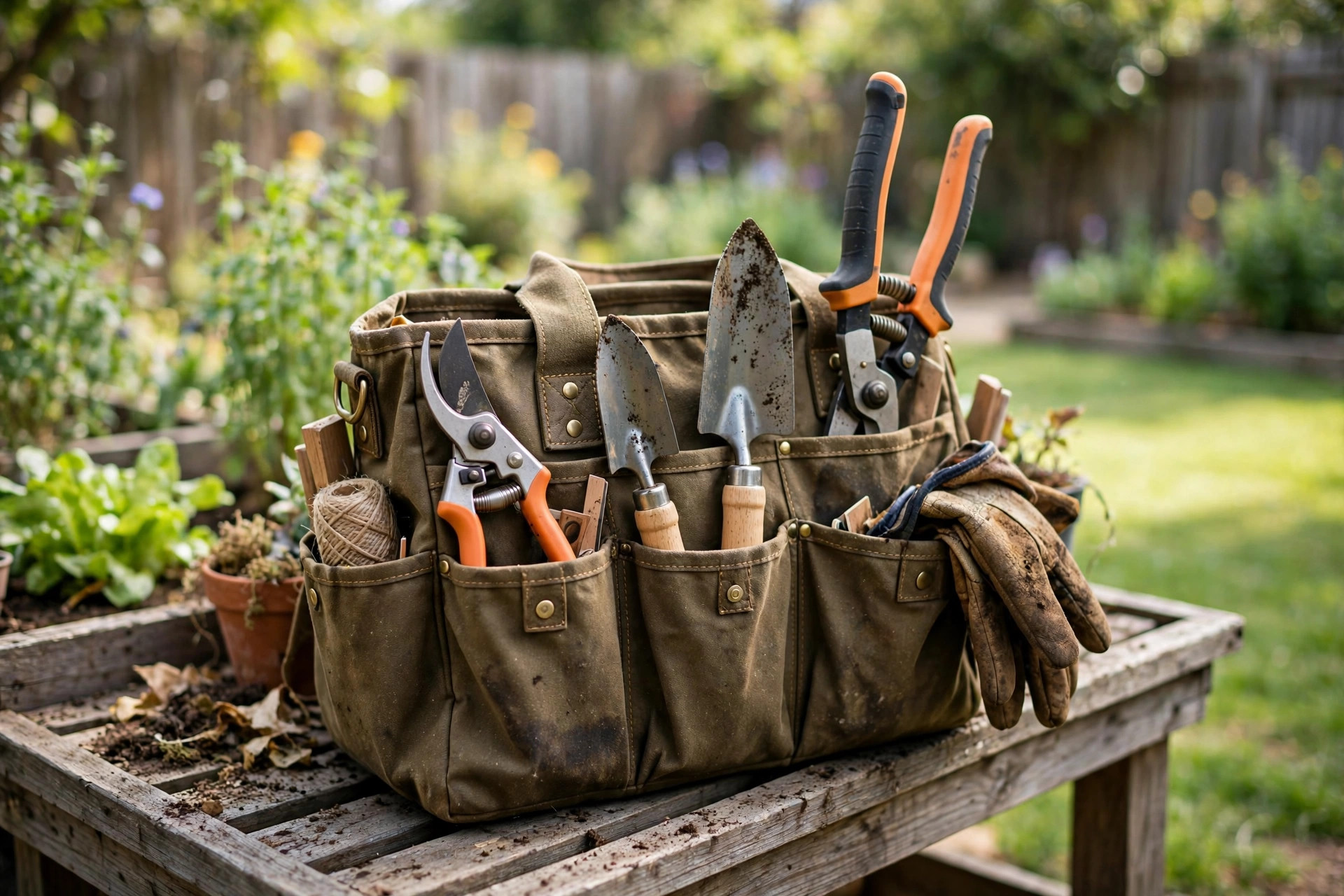

A professional gardener does not work like a weekend gardener. The day is long. The jobs change from hour to hour. A lawn in the morning, a rose bed at noon, a hedge after lunch. The best garden tool bag for professionals is the one that keeps every tool in its place from the first job to the last. This guide explains what a working bag needs, the types worth buying, what they cost, and how to care for them.
Why a Tool Bag Matters for Professionals
An amateur can walk back to the shed. A professional cannot. When a crew works a large yard, every trip back to the truck wastes paid time. A good bag holds pruners, snips, a trowel, gloves, twine, plant ties, a knife, and a spray bottle. Everything rides on the belt or the shoulder, and the hands stay free for work.
Order matters too. Tools buried at the bottom of a bucket get lost. A bag with deep pockets keeps sharp tools apart from gloves and seed packets. Sharp edges stay covered. That means fewer cuts and fewer ruined blades. Over a full season, that order saves real money. A gardener who keeps his tools sharp and sorted spends less on replacements.
There is also the matter of looking professional. A client notices gear. A torn bucket with rusty tools does not inspire trust. A clean, sturdy bag with well-kept tools tells the client the work will be done right. Many landscape firms now issue the same bag to every crew member for that reason. The uniform look builds the firm’s name as much as the work does.
What to Look for When Choosing: Best Garden Tool Bag for Professionals
Material and Build
Canvas and waxed canvas are the old favorites. They are tough, they resist thorns and branches, and they take abuse season after season. Leather trim looks fine but adds weight and cost. Ballistic nylon is lighter and sheds water better. Avoid thin polyester bags. They tear at the seams within months of daily use.
Look at the stitching. Double-stitched seams and reinforced corners hold under heavy loads. The handle should be riveted, not just sewn. If the bag hangs from a belt, the loops must be wide enough for a two-inch work belt. Fiskars and other old tool makers put real stress on these points because they know a bag full of steel is heavy.
Pocket Layout
Count the pockets before you buy. A professional bag needs at least eight to twelve pockets of different sizes. Long narrow sleeves fit pruners and loppers. Short wide pockets hold tape measures and plant tags. An outside mesh pocket takes a phone or a pair of reading glasses. A small zippered pocket holds cash and the client’s gate code.
The pockets should open wide. Stiff pocket mouths that stay open are worth their weight. They let you drop a tool in without looking. That matters when your other hand is holding a branch steady. Elastic loops for pencils and markers are a small touch that saves time through the day.
Size and Carry Style
Tool bags come in three carry styles. A belt pouch rides on the hip and keeps only the most-used tools close. A tote bag carries more and hangs from the shoulder or the forearm. A backpack style frees both arms and suits long walks across big properties.
For full-day work, many professionals own two. A small belt pouch for daily pruning rounds, and a larger tote for planting days when they carry bulbs, fertilizer, and extra tools. Try the weight before you commit. Fill it in the shop if you can. A loaded bag of fourteen pounds feels fine in the store and cruel after six hours.
Weather Resistance
Work does not stop for light rain. A bag that soaks through will rust your best shears overnight. Waxed canvas shrugs off drizzle. Nylon with a waterproof coating does the same job. A fitted rain cover helps for heavy storms. Check the bottom. A hard or raised base keeps the bag out of wet soil when you set it down on the lawn.
Mold is the hidden enemy. Bags stored damp grow mildew, and mildew eats stitching. The bag should air out fast. Mesh sides dry quicker than solid walls. Always hang the bag open in the garage at day’s end, never folded shut in the truck.
Types of Professional Tool Bags
Canvas tote bags are the classic choice. They hold a dozen tools, last for years, and cost little. Their weakness is water. Untreated canvas soaks through and takes a day to dry.
Waxed canvas bags fix the water problem. The wax coating beads off rain and thorns slide across it. Re-wax once a year and the bag lasts a decade. They cost more up front but less over time.
Ballistic nylon organizers are the lightest option. They have the most pockets and the cleanest layout. Crews who fly through jobs like them. The fabric does not breathe, so damp tools can sweat inside on hot days.
Bucket organizers wrap pockets around a standard five-gallon bucket. They are cheap and hold a lot. They also spill. Tipping a bucket on a slope dumps everything. Most professionals keep one in the truck for rough work and carry a proper bag on their person.
Roll-up tool wraps suit the minimalist. Each tool slides into its own slot and the whole thing rolls tight. Fine for hand tools, useless for bottles and gloves. Some gardeners pair a roll-up with a small tote.
Cost and Price Ranges
Prices for the best garden tool bag for professionals run from about twenty dollars to over one hundred fifty. The spread reflects real differences.
Entry-level canvas totes cost twenty to forty dollars. They suit new hires and light daily use. Expect one to two seasons before the seams give out. They are also a fair way to learn what layout you like before you spend more on a premium bag.
Mid-range bags cost forty to ninety dollars. This is where most professionals shop. Waxed canvas and heavy nylon live here. A seventy-dollar bag that lasts four seasons costs less per year than a twenty-five-dollar bag replaced every spring.
Premium bags cost ninety to one hundred fifty dollars. Leather trim, copper rivets, and lifetime warranties justify the price for crew leaders who stake their day on their gear. Some makers repair their bags free, which turns a purchase into a long partnership.
Do not judge by price alone. Check the warranty. A maker who stands behind a bag for five years has built it to last. Read independent reviews when you can. They test stitching and zippers in ways no store shelf can.
Care and Upkeep for a Long Life
A tool bag is only as good as its care. Empty it every night. Dirt and grit grind into fabric and dull the edges riding against it. Shake out the pockets and wipe the inside with a dry rag.
Wash canvas bags with a brush and cold water. Never use a washing machine. The heat and spin break down the stitching and strip wax coatings. Air dry in the shade. Sun fades canvas and weakens nylon over time.
Re-wax waxed canvas once a year. Rub a bar of fabric wax over the dry bag and warm it gently with a hair dryer. The wax melts into the weave and the water resistance returns. This ten-minute job doubles the bag’s life.
Oil leather handles and trim with a light leather conditioner each spring. Check rivets and buckles. Tighten loose screws before they pull free. A dab of seam sealer on a worn corner stops a tear from spreading.
Store the bag hanging and open in a dry shed. A bag left stuffed in a damp truck bed will rot from the inside. And keep protective gloves in a separate pocket from blades, so the fabric lasts longer and your hands stay safe.
Safety on the Job
Sharp tools cause most bag-related injuries. Pruners and knives should sit blade-down in deep sleeves, or wear their holsters inside the bag. Never toss a folding saw loose among the gloves. One reach-in can end a workday.
Weight matters for safety too. A bag heavier than fifteen pounds invites back strain. Load only what the day’s job needs. For planting days, let the heavy cart or the wheelbarrow carry the soil and pots, and keep the bag light.
Gloves live on top, not buried. When thorns or broken glass appear, you need protection in seconds, not minutes. Keep a small first aid kit in the zippered pocket. A strip of bandages and antiseptic costs little and saves a trip to the pharmacy.
Chemical bottles need their own sealed pocket. Fertilizer and spray concentrate can leak. Keep them upright and away from tools and gloves. Rinse any spill at once and wash the bag that night. Burpee and other garden suppliers warn that residue on handles can burn skin on the next use.
Label the pockets when a crew shares bags. A strip of masking tape with a name keeps personal tools from walking away. It also helps a new hire learn where each tool lives. A bag that stays organized all week starts the next Monday ready for work.
Frequently Asked Questions
How many tools should a professional garden tool bag hold? A working bag holds eight to fifteen hand tools plus gloves, ties, and small supplies. More than that turns it into a heavy sack that slows you down. Carry the day’s kit, not the whole shed.
Canvas or nylon, which is better for professionals? Both serve. Canvas breathes, looks classic, and costs less. Nylon resists water and weighs less. Many professionals choose waxed canvas for the best of both. Pick by your climate. Wet regions favor nylon or waxed canvas.
Can one bag serve both pruning and planting work? Yes, with the right layout. Deep sleeves take pruners and a trowel. Wide pockets take bulbs and twine. Some professionals keep a small belt pouch for pruning days and a larger tote for planting days, switching by the job.
How do I keep tools from rusting inside the bag? Dry tools before they go in. Wipe blades with an oily rag after rain. Never store the bag damp. Knowing how to sharpen and oil garden tools properly keeps edges clean and free of the nicks where rust starts.
What size belt fits a tool pouch? Most belt pouches fit belts two to two and a half inches wide. Measure your work belt before buying. A loose pouch slides around and throws off your balance on slopes.
How often should a professional replace a tool bag? A quality bag lasts three to five seasons of daily use. Replace it when seams split, zippers fail, or the bottom sags. Repair small tears early. A stitch in time truly saves the bag.
Final Word
The best garden tool bag for professionals is not the most expensive one. It is the one that fits your tools, your body, and your workday. Choose strong material, plenty of pockets, and a carry style you can wear for eight hours. Care for it, and it will care for your tools. A well-kept bag is the quiet mark of a gardener who takes the trade seriously. Start with a solid mid-range bag, learn what layout suits your work, and upgrade only when you know exactly what you need.
For more background, see The Spruce, Bob Vila, and Family Handyman.
References
Bob Vila. (n.d.). Home improvement advice. https://www.bobvila.com Burpee. (n.d.). Seeds, plants, and gardening supplies. https://www.burpee.com Consumer Reports. (n.d.). Product reviews and ratings. https://www.consumerreports.org Corona Tools. (n.d.). Garden and landscape tools. https://www.corona-tools.com Family Handyman. (n.d.). DIY home repair and maintenance. https://www.familyhandyman.com Fiskars. (n.d.). Garden and cutting tools. https://www.fiskars.com Gardener’s Supply Company. (n.d.). Gardening tools and supplies. https://www.gardeners.com The Spruce. (n.d.). Home and garden advice. https://www.thespruce.com
Was this guide helpful?

About Sarah Mitchell
The My Garden US editorial team writes practical, in-depth home and garden guides for American homeowners — tested advice, no fluff.
You May Also Like
The Best Garden Wagon With Canopy Reviews: What to Buy and Why
June 25, 2026 0 views
Best Hand Cultivator for Weeding Reviews: What Real Gardeners Found
March 20, 2026 0 views
How to Clean Rusty Garden Tools: A Step-by-Step Guide
March 18, 2026 0 views