
A whole chicken cooked on a rotisserie is one of the finest meals a backyard grill can produce. The bird turns slowly over the heat. The skin grows crisp and golden. The juices stay inside. Many cooks who try it once never go back to the old flat method. Finding the best outdoor rotisserie for whole chicken starts with a simple question. Do you want a kit that fits the grill you own, or a grill with a rotisserie built in?
This guide walks through the whole choice. It explains how rotisseries work. It lists the types on the market. It shows what to check before you buy. It covers cost, care, and safety. At the end you will find answers to common questions. Every word is plain and practical, written for the home cook.
Why a Rotisserie Makes a Better Whole Chicken
Heat is the enemy of a dry bird. A chicken lying flat in an oven or on a grate has one side facing the heat. That side dries. The other side steams. A rotisserie solves this by turning the bird. Each side spends only seconds near the hottest point. The bird cooks evenly from all sides.
There is a second benefit. As the spit turns, melted fat and juices run down over the skin. This is self-basting. It keeps the breast meat moist and gives the skin its deep color. Cooks who follow guides on Weber often say the rotisserie is the most forgiving way to roast poultry. A small mistake in timing still leaves a juicy result.
The third benefit is flavor. Smoke from charcoal or wood wraps around the turning bird. You cannot get that flavor from a kitchen oven. This is why backyard cooks rank rotisserie chicken high on any list of grilling guides.
How a Rotisserie Works: Best Outdoor Rotisserie for Whole Chicken
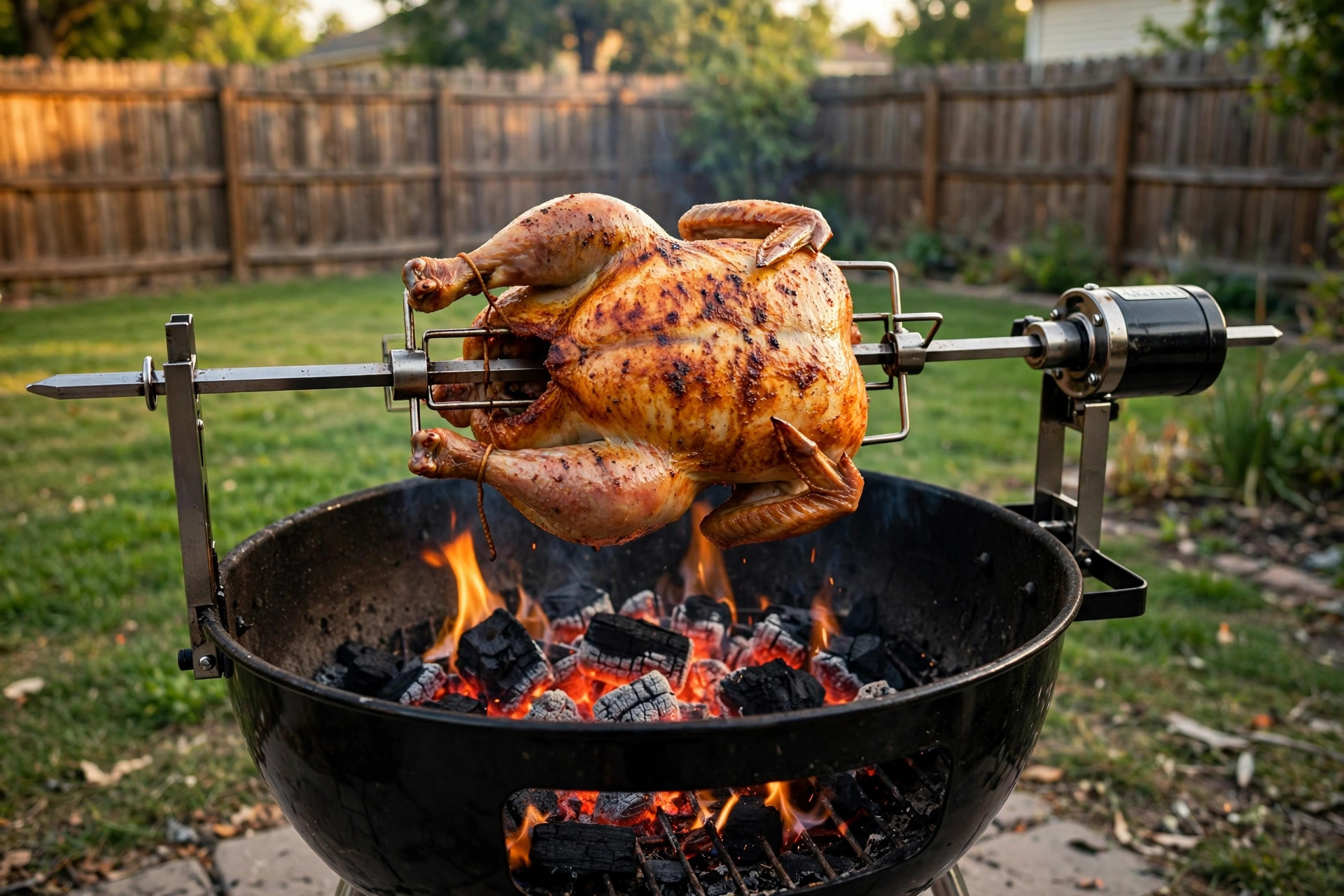
A rotisserie has four parts. A long metal spit rod runs through the center of the chicken. Two or four fork prongs slide onto the rod and grip the bird. A motor turns the rod slowly, usually three to six turns per minute. A counterweight balances heavy birds so the motor does not strain.
The spit rests in brackets on each side of the grill. Gas grills often have a rear burner made just for this job. It runs along the back wall of the grill. The chicken turns in front of it, and the dripping fat falls into a drip pan below. Charcoal grills use a ring that lifts the lid higher, with coals banked to the sides. Electric and pellet units work in a similar way.
Balance matters more than most buyers expect. A chicken that is loose on the spit will swing instead of turn. One side then sits over the heat too long. Good prongs and a tight fit solve the problem. A reliable thermometer helps too, since the cook cannot judge doneness by eye while the bird turns. Many cooks pair their setup with the best bbq thermometer wireless for grilling to track the inside temperature from a distance.
Types of Outdoor Rotisseries
Rotisserie Kits for Gas Grills
Most gas grills have mounting points for a spit. A kit made for your grill model is the cheapest path into rotisserie cooking. The kit has a rod, forks, a motor, and brackets. It hooks onto the grill in minutes. A rear infrared burner is a big plus, but not required. You can cook with indirect heat from the side burners instead.
The best outdoor rotisserie for whole chicken in this group is one that fits your grill exactly. Universal kits exist, but model-specific kits sit straighter and turn more smoothly. Check the spit length against your grill width before you buy. Brands such as Char-Broil and Broil King make kits for their own lines, which is why shoppers looking at the best rotisserie attachment for gas grill often start with the maker of the grill they already own.
Kettle and Charcoal Rotisserie Rings
Charcoal lovers use a steel ring that sits between the kettle base and the lid. The ring raises the lid and holds the spit brackets. Coals go in two piles on each side. A drip pan goes in the middle. The chicken turns between the piles and cooks from both sides at once.
This setup gives the deepest smoke flavor of any home method. It needs more attention than gas. You must watch the coals and add fresh ones on long cooks. A whole chicken takes about ninety minutes, which fits one load of coals in most kettles. Cooks who study amazing ribs techniques often call this the classic American way to roast a bird.
Standalone and Countertop Rotisserie Grills
Some grills come with the rotisserie built in. They have the motor mount, the rear burner, and the tall lid all from the factory. These cost more than a kit. They also work better, because every part was designed together. Shoppers comparing full units often read Napoleon product pages and Traeger reviews to see how the rotisserie fits into the whole grill design.
A small group of electric outdoor rotisseries also exists. They plug into an outlet and use a heating element. They are handy on patios where gas or charcoal is not allowed. They give no smoke flavor, so the result tastes closer to oven roast.
What to Look for When You Buy
Start with fit. Measure your grill from side to side inside the lid. The spit must be long enough to reach both brackets with room for the motor. For a whole chicken, the lid must close over the bird with at least two inches of clearance.
Next, check the motor. A good motor turns a heavy bird without pausing or grinding. Look for metal gears instead of plastic. Electric motors are the most common. Some premium units use battery motors for campsites.
Check the rod and forks. Thick stainless steel rods bend less under a five-pound bird. Sharp four-prong forks grip better than two-prong forks. The best outdoor rotisserie for whole chicken uses forks that lock with thumb screws and do not slip.
Weight capacity matters. A whole chicken weighs three to six pounds. Most kits handle up to fifteen pounds, which covers turkeys too. If you plan to cook larger birds later, buy capacity now. It costs little extra.
Balance hardware is a quiet detail that separates good kits from cheap ones. A counterweight bar lets you offset a lopsided bird. Without it, the motor strains on every turn and wears out early. Independent testers at Consumer Reports often note build quality as the main gap between budget and mid-range grill gear, and rotisserie kits follow the same pattern.
Cost and Price Ranges
Prices are plain and wide. A basic universal kit sells for twenty to forty dollars. It will roast a chicken, but the motor may be weak and the forks thin. A mid-range kit from a known brand runs forty to eighty dollars. This is the sweet spot for most buyers. The motor lasts years and the parts fit well.
A charcoal kettle ring with a full spit set runs eighty to one hundred fifty dollars. Standalone gas grills with built-in rotisserie hardware start near four hundred dollars and climb past one thousand. Retailers such as The Home Depot stock the full range, so you can compare kits and full grills side by side.
Ongoing costs are small. You will use a foil drip pan for each cook, a few cents each. Fuel is the same as normal grilling. A whole chicken itself is one of the cheapest meats at the store, which makes the rotisserie one of the best value upgrades in outdoor cooking.
Preparing the Chicken
Trussing is the first step. Tie the legs together with kitchen string. Tuck the wing tips behind the back. A tight, compact bird turns smoothly. A loose bird flops and swings.
Season the bird simply. Salt, pepper, and a little oil go a long way. Many cooks add a dry rub under and over the skin an hour before cooking. If you enjoy mixing your own blends, the best bbq rub for ribs homemade guide shows the method, and the same style of rub works well on poultry.
Slide the spit through the bird from neck to tail. Push one fork into the breast end. Push the other into the tail end. Tighten both. Spin the rod by hand. The bird should stay still on the rod. If it slips, tighten the forks again. Add the counterweight if your kit has one.
Set up the grill for indirect heat. On a gas grill, light the rear burner and leave the main burners off or low. Place a drip pan with a little water under the bird. On charcoal, bank the coals to the sides and set the pan in the middle. Aim for a grill temperature near three hundred fifty degrees.
Care and Upkeep
Clean the rod and forks after every cook. Hot soapy water and a stiff brush do the job. Dry the parts fully before storage. Stainless steel resists rust, but standing water will stain it.
Wipe the motor housing with a damp cloth. Never soak the motor. Oil the gears once a season if the maker allows it. Store the kit in a dry place. A garage hook keeps the long rod from bending.
Check the brackets on the grill for grease buildup. Grease near the rear burner can catch fire. Scrape the drip area clean after each rotisserie cook. Replace foil drip pans every time. They are cheap and not worth reusing.
At season’s end, inspect the power cord and plug. Frayed cords are a fire risk. Replace the motor if it struggles under a normal bird. Motors are often sold alone for less than the price of a full kit.
Safety
Rotisserie cooking is safe when a few rules are followed. Keep the grill at least ten feet from the house, the garage, and any overhang. Never leave a lit grill unattended for long. The turning bird can drip fat, and fat can flare.
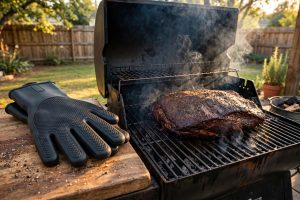
Use long tools and heat-proof gloves when you handle the spit. The rod stays hot long after the motor stops. Good protection matters, which is why many cooks check the best grill gloves heat resistant reviews before their first long cook.
Keep children and pets away from the grill. The motor cord should not dangle where it can be pulled. On gas grills, check the hose for cracks before each season. On charcoal grills, dispose of ashes in a metal can with a lid, well away from anything that can burn.
Food safety counts too. The chicken is done when the thickest part of the thigh reads one hundred sixty-five degrees. Let the bird rest ten minutes before carving. The juices settle and the meat stays moist.
Frequently Asked Questions
How long does a whole chicken take on a rotisserie?
Most chickens weighing three to five pounds take seventy-five to one hundred minutes at three hundred fifty degrees. Larger birds take longer. Always cook to temperature, not to time. The thigh should reach one hundred sixty-five degrees.
Can I use a rotisserie on any gas grill?
Most full-size gas grills accept a spit kit. Small portable grills often do not. Check that your grill has bracket slots or mounting holes on both side walls, and that the lid closes over a chicken with room to spare.
Do I need a rear burner for good results?
A rear burner helps, but it is not required. You can cook with indirect heat from the side burners. The chicken will still turn, baste itself, and brown well. The rear burner simply gives more even heat on the turning bird.
What is the best fuel for rotisserie chicken?
Charcoal gives the most smoke flavor. Gas gives the most control. Both make an excellent bird. Many cooks start with gas for ease and move to charcoal when they want deeper flavor.
Should I brine the chicken first?
Brining adds moisture and is worth the time if you plan ahead. A simple saltwater brine for four to eight hours works well. Pat the skin dry before the bird goes on the spit so the skin crisps.
How do I keep the chicken from slipping on the spit?
Truss the bird tight. Push the forks deep into the meat. Tighten the thumb screws hard. Test by spinning the rod by hand before you light the grill. If the bird moves on the rod, reset the forks.
A Short Final Word
The best outdoor rotisserie for whole chicken is the one that fits your grill, turns smoothly, and holds the bird tight. You do not need the most expensive kit. You need a strong motor, sharp forks, and a balanced bird. Salt, heat, and patience do the rest. Once you serve that first golden chicken, sliced at the table with the skin still crackling, the kit will have paid for itself many times over.
References
AmazingRibs.com. (n.d.). Barbecue and grilling science. https://www.amazingribs.com Broil King. (n.d.). Gas and charcoal grills. https://www.broilkingbbq.com Char-Broil. (n.d.). Gas and charcoal grills. https://www.charbroil.com Consumer Reports. (n.d.). Product reviews and ratings. https://www.consumerreports.org Napoleon. (n.d.). Fireplaces, grills, and heating products. https://www.napoleon.com The Home Depot. (n.d.). Home improvement products. https://www.homedepot.com The Spruce Eats. (n.d.). Recipes and cooking guides. https://www.thespruceeats.com Traeger. (n.d.). Wood pellet grills. https://www.traeger.com Weber. (n.d.). Grills and outdoor cooking. https://www.weber.com
Was this guide helpful?

About Sarah Mitchell
The My Garden US editorial team writes practical, in-depth home and garden guides for American homeowners — tested advice, no fluff.
You May Also Like
How to Find a Gas Grill for Sale Near Me Deals Worth Your Money
May 13, 2026 0 views
Pellet Grill Grease Fire Prevention Tips for Safe Backyard Cooking
July 20, 2026 0 views
Best BBQ for Camping Trips Reviews: What to Buy and Why
April 24, 2026 0 views