
Introduction
A pellet grill that will not heat is a common trouble. You load the hopper, you set the dial, and the grill stays cold or warms only a little. This pellet grill not heating troubleshooting guide walks you through the causes in plain order. Most heat faults come from a short list of parts. Work through them one by one, and the grill will often come back to life the same day.
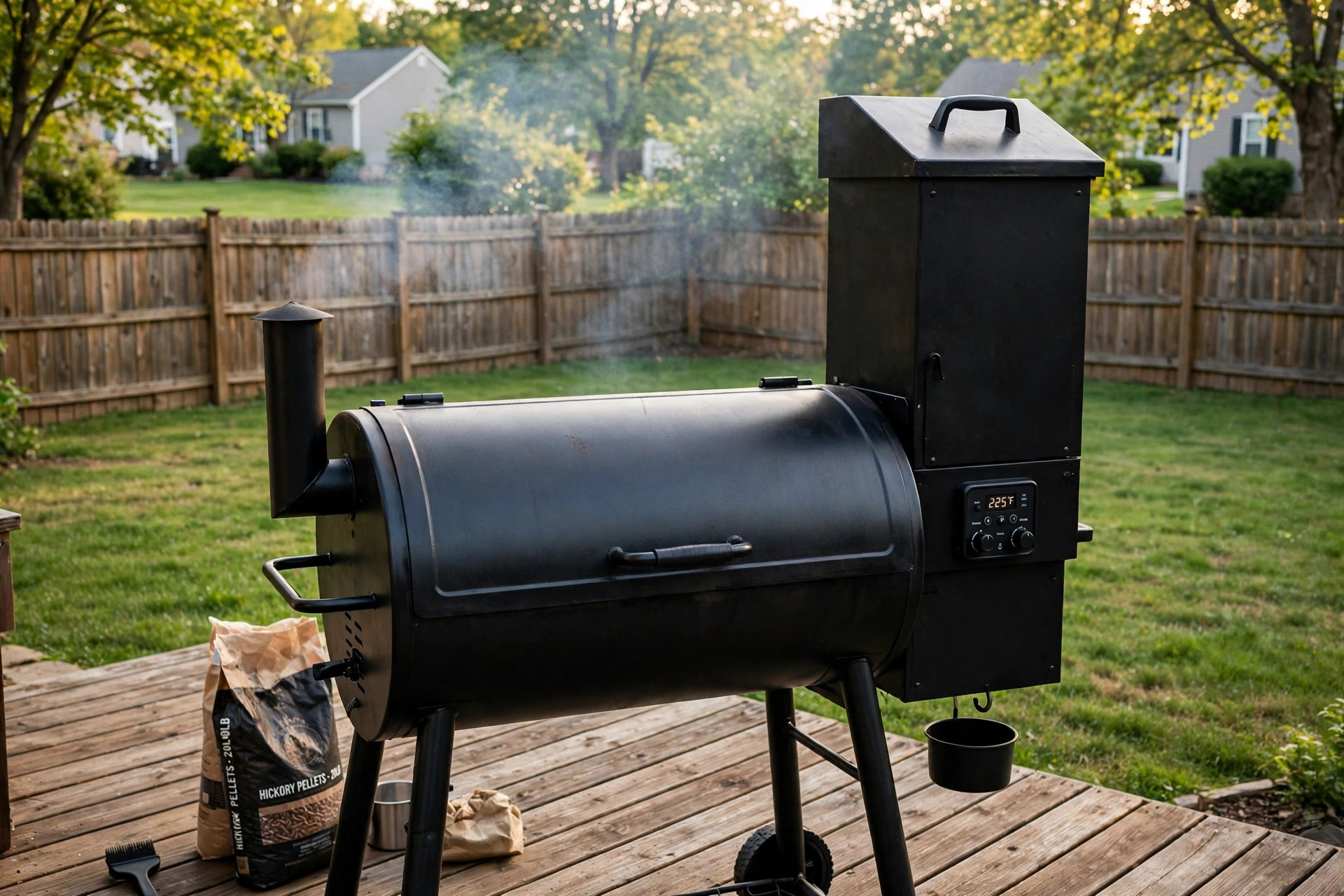
Before you begin, keep one fact in mind. A pellet grill is a small machine with four jobs. It feeds wood pellets from the hopper to the fire pot with an auger. It lights the pellets with a hot rod igniter. It pushes air through the fire with a fan, and it reads heat with a probe. If any one of these four jobs fails, the grill will not heat.
Why a Pellet Grill Loses Heat: Pellet Grill Not Heating Troubleshooting Guide
Heat trouble in a pellet grill is almost never a mystery. It is one of a few known faults. The pellets may be damp. The fire pot may be full of old ash. The igniter may be dead. The auger may be jammed. The fan may be still. Or the probe may be dirty and lying to the control board.
One good habit will save you much grief. Clean the grill before each long cook. Ash is the first enemy of a pellet fire. A fire pot packed with ash smothers the pellets. A dirty probe reads wrong. Guides from Traeger and Weber stress the same simple rule. Keep the fire pot clean, and half of all heat trouble never happens.
Also know that a cold or windy day can slow your grill. A pellet grill holds heat by burning pellets at a steady rate. In winter, it must burn more pellets to hold the same heat. If your grill holds 350 degrees in summer but only 280 in winter, the fault may be the weather, not the machine. A grill blanket or a sheltered spot helps more than new parts.
Start With the Pellets
Check the Hopper
Look in the hopper first. It sounds simple, and it is. Many grills go cold for no reason but an empty hopper. Pellets also bridge. They arch over the auger mouth and leave a hollow space below. The auger turns, but no pellets fall. Open the lid and look. If the level has dropped to a cone shape around the throat, push the pellets down with a stick and fill the hopper.
While you are there, check for damp pellets. Damp pellets swell and crumble. They turn to mush in the auger and jam it. They also burn poorly and make little heat. Take a handful and snap one. A dry pellet snaps clean and smells of wood. A damp pellet bends or crumbles. If your bag sat open in the garage through a wet spring, the bag is the likely fault.
Store pellets in a sealed tub with a tight lid. Keep the tub off a damp floor. Cheap care of fuel prevents costly care of parts. The plain advice at AmazingRibs matches what pit crews say. Dry pellets are the cheapest insurance a pellet cook can buy.
Check Pellet Quality and Feed
Cheap pellets can cause low heat too. Some brands pack bark and dust into the bag. Dust clogs the auger. Bark burns dirty and low. A good food-grade hardwood pellet burns hot and clean. If your grill struggles on one brand and runs fine on another, you have your answer.
Also watch the feed rate setting. Many grills have a feed control or a minimum feed setting. If it is set too low, the fire starves. If a grill runs on a cold night with a low feed setting, it may never climb. Raise the feed rate a step and wait twenty minutes before you judge the change.
If you are new to pellet cooking and want the full picture, read our guide to pellet grill vs gas grill pros cons. It explains how pellet feed systems differ from gas burners, which helps when you diagnose a fault.
The Fire Pot and the Igniter
The fire pot is where the pellets burn. Turn the grill off and let it cool. Then pull the grates, the drip tray, and the heat shield. Look into the fire pot. If it is heaped with ash, clean it out. A shop vacuum or even a stiff brush will do. A pot buried in ash cannot hold a fire.
Next comes the igniter, the hot rod that lights the pellets. A dead igniter is one of the most common faults in this whole guide. The signs are plain. The auger feeds pellets. The fan blows. The pot fills with fresh pellets. But no fire starts, and the grill stays cold or throws a low-temperature error.
You can test the rod by hand. With the grill cool and unplugged from the fire, start the ignition cycle and wait a few minutes. Then feel near the fire pot for heat. A working rod throws strong heat. A dead rod stays cold. Do not touch the rod itself. If it is dead, replacement is a simple job on most models. The part is small and cheap, and makers like Char-Broil and Napoleon sell replacements through their parts lines.
While the pot is open, look at the auger tube mouth. If pellets are piled at the tube and none are falling, the auger may be jammed. A jam often comes from damp pellet mush. Clear the mush with a long tool, clean the tube, and run a short dry cycle to push the rest through.
The Fan and the Air Path
A pellet fire needs air. The fan pushes air through the fire pot and drives the heat up into the cooking chamber. If the fan is dead, the fire smolders and the grill stays lukewarm. Listen when you start the grill. You should hear the fan hum. If the auger clicks but there is no hum, the fan or its wire is the suspect.
Check the wire where it plugs into the control board. Heat and vibration can work a plug loose. Push it home and try again. If the fan still sits still, it may need replacement. Fans are among the cheaper parts in a pellet grill.
Also check the air path. Grease and ash can block the vents around the fire pot. A drip tray set wrong can choke the airflow. Make sure the tray sits level and the grease runs to the drain cup. For step-by-step cleaning, see our pellet grill maintenance tips for beginners.
Temperature Settings and the Probe
The temperature probe is the grill’s thermometer. If it lies, the control board makes bad choices. A probe caked in grease reads low or reads wrong. The grill then thinks it is hotter than it is, and it cuts the pellet feed. The result is a grill that will not climb.
Find the probe inside the cooking chamber. It is usually a small metal rod on the wall. Wipe it clean with a damp cloth when the grill is cool. A light scrub with vinegar cuts the grease. Do this every few cooks. Testers at Consumer Reports and cooks at The Spruce Eats both list a dirty probe as a top cause of odd temperature behavior.
If the probe is clean and the grill still misbehaves, check the setting itself. Some grills have a smoke setting that runs very low on purpose. A grill left on smoke will never reach grilling heat. Move the dial to your target temperature and wait. A pellet grill needs fifteen to thirty minutes to climb and settle. Judge the heat only after it has had full time.
For cooks where steady heat matters most, like a long brisket, see how to smoke brisket on pellet grill. That guide shows how a clean probe and a steady feed rate keep a low-and-slow cook on track.
Cost and Price of Common Repairs
Most heat faults cost little to fix. Here is a plain price guide for the common parts, based on what major retailers like The Home Depot and parts makers like Broil King list.
A hot rod igniter is usually the cheapest fix. Expect to pay between fifteen and forty dollars. It is a small electric part and fits most models with basic hand tools.
An induction fan runs a bit more. Expect between twenty-five and sixty dollars. A new temperature probe costs about the same, twenty to fifty dollars.
An auger motor is the priciest of the common parts. Expect between forty and ninety dollars. A full control board can run seventy to one hundred fifty dollars, but boards fail far less often than the parts above.
Call these figures a guide, not a promise. Prices move with the brand and the model. If the grill is under warranty, call the maker first. A free part beats a cheap part.
Care and Upkeep Through the Year
A clean grill is a hot grill. After each cook, burn off the grates and brush them. Empty the grease cup before it overflows. Every few cooks, vacuum the ash from the fire pot and the bottom of the chamber. Wipe the temperature probe. Check the hopper for damp pellets.
Seasonal care matters too. In spring, open the grill after winter storage and check for nests, rust, and damp pellets left in the hopper. In fall, give the grill a deep clean before the cold months. Cover the grill between cooks, but never cover a hot grill. A dry grill with clean parts heats faster and holds heat longer.
Keep spare parts on hand if you cook often. A spare igniter rod costs little and saves a ruined weekend. Store your pellets sealed and dry, and you will prevent the most common jam of all.
Safety Rules for a Pellet Grill
A pellet grill burns wood and makes real fire. Treat it with care. Keep the grill at least ten feet from the house, the deck rail, and any overhang. Never use it in a garage or under a low roof. The smoke must have open air.
Never leave a lighting grill alone until the fire is set and the smoke has thinned. Thick white smoke at startup is normal, but a grill that will not light should be shut down and checked, not left to fill with unburned pellets. A hopper full of unburned pellets that suddenly lights can flare.
Let the grill cool fully before you clean the fire pot or touch the igniter. Ash can hide hot coals for an hour. Keep a fire extinguisher rated for grease fires within reach of your cooking spot. Water makes a grease fire worse, so keep water away from the grill.
Frequently Asked Questions
Why does my pellet grill stay at 150 degrees and never climb? The most likely cause is a dirty fire pot or a dead igniter. The grill is feeding pellets but the fire is weak or absent. Shut the grill down, let it cool, and clean the fire pot. Check that the igniter rod throws heat. Also make sure the fan is running and the temperature probe is clean.
Can damp pellets stop a pellet grill from heating? Yes. Damp pellets are one of the top causes of low heat and auger jams. They swell, crumble, and burn poorly. Store pellets in a sealed container. If a bag has sat open in a damp place, replace it before you blame the parts.
How long should a pellet grill take to reach temperature? Give it fifteen to thirty minutes. A pellet grill climbs slowly compared to a gas grill. In cold or windy weather it needs more time. If the grill has had thirty minutes and still will not climb, work through the checks in this guide.
Is it safe to run the grill with the fire pot door open for testing? No. Keep all doors and lids shut during a test burn unless the manual for your model says otherwise. An open chamber changes the airflow and gives a false reading. It can also let sparks escape.
Should I replace the control board if nothing else works? Try the cheap parts first. The igniter, the fan, the probe, and the auger cause almost all heat faults. A control board fails rarely. If every other part tests good and the grill still will not heat, then a board may be the fault. Check the warranty before you buy one.
Can a pellet grill heat in winter? Yes, but it burns more pellets to hold the same heat. In very cold weather, a grill may top out lower than its rated maximum. A grill blanket, a wind break, and dry pellets help. Start the grill a little earlier than you would in summer.
A Final Word
A pellet grill that will not heat feels like a dead machine, but it is usually a small fault in a simple system. Work the list in order. Check the hopper and the pellets. Clean the fire pot. Test the igniter. Listen for the fan. Wipe the probe. One of these steps finds the fault in most cases, and the fix is often a cheap part or a good cleaning.
Keep the grill clean, keep the pellets dry, and check the probe every few cooks. A little care each week is worth more than a repair each year.
References
AmazingRibs.com. (n.d.). Barbecue and grilling science. https://www.amazingribs.com Broil King. (n.d.). Gas and charcoal grills. https://www.broilkingbbq.com Char-Broil. (n.d.). Gas and charcoal grills. https://www.charbroil.com Consumer Reports. (n.d.). Product reviews and ratings. https://www.consumerreports.org Napoleon. (n.d.). Fireplaces, grills, and heating products. https://www.napoleon.com The Home Depot. (n.d.). Home improvement products. https://www.homedepot.com The Spruce Eats. (n.d.). Recipes and cooking guides. https://www.thespruceeats.com Traeger. (n.d.). Wood pellet grills. https://www.traeger.com Weber. (n.d.). Grills and outdoor cooking. https://www.weber.com
Was this guide helpful?

About Robert Taylor
The My Garden US editorial team writes practical, in-depth home and garden guides for American homeowners — tested advice, no fluff.
You May Also Like
Best Outdoor Grill for Small Deck: A Practical Buying Guide
September 24, 2026 0 views
Best BBQ for Labor Day Cookout: A Plain Guide to Picking the Right Grill
July 28, 2026 0 views
How to Smoke Chicken on a Gas Grill: A Complete Guide
June 20, 2026 0 views