Every summer the same debate starts in backyards across the country. A pellet grill vs gas grill pros cons list sits on the counter. Neighbors swear by one side or the other. Both promise great food. Both cost real money. So how do you choose between them? This guide lays out the facts in plain language. You will learn how each grill works, what each does well, where each falls short, and which one fits your life. By the end you will have a clear answer, not a sales pitch.
Why It Matters
A grill is not a small purchase. It sits on your patio for years. It shapes how you cook on warm evenings. It shapes how your food tastes. The wrong choice means cold spots, high fuel bills, or a smoker gathering dust in the garage. The right choice means dinners that bring the family outside.
The two types work in very different ways. A pellet grill burns small wood pellets and adds real smoke flavor. A gas grill burns propane or natural gas and heats up fast with clean heat. The pellet grill vs gas grill pros cons debate is really about trade offs: flavor against speed, set-and-forget control against simple reliability, smoke taste against clean grates.
Many first time buyers start with a best gas grill under 500 for beginners because the price feels safe. Others fall in love with smoke flavor and go straight to pellets. There is no wrong answer. There is only the right fit for your yard, your budget, and your patience.
How Each Grill Works: Pellet Grill vs Gas Grill Pros Cons
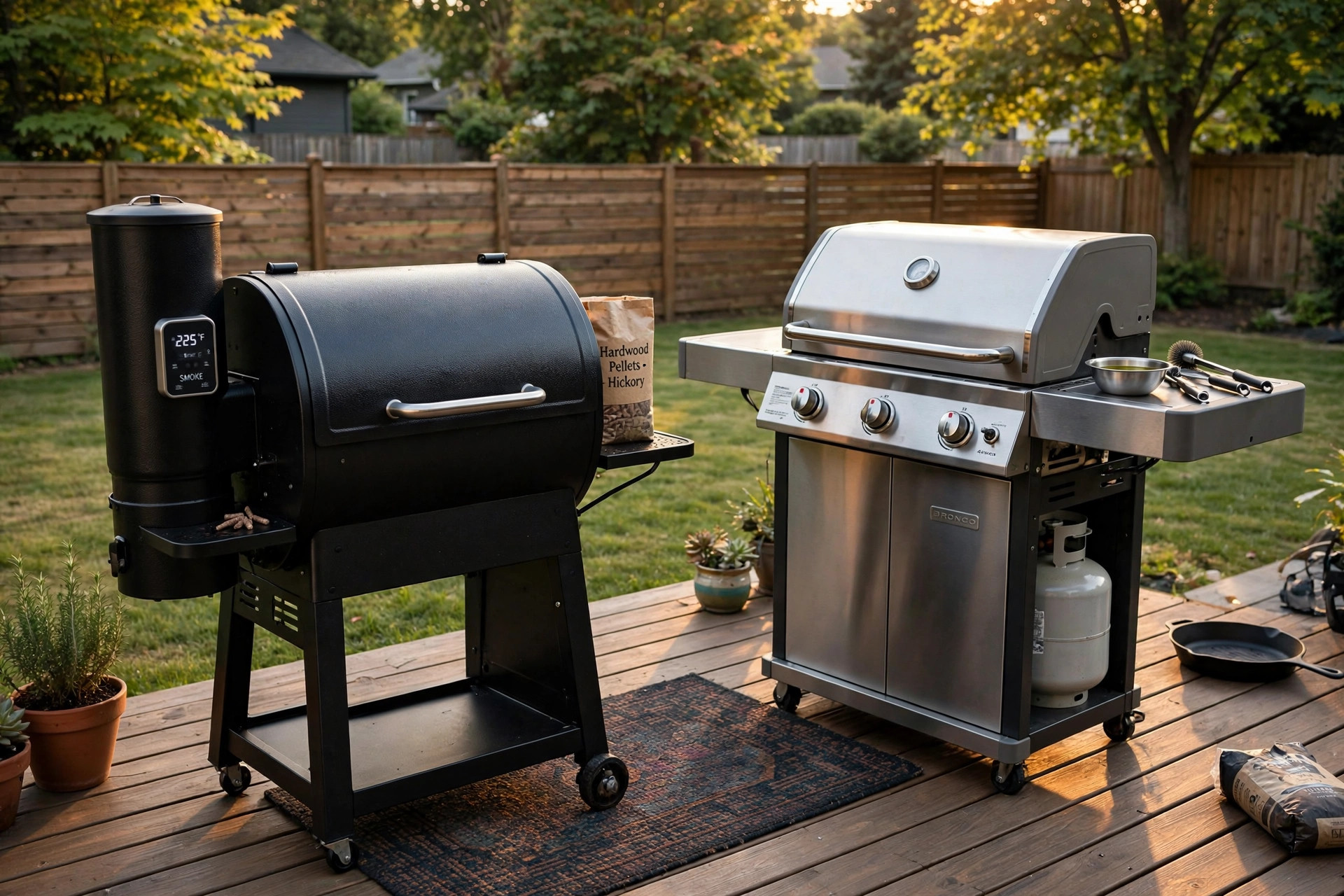
A gas grill is the familiar machine most families know. You turn a knob. Gas flows to burners under the grate. A spark lights it. Within ten to fifteen minutes the grill is ready. Heat comes from metal tubes with small flame holes. Dials control each burner zone. You cook over direct heat for steaks and burgers. You turn one side off for slower roasting.
A pellet grill looks like a cross between a grill and a smoker. It has a hopper, a large box that holds wood pellets made from compressed sawdust. An auger, a metal screw, feeds pellets into a small fire pot. An igniter lights them. A fan feeds air to the fire and spreads heat and smoke through the cooking chamber. A digital controller holds the temperature you set, much like an oven. You dial in 225 degrees for a brisket or 450 for chicken, and the machine does the work.
The core difference is simple. Gas gives you fast, clean, direct heat. Pellets give you wood smoke and steady low heat with hands-off control.
What to Look for When You Choose
Start with your cooking style. Do you cook weeknight burgers in a hurry? Or do you plan slow weekend sessions with ribs and roasts? A gas grill suits fast daily cooking. A pellet grill suits low and slow barbecue.
Look at flavor first. Pellet grills add real wood smoke to food. Oak, hickory, apple, and cherry pellets each give a different note. Gas grills add no smoke. Food tastes clean and simple, much like a hot broiler.
Look at speed next. A gas grill heats up in about ten minutes. A pellet grill needs fifteen to twenty minutes to warm up and settle at temperature. When time is short, gas wins.
Look at temperature range. Gas grills run from low simmer heat to very high searing heat, often above 600 degrees. Pellet grills usually top out near 500 degrees. They smoke and roast beautifully. They sear less fiercely. Some new pellet models add sear zones, but gas still holds the edge for a hard crust.
Check the controls. Pellet grills use digital controllers and often phone apps. Gas grills use manual knobs. They are simple and dependable, with no electronics to fail.
Think about fuel. Propane tanks need refills and cost money each season. Pellets come in twenty or forty pound bags and burn by the hour. Both are easy to find at stores and online. You can compare fuel options at retailers like The Home Depot before you commit.
Finally, think about weather. Pellet grills hold temperature well in cold wind because the controller feeds more fuel. Gas grills lose some power in heavy wind but start reliably in almost any weather.
Pros of the Pellet Grill
Smoke flavor is the big win. Food comes off with a gentle wood taste that gas cannot copy. Ribs, brisket, and pork shoulder turn tender over hours with almost no work from you.
Set-and-forget control is the second win. You set the temperature and walk away. The auger and fan hold it steady within a few degrees. This makes long cooks easy for beginners. If you want to try slow barbecue, read about how to smoke brisket on pellet grill to see how forgiving the process is.
Versatility is the third win. A pellet grill can smoke, roast, bake, and even slow cook. Some owners bake pizza and bread in theirs. One machine covers jobs that used to need two or three cookers.
Pellet flavor variety is a bonus. You can switch pellet types between cooks. Apple wood for chicken. Hickory for beef. Mesquite for bold flavor. This control over taste is fun to explore.
Modern pellet grills often add smart features. Phone apps track temperature. Alerts warn you when fuel runs low. Makers like Traeger helped build this category and continue to refine the controls.
Cons of the Pellet Grill
Price is the main drawback. Good pellet grills cost more than good gas grills. Budget models exist, but the best build quality starts higher.
Speed is another drawback. Startup takes longer. The grill needs time to feed pellets, light them, and reach a steady temperature. Weeknight dinners take more planning.
Searing is weaker. Most pellet grills top out around 450 to 500 degrees. You can cook a fine steak, but you will not get the fierce crust a hot gas grill gives. Sear plates help, but they do not fully close the gap.
Pellets need dry storage. Wood pellets soak up water and swell. A damp bag becomes useless mush. You must store bags indoors or in sealed bins. In rainy climates this takes real care.
Electronics add risk. A controller, an auger motor, and a fan can all fail. Power outages stop a cook cold. Gas grills have no such worries.
Cleaning takes effort. Ash builds up in the fire pot. Grease collects in drip trays. You must vacuum the ash and scrape the grates often. Neglected ash chokes the fire and causes flame outs.
Pros of the Gas Grill
Speed is the top strength. Turn the knob, press the igniter, and cook in ten minutes. For busy families this matters more than anything else.
High heat is the second strength. Gas grills reach searing temperatures with ease. Steaks, burgers, and chops get a dark crust and juicy center. This is the classic grill taste most people grew up with.
Simplicity is the third strength. Knobs, burners, and grates. There is little to break and little to learn. Even a first time owner cooks a good meal on day one.
Fuel is cheap and easy. A propane tank lasts many cooks. Refills and exchanges sit at every hardware store. Natural gas models hook to the house line and never need refills at all.
Grills from brands like Weber and Char-Broil have decades of track record. Parts are easy to find. Service is simple. Reviews at Consumer Reports can help you compare models side by side.
Cons of the Gas Grill
Flavor is the main limit. Gas burns clean. Food tastes good but plain. There is no smoke. Some cooks add a smoker box with wood chips, but the smoke stays light.
Hot spots bother cheap models. Thin burners and light grates create uneven zones. Food burns in one place and stays raw in another. Heavy grates and even burner spacing fix this, but they cost more.
Flare ups happen. Dripping fat hits the burners and flames jump. This chars food and scares new cooks. Keeping the grill clean and using indirect zones reduces the risk, but it never fully goes away.
Tanks run out at bad times. Nothing ruins a cookout like an empty propane tank. You learn to keep a spare, but it is one more thing to track.
Weather hurts performance. Wind steals heat from an open gas grill. Cold air slows warm up. The grill still works, but it cooks slower and less evenly.
Cost and Price
Entry gas grills start low. A solid two or three burner model costs a few hundred dollars. Mid range models with better grates and build run higher. Premium gas grills with rotisserie burners and side stations cost much more.
Pellet grills start higher. Small portable models keep the entry price down. Full size models with strong controllers and thick steel cost clearly more than a mid range gas grill. Top brands like Napoleon and Broil King sit at the higher end of the market.
Running costs differ too. Propane costs per tank, and a busy family may use several tanks a summer. Pellets cost per bag, and long smokes eat through them. A twelve hour brisket can burn most of a bag. For short cooks, gas is cheaper. For long cooks, both add up.
Long term value depends on use. A grill you use twice a week earns its price. Buy the machine that matches how often you truly cook outside.
Care and Upkeep
Both grills need regular cleaning. Brush the grates after each cook while they are still warm. Scrape the grease tray before it overflows.
Gas grills need burner checks. Once a season, look at the burner tubes. Spiders and insects build nests inside them. A blocked tube gives weak flames or no flames. Brush the tubes and check the igniter battery. Replace worn grates before they rust through.
Pellet grills need ash removal. Vacuum the fire pot every few cooks. Empty the grease bucket. Check the auger tube for pellet dust that can jam the screw. Store pellets in a dry bin with a tight lid. Follow a simple set of pellet grill maintenance tips for beginners each season and problems stay rare.
Covers help both types. A good cover keeps rain off the steel and sun off the paint. It does not replace cleaning, but it slows rust and wear. Check the caster wheels, handles, and thermometer once a year and tighten anything loose.
For recipe ideas once your grill is clean, The Spruce Eats and AmazingRibs both carry large free recipe libraries. Traditional kettle fans can also look at Big Green Egg resources for charcoal and smoke techniques that cross over well.
Safety
Place every grill at least ten feet from the house, deck railings, and low branches. Never grill in a garage, on a screened porch, or under an awning. Fumes and heat need open air.
For gas, check the hose and connections before the first spring cook. Mix dish soap with water and brush it on the joints. Bubbles mean a leak. Tighten or replace the part before you light the grill. Keep the lid open when you light it so gas does not pool under the cover.
For pellets, keep the hopper lid closed during cooks. Do not pour a fresh bag of pellets into a hot hopper. Let the grill cool fully before you cover it. Empty the ash only when the grill is stone cold.
Keep children and pets clear of the cooking zone. Handles and lids stay hot long after the fire dies down. Keep a spray bottle of water handy for small flare ups, and know where your fire extinguisher sits.
Frequently Asked Questions
Which is better for a beginner, pellet or gas?
Gas is easier on day one. You turn a knob and cook. Pellets take a few cooks to learn, but the digital controller forgives mistakes. Pick gas for simple weeknight meals. Pick pellets if smoke flavor excites you.
Can a pellet grill replace a gas grill?
It can for most cooking. It smokes, roasts, and bakes well. It sears less fiercely than gas. Many owners keep a small gas grill for fast searing and use the pellet grill for everything else.
How long do pellets last in a cook?
About one to two pounds per hour at smoking temperatures. A twenty pound bag covers roughly ten to twenty hours of cooking. High heat grilling burns more. Always start a long cook with a full hopper.
Is a pellet grill safe to use on a wooden deck?
Yes, with the same rules as any grill. Keep it ten feet from walls and railings. Use a grill mat under the unit to catch grease and stray embers. Never leave it running with no one home.
Do pellet grills work in winter?
They work well. The controller feeds more pellets to hold temperature in the cold. Use more fuel than in summer. A fitted thermal blanket, sold for many models, cuts fuel use in freezing weather.
Which costs less to run each year?
For short weekly cooks, gas usually costs less. Propane is cheap per cook. For long smokes, the gap closes because pellets burn fast over twelve hour cooks. Your cooking style decides the bill.
A Short Final Word
The pellet grill vs gas grill pros cons list comes down to how you cook and what you love to eat. Choose a pellet grill if you want real smoke flavor, hands-off low and slow cooking, and one machine that smokes, roasts, and bakes. Choose a gas grill if you want fast heat, fierce searing, simple knobs, and the lowest price to get started. Both will feed your family well for years. Pick the one that matches your life, learn its habits, and enjoy the smoke.
References
AmazingRibs.com. (n.d.). Barbecue and grilling science. https://www.amazingribs.com Big Green Egg. (n.d.). Kamado grills and outdoor cooking. https://www.biggreenegg.com Broil King. (n.d.). Gas and charcoal grills. https://www.broilkingbbq.com Char-Broil. (n.d.). Gas and charcoal grills. https://www.charbroil.com Consumer Reports. (n.d.). Product reviews and ratings. https://www.consumerreports.org Napoleon. (n.d.). Fireplaces, grills, and heating products. https://www.napoleon.com The Home Depot. (n.d.). Home improvement products. https://www.homedepot.com The Spruce Eats. (n.d.). Recipes and cooking guides. https://www.thespruceeats.com Traeger. (n.d.). Wood pellet grills. https://www.traeger.com Weber. (n.d.). Grills and outdoor cooking. https://www.weber.com
Was this guide helpful?

About Sarah Mitchell
The My Garden US editorial team writes practical, in-depth home and garden guides for American homeowners — tested advice, no fluff.