
Pool owners know that a clean pool takes work. Chlorine tablets, shock powder, test kits, and algaecide all sit on the shelf in the garage. They are strong chemicals. They can hurt people if they are handled the wrong way. The best pool chemical storage bin keeps these supplies safe, dry, and away from children. It is a simple buy. It is also one of the most important buys for a pool owner.
This guide will help you choose the best pool chemical storage bin for your home. It covers why safe storage matters, what to look for, the main types of bins, what they cost, and how to take care of them. You will also find safety rules and answers to common questions. Read it before you buy.
Why the Best Pool Chemical Storage Bin Matters
Pool chemicals are not like soap or paint. Chlorine and shock are strong oxidizers. They can start fires when they touch the wrong thing. Acids like muriatic acid can burn skin and damage lungs. Many of these products release fumes. The fumes get worse when bottles are open or when heat builds up.
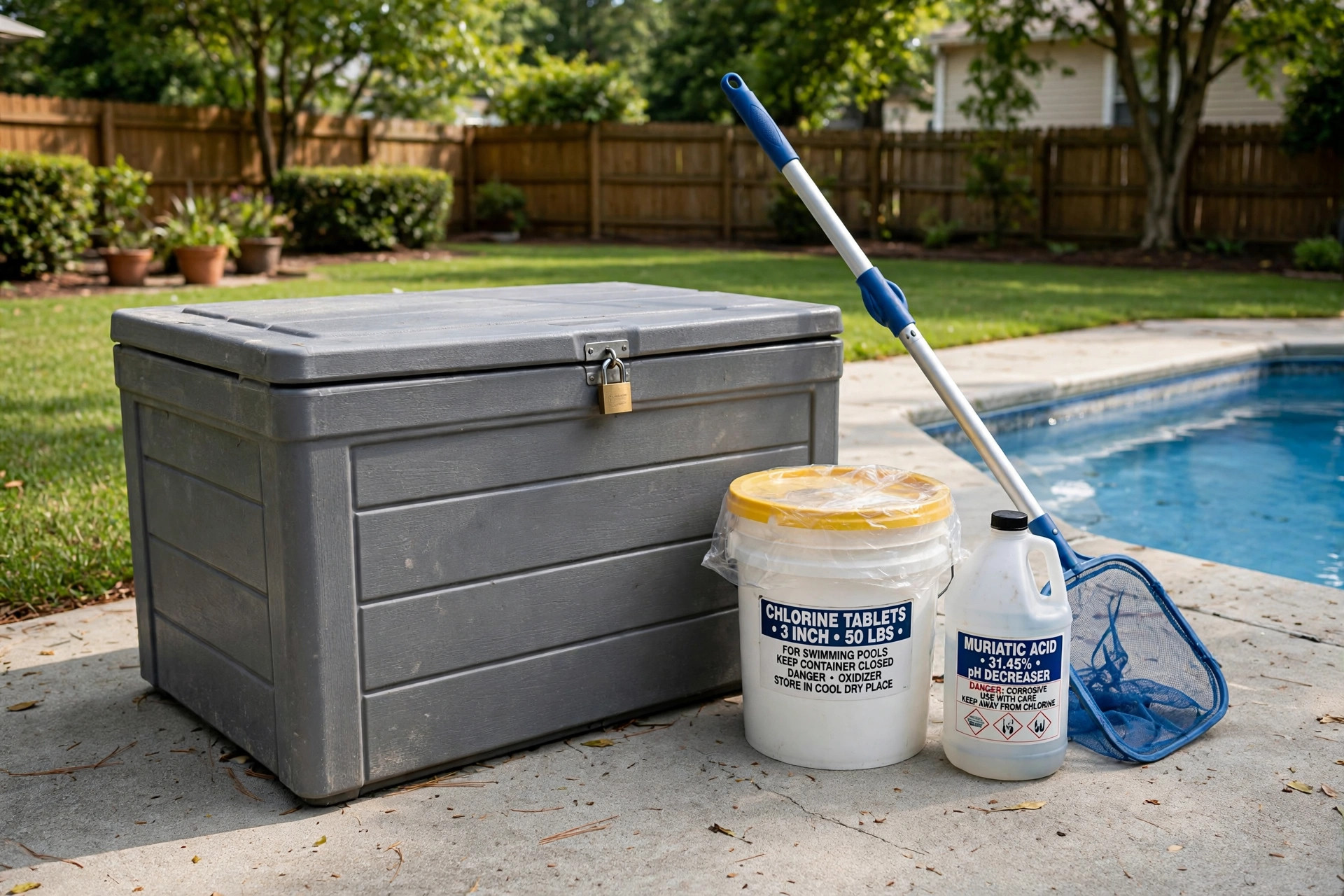
A good storage bin solves several problems at once. First, it keeps chemicals dry. Water mixed with chlorine products can cause dangerous reactions. A sealed bin keeps out rain, sprinklers, and damp air. Second, it keeps chemicals locked away. The U.S. Consumer Product Safety Commission has long warned that pool chemicals hurt thousands of Americans each year. Many of the victims are children. A bin with a lock stops small hands from reaching in.
Third, a bin keeps different chemicals apart. Chlorine and acid should never sit side by side in a small space. If a bottle leaks, the two can mix. That mix can make toxic gas or even start a fire. A wide bin lets you set them on opposite ends.
Fourth, a storage bin keeps your pool supplies neat. Test kits, brushes, thermometers, and extra nets often end up scattered around the shed. A large bin holds them all in one place, which saves time when you do your weekly pool care.
What to Look for When You Choose: Best Pool Chemical Storage Bin
Not every plastic box works for pool chemicals. The best pool chemical storage bin has certain features. Here is what to check before you buy.
Material
The bin should be made of heavy plastic, such as high-density polyethylene. This plastic stands up to chemical fumes. Metal bins can rust. Rust can eat through the bin and let chemicals leak. Metal can also react with some pool chemicals. Stick with plastic.
A Locking Lid
A lock is not optional. It is the main safety feature. Look for a bin that comes with a built-in lock or a hasp for a padlock. The lock should be sturdy enough that a child cannot break it. Home supply stores such as The Home Depot carry bins with locking lids in the outdoor storage section.
Ventilation
Pool chemicals give off fumes. A bin that is sealed too tight can trap fumes inside. The best pool chemical storage bin has small vents near the top. The vents let fumes out while keeping rain out. If the bin you like has no vents, you can drill a few small holes high on the sides. Keep them above the level where chemicals sit.
Size
Think about how much you keep on hand. A small pool owner may only need a 30 to 50 gallon bin. That holds a few jugs of liquid chlorine, a bucket of tablets, and a test kit. A large pool owner who buys bulk chlorine tablets may need 80 gallons or more. Do not buy a bin that is too small. An overfilled bin is hard to close, and a lid that will not close does not lock.
Weather Resistance
Most people keep the bin outside, near the pool or the shed. The bin must stand up to sun, rain, and cold. Look for UV-resistant plastic. It will not crack or fade after one summer in the sun. A lid with a slight overhang keeps rain from seeping in at the edges. Guides at The Spruce often note that cheap storage boxes fade and crack within a year. Pay a little more for one that lasts.
Easy to Clean
Spills happen. Choose a bin with a smooth inside. A smooth floor lets you sweep out powder or wipe up liquid. Some bins have a removable tray at the bottom. That helps too.
Types of Pool Chemical Storage Bins
There are three main types. Each fits a different home and budget.
Small Deck Boxes
A deck box is the most common choice. It looks like a small outdoor chest. It sits on the patio or the pool deck. Most hold 30 to 70 gallons. They are easy to open and close, and many come with a lock. They work well for above ground pools and small in ground pools. The downside is space. A deck box may not hold a season of supplies for a big pool.
Large Horizontal Storage Sheds
These are bigger and hold 100 to 200 gallons. They often have double doors that swing open wide, which makes it easy to reach items in the back. Some have shelves or dividers. They cost more, but they fit a full season of supplies with room to grow. A large shed is a good pick if you buy chemicals in bulk to save money.
Wall Cabinets
Some owners prefer a wall-mounted cabinet inside a locked pool house. A cabinet keeps chemicals off the floor, which matters if the area floods. It also saves floor space in a small shed. The cabinet must still lock and still be vented. A lockable outdoor storage box for pool supplies of any size is always better than an open shelf.
What the Best Pool Chemical Storage Bin Costs
Price depends on size, material, and brand. Here are typical ranges in 2026.
– Small deck box (30 to 50 gallons): 40 to 90 dollars. – Medium deck box (50 to 90 gallons): 90 to 160 dollars. – Large storage shed (100 to 200 gallons): 160 to 350 dollars. – Wall cabinet (lockable, vented): 80 to 200 dollars.
A padlock costs 10 to 25 dollars if the bin does not come with one. The total is a small price for the safety it buys.
How to Set Up and Organize Your Bin
Place the bin on level ground. A flat concrete pad is best. If the bin wobbles, it can tip in strong wind. Put it in a shaded spot if you can. Shade keeps the inside cool, since heat makes fumes worse. Keep the bin at least ten feet from the pool, the grill, and the house.
Organize the inside with care. Put chlorine products on one side and acids on the other side, with at least a foot of space between them. Stand jugs upright. Tighten every cap before you put a bottle away. Keep test kits and paper strips in a zip bag, because moisture ruins test strips fast.
Label the bin. Write “POOL CHEMICALS” on the front in large letters. Keep the safety sheets that come with each product in a folder in the house. The sheets tell you what to do if someone swallows a chemical or gets it in their eyes.
Care and Upkeep
Check the bin once a month. Open it and look for leaks, cracked bottles, and rust spots. A strong chemical smell may mean a cap is loose. Clean up any powder or liquid right away while wearing gloves and eye protection. Rinse the inside with the hose and let it dry with the lid open before you close it.
Oil the hinge or padlock once a year. A rusted lock is hard to open in a hurry. Check the vents for spider or wasp nests and clear them out. Check the lid seal. If the rubber gasket is cracked, water may leak in. Replace the gasket or the whole lid.
Replace the bin when it wears out. Cracks, warped lids, and broken locks mean it is time for a new one. Do not keep using a broken bin. It cannot do its job.
Safety Rules Every Pool Owner Must Know
The best pool chemical storage bin only works if you follow basic safety rules. These rules come from years of guidance by public safety agencies and pool care educators such as Swim University.
1. Keep chemicals locked up at all times. Lock the bin every time you close it. 2. Store chemicals in their original containers. The label has the safety facts. 3. Keep chlorine away from acid. A leak that mixes the two can make poison gas. 4. Add chemicals to water, not water to chemicals. This stops violent splashes. 5. Wear gloves and eye protection when you handle chemicals. 6. Keep chemicals cool and dry. Heat and moisture raise the risk of fire. 7. Never mix two chemicals unless the label says to. 8. Keep the bin out of reach of children and pets. The lock is the last line of defense; placement is the first. 9. Know the poison control number: 1-800-222-1222 in the United States. Post it on the bin. 10. Read the label every time. Products change, and warnings change with them.
Most pool chemical injuries happen when one of these rules is skipped.
Common Mistakes to Avoid
Many pool owners make the same errors. The first is storing chemicals in the house. A laundry room or basement seems safe, but fumes can travel through the house. Keep chemicals outside or in a detached shed.
The second error is stacking heavy jugs on top of powder buckets. The weight can crack lids. Keep heavy items on the bottom.
The third error is buying a bin with no lock to save money. A lock costs a few dollars. Always buy the lock.
The fourth error is forgetting about the bin after the pool closes for the season. Check stored chemicals in spring before you use them. Throw away anything that looks changed, clumped, or leaking.
The fifth error is tossing empty containers in the trash without rinsing. Rinse empty bottles and buckets first. The Environmental Protection Agency offers guidance on household chemical waste.
How a Storage Bin Fits Into Regular Pool Care
Most pool owners test the water twice a week. A bin near the pool makes this easy. You open the lid, grab the kit, test, and add what is needed. Then you lock it up again.
Learning how to balance pool water chemistry is easier when your supplies are neat. You can see at a glance what is running low, so you will not buy extra by mistake or run out of chlorine on a holiday weekend. Good storage saves money as well as time.
The bin also pairs with other safety gear. If you use a pool alarm for child safety, the locked bin is a second layer of defense. The alarm guards the water. The bin guards the chemicals.
Home project sites like Bob Vila and spa makers like Hot Spring both stress that proper chemical storage is a basic part of owning pool or spa equipment. If you are still unsure about size, start with a mid-size deck box. What matters is that you start with something locked and dry today.
FAQ: Best Pool Chemical Storage Bin
Can I keep pool chemicals in the garage?
It is better to keep them outside in a locked bin or a detached shed. A garage attached to the house can let fumes drift indoors. If the garage is your only option, use a vented bin and keep it near the garage door.
How long do pool chemicals last in storage?
Most dry chlorine products last three to five years if kept cool and dry. Liquid chlorine loses strength in weeks to months. Test kits last about a year. Old chemicals may not work well, and some become less safe. When in doubt, throw them out and buy fresh.
What should I do if chemicals spill inside the bin?
Put on gloves and eye protection. Scoop up powder with a dry scoop. Never use a vacuum. Wipe liquid with old towels, rinse with the hose, and let it air dry. If two chemicals mixed in the spill, step back and call poison control or your local fire department.
Do I need to vent a pool chemical storage bin?
Yes, in most cases. Small vents near the top let fumes escape. Without vents, fumes can build up and corrode the bin. A few small holes high on the sides are enough. Keep them above the chemical level so rain does not reach the products.
Is a deck box enough for a large in ground pool?
It depends on how much you buy at once. A small deck box may not hold a full season of supplies for a big pool. Many large-pool owners use a big storage shed or two deck boxes: one for chlorine products and one for acids and test gear. That keeps the two types apart, which is safer.
Final Word
The best pool chemical storage bin is a simple thing. It is plastic. It locks. It vents. It keeps rain out and fumes moving. It costs less than one service call from the pool store. Yet it guards your family, your pets, and your pool.
Buy one that fits your supply list. Set it on level ground in the shade. Lock it every time. Check it once a month. If you do these things, your pool chemicals will stay safe and strong all season.
For more on keeping your pool in top shape, look at guides on bulk chlorine tablet buying, balancing pool water chemistry, and whether a salt water or chlorine pool fits your home. Retailers like The Home Depot and spa makers like Bullfrog Spas offer more storage ideas for pool and spa owners.
References
Bob Vila. (n.d.). Home improvement advice. https://www.bobvila.com Bullfrog Spas. (n.d.). Hot tubs and spas. https://www.bullfrogspas.com Hot Spring Spas. (n.d.). Hot tubs and spas. https://www.hotspring.com Leslie’s Pool Supplies. (n.d.). Pool supplies and equipment. https://www.lesliespool.com Pool Warehouse. (n.d.). Pool equipment and supplies. https://www.poolwarehouse.com Swim University. (n.d.). Pool and hot tub care guides. https://www.swimuniversity.com The Home Depot. (n.d.). Home improvement products. https://www.homedepot.com The Spruce. (n.d.). Home and garden advice. https://www.thespruce.com U.S. Consumer Product Safety Commission. (n.d.). Product safety information. https://www.cpsc.gov U.S. Environmental Protection Agency. (n.d.). Protecting human health and the environment. https://www.epa.gov
Was this guide helpful?

About Lisa Anderson
The My Garden US editorial team writes practical, in-depth home and garden guides for American homeowners — tested advice, no fluff.
You May Also Like
How to Choose the Best Pool Vacuum for Vinyl Liner Pools
May 2, 2026 0 views
How to Clean Green Pool Water Fast: A Clear Guide
April 10, 2026 0 views
Best Pool Cover for Winter Reviews: A Plain Guide to Keeping Your Pool Safe All Winter
October 5, 2026 0 views