
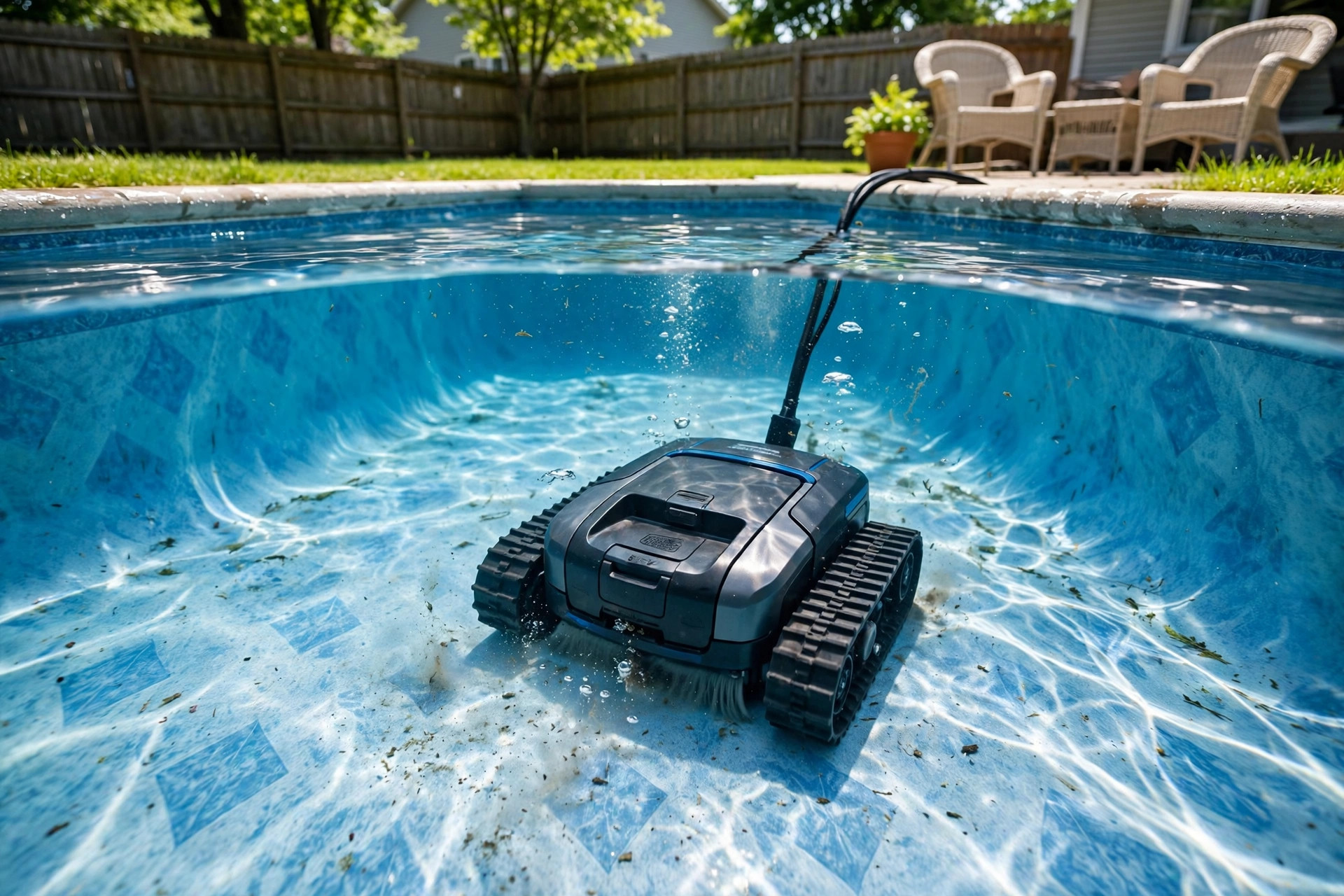

A vinyl liner pool is a smart choice for many homes. It feels smooth under your feet. It costs less than concrete. But the liner is also soft. Sharp brushes and hard wheels can cut or scratch it. That is why the best pool vacuum for vinyl liner pools must be gentle first and strong second.
This guide walks you through the choices. You will learn why liners need special care. You will see the four main types of pool vacuums. You will learn what features matter most. You will get honest price ranges. And you will read care and safety tips that protect both your liner and your family.
Why Vinyl Liners Need Special Care
A vinyl liner is a thick sheet of plastic. It lines the walls and floor of the pool. It holds the water in. Most liners are about twenty to thirty mil thick. A mil is one thousandth of an inch. That is not very thick.
The liner stretches and moves a little. That is normal. But sharp objects can tear it. Stiff bristles can wear it thin over time. Once a liner tears, you must patch it or replace it. Patches work for small holes. A full liner replacement can cost thousands of dollars.
Dirt and debris still settle on the liner every day. Leaves fall in. Dust blows in. Algae can grow on the walls. You must clean the pool often. A vacuum does this work for you. The right vacuum picks up dirt without harming the soft surface.
Look for vacuums made for vinyl or soft surfaces. Makers often say “vinyl safe” on the box. Soft brushes and rubber wheels are good signs. Avoid cleaners with stiff metal parts or hard wheels. They can scratch the liner and cut its life short.
Regular cleaning also helps your pool filter. A good vacuum removes dirt before it reaches the filter. That means the filter works less hard. For more on filters, read our guide to the best pool filter for small pools.
Types of Pool Vacuums: Best Pool Vacuum for Vinyl Liner
There are four main types. Each one cleans in a different way. The best pool vacuum for vinyl liner pools can be any of the four, as long as it is gentle on the surface.
Suction-Side Vacuums
A suction-side vacuum plugs into the skimmer or a suction port. It uses the pull of the pool pump. Water and dirt get sucked up through the cleaner and into the filter. The vacuum moves on its own in a random pattern.
These are often the cheapest choice. They have few parts. That makes them simple to run. Many have soft discs or soft brushes made for vinyl. The disc design is gentle because the weight spreads over a wide area.
The downside is that they need a strong pump. If your pump is weak, the cleaner may move slowly. They also push all the dirt through your filter. That means you must clean the filter more often. Still, for a small to medium vinyl pool, a suction-side vacuum is a fair and low-cost pick.
Pressure-Side Vacuums
A pressure-side vacuum uses water pressure from the return jet. A booster pump may be needed. The pressure pushes the cleaner around the pool. A bag on the cleaner catches the dirt.
Because the dirt goes into the bag, not the filter, the filter stays cleaner. This is a plus. Pressure-side cleaners are strong. They pick up leaves and larger debris well. Many come with soft wheels and gentle skirts for vinyl liners.
The cost is higher. You may need a booster pump, which adds to the bill. Energy use is higher too. For larger pools with lots of trees nearby, a pressure-side vacuum is worth a look.
Robotic Pool Cleaners
A robotic cleaner is an electric unit with its own motor. It runs on a cord or a battery. You drop it in the pool. It scrubs and vacuums on its own. It catches dirt in a filter basket inside the unit.
Robots are the most popular choice today. They clean the floor and the walls. Many climb the walls and scrub the waterline. Good models have soft rubber tracks or wheels. Those are safe for vinyl liners. They do not use the pool pump, so they save energy.
The price is the highest of the four types. But they save time. You can set a timer and walk away. For a vinyl liner pool, a robot with soft tracks is often the best pool vacuum for vinyl liner owners who want easy weekly cleaning.
Manual Vacuums
A manual vacuum is a vacuum head on a long pole. You connect it to a hose and the skimmer. Then you walk around the pool and push it yourself. You see the dirt leave through the head. You control where it goes.
This is the cheapest option. A head, hose, and pole cost little. It is also the best for spot cleaning. If one corner has algae, you can scrub it by hand. Soft brush heads are easy to find. They are safe for vinyl.
The downside is time. You do the work. For a big pool, manual vacuuming takes thirty minutes or more. Many owners use a manual vacuum for tough spots and an automatic cleaner for the weekly work.
What to Look for When You Buy
Not all vacuums are safe for vinyl. Use this list when you shop. It will help you find the best pool vacuum for vinyl liner pools in your price range.
Soft wheels or tracks. Hard plastic wheels can leave marks. Look for soft rubber wheels, foam tracks, or soft disc skirts. These glide over vinyl without scratching it.
Soft brushes. Brushes should bend easily when you press them. Stiff bristles wear liners down. Soft brushes lift algae and dirt gently. Some robots have rotating brushes. Check that they are made for vinyl.
Weight and balance. A heavy cleaner can press too hard on the liner. Many good models spread their weight wide. Suction-side cleaners with large discs do this well. Robots with wide tracks do this well too.
Good coverage. The cleaner should reach the whole pool. Look for a long cord or hose. For robots, check the cycle time. A two-hour cycle may miss spots in a large pool. A three-hour cycle covers more.
Easy filter or bag. You will clean the basket or bag often. A top-loading basket is easy to empty. A bottom loader is harder. Small baskets fill fast. Large baskets save time.
Climbing ability. Dirt collects at the waterline. A cleaner that climbs walls will scrub that line. This is a strong plus for algae control.
Cord or hose length. Measure your pool. Add a few feet. The cord must reach from the outlet to the far end. The hose must reach from the skimmer to the far end.
Pool care guides on The Spruce explain many of these features in more detail. Retailers such as Leslie’s also label cleaners as vinyl safe, which makes shopping easier.
Cost and Price
Prices vary a lot. Here are honest ranges for each type. Prices can change by year and brand. These numbers give you a fair idea.
Manual vacuum kits: 30 to 100 dollars. This includes the head, hose, and pole. You may already own a pole. Then the cost is lower. This is the best pick if money is tight.
Suction-side vacuums: 150 to 400 dollars. Simple models cost less. Models with better steering cost more. You need a decent pump. No booster pump is needed.
Pressure-side vacuums: 400 to 900 dollars. The cleaner itself costs more. A booster pump adds 200 to 400 dollars more if you do not have one. Energy costs run higher over the season.
Robotic cleaners: 300 to 1,500 dollars. Basic robots cost 300 to 600 dollars. Mid-range models cost 600 to 1,000 dollars. Top models with smart mapping cost over 1,000 dollars. Most vinyl pool owners find a mid-range robot gives the best value.
You can compare current prices at large pool equipment retailers like Pool Warehouse and Home Depot. Both carry models labeled for vinyl liners.
Care and Upkeep of Your Vacuum
A pool vacuum needs care too. Small habits keep it running well for years.
Empty the basket or bag often. Do not let it fill past two-thirds full. A full basket slows the cleaner. Dirt can fall back into the pool. Empty it after each cycle in heavy leaf season.
Rinse after use. Pool water has chlorine. Chlorine can wear seals and parts. Rinse the cleaner with fresh water from a hose. This takes one minute. It adds years of life.
Store it in the shade. Sun breaks down plastic and rubber. When the cleaner is not in use, keep it in a shed or under a cover. Do not leave it in the pool between cleanings unless the maker says it is fine.
Check brushes and wheels. Look for wear each month. Worn brushes clean less well. Worn wheels can get rough. Rough edges can scratch a vinyl liner. Replace worn parts right away. Parts are cheap. A new liner is not.
Mind the cord or hose. Do not yank the cord to pull the robot out. Lift it by the handle or a hook. For hoses, check for cracks. A cracked hose loses suction. Replace bad hose sections.
Keep chemicals balanced. A vacuum cannot fix bad water. Test chlorine and pH each week. Algae grows fast in warm, unbalanced water. Guides at Swim University give simple steps for weekly water testing.
Safety Around the Pool
Cleaning time is a good time to think about safety. Pool safety guides from the U.S. Consumer Product Safety Commission remind owners of a few key rules.
First, never swim while a robotic or electric cleaner runs. Take it out of the pool before anyone gets in. The cord carries power. It should never be near swimmers.
Second, turn off the pump before you connect or remove a manual or suction-side vacuum. Moving water can trap a hand or hair in a suction port. This is rare but serious. Teach children to stay clear of the skimmer and drains.
Third, store the cleaner where children cannot reach it. Long hoses and cords can be a trip hazard. Coil them and hang them up.
Fourth, check the liner for damage while you clean. If you see a tear, stop vacuuming that spot. A vacuum can make a small tear bigger. Patch small tears right away with a vinyl patch kit.
Many owners add lighting for evening swims after the cleaning is done. If that sounds like you, see our guide on how to install inground pool lights. And if your pool gets heavy daily use, our article on the best pool for exercise lap swimming may interest you.
Frequently Asked Questions
Can I use any pool vacuum on a vinyl liner?
No. You should use only vacuums made for vinyl or soft surfaces. Cleaners with stiff brushes, metal parts, or hard wheels can scratch or tear the liner. Look for “vinyl safe” on the package. Soft rubber wheels, foam tracks, and soft brushes are safe signs.
How often should I vacuum a vinyl liner pool?
Most pools need vacuuming once or twice a week. In heavy leaf season, you may need to run the cleaner every day. Skim the surface daily with a net. Brush the walls once a week. Regular light cleaning beats one big cleaning each month.
Will a robotic cleaner damage my vinyl liner?
A good robot will not. Choose a model with soft tracks or rubber wheels. Avoid models with hard plastic wheels. Check reviews from vinyl pool owners. Keep brushes clean and in good shape. A well-kept robot is one of the gentlest ways to clean a liner.
Do I need to lower the water to vacuum?
No. You vacuum with the pool full. For manual vacuums, keep the hose full of water before you connect it. This stops air from getting into the pump. For robots, just lower the unit in and let it sink to the floor.
What is the cheapest safe option for a vinyl pool?
A manual vacuum kit with a soft brush head is the cheapest safe option. It costs 30 to 100 dollars. It takes your time, but it is gentle and works well for small pools. Pair it with a weekly brush of the walls for best results.
How long should a pool vacuum last?
A manual kit can last five years or more. Suction-side and pressure-side cleaners often last three to five years. Robots often last three to seven years, depending on care. Rinsing, shade storage, and part replacement stretch the life of any cleaner.
A Final Word
The best pool vacuum for vinyl liner pools is the one that cleans well and treats the liner with care. Soft brushes, soft wheels, and gentle movement matter more than raw power. A robot with soft tracks is a top pick for busy owners. A suction-side cleaner is a solid budget pick. A manual vacuum is the cheapest way to start.
Match the cleaner to your pool size, your tree cover, and your budget. Care for the cleaner as you care for the pool. And always keep safety first when the cleaner is in the water. With the right vacuum and a simple weekly habit, your vinyl liner will stay clean, smooth, and strong for many years.
Buying guides are also published by Bullfrog Spas and Hot Spring Spas.
References
Bullfrog Spas. (n.d.). Hot tubs and spas. https://www.bullfrogspas.com Hot Spring Spas. (n.d.). Hot tubs and spas. https://www.hotspring.com Leslie’s Pool Supplies. (n.d.). Pool supplies and equipment. https://www.lesliespool.com Pool Warehouse. (n.d.). Pool equipment and supplies. https://www.poolwarehouse.com Swim University. (n.d.). Pool and hot tub care guides. https://www.swimuniversity.com The Home Depot. (n.d.). Home improvement products. https://www.homedepot.com The Spruce. (n.d.). Home and garden advice. https://www.thespruce.com U.S. Consumer Product Safety Commission. (n.d.). Product safety information. https://www.cpsc.gov
Was this guide helpful?

About Michael Thompson
The My Garden US editorial team writes practical, in-depth home and garden guides for American homeowners — tested advice, no fluff.
You May Also Like
How to Install a Pool Heat Pump the Right Way
October 4, 2026 1 views
Best Hot Tub Insulation for Winter: A Complete Guide
January 18, 2026 0 views
How to Raise Pool Alkalinity Levels the Safe Way
September 7, 2026 0 views