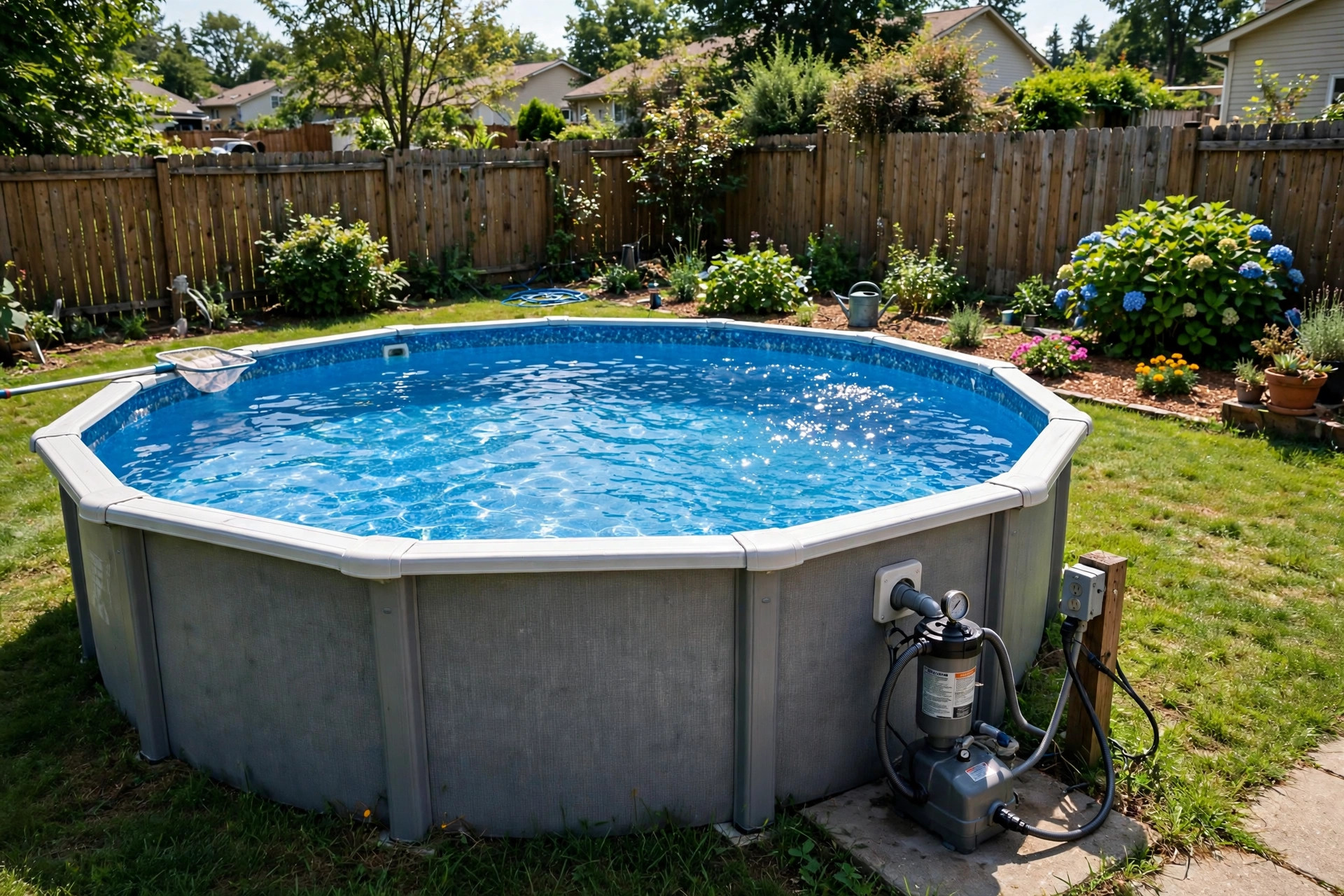
A clean pool starts with the right filter. The best pool filter for small pools is not the biggest one on the shelf. It is the one that matches your pool size, your budget, and your wish to spend less time on care. A small pool can be a fine place for family fun, but it will turn green and cloudy fast if the water is not moved and cleaned each day.
Why the Filter Matters More Than You Think
A pool is a closed body of water. No rain or river washes it clean. Every leaf, every grain of dirt, and every trace of oil from swimmers stays in the water until it is taken out. The pump moves the water. The filter catches what the water carries. In a small pool the water turns over fast, so a good filter can clean the whole body of water in a few hours.
Small pools have their own needs. A small above ground pool, often holding two thousand to five thousand gallons, needs less power but no less care. An oversized filter can push water too hard and strain the pump. An undersized filter will run all day and still leave the water dull.
Water health is the next reason. Clear water is safe water. Dirt and leaves feed algae and bacteria. A filter that works well keeps chlorine or salt systems working at lower doses. Pool supply guides at Leslie’s Pool Supplies note that steady filtration is the base of all water care. The filter cannot do the whole job alone, but nothing else can take its place.
The Three Main Types of Pool Filters: Best Pool Filter for Small Pools
Every best pool filter for small pools comes from one of three families. Each has strengths and costs. Learn them before you shop.
Cartridge Filters
A cartridge filter holds a pleated paper-like cylinder. Water passes through the pleats, and dirt stays on the surface. Many owners of small pools choose this type first. Cartridge filters are small, quiet, and simple. They need no backwashing, so they waste less water. To clean one, you lift out the cartridge and hose it off. Replacement cartridges last one to three seasons.
For a small pool this is often the top pick. A single-cartridge unit rated for a few thousand gallons is light, cheap to run, and easy to store for winter. Reviews and buying guides at The Spruce often point small-pool owners toward cartridge models for these plain reasons.
Sand Filters
A sand filter holds a tank of special sand. Water enters the top and flows down through the sand bed, which traps dirt. To clean it, you reverse the flow in a step called backwashing. Sand filters are tough and simple. The sand needs changing only every five years or so.
For small pools, sand filters work well when the pool is used hard by many swimmers. They hold more dirt before they need cleaning. The trade is size and water use. Backwashing sends water down the drain, and the tank takes more room on the pad. A small sand unit is fine for many above ground pools, but check the weight and the space you have.
DE Filters
A DE filter uses diatomaceous earth, a fine powder made from tiny fossils, to coat a grid. It gives the clearest water of the three. But DE filters cost more, need more care, and the powder must be handled with care. Most small-pool owners skip this type.
What to Look for When You Shop
Finding the best pool filter for small pools comes down to five points. Write your pool size on paper before you look at any model.
Match the flow rate. The filter is rated in gallons per minute, or GPM. It must meet or beat your pump output. If the pump pushes forty GPM and the filter is rated for thirty, the filter will strain and the water will slow. Pair the two as a set when you can.
Check the pool volume. A small pool holds two thousand to eight thousand gallons. A filter made for a twenty thousand gallon pool is wasteful for this size. Look at the label. It should list a pool size range. Stay near the middle of that range, not the top edge.
Mind the size and weight. Many small pools sit in tight yards. Measure the pad or the ground space by the pool. A filter that needs two feet of room on each side may not fit. Sand units are heavy. Cartridge units are light.
Look at energy use. The pump and filter run for hours each day. A unit that works with a small energy-saving pump will cut the monthly bill. Guides from home retailers such as Home Depot show how pump size and filter size should be planned together.
Think about cleaning effort. Be honest about how much care you will give. If you will not hose a cartridge every two weeks, a sand filter with a quick backwash lever may suit you better. The best pool filter for small pools is the one you will keep clean.
Cost and Price: What You Should Expect
Prices for small-pool filters sit in a wide but fair range. A basic cartridge filter for a small above ground pool often costs between eighty and two hundred dollars. Mid-range cartridge units with larger bodies run two hundred to four hundred dollars. Small sand filters for pools of this size run one hundred fifty to four hundred dollars. DE units, rare for small pools, start higher still.
Running costs matter as much as the price tag. A cartridge needs a new element every one to three years at twenty to eighty dollars. Sand needs a bag or two of filter sand every five years. Your power bill rises with pump run time. A small efficient pump may add only a few dollars a month. A large pump on a small pool can waste far more. Retailers and pool warehouses such as Pool Warehouse list running-cost notes beside many models, which helps with honest planning.
Do not forget the extras. Hoses, clamps, a filter base, and in some cases a new pump add to the bill. Buy the filter as a set with the pump when the maker offers it. The parts are made to work as one, and the price is often lower than buying each piece alone.
Pairing the Filter With Pump and Cleaner
The filter is one part of a cleaning team. The pump moves the water to the filter. A skimmer pulls leaves from the surface. A cleaner or vacuum scrubs the floor and walls.
If you already own a pump, read its label for GPM and match the filter to it. If you are buying new, many makers sell a matched pump and filter set sized for small pools. Owners with salt systems should check our notes on the best pool filter for saltwater systems, since salt is hard on some seals and metals.
A robotic cleaner takes much of the daily load off the filter. A compact robot built for small vinyl pools, like the models in our review of the best robotic pool cleaner for vinyl, eats leaves and dirt before they reach the filter. This means less backwashing, less cartridge rinsing, and longer filter life. For small pools the filter then only needs to catch the fine stuff, which is exactly what it does best.
Education sites such as Swim University give free step-by-step guides on how the pump, filter, and cleaner work as a system. Reading one guide before you buy will save you from a bad match.
Installation Tips for a Small Pool
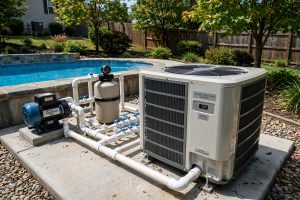
Most small-pool filters go in place in an afternoon. Put the unit on firm, level ground near the pool, within reach of the power outlet and the hoses. Keep it above the pool water line when the maker calls for that. Leave room on all sides for your hands and tools.
Follow the manual page by page. Fill the filter body with water before you start the pump. This step, called priming, keeps air out of the system. An air lock will make the pump run loud and dry, which can harm the motor. Check every clamp and joint for drips in the first hour.
Many small-pool owners place the filter on a rubber mat or a small pad. This cuts hum and keeps the unit from walking on soft ground. Keep the area dry and clear of mulch and leaves, which can clog air vents on the pump motor.
Care and Upkeep Through the Season
A filter only works when it is clean. Build these small habits into your week and the water will stay clear.
Check pressure weekly. Most filters have a pressure gauge. Write down the clean reading when the filter is new. When the gauge reads eight to ten PSI above that clean number, it is time to clean or backwash. This one habit does more than any other.
Rinse cartridges often. In hot months with daily use, hose the cartridge every one to two weeks. Use a firm spray and work from top to bottom. Never use a pressure washer, which can tear the pleats. Let it dry fully before you put it back.
Backwash sand on schedule. When pressure rises, run the backwash cycle until the sight glass runs clear, then rinse and return to filter mode. This takes a few minutes. Do it when the yard is not in drought rules, since it uses water.
Watch the water line and skimmer. A low water level lets air into the pump. A full skimmer basket slows flow to the filter. Empty the basket often. These small steps keep the filter from working against itself.
Close the season right. When the swim season ends, drain the filter, bring the cartridge inside, and store the unit dry. Sand filters should be drained and covered. Winter care adds years to a small filter. Hot tub and spa owners will find similar seasonal care advice at Hot Spring and Bullfrog Spas, whose guides stress dry winter storage for all water equipment.
Safety Points Every Owner Should Know
A filter is a pressure vessel. It holds water under force. Read the safety pages in the manual before you open any lid or valve. Turn the pump off and release pressure through the air relief valve before you open the filter. A lid under pressure can blow off with great force.
Keep children away from the equipment pad. Teach them never to play with valves or the pump switch. Safety guidance from the U.S. Consumer Product Safety Commission covers pool drains and equipment hazards, and every small-pool owner should read it once.
Handle DE powder with care if you ever use a DE unit. Wear a mask and gloves. Store chemicals in a dry place away from the filter, and never mix chemicals. Add them to the pool water only, as the label directs.
Frequently Asked Questions
How big a filter do I need for a small pool? Match the filter to your pool volume and your pump. For a pool of two thousand to five thousand gallons, a cartridge unit rated for that range, or a small sand filter of like size, is enough. Do not buy a unit rated for twenty thousand gallons. Oversizing wastes money and can upset the flow balance.
How long should I run the filter each day? Most small pools need the water turned over once or twice a day. With a right-sized pump and filter, this often means six to eight hours of run time in the swim season. Split it into two runs, morning and evening, to keep the water moving through the warm day.
Which is better for a small pool, cartridge or sand? Both work. Cartridge filters are smaller, cheaper to run, and need no backwashing. Sand filters hold more dirt and suit pools with heavy use. For light home use, cartridge is often the best pool filter for small pools.
Why is my pool still cloudy with a new filter? A filter clears dirt, not chemistry. Test the water. Low chlorine, high pH, or algae need chemical care first. Make sure the pump runs long enough and the cartridge or sand is clean. New filters can also trap air at first. Bleed the air and check again.
How often should I replace the filter cartridge? Rinse it every one to two weeks in season. Replace it every one to three years, or sooner if the pleats are torn, flat, or stained dark. A worn cartridge lets dirt pass through, and no amount of rinsing will fix it.
Can I use a salt system with a small pool filter? Yes, if the filter parts resist salt. Many cartridge and sand units do. Check the label for salt compatibility, and rinse the equipment pad with fresh water now and then to fight rust. Salt pools still need a well-sized filter, since salt systems do not clean dirt.
A Short Final Word
The best pool filter for small pools is the right-sized, well-kept one. Start with your pool volume. Pick the type that fits your yard and your care habits. Match it to a pump of like size. Keep the clean pressure reading on a card by the pad, and clean the filter when the needle climbs. Small pools reward owners who plan once and keep simple habits. Do that, and the water will be clear every time you step in.
References
Bullfrog Spas. (n.d.). Hot tubs and spas. https://www.bullfrogspas.com Hot Spring Spas. (n.d.). Hot tubs and spas. https://www.hotspring.com Leslie’s Pool Supplies. (n.d.). Pool supplies and equipment. https://www.lesliespool.com Pool Warehouse. (n.d.). Pool equipment and supplies. https://www.poolwarehouse.com Swim University. (n.d.). Pool and hot tub care guides. https://www.swimuniversity.com The Home Depot. (n.d.). Home improvement products. https://www.homedepot.com The Spruce. (n.d.). Home and garden advice. https://www.thespruce.com U.S. Consumer Product Safety Commission. (n.d.). Product safety information. https://www.cpsc.gov
Was this guide helpful?

About Robert Taylor
The My Garden US editorial team writes practical, in-depth home and garden guides for American homeowners — tested advice, no fluff.