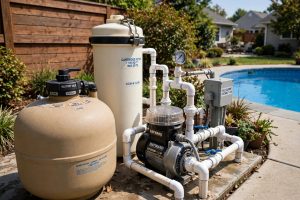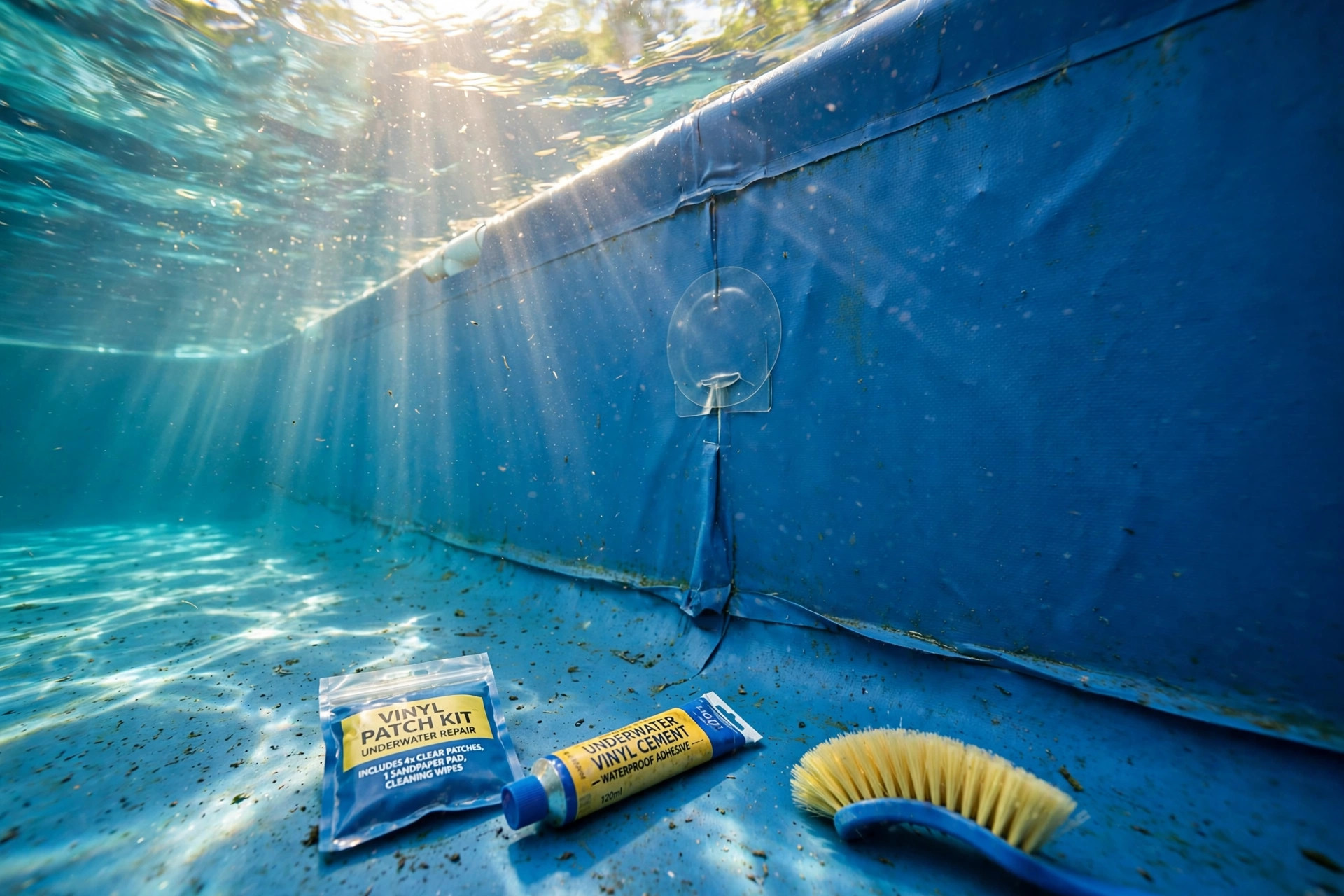

A small tear in a vinyl pool liner can cause a slow leak that grows worse with time. Many owners fear they must drain the whole pool to fix it. The good news is that you do not. Once you learn how to patch pool liner underwater, you can stop a leak in less than an hour and keep the pool full. The job needs a simple kit, a steady hand, and patience.
This guide walks you through the full process. It covers why fast repair matters, what to buy, how to choose a kit, the exact steps, the costs, and the safety rules. It also answers common questions. Read it once before you start so you feel ready.
Why It Matters
Water is heavy. A single small tear can lose hundreds of gallons over a week. That lost water raises your water bill. It also strains the pool pump, which must work harder as levels drop. Low water can let air into the pump and burn out the motor. A burned motor costs far more than a patch kit.
A tear also lets dirt and sharp grit work under the liner. Once debris gets behind the vinyl, it can widen the rip. In an above ground pool, a leak near the wall can wash away the sand base. That can make the wall lean or buckle. In an inground pool, water behind the liner can cause wrinkles and floating spots. Small problems turn into large ones when they are left alone.
Fast action saves money. A patch kit costs less than a family dinner. A full liner replacement can cost thousands. By acting early, you protect the liner you already have. You also keep the pool open for swimming instead of closing it for a big repair.
What You Need Before You Start: How to Patch Pool Liner Underwater
Gather your tools before you step into the water. You do not want to climb in and out many times. Here is a plain list:
– An underwater vinyl patch kit, made for wet use – A pair of swim goggles or a mask – A soft cloth or sponge – Fine sandpaper or the rough pad that comes in the kit – Sharp scissors – A small weight or a smooth stone to hold the patch down – A towel for the deck
Some kits include the glue, a sheet of vinyl, and an applicator. Others sell the patch material and the glue apart. Buy them together if you can. Pool supply stores such as Leslie’s Pool Supplies carry kits that are tested for pool water. Online stores like Amazon and big chains like The Home Depot and Lowe’s stock them too.
Check the kit label. It should say it works underwater. Regular vinyl glue will wash off in the pool. Underwater glue is thicker and sets in wet conditions. Do not use super glue, tape, or household cement. They will fail within days.
How to Choose the Right Patch Kit
Peel-and-Stick Patches
Peel-and-stick patches are the easiest choice. You cut a round piece, peel off the backing, and press it on. They work well for tiny punctures and pin holes. They need less skill than glue kits. The bond is weaker than glue, so use them for small spots only.
Glue and Vinyl Patch Kits
Glue kits give a stronger hold. You spread underwater vinyl cement on a vinyl patch and press it onto the tear. These kits fix larger rips and hold for years. They take more care to apply. You must fold the patch, swim down to the tear, unfold it, and press it flat. Most pool owners can do this with practice.
What to Look For
Size matters. Buy a kit with enough vinyl to cut a patch that extends at least two inches past the tear on every side. Clear patches look best on patterned liners. Blue patches blend with plain blue liners. Check the shelf life of the glue. Old glue turns thick and will not bond. Stores like Pool Warehouse sell fresh stock with clear dates on the box.
Read the liner type on your pool papers if you still have them. Most home pools use 20 or 28 mil vinyl. Standard patch vinyl works on both. Guides from Swim University explain how to read liner labels and match materials.
Step by Step: How to Patch Pool Liner Underwater
Step 1: Find the Tear
Put on your goggles. Walk the pool slowly and look for the rip. Check near steps, ladders, and corners first. These spots see the most wear. If you cannot see it, look for a small stream of dirt or a darker mark on the liner. Some owners drop a little food coloring near a suspect spot. The color will drift toward the leak.
Mark the spot. You can hold a small coin or a rubber band on the deck above it. This saves time when you go under with the patch.
Step 2: Clean the Area
Rub the torn area gently with a soft cloth. Remove algae, slime, and loose grit. A clean surface bonds far better. Do not scrub hard. Hard scrubbing can widen the tear. If the liner feels rough with calcium scale, use the fine pad from the kit with a light touch.
Step 3: Cut the Patch
Cut a patch with round edges. Round shapes resist peeling better than square ones. A square corner lifts first. Make the patch at least two inches larger than the tear on all sides. For a one-inch tear, cut a five-inch round patch. Cut it before you get into the water. Keep the patch dry until the moment of use if your kit asks for it. Most underwater kits let you fold the patch with glue inside.
Step 4: Apply the Glue
Spread a thin, even layer of underwater vinyl cement on the patch. Cover the whole patch, edge to edge. Do not use too much. Extra glue squeezes out and makes a mess. If the kit uses a peel-and-stick patch, skip this step and peel the backing.
Fold the patch in half with the glued sides facing in. This protects the glue while you swim down. Hold it folded until you reach the tear.
Step 5: Place the Patch
Swim down to the marked spot. Unfold the patch right over the tear. Center it so the tear sits in the middle of the patch. Press it down with the palm of your hand. Start at the center and push outward. This motion drives out trapped water and air bubbles. Trapped bubbles weaken the bond.
Step 6: Hold It Firm
Hold the patch in place for at least one full minute. Press hard and steady. Some kits ask for two minutes. Read your label. After you let go, set a smooth weight on the patch if the spot is on the floor. On a wall, you can press once more and let the water pressure help. Water pressure is your friend. It pushes the patch against the liner day and night.
Step 7: Let It Cure
Stay out of that spot for 24 hours. Light swimming is fine after the first hour if the kit allows it. Rough play near the patch can wait a day. The glue reaches full strength in about a day. After that, the patch should hold through the whole season and beyond.
Types of Liner Damage You Can Fix Yourself
Small punctures from toys, sticks, or sharp stones are the easiest to fix. A clean hole under two inches wide patches well. Short straight tears up to about four inches also patch well if the vinyl around them is still strong.
Seam tears need more care. The seam is the glued joint where two liner panels meet. If the tear runs along the seam, the bond there is already weak. A patch can still hold, but watch it each week. If it lifts, call a pool service.
Do not patch large rips on your own. A tear longer than six inches, or one with brittle cracked edges around it, means the liner is old. Patching brittle vinyl is like sewing thin paper. It will tear again beside the patch. In that case, read our guide on the /pool-liner-replacement-cost-estimate/ to plan a full replacement.
Cost of Patching a Pool Liner Underwater
An underwater patch kit costs between ten and thirty dollars. That is the whole job if you do it yourself. The patch vinyl in one kit can fix several small tears, so keep the leftovers.
A pool service will charge between one hundred fifty and three hundred dollars for the same repair. You pay for the visit and the labor. Many owners try the kit first and call a pro only if the tear is in a hard spot.
Compare that to a full liner replacement. A new liner for an above ground pool runs from one thousand to two thousand five hundred dollars with labor. An inground liner runs from two thousand five hundred to four thousand five hundred dollars. A twenty-dollar kit that adds two more seasons to your liner is a strong deal.
Prices for supplies move with the season. Big retailers like The Home Depot, Lowe’s, and Amazon list current kit prices online. Buy in spring before the rush if you want the best choice.
Care and Upkeep After the Patch
A patched liner needs normal care, nothing special. Keep your water chemistry in range. Low pH makes water acidic and can eat at vinyl over time. High chlorine can bleach and weaken the material. Test the water twice a week in summer. Advice from The Spruce and Swim University shows that steady chemistry adds years to any liner.
Brush the pool walls each week. Brushing stops algae from taking hold near the patch edges. Use a soft nylon brush, never a steel brush. Steel scratches vinyl and can lift a patch.
Vacuum debris from the floor. Sharp twigs and acorns cause many of the punctures that need patching. A good pool vacuum keeps the floor clear. See our roundup of the /best-pool-vacuum-for-leaves-reviews/ for models that pick up heavy debris without scratching.
Check the patch once a month. Press its edges gently. If an edge lifts, you can add a second small patch over it. Cloudy water can hide a failing patch, so keep the water clear. Our guide on /how-to-fix-cloudy-pool-water/ walks through the fix step by step.
Safety Notes
Never work on the pool alone. Have another adult nearby when you dive to place a patch. Shallow water is still water. Blackouts and cramps happen without warning.
Turn off the pool pump while you work under water near the skimmer or the main drain. Suction from a drain can trap hair or a hand. The U.S. Consumer Product Safety Commission publishes pool drain safety rules at cpsc.gov. Follow them.
Keep chemicals away from the patch site. Do not pour shock or algaecide right after a repair. Strong chemicals can soften fresh glue. Wait a day, then dose as normal.
Wear foot protection on rough pool floors. Old liners can feel gritty. Water shoes stop scrapes while you press the patch.
If your pool shares a yard with a hot tub, note that spa shells and covers need their own care. Spa makers like Hot Spring Spas and Bullfrog Spas publish upkeep guides for their products on their homepages.
Frequently Asked Questions
How long will an underwater patch last?
A well-placed patch on healthy vinyl can last two to five years. Some last for the rest of the liner’s life. Glue kits last longer than peel-and-stick patches. Keep the water chemistry steady and the patch stays put.
Can I swim right after patching?
Light swimming is fine after about an hour with most kits. Wait a full day before rough play, diving, or sliding near the patch. Check your kit label for the exact cure time.
Will the patch show?
A clear patch on a patterned liner is hard to see from the deck. A blue patch blends with solid blue liners. Under water, most patches fade from view within a week as a thin film of pool water chemistry settles on them.
Can I use regular super glue or duct tape?
No. Regular glues break down in chlorinated water. Duct tape peels within days. Only underwater vinyl cement bonds in wet pool conditions. Kits from Pool Warehouse or Leslie’s Pool Supplies are made for this exact job.
What if the tear keeps growing after I patch it?
The vinyl around the tear may be brittle from age or sun. One patch cannot save a worn-out liner. If new tears appear each month, start planning for a replacement. The /pool-liner-replacement-cost-estimate/ guide helps you budget for it.
Should I drain the pool instead?
Draining is rarely needed for a small tear. Draining an inground pool can even cause the liner to shrink or float. It also wastes thousands of gallons. Patch underwater first. Drain only if a pro tells you the liner must come out.
Final Word
Learning how to patch pool liner underwater puts you in control. A small kit, a calm hour, and steady hands can stop a leak that would otherwise cost hundreds. Work step by step. Keep the patch larger than the tear. Let the glue cure. Then enjoy the rest of the season with a full, clear pool.
Related guides on this site include best above ground pool for families, how to open pool for summer season, and best pool pump for inground pools.
References
Bullfrog Spas. (n.d.). Hot tubs and spas. https://www.bullfrogspas.com Hot Spring Spas. (n.d.). Hot tubs and spas. https://www.hotspring.com Leslie’s Pool Supplies. (n.d.). Pool supplies and equipment. https://www.lesliespool.com Pool Warehouse. (n.d.). Pool equipment and supplies. https://www.poolwarehouse.com Swim University. (n.d.). Pool and hot tub care guides. https://www.swimuniversity.com The Home Depot. (n.d.). Home improvement products. https://www.homedepot.com The Spruce. (n.d.). Home and garden advice. https://www.thespruce.com U.S. Consumer Product Safety Commission. (n.d.). Product safety information. https://www.cpsc.gov
Was this guide helpful?

About David Wilson
The My Garden US editorial team writes practical, in-depth home and garden guides for American homeowners — tested advice, no fluff.
You May Also Like
Best Hot Tub for Small Backyard: How to Pick the Right Compact Spa
March 9, 2026 0 views
How to Test Pool Water Without Kit: Simple Ways to Read Your Pool
May 2, 2026 0 views
The Best Pool Chemical Feeder for Chlorine: How to Choose the Right One
June 4, 2026 0 views