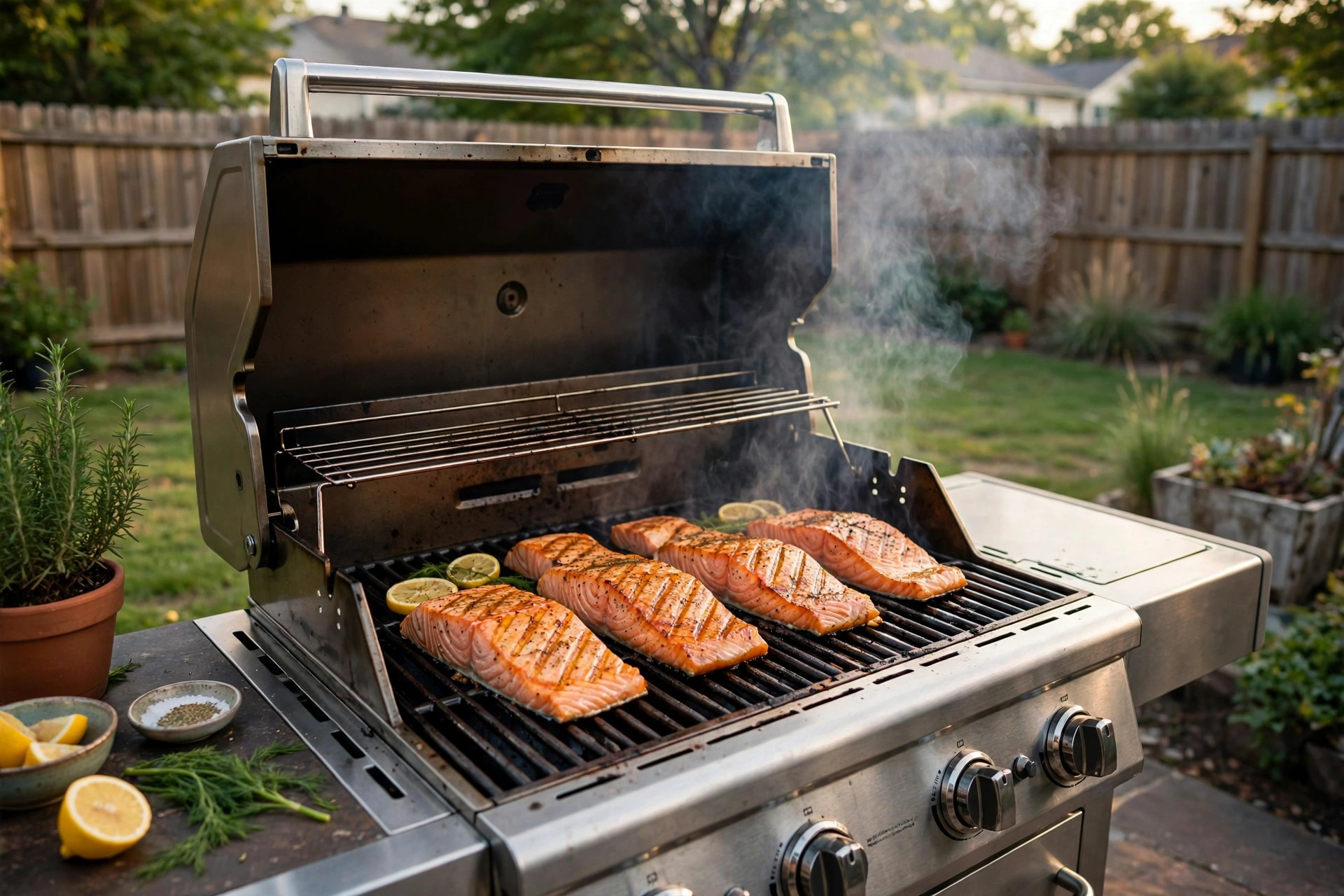

Many cooks ask how to grill fish without sticking. It is a fair question. Fish is delicate. A fillet can tear in half the moment it touches a grate that is not ready. The skin pulls off. The flesh falls through the bars. The meal turns into a mess.
But there is no secret to it. Grilling fish well rests on simple habits. They are the same habits that good cooks have used for years. Clean the grate. Heat it fully. Oil it well. Dry the fish. Leave the fish alone until it releases on its own. Learn these steps once and they stay with you for life. This guide walks through each one in plain order.
Why It Matters
Fish sticks because of science. Proteins in the flesh bond to bare metal. The bond is strongest when the grate is cool, dirty, or dry. It weakens when the grate is hot, clean, and oiled. That is the whole story.
A whole fillet cooks better than a broken one. It holds its juices inside. The flesh firms up in one piece. The skin crisps into a golden crust. A fillet that tears apart dries out fast. It cooks unevenly. Some parts burn while others stay raw.
There is also money at stake. Good fish is not cheap. Salmon, halibut, and swordfish cost more than most meats. One torn fillet can waste the price of a meal. A few minutes of care protect that cost.
And there is pride. Serving a clean, golden fillet with clear grill marks feels like a small victory. Guests notice. They ask how you did it. You will know the answer: heat, clean grates, and patience. Grilling guides from Weber stress the same basics for all grilled foods.
What to Look For When You Buy Fish: How to Grill Fish Without Sticking
Thick and Firm Fillets
Thick fish holds together. Salmon, tuna, swordfish, mahi mahi, and grouper are strong picks. Each is at least an inch thick. That thickness gives the flesh time to firm up before you flip it. Thin fillets like sole or flounder are a poor match for bare grates. They fall apart no matter how careful you are.
Skin On
Skin is a gift. It shields the flesh from the metal. It also crisps into a tasty layer that many people love. Ask the fish seller for skin-on fillets. If the fish has no skin, the rest of the steps matter even more. Oil and heat do the work that skin would have done.
Fresh and Firm
Fresh fish holds together better than old fish. Old flesh softens and breaks under its own weight. Smell the fish before you buy. It should smell like the sea. It should not smell sour. Press the flesh with a finger. It should spring back. If the dent stays, pick another piece. Seafood grilling tips from The Spruce Eats say the same: fresh fish behaves better on heat.
The Core Method
This is the heart of the guide. Each step matters. Do them in order.
1. Start With Clean Grates
Old food is the main cause of sticking. Carbon and grease from the last cook glue themselves to the fish. Heat the grill first. Then scrape the bars hard with a stiff wire brush. Clean every bar. For a deeper clean, read how to clean stainless steel grill grates and make it a habit after each cook.
2. Preheat Fully
Heat the grill for ten to fifteen minutes with the lid closed. The grates must be truly hot. A drop of water should dance on the metal. Medium-high heat suits most fish. Thick steaks like it there. Thin fillets want high heat and a short stay. Cold metal is a promise of sticking. Pellet grill cooking guides give the same advice for steady heat.
3. Oil the Hot Grates
Fold a paper towel into a thick pad. Pour a spoonful of oil with a high smoke point onto it. Canola or avocado oil works well. Grip the pad with long tongs. Wipe it across the hot bars. Cover the whole cooking area. Do it two or three times. The oil fills the small pores in the metal. This is the step most people skip. It is the step that matters most.
4. Dry the Fish and Oil It
Pat the fish dry with paper towels. Wet fish steams. Steam does not sear. It does not release. After the fish is dry, brush it lightly with oil on all sides. Add salt and pepper at the last moment. Salt pulls water to the surface, so early salting works against you. Dry, oiled, seasoned: that is the order.
5. Lay It Down and Leave It Alone
Set the fillet on the grate at a slight angle to the bars. The angle makes clean grill marks. Once the fish is down, do not touch it. Do not poke it. Do not test it. Wait three to four minutes. The crust will form. When the crust forms, the fish lets go on its own. Slide a thin spatula under one edge. If it lifts free, it is ready. If it resists, wait one more minute. Patience is the whole trick.
6. Flip Once and Finish
Slide a thin metal spatula fully under the fillet. Turn it in one smooth motion. A fish spatula is thin and wide. It supports the whole fillet. Cook the second side for half the time of the first. Check the thickest part with a wireless grill thermometer. Pull the fish when it reaches 145 degrees Fahrenheit. The flesh should flake with a fork and look just opaque in the center.
Types and Options
Direct Grilling on the Bars
This is the classic way. The fish sits right on the grate. It gives the best sear and the clearest grill marks. It works best for skin-on fillets and thick steaks. Every step above applies in full. Barbecue science from AmazingRibs explains why hot metal and dry surfaces sear best.
Grill Baskets and Toppers
A basket holds small pieces, thin fillets, shrimp, and vegetables. It flips in one motion. The basket still needs the same care: hot, clean, and oiled. Baskets cost little. They wash in minutes. They are a good buy if you grill fish often. You can find grill tools and accessories at most hardware stores.
Planks and Foil Packets
A cedar plank gives gentle smoke and zero sticking. Soak the plank in water for at least an hour before it goes on the grill. Foil packets steam the fish in its own juices. Both methods trade sear for ease. They are good choices for very delicate fish.
Cast Iron on the Grill
A cast iron skillet or griddle sits on the grill and cooks the fish with steady heat. There is no sticking risk at all. The pan must be hot and lightly oiled. Over time, seasoning builds a natural nonstick layer. Learn how to season cast iron grill grates to understand how that layer forms. Charcoal kamado cooking guides also praise cast iron for steady heat.
Cost and Price
The method costs almost nothing. You already own the grill. A stiff brush costs a few dollars. A thin fish spatula costs about the same as a fast-food lunch. Oil with a high smoke point is a kitchen staple. A grill basket is cheap.
The one tool worth spending on is a thermometer. It removes all guesswork. It tells you when the fish is done. It saves fillets from overcooking. Overcooked fish is dry fish. A good thermometer pays for itself in a single summer. Check grill reviews from Consumer Reports before you buy tools.
The real cost is the fish itself. Watch for sales on salmon sides. Frozen fillets are fine if you thaw them well. Thaw them in the refrigerator overnight, not on the counter. Press out the extra water with paper towels before they hit the grill. Buy oil in larger bottles if you grill often. It costs less per ounce. Store it in a cool, dark cabinet so it stays fresh.
Care and Upkeep
Clean the grates after every cook. Brush them while they are still hot. Grease comes off easily then. Once a month, do a deeper clean. Soak the grates or use a cleaner made for grill metal. Look for rust. Light rust comes off with a brush and a wipe of oil. Heavy rust may mean new grates.
Cover the grill after it cools. A cover keeps rain off the metal. It slows rust. Replace the brush when the bristles thin out. Loose bristles can land in food. That is a real hazard.
Keep your fish tools in one spot near the grill. The spatula, tongs, brush, and oil should live together. When the tools are ready, the cook goes smoothly. Kamado grill care guides remind cooks that steady care extends the life of any grill.
Safety
Hot grates burn skin in a second. Wear heat-proof gloves. Keep children and pets well away from the grill. Never leave a lit grill alone, even for a minute.
Raw fish needs clean handling. Wash your hands before and after you touch it. Use one plate for raw fish and a clean plate for cooked fish. Keep knives, boards, and tongs clean between tasks. A thermometer keeps you from serving fish that is undercooked. It also keeps you from drying it out.
Watch for flare-ups. Fish skin holds fat. Fat drips onto the fire and flames rise. If flames leap up, move the fish to a cooler part of the grill. Close the lid to calm the fire. Keep a spray bottle of water nearby for small flare-ups. Never aim a strong stream at a grease fire. Closing the lid is safer. Grill safety resources cover these basics in detail.
Frequently Asked Questions
Why does my fish always stick to the grill?
The grates are too cool, too dirty, or too dry. Preheat for ten to fifteen minutes with the lid closed. Scrape the bars clean with a wire brush. Oil them well with a towel and tongs. Fix all three and sticking drops fast.
Should I oil the fish or the grate?
Do both. Oil the hot grate first. Then pat the fish dry and brush it lightly with oil. The two layers work together. The grate oil fills the pores in the metal. The fish oil keeps the flesh from bonding to it.
What is the best fish for grilling?
Thick, firm fish is best. Salmon, tuna, swordfish, mahi mahi, and grouper all hold up well. They are thick enough to cook through without falling apart. Skin-on fillets give you a free shield against the grate.
How long should I cook fish on the grill?
Plan on eight to ten minutes per inch of thickness. Use medium-high heat. Flip once. Test the thickest part with a thermometer. Pull the fish at 145 degrees Fahrenheit. It should flake with a fork.
Can I grill frozen fish?
You can, but thawed fish cooks far better. Thaw it in the refrigerator overnight. Pat it dry before you oil it. Thawed fish sears and releases cleanly. Frozen fish steams on the grate and sticks.
Do I need a special grill to cook fish?
No. Gas, charcoal, and pellet grills all work. The method matters more than the machine. Clean grates, full heat, and oil fit any grill you own.
A Final Word
Grilling fish without sticking is not a trick. It is a habit. Clean the grate. Heat it well. Oil it right. Dry the fish. Leave it alone until it releases on its own. Do this every time and the grill will serve clean, golden fillets for years. The first cook takes focus. The tenth feels easy. Soon you will wonder why it ever seemed hard.
References
AmazingRibs.com. (n.d.). Barbecue and grilling science. https://www.amazingribs.com Big Green Egg. (n.d.). Kamado grills and outdoor cooking. https://www.biggreenegg.com Char-Broil. (n.d.). Gas and charcoal grills. https://www.charbroil.com Consumer Reports. (n.d.). Product reviews and ratings. https://www.consumerreports.org Napoleon. (n.d.). Fireplaces, grills, and heating products. https://www.napoleon.com The Home Depot. (n.d.). Home improvement products. https://www.homedepot.com The Spruce Eats. (n.d.). Recipes and cooking guides. https://www.thespruceeats.com Traeger. (n.d.). Wood pellet grills. https://www.traeger.com Weber. (n.d.). Grills and outdoor cooking. https://www.weber.com
Was this guide helpful?

About Michael Thompson
The My Garden US editorial team writes practical, in-depth home and garden guides for American homeowners — tested advice, no fluff.
You May Also Like
Best Grill for Apartment Dwellers Reviews: What Really Works on a Balcony or Small Patio
September 17, 2026 0 views
The Best Outdoor Cookware Set for Camping: A Plain Guide
March 7, 2026 0 views
Best Grill for Condo Balcony Reviews: What Small-Space Cooks Should Know
February 21, 2026 0 views