
Introduction
A dog life jacket for small breeds pool safety is one of the smartest buys a pool owner can make. Many people think small dogs are safe near water because they are light. The truth is the reverse. Small breeds tire fast. Cold water shocks them. A steep pool step can trap them. This guide explains why the jacket matters, how to choose one, what it costs, and how to keep it in good shape.
Why a Life Jacket Matters for Small Breeds: Dog Life Jacket for Small Breeds Pool Safety
Small dogs face special risks in and around a pool.
First, they have little body fat. Fat helps dogs float. A lean Chihuahua or a small terrier sits low in the water. That means more work with every stroke.
Second, they have short legs and small lungs. A big dog can swim for half an hour. A small dog may be worn out in five minutes. When a dog tires, panic sets in. Panic leads to poor choices, like swimming away from the steps.
Third, small dogs get cold fast. Even warm pool water draws heat from a small body. Cold muscles cramp. A cramp in deep water is a grave risk.
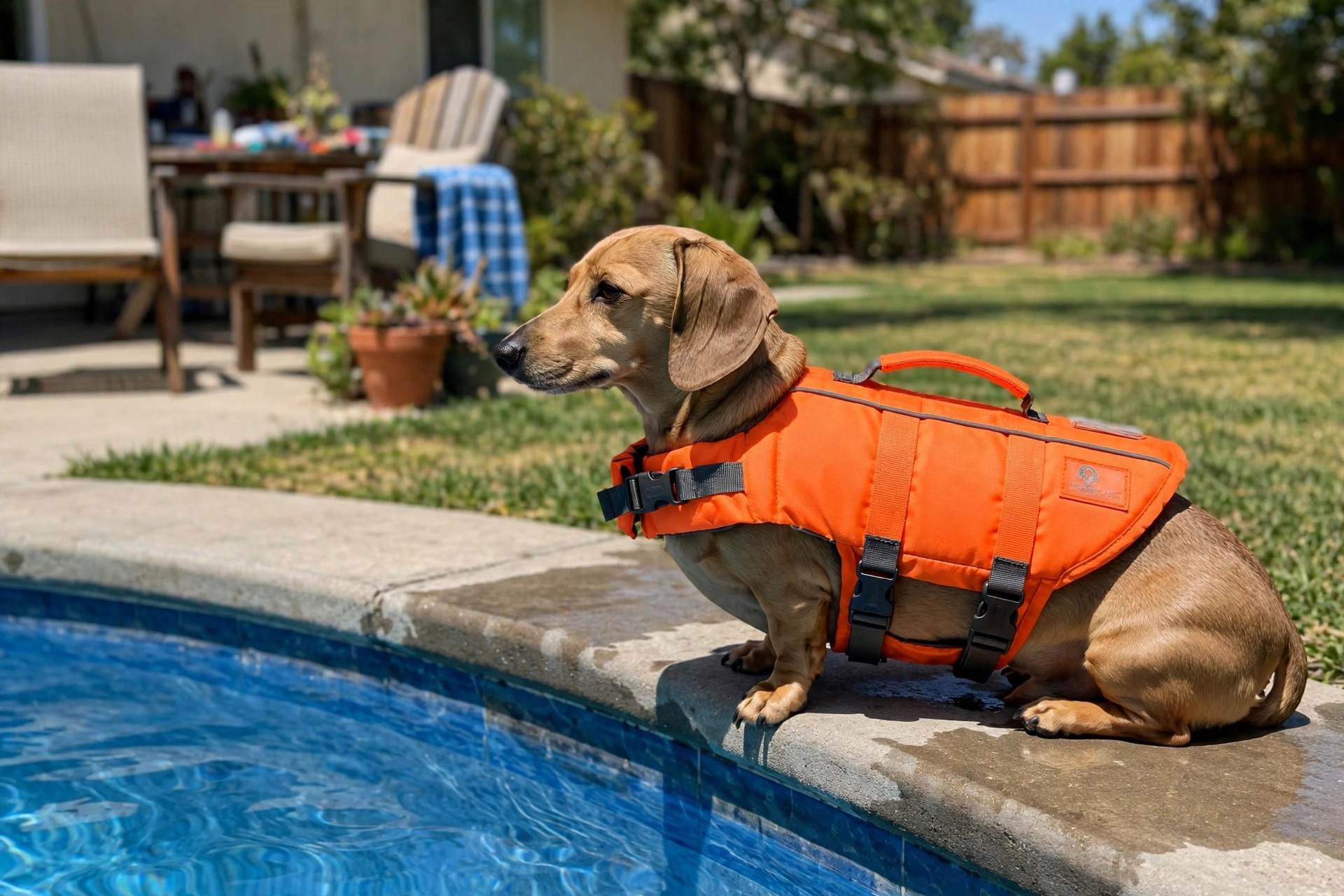
Fourth, many small breeds were not built for water. A pug or a shih tzu has a flat face. Water enters the nose and mouth with ease. A dachshund has short legs and a long back. It cannot swim with power.
A life jacket solves these problems. It holds the dog high in the water. It gives a tired dog time to rest. It has a handle on top, so you can lift a small dog out of the pool with one hand. The American Kennel Club notes that flotation gear is wise for dogs that swim in pools and lakes alike, and the ASPCA urges owners to watch pets near any open water at all times. A jacket never takes the place of watchful eyes, but it buys time when time matters most.
What to Look for When You Choose a Jacket
Fit is the first and most vital point. A loose jacket slides off. A tight jacket chokes and rubs. Measure three things: the neck, the chest just behind the front legs, and the length from neck to tail. Write the numbers down. Then match them to the maker’s size chart. When a dog falls between sizes, pick the smaller size. A snug fit is a safe fit.
Next, look at the straps. Good jackets have at least two belly straps, and three is better. Wide straps spread the load. Quick-release buckles let you free the dog in seconds. Never buy a jacket with only one strap. It can spin on the dog’s body.
Check the handle. A strong top handle is a must for small breeds. It lets you lift the dog straight out of the pool. Test the stitching. It should be tight and even. Cheap thread gives way when wet.
Look for a D-ring. This is a metal ring for the leash. It sits on the top or back of the jacket. It lets you guide the dog to the pool steps during training.
Color matters more than people think. Bright colors, like yellow, orange, or red, are easy to see in blue water. A dark jacket hides a struggling dog. Some jackets add reflective trim. This helps at dusk, when many families use the pool after work.
Foam panels should run the full length of the body. They keep the dog level in the water. Some jackets add a chin rest. This helps flat-faced breeds keep their nose above the surface. It is a small extra that earns its keep.
The PetMD library of pet care guides reminds owners that gear must suit the animal’s size and shape, not just its weight. Two dogs of the same weight can need very different jackets. Chewy and other pet shops list chest and neck ranges on every product page, so use them.
Types and Options on the Market
Most jackets fall into three broad groups.
Basic swim vests. These have foam panels, belly straps, and a top handle. They do the main job: keep the dog afloat. They cost the least. For a small breed that only wades near the pool, a basic vest may be enough.
Full-support jackets. These add a chin float, extra straps, and sometimes a tail guard. They keep the head high. They suit breeds with flat faces and dogs that have never swum. They cost more, but they give more margin for error.
Sport and boat jackets. These are built for lakes and boats. They use tough fabric and strong buckles. Some are made for dogs that jump off docks. Around a home pool, this level is more than most small dogs need. Still, the tough fabric lasts longer, which can make it a fair buy.
Fabric choice counts. Nylon shells dry fast and resist tears. Mesh underbellies let water drain. Foam should be soft and even. Hard lumps press on the ribs. Neoprene trim around the neck and legs stops rubbing on dogs with short coats.
Price bands are broad. A fair jacket for a small breed runs from about fifteen dollars to about sixty dollars. Basic vests sit at the low end. Full-support models sit at the high end. Brand names tend to cost more. Price alone does not prove worth. Read the size chart, check the strap count, and look at owner reviews with care.
Keep in mind that a clean home goes hand in hand with safe pets. Many dog owners also read about the best pet vacuum for dog hair on furniture when they plan the full care routine for a small dog.
Cost and Price: What You Should Expect to Pay
You do not need to spend much for solid protection.
Entry-level vests, often sold by large pet chains, run about fifteen to twenty-five dollars. They use thin foam and two straps. They work for calm dogs in calm water with a watchful owner close by.
Mid-range jackets run about twenty-five to forty-five dollars. This is the sweet spot for most buyers. You get three straps, a strong handle, a D-ring, and bright colors. Most small breeds do well here.
Top-end models run about forty-five to sixty dollars or more. You pay for tough fabric, chin floats, and refined fit systems. These suit dogs that swim often or dogs with breathing limits.
Watch for hidden costs. A jacket that fits this year may not fit next year. Puppies grow fast. A growing dog may need a new size each season. Budget for one replacement in the first two years.
Sales help. Spring is the best time to buy, as shops clear stock before pool season. Buy a size up only if the chart says the dog is at the top of the range. Never size up “to grow into it.” A loose jacket is a false friend.
Care and Upkeep
A life jacket lasts longer when you care for it.
Rinse it after every swim. Pool water holds chlorine. Chlorine breaks down fabric and thread. A quick rinse under the tap takes one minute. It adds a full season of life to the jacket.
Hang it to dry in the shade. Sun heat dries fast, but it also fades color and weakens foam. Never put it in a hot dryer. The foam can warp.
Check the straps and buckles each month. Look for frayed thread, cracked buckles, and torn foam. Pull each strap hard. If a buckle slips, replace the jacket. A failure in the water is not the time to find a weak point.
Store it flat or hung up. Do not fold it tight for months. Folded foam takes a set and floats less well. Keep it where you keep the pool gear, so you reach for it each time.
Wash it by hand when it smells. Use mild soap and cool water. Rinse well. Let it dry fully before you store it. A damp jacket grows mold, and mold harms the dog’s skin.
Dog owners who think about long-term care often plan ahead for aging pets too. If you share your home with an older large dog, you may also want to read about the best dog bed for joint pain large seniors.
Pool Safety Rules That Go With the Jacket
The jacket is one part of a safe pool. These rules form the rest.
Teach the dog where the steps are. Walk the dog to the steps on a leash, in the jacket, again and again. Dogs do not learn pool exits in one lesson. Repeat the drill until the dog heads for the steps on its own.
Never leave the dog alone at the pool. This is the first rule of pool safety for children, and it holds for dogs as well. The U.S. Consumer Product Safety Commission publishes pool safety guidance that stresses layers of protection, and the same idea fits pets: fence, cover, jacket, and watchful eyes all work together.
Use a pool fence with a self-closing gate. Small dogs slip through wide bars. Check the gap size. A gap wider than four inches can pass a small breed.
Keep a ramp or steps in the water. Some dogs cannot climb standard pool steps. A floating ramp gives them a way out. Test it with the dog in the jacket before you trust it.
Watch the water temperature. Below about seventy degrees Fahrenheit, keep swims short. Small dogs chill fast. If the dog shivers, the swim is over.
Limit swim time. Ten to fifteen minutes is plenty for most small breeds. Rest on the deck between swims. Offer fresh water. Dogs that drink pool water take in chlorine, which upsets the stomach.
Dry the ears after swimming. Water in the ear canal breeds infection. Floppy-eared breeds face the most risk. Many owners pair swim care with a regular ear routine, and guides to the best dog ear cleaner for floppy eared breeds can help you pick a gentle product.
The Red Cross offers pet first-aid courses that cover drowning response and CPR for dogs. One course takes a few hours. It is time well spent for any pool owner.
Frequently Asked Questions
Do small dogs really need life jackets, even if they can swim? Yes. Small dogs tire fast and chill fast. A dog that swims well for five minutes can still fail at minute ten. The jacket holds the dog up when strength runs out. It is cheap insurance.
What size life jacket fits a Chihuahua or a Yorkie? It depends on the chest and neck size, not the breed name. Measure the chest just behind the front legs and the neck at the base. Match the numbers to the maker’s chart. Most Chihuahuas take an extra-small. Many Yorkies take an extra-small or small. When in doubt, pick the smaller size for a snug fit.
Can my dog wear the life jacket all day by the pool? No. Take it off when the dog is out of the water for a long rest. A wet jacket chills the dog and rubs the skin. Put it back on before the next swim. Think of it like a seat belt: wear it for the risky part.
Will a life jacket teach my dog to swim on its own? No. A jacket supports the dog, but it does not teach skill. Use swim lessons with the jacket on. Guide the dog to the steps. Praise calm exits. Over weeks, the dog learns the safe path.
How often should I replace the jacket? Check it each season. Replace it when straps fray, buckles crack, or foam thins. Growing puppies may outgrow a jacket in months. Most jackets last two to four seasons with good care.
Are human life jackets safe for small dogs? No. Human jackets do not fit a dog’s shape. They slide, twist, and block the legs. Always buy a jacket made for dogs, sized to your dog’s chest and neck.
A Final Word
A dog life jacket for small breeds pool safety is a small buy with a large payoff. It keeps a tired dog afloat. It gives you a handle to lift the dog clear of the water. It pairs with fences, covers, training, and watchful eyes to form a full shield around the pool. Measure your dog, pick a bright color, check the straps, and use the jacket every time the dog is near the water. The pool should be a place of joy, and safe habits keep it that way.
Buying guides are also published by The Home Depot and The Spruce Pets. See also Petco and PetSmart for further detail.
References
American Kennel Club. (n.d.). Dog care and training resources. https://www.akc.org ASPCA. (n.d.). Pet care and animal welfare resources. https://www.aspca.org Chewy. (n.d.). Pet supplies. https://www.chewy.com Petco. (n.d.). Pet supplies and services. https://www.petco.com PetMD. (n.d.). Pet health information. https://www.petmd.com PetSmart. (n.d.). Pet supplies and services. https://www.petsmart.com The Home Depot. (n.d.). Home improvement products. https://www.homedepot.com The Spruce Pets. (n.d.). Pet care guides and product reviews. https://www.thesprucepets.com
Was this guide helpful?

About Sarah Mitchell
The My Garden US editorial team writes practical, in-depth home and garden guides for American homeowners — tested advice, no fluff.
You May Also Like
Best Pet Vacuum for Dog Hair on Furniture
September 28, 2026 0 views
Best Dog Bed for Joint Pain Large Seniors
April 18, 2026 0 views
Pet Food Storage Container Airtight Large: A Complete Guide for American Pet Owners
April 24, 2026 0 views