Introduction
An old dog moves slow in the morning. He groans when he stands up. He turns in small circles before he lies down, as if the floor has grown harder over the years. This is the daily life of a large senior dog with sore joints. The best dog bed for joint pain large seniors is not a luxury item. It is basic care. A good bed takes pressure off hips, elbows, and shoulders. It lets an old dog rest deep and rise with less pain. This guide explains what to buy, what to skip, what these beds cost, and how to keep them clean. It will help you choose with a clear head and a kind heart.
Why Large Senior Dogs Need Joint Support: Best Dog Bed for Joint Pain Large Seniors
Large dogs age faster than small ones. A Great Dane or a Labrador may be called senior at age seven or eight. Their weight is the main reason. Every step presses many pounds through the hip and elbow joints. Over the years, the smooth cartilage in those joints wears thin. The bones rub closer together. The result is stiffness, limping, and pain that is worst after rest.
Hard floors make this worse. Tile, wood, and concrete give no cushion. A large dog that sleeps on a hard floor puts his full weight on two or three pressure points. The elbows and hips take the load. Over time, the skin over those points can thicken into calluses. In bad cases, open sores called hygromas can form on the elbows.
A supportive bed spreads the weight. Instead of two hard points, the whole body shares the load. Blood moves better through the legs. The dog can shift in his sleep without jolting awake in pain. Owners often report that a good bed is the single biggest change they make for an old dog. Diet and medicine matter, but rest is where the body repairs itself. A bed that supports the joints gives that repair a chance.
Veterinarians see this pattern every day. Senior dog care guides from groups like the American Society for the Prevention of Cruelty to Animals stress soft, warm resting places for aging pets. Pain guides on PetMD list orthopedic bedding as one of the first home steps for dogs with arthritis. The science is simple: less pressure means less pain.
What to Look For When You Shop
Foam Thickness and Density
Foam is the heart of the bed. For a large senior dog, look for a foam base at least four inches thick. Dogs over ninety pounds do better with five or six inches. Thin foam will flatten under a heavy dog. When the foam flattens, the dog is back on the floor again, and the bed is useless.
Density matters as much as thickness. Dense foam holds its shape for years. Cheap, airy foam sags in months. Press the foam with your hand in the store. It should push back slowly. It should not stay dented. Memory foam made for people works on the same idea, and pet beds borrow the same material.
Firm Support, Not Plush Softness
This point surprises many buyers. A bed that feels soft and fluffy in the store is often the wrong choice. Soft fill, like loose fiber or thin batting, lets a heavy dog sink straight through to the floor. What an old dog needs is firm, even support. The bed should hold the body level, like a good mattress holds a person.
Some beds mix materials. A firm foam base with a softer top layer can work well. The top layer gives comfort. The base gives support. Read the product details before you buy. Look for words like orthopedic, high density, and supportive. Be wary of beds that list only polyester fill with no foam at all.
The Right Size and Shape
Measure your dog. Have him lie on his side in his normal sleep pose. Measure from nose to tail base, then add six to eight inches. That is the length you need. Large breeds often need beds marked extra large or giant. A bed that is too small forces the dog to curl tight, which strains stiff joints.
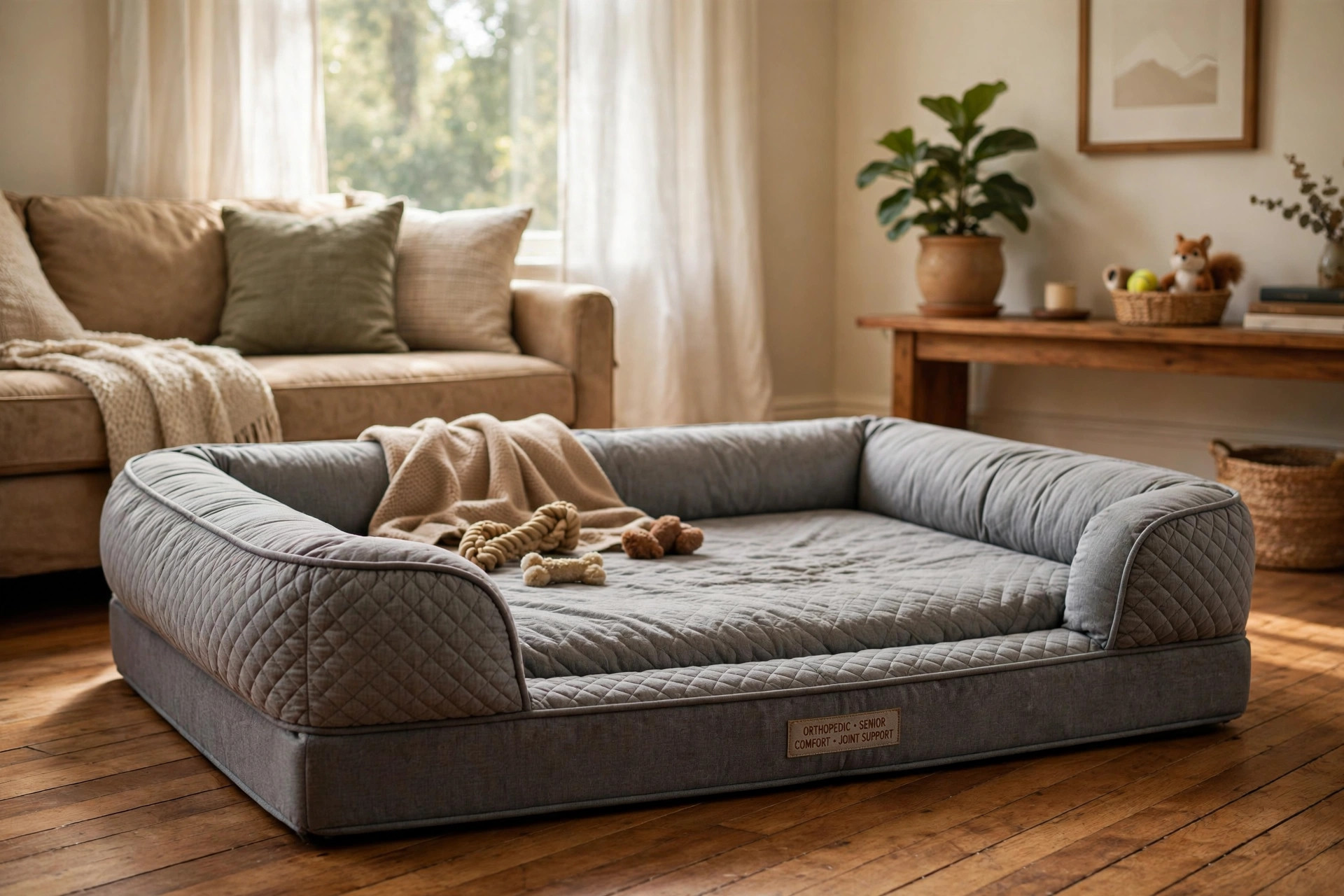
Shape is a matter of habit. Some dogs stretch out flat. A simple rectangular mattress pad suits them. Some dogs like to lean against something. A bolster bed, with raised sides, gives them a pillow for the head and a wall for the back. Watch how your dog sleeps now. Buy the shape that matches.
Covers You Can Wash
Old dogs have accidents. They drool. Their coats shed. A bed with a cover you cannot remove will smell bad within a month. Look for a zippered cover that comes off in one piece. Check that it fits a home washing machine. Many good beds also have a waterproof liner under the cover. That liner protects the foam from urine and spills. Foam that gets wet can grow mold, and mold is dangerous for old lungs.
Types of Beds for Sore Joints
Memory foam orthopedic beds are the top choice for most large seniors. They mold to the body and spread weight evenly. They cost more than basic beds, but they last longer and support better. Many owners find them worth the price within the first month of better sleep.
Egg crate foam beds are a budget option. The bumpy surface looks odd, but it does spread pressure better than flat cheap foam. These beds suit dogs in the early stages of stiffness. They may not be thick enough for very heavy dogs with advanced arthritis.
Bolster beds combine a foam base with raised edges. The bolsters serve as headrests. Many senior dogs like to sleep with the chin up, and a bolster makes that easy. Make sure the base foam is still thick and dense. Some bolster beds spend all the design effort on the sides and skimp on the base.
Elevated cot beds lift the dog a few inches off the ground. Air flows under the bed, which helps in hot weather. They keep the dog off cold floors in winter only if you add a pad. A cot alone gives little joint cushion, so it suits mild cases or warm climates. Some owners pair a cot with a thin foam pad for the best of both.
Heated beds and warming pads are a separate aid, not a bed type. Gentle warmth can soothe stiff joints on cold mornings. If you use one, choose a low wattage pad made for pets, and never leave it on high. Old dogs with thin skin can burn. Place the pad under a blanket, not right against the skin.
What These Beds Cost
Prices run wide. A basic egg crate foam bed for a large dog may cost thirty to sixty dollars. A true memory foam orthopedic bed in extra large often runs eighty to one hundred and fifty dollars. Premium brands with thick medical grade foam and waterproof liners can reach two hundred dollars or more.
Think in cost per year. A cheap bed that sags in six months costs more over time than a firm bed that lasts three years. Read buyer reviews with care. Look for reviews from owners of large senior dogs, not just small young ones. A bed that works for a twenty pound terrier may fail under a ninety pound shepherd.
Shop around before you buy. Large retailers like Chewy and Petco carry wide ranges and show many reviews in one place. General stores like Amazon, Wayfair, and IKEA also stock pet beds, and The Home Depot carries washable options in its pet aisle. Prices shift often, so compare the same size and foam thickness across stores.
Care and Upkeep
Wash the cover every one to two weeks. Old dogs shed skin oils that build up fast. Use a mild detergent with no strong scent. Strong scents can bother a dog’s nose and make him avoid the bed. Dry the cover fully before you put it back. Damp fabric against old skin can cause hot spots.
Air out the foam every few months. Take the cover off on a dry day and let the foam sit in fresh air for a few hours. Do not soak foam in water. If the foam gets wet, press it with towels and let it dry flat in a warm room. A waterproof liner makes this chore rare, which is why it is worth seeking.
Check the bed for sagging twice a year. Press the middle with both hands. If your hands sink near the floor, the foam is done. Replace it. An old dog will not tell you the bed has failed. He will simply start sleeping on the hard floor again, which is his way of voting.
Grooming ties into bed care. Long nails change how a dog stands and walks, and bad posture strains sore joints. A quiet dog nail grinder for nervous dogs lets you keep nails short without a stressful clipping session. Short nails, a clean bed, and fresh water close by form a simple comfort routine. Many owners keep a pet water fountain for multiple cats or a plain bowl near the bed so a stiff dog does not have to walk far to drink. If cats share the home, give them their own high resting spot, such as a sturdy tall cat tree for large cats, so the dog’s bed stays the dog’s own quiet place.
Safety Notes
Place the bed away from stairs and slick floors. A stiff dog that slips getting up can hurt himself badly. Put a non slip rug under and around the bed. Keep the path to the door, the food, and the yard short and clear.
Watch for chewing. Some senior dogs chew foam when bored or in pain. Swallowed foam can block the gut. If your dog chews, choose a bed with a tough canvas cover and check it often for tears. Remove the bed at once if foam starts coming out.
Heat needs care. Old dogs feel cold more, but they also move away from heat slower. If you use a warming pad, test it with your own hand first. It should feel mildly warm, never hot. Turn it off when the room is warm. Dogs with nerve damage may not feel a burn in time, so keep the setting low.
Raised beds and cots must stand steady. A large dog that steps on a wobbly edge can tip it and fall. Test the frame with your own weight before the dog uses it. Tighten bolts twice a year.
Frequently Asked Questions
How thick should a dog bed be for joint pain?
Four inches is the least for a large dog. Five to six inches is better for dogs over ninety pounds or with advanced arthritis. The test is simple: press down hard in the middle. If you feel the floor through the foam, it is too thin.
Is memory foam really better than regular fill?
For joint pain, yes. Regular polyester fill packs down fast under heavy weight. Memory foam springs back and spreads pressure over a wide area. That even spread is what eases sore hips and elbows. Breed care guides from the American Kennel Club and bedding reviews on The Spruce Pets both point to dense foam as the safer pick for seniors.
My old dog will not use the new bed. What can I do?
Put the new bed where the old one stood. Dogs trust habit and scent. Lay a worn shirt of yours on it for a day so it smells like you. Reward the dog with a treat each time he steps on it. Do not force him. Most dogs accept the bed within a week once it carries familiar smells.
Should the bed be near my bed or in a quiet room?
Near the family is best. Senior dogs can feel anxious when left alone, and worry makes pain feel worse. A corner of the living room or bedroom works well. Keep it out of busy walkways so the dog is not stepped on or startled awake.
How often should I replace an orthopedic dog bed?
Every two to three years for a large dog, sooner if it sags. Washable covers can be replaced on their own when they wear out. Mark the buy date on the liner with a fabric pen so you remember.
Can a good bed replace pain medicine?
No. A bed eases pressure and helps rest, but it does not treat the joint disease itself. If your dog limps, cries, or will not rise, see a veterinarian. Medicine, weight control, and gentle exercise work with the bed, not instead of it.
Final Word
A large senior dog asks for little. Food, water, a kind voice, and a soft place to lie. The best dog bed for joint pain large seniors meets that last need with honest support. Choose thick dense foam. Size it right. Keep it clean. Put it where the family gathers. You cannot give your old friend back his young joints. You can give him rest without pain, and on most days, that is enough.
References
Amazon. (n.d.). Online shopping. https://www.amazon.com American Kennel Club. (n.d.). Dog care and training resources. https://www.akc.org ASPCA. (n.d.). Pet care and animal welfare resources. https://www.aspca.org Chewy. (n.d.). Pet supplies. https://www.chewy.com IKEA. (n.d.). Home furnishings. https://www.ikea.com Petco. (n.d.). Pet supplies and services. https://www.petco.com PetMD. (n.d.). Pet health information. https://www.petmd.com The Home Depot. (n.d.). Home improvement products. https://www.homedepot.com The Spruce Pets. (n.d.). Pet care guides and product reviews. https://www.thesprucepets.com Wayfair. (n.d.). Furniture and home goods. https://www.wayfair.com
Was this guide helpful?

About Lisa Anderson
The My Garden US editorial team writes practical, in-depth home and garden guides for American homeowners — tested advice, no fluff.