A pet water fountain for small dogs and cats is a simple machine that moves water in a gentle stream. Most models hold between half a liter and two liters. A small pump pushes the water up and lets it fall back into the bowl. The moving water stays fresher than still water in a dish. Many small dogs and cats prefer it for this reason. A fountain can help your pet drink more water each day. Good hydration supports the kidneys, the digestion, and the general health of small animals. This guide explains how these fountains work, what to look for when you buy one, how much they cost, and how to keep one clean and safe.
Why Fresh Water Matters for Small Pets
Small dogs and cats need water every day, just as people do. Cats in particular tend to drink too little. Many cats came from dry regions, and their bodies do not signal thirst very well. Low water intake over months or years can raise the risk of kidney trouble and urinary problems. Veterinary groups such as the American Veterinary Medical Association stress that clean water should be available at all times. A pet water fountain for small dogs and cats answers this need in a practical way.
Moving water stays cleaner than water that sits still. Dust and hair fall into an open bowl and stay there. In a fountain, the water passes through a filter each time it cycles. The filter catches hair, small bits of food, and other debris. The constant motion also keeps the surface of the water from growing a film. Many owners notice that their pets visit a fountain more often than a bowl. The gentle sound of running water draws the animal in. Small dogs may drink from the falling stream. Cats often paw at it first, then drink. Over time, the fountain becomes part of the daily routine.
Fresh water also helps with food. Dry kibble contains little moisture. A pet that eats mostly dry food needs extra water to make up the difference. A fountain placed near the feeding area makes drinking easy. Pet care guides from Purina point out that good hydration aids digestion in both dogs and cats. For senior animals, steady water intake matters even more. Older kidneys need more support. A fountain is a small change that can bring a real benefit.
How to Choose the Right Fountain: Pet Water Fountain for Small Dogs and Cats
Not every fountain suits a small dog or a cat. A pet water fountain for small dogs and cats should match the size, habits, and comfort of your animal. Take time to compare models before you buy. Reading product details on Chewy or in guides from The Spruce Pets can help you see the differences.
Size and Capacity
Small dogs and cats drink small amounts at a time. A fountain with a capacity of one to two liters is usually enough. That amount serves one or two animals for a day or two. A very large fountain takes up counter space and wastes water when you change it. A very small one needs refilling too often. Look for a low profile. A low bowl lets a small cat drink without straining its neck. A low front edge lets a tiny dog reach the water. Some fountains have a raised spout. This suits cats that like to drink from the stream.
Pump Noise
A loud pump will scare a nervous cat. It will annoy you in a quiet house. Good fountains use low voltage pumps that run almost silently. Check the product description for the noise level. Some makers list a rating in decibels. A rating below thirty decibels is very quiet. If no rating is given, read customer reviews. Owners often mention noise. A quiet pump also means the motor is working well. A pump that grows louder over time may be clogged or worn out.
Material: Plastic, Ceramic, or Stainless Steel
Most fountains come in plastic, ceramic, or stainless steel. Plastic is light and cheap. It is the most common choice. Some cats develop chin acne from plastic bowls, so watch for red bumps under the chin. Ceramic is heavy and stable. It does not hold odors. It is dishwasher safe in many cases. Stainless steel is the toughest option. It resists scratches and bacteria. It costs more. Each material works well if you clean it on schedule. Your choice depends on your budget and your pet.
Types of Pet Water Fountains
Makers sell several designs. Each has its own way of moving water. The right type depends on how your pet likes to drink. Households with more than one cat may want to read about the best pet water fountain for multiple cats before deciding.
Flower and Daisy Styles
These fountains have a flower shaped top. Water bubbles up through the center or flows out of small spouts. The petals give cats several places to drink. Many cats like to drink from the gentle streams between petals. These models are often small and quiet. They suit one cat or one small dog very well.
Free Falling Stream
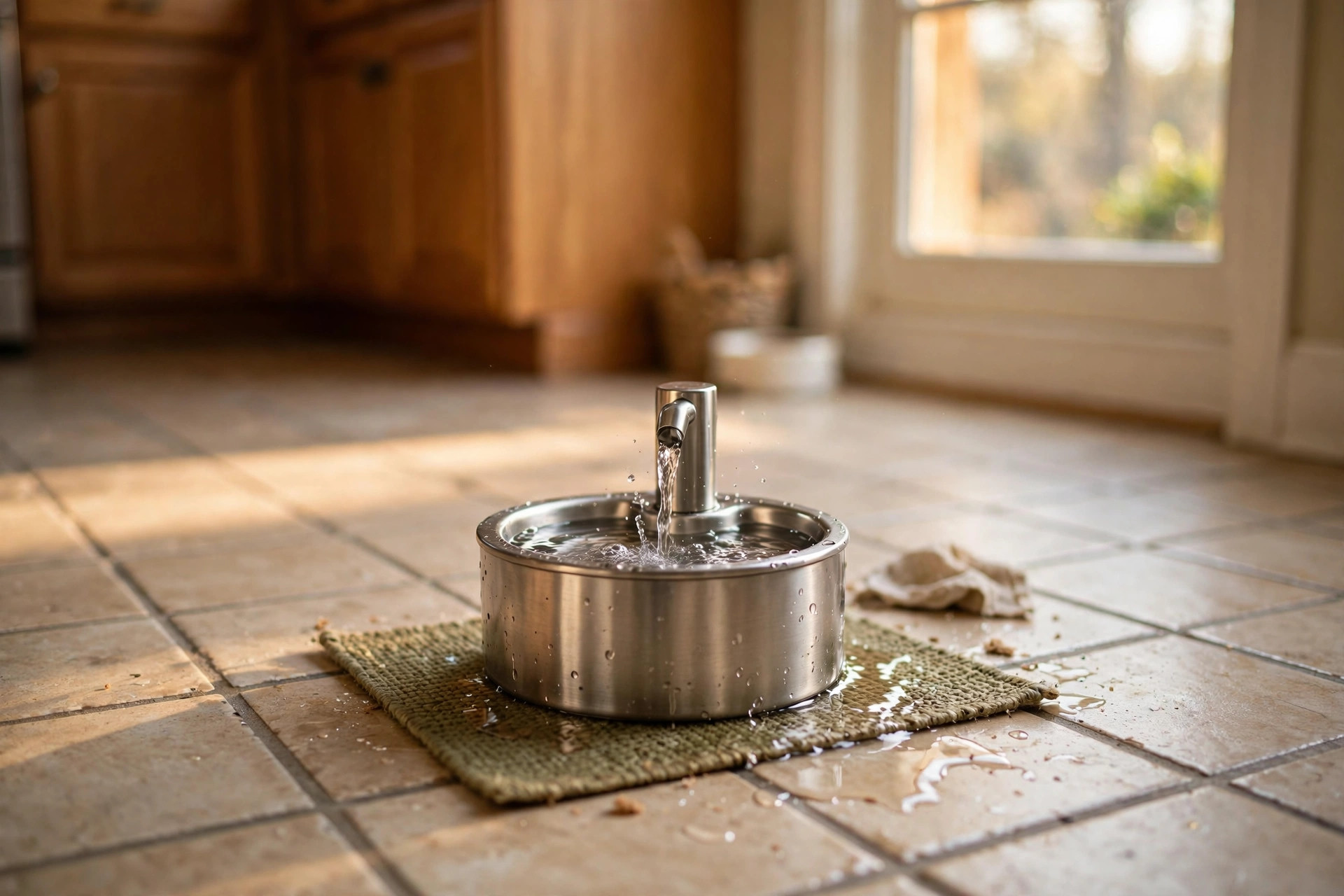
In this design, water pours from a spout in a clear arc. It mimics a faucet. Cats that drink from taps love this style. The stream adds oxygen to the water. The splash may wet the floor around the fountain. Place a mat under it to catch drips.
Bucket and Tower Styles
Some fountains look like a small bucket with a spout on top. Others are tall towers with water flowing down the sides. Tall models hold more water. They work for homes with two or three small pets. The larger size means less frequent refilling.
Gravity Dispensers
A gravity dispenser is not a true fountain. It has a bottle that refills the bowl as the level drops. There is no pump and no filter. The water does not move. These cost less and need no power. They do not keep water as fresh as a pump fountain. They can serve as a backup during a power outage.
Cost and Price
A pet water fountain for small dogs and cats costs between twenty and eighty dollars in most stores. Basic plastic models sit at the low end. Ceramic and stainless steel models cost more. A quiet pump with adjustable flow adds to the price. Filters are an added cost. Most filters need replacement every two to four weeks. A pack of filters costs around ten to fifteen dollars. Plan for this ongoing expense when you compare models.
Electricity use is tiny. A small pump draws only a few watts. It costs only a few dollars per year to run. Water use is also small. You will change the water often, so waste stays low. Home improvement stores such as Home Depot carry several models, and prices there match most online sellers. The total first year cost for a mid range fountain, including filters, usually falls between fifty and one hundred twenty dollars.
Care and Upkeep
A fountain needs regular cleaning. This is the most important part of ownership. A dirty fountain can grow slime and bacteria. Clean the bowl and pump at least once a week. Take the fountain apart. Rinse every part with warm water. Use a small brush on the pump. Do not use strong soap. Mild dish soap is enough. Rinse well so no soap remains. A full cleaning routine fits well with other pet care tasks. Keep feeding supplies organized too, for example with a pet food storage container airtight large, so water and food care stay on one schedule.
Filter Replacement
The filter catches debris as water cycles. It does not last forever. Most makers say to change the filter every two to four weeks. Mark the date on a calendar. A used filter slows the flow and lets debris pass through. Some fountains have a reminder light. If yours does not, set a phone reminder. Always keep a spare pack of filters at home.
Water Changes
Change the water fully once or twice a week. Top up the level between changes so the pump stays covered. A pump that runs dry will burn out. Use fresh tap water. Filtered water is fine too. In hard water areas, mineral buildup can coat the pump. Soak the pump in a mix of water and white vinegar once a month to dissolve the scale.
Safety Tips
Pet water fountains are safe when used with care. Keep these points in mind. The ASPCA offers general pet safety guidance that applies to any new product you bring home.
Keep the cord out of reach. Puppies and kittens chew cords. Run the cord behind the fountain and tape it to the floor if needed. Use a fountain with a low voltage pump. Most models use twelve volts or less. Check that the plug and outlet stay dry. Place the fountain on a level surface away from foot traffic. A knocked over fountain spills water and can damage the pump.
Choose a model with food grade materials. Avoid fountains made with unknown plastics. Stainless steel and ceramic are the safest bets. Wash your hands before you clean the fountain. Keep the fountain away from direct heat. Do not place it next to a stove or a radiator. In hot weather, change the water more often. The American Kennel Club notes that small dogs overheat faster than large ones, so fresh cool water matters in summer.
Watch your pet during the first days. Most animals accept a fountain quickly. A shy cat may need a few days. Leave the old water bowl out until the cat uses the fountain on its own. Never force an animal to use it. If a pet refuses the fountain after two weeks, the pump noise may be the cause. Try a quieter model.
When you travel with your pets, plan water for the trip too. A pet stroller for small dogs and cats travel keeps small animals close, and a portable water bottle keeps them hydrated on the road. Adoption and pet care sites such as Petfinder remind new owners that routine matters. Keep the fountain routine steady even during busy weeks.
Frequently Asked Questions
How often should I clean a pet water fountain? Clean the bowl and all parts once a week. Change the filter every two to four weeks. Change the water fully once or twice a week. In warm weather or multi pet homes, clean more often.
Do pet water fountains use a lot of electricity? No. Most pumps draw only two to six watts. That is less than a small night light. The yearly cost is only a few dollars. The pump can run all day without worry.
Are pet water fountains safe for cats with kidney disease? Many vets support their use. The moving water often helps cats drink more. More water can support kidney health. Ask your own vet first. Each animal is different, and your vet knows your pet best. Nutrition advice from Hill’s Pet and veterinary references from PetMD both stress steady hydration for cats.
Can small dogs and cats share one fountain? Yes, if both animals are healthy and the fountain is big enough. A one to two liter model suits one small dog and one cat. Clean it more often with two animals using it. Keep an eye on shy pets. Make sure each animal gets its turn.
Why is my fountain making noise? The water level is probably low. The pump sucks air when it is not fully covered. Add fresh water to the fill line. If noise continues after refilling, the pump may be clogged. Take it apart and clean it. A worn pump may need replacement.
Is a water fountain better than a bowl? For most pets, yes. The water stays fresher and cleaner. The filter removes debris. The motion attracts animals and helps them drink more. A bowl still works as a backup. Keep one bowl out during power outages or pump repairs.
A Final Word
A pet water fountain for small dogs and cats is a small purchase with daily benefits. It keeps water fresh. It filters out debris. It draws pets to drink more often. Choose a quiet model in the right size. Clean it each week. Change the filter on time. With basic care, a good fountain will last for years. Your small dog or cat will enjoy fresh water every day, and you will have one less daily chore to worry about.
References
American Kennel Club. (n.d.). Dog care and training resources. https://www.akc.org American Veterinary Medical Association. (n.d.). Pet care resources. https://www.avma.org ASPCA. (n.d.). Pet care and animal welfare resources. https://www.aspca.org Chewy. (n.d.). Pet supplies. https://www.chewy.com Hill’s Pet Nutrition. (n.d.). Pet nutrition guides. https://www.hillspet.com Petfinder. (n.d.). Pet adoption resources. https://www.petfinder.com PetMD. (n.d.). Pet health information. https://www.petmd.com Purina. (n.d.). Pet food and care. https://www.purina.com The Home Depot. (n.d.). Home improvement products. https://www.homedepot.com The Spruce Pets. (n.d.). Pet care guides and product reviews. https://www.thesprucepets.com
Was this guide helpful?

About Robert Taylor
The My Garden US editorial team writes practical, in-depth home and garden guides for American homeowners — tested advice, no fluff.