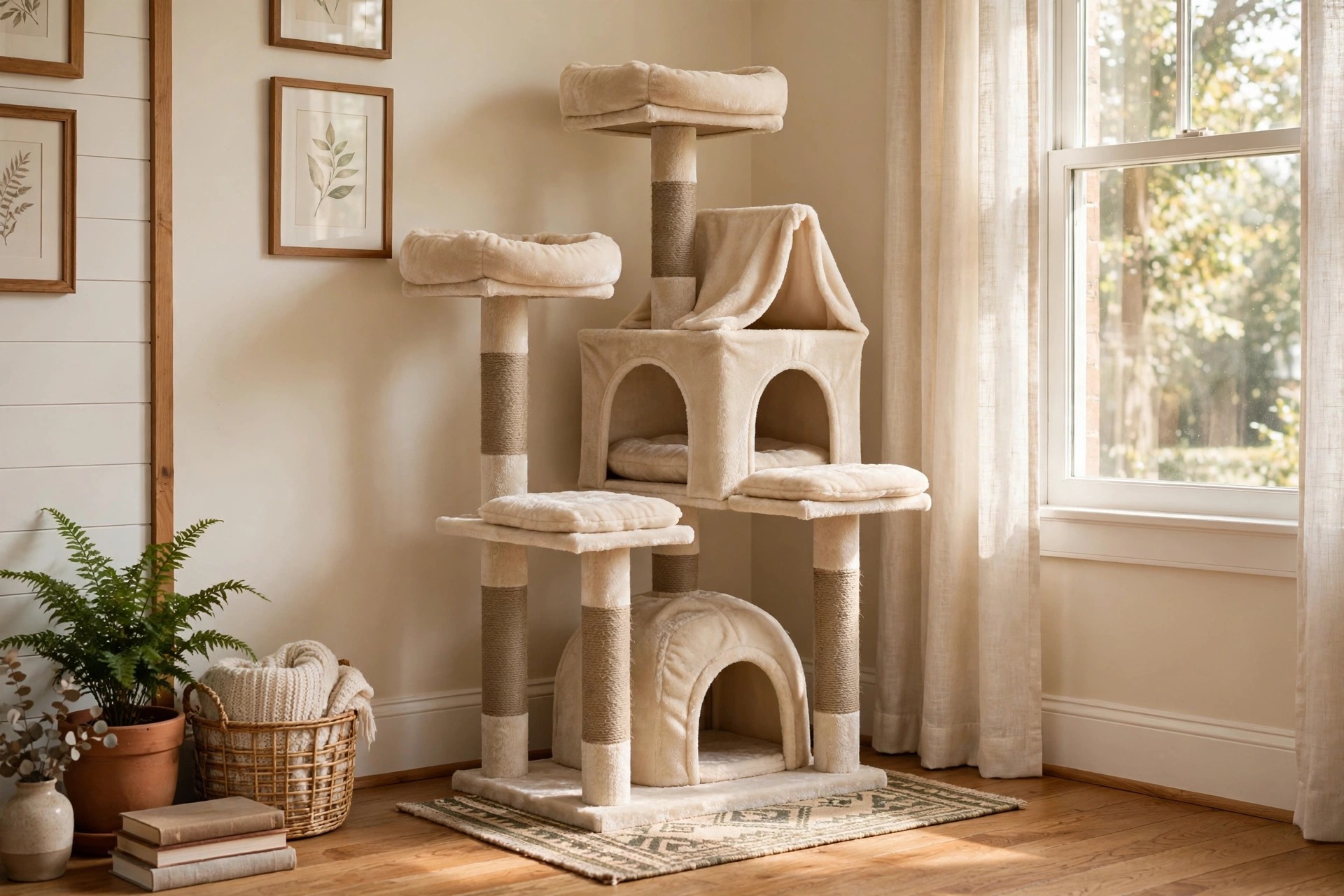
Some cats walk into a new room and own it. Others do not. A shy cat reads a room first. It checks every corner. It listens for feet on the stairs. It waits for the noise to stop. For this kind of cat, an open perch in the middle of the room can feel wrong. A cat tree with hiding spots for shy cats answers that need. It gives the cat a high view and a closed den in one piece of furniture. The cat can watch the world from above and slip out of sight when it wants. This guide explains why hiding spots matter, what to look for, the main types on the market, what they cost, how to keep them clean, and how to keep them safe. It is written for plain use in a real American home.
Why a Hiding Spot Matters to a Shy Cat
Cats come from small wild hunters. Those hunters survived by watching from cover. A closed box or a covered den feels like that cover. It tells the cat that nothing can reach it from behind. The experts at the ASPCA stress that cats need places to hide as part of good welfare. A cat that can hide when it wants feels less fear. Less fear means less stress. Less stress means better health.
A shy cat is not broken. It is careful. A new home, a new dog, a new baby, or a new roommate can all push a careful cat into long hiding under the bed. A cat tree with closed hides gives the same safety up in the open. The cat stays part of family life instead of vanishing into a closet. Many owners report that their timid cats start to sit out on the open perches within a few weeks, once they learn the den is there when they need it. The hiding spot builds trust.
Height matters too. A shy cat likes to be above eye level. From a high perch the cat can see who is coming. It does not need to run. A good cat tree gives both the den and the high view. That pair is what makes these trees work for timid pets.
What to Look for When You Choose: Cat Tree with Hiding Spots for Shy Cats
Shopping for a cat tree with hiding spots for shy cats is easy once you know the points that count. Take time with each one.
Size and Stability
First check the size. Measure the corner where the tree will stand. Most good trees are 48 to 72 inches tall. A tree shorter than 40 inches may not give a shy cat the high view it wants. A tree taller than 72 inches can work in rooms with high ceilings, but it must be very solid.
Stability is the most important point of all. Push the tree in the store or read owner reviews about wobble. A shy cat will not climb a tree that shakes. One bad scare on a wobbly tower can make the cat avoid it for months. Look for a wide base, heavy posts, and thick boards. If you share your home with a big cat, look at guides for a sturdy tall cat tree for large cats to learn what strong frames look like.
Materials and Fabric
Most cat trees are covered in carpet, faux fur, or plush fabric. Plush and faux fur feel soft and quiet. They suit shy cats well because they do not make much noise when the cat jumps on them. Carpet is rough and loud, but it holds up longer under claws.
Sisal rope on the posts is the standard for scratching. It should be wound tight and glued or stapled well. Loose rope unravels fast and can catch claws. Pressed wood boards are the usual frame. Solid wood costs more and lasts longer. Avoid trees made only of thin cardboard tubes. They break down and tip.
Number and Shape of Hides
Count the closed spots. One hide may be enough for a single shy cat. Two cats need at least two hides, or one may guard the only den. The hide should fit the cat with room to turn around. A hole 8 to 10 inches across suits most adult cats.
Look at how the hide sits on the tree. A hide at mid height is best for a shy cat. It is off the floor but not at the very top where drafts and bright light land. A round cubby with one or two openings feels like a real den. Tunnels between levels add play value. Some trees have a removable cushion in the hide, which makes cleaning much easier.
Types of Cat Trees With Hiding Spots
Shops sell many shapes. The list below covers the main ones you will see at stores like Chewy or Petco.
Classic tower with condo. This is the most common type. It has two or three levels, one or two square or round condos, sisal posts, and a top perch. It fits most rooms and most cats.
Corner cat tree. These are shaped to sit in a corner. They save floor space. Many have a tall condo at the base and small steps up to a high perch. They suit apartments.
Multi-condo mansion. Large trees with three or more closed hides. They suit homes with several shy or new cats. They take a lot of floor space and cost more.
Wall-mounted setups. Small hides and shelves bolt to the wall. They use no floor space at all. They suit renters who want to keep floors clear, but you must drill into studs.
Scratcher towers with a den. These combine a tall scratch post with one hide at the base. If your cat loves to scratch, this shape helps. For extra scratching room, many owners pair a hide tree with a tall scratching post for large cats so the tree itself stays in good shape longer.
Enclosed kitty condos in furniture style. These look like small side tables or bookcases. They blend with home decor. The hides are closed on more sides, which very shy cats often like best.
Cost and Price Ranges
Prices vary with size, wood, and fabric. Use this plain range as a guide before you shop at big stores such as Amazon or Wayfair.
– Small trees, one hide, under 45 inches: about 40 to 80 dollars. – Mid-size towers, one to two hides, 48 to 60 inches: about 80 to 160 dollars. – Large towers, two to three hides, 60 to 75 inches: about 160 to 300 dollars. – Solid wood designer trees: 300 dollars and up.
Cheap trees under 40 dollars can work for a kitten, but they often wobble and the fabric wears fast. For a shy adult cat, spend at least in the mid range. A steady tree that the cat trusts is worth more than two shaky ones it will not use. Watch for holiday sales at stores like PetSmart and The Home Depot, where good towers often drop 20 to 30 percent.
Care and Upkeep
A clean cat tree lasts longer and smells better. Plan on light care each week.
Vacuum the tree once a week with a hand tool. Fur collects in the hides first. Pull the cushions out and shake them outside. Wash any removable covers in cold water and air dry them. Most faux fur covers can go in the machine on gentle, but check the tag.
Tighten the bolts every few months. The tree gets climbed, jumped on, and scratched. Bolts loosen over time. A quick check with a wrench takes five minutes. If a sisal post wears smooth, wrap new sisal rope over it or buy a replacement post. Many brands sell spare parts.
Replace the tree when the frame breaks or the posts lean. A leaning tree is not safe. Do not let a shy cat keep using a broken tree. One fall can undo months of trust. The pet health writers at PetMD note that safe, well-kept furniture helps indoor cats stay active and calm.
Safety First
Safety starts with placement. Put the tree away from breakable lamps and picture frames. Keep it a few feet from window cords and blind cords, which can trap a cat. A tree near a sunny window perch is a good spot for daytime naps, but make sure the window screen is locked in place.
Check small parts. Buttons, dangling toys, and loose pom-poms can come off and be swallowed. Cut off any toy that hangs by a thin string, or replace it with a short felt strip. Make sure the tree cannot slide on smooth floors. Put a rug or non-slip pad under the base if the floor is tile or hardwood.
For kittens and very old cats, choose a tree with low steps between levels. Big jumps can hurt small or stiff joints. The American Kennel Club is a dog group, but its safety pages on pet furniture testing are still useful reading for any pet owner who wants strong, tip-proof designs. Review sites like The Spruce Pets also publish plain buying guides that show which trees pass stability tests.
Frequently Asked Questions
How long will it take my shy cat to use the tree? Most shy cats need one to four weeks. Put the tree in a quiet corner at first. Place a worn shirt that smells like you in the hide. Do not force the cat in. Let it find the tree on its own time. Treats near the base can help, but never push.
Should the hide face the room or the wall? Face one opening toward the room and, if there are two openings, turn the other toward a quieter side. The cat likes to see out. A hide pressed flat against a wall with the door facing the wall is useless.
Can two cats share one tree with hiding spots? Yes, if there are enough levels and at least one hide per cat. Watch the first week. If one cat blocks the other from the hides, you need a second tree or a larger one with more dens.
What if my cat only sleeps in the hide and never uses the perches? That is fine at first. The cat is using the tree for safety, which is what you bought it for. Over time, most shy cats start to sit on the higher perches, often at night when the house is quiet. Keep the open perches soft and warm to invite that step.
Is a covered hide better than an open basket for a shy cat? For the early months, yes. A covered hide gives the closed-in feel a timid cat wants. Once the cat grows bold, it may move to the open basket on its own. Trees that have both shapes let the cat choose.
Do cat trees with hiding spots work for newly adopted shelter cats? They are one of the best first buys for a new rescue. Shelter cats often arrive scared and quiet. A den high off the floor gives them a safe home base while they learn the house. Pair the tree with a calm routine and short, gentle visits.
A Short Final Word
A cat tree with hiding spots for shy cats is more than furniture. It is a safe home inside the home. Choose a steady frame, soft quiet fabric, and a hide at mid height. Place it in a calm corner. Clean it often and check the bolts. Then give your cat time. Shy cats do not rush trust, but they give it fully once they feel safe. A good tree helps that day come sooner.
References
Amazon. (n.d.). Online shopping. https://www.amazon.com American Kennel Club. (n.d.). Dog care and training resources. https://www.akc.org ASPCA. (n.d.). Pet care and animal welfare resources. https://www.aspca.org Chewy. (n.d.). Pet supplies. https://www.chewy.com Petco. (n.d.). Pet supplies and services. https://www.petco.com PetMD. (n.d.). Pet health information. https://www.petmd.com PetSmart. (n.d.). Pet supplies and services. https://www.petsmart.com The Home Depot. (n.d.). Home improvement products. https://www.homedepot.com The Spruce Pets. (n.d.). Pet care guides and product reviews. https://www.thesprucepets.com Wayfair. (n.d.). Furniture and home goods. https://www.wayfair.com
Was this guide helpful?

About James Carter
The My Garden US editorial team writes practical, in-depth home and garden guides for American homeowners — tested advice, no fluff.