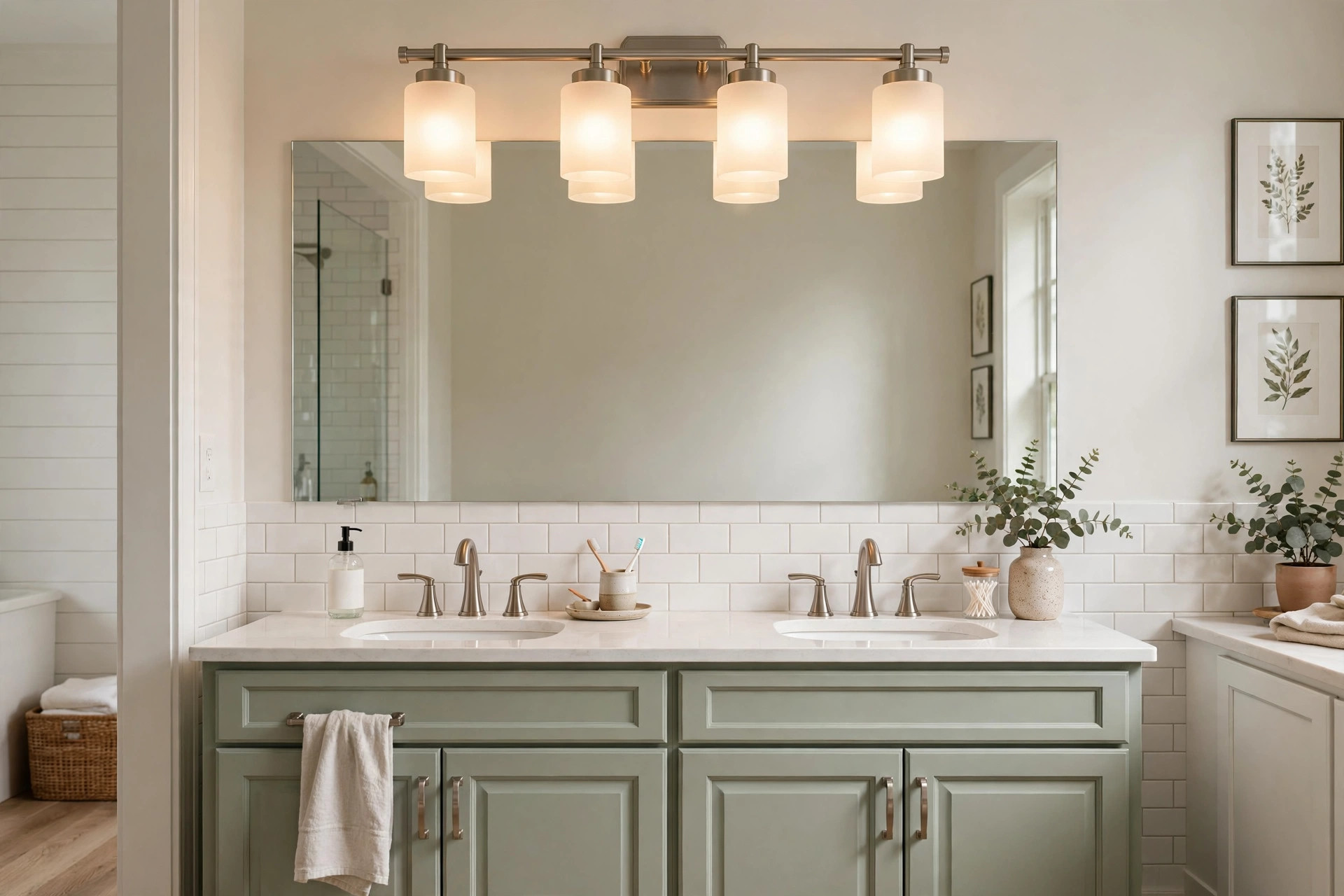

Good light at the mirror changes the whole bathroom. This vanity light bars reviews buying guide usa will help you pick the right bar for your mirror. A vanity light bar is a long fixture with two, three, or more bulbs in a row. It sits above or beside the mirror. It gives even light across the face. It helps with shaving, makeup, and daily care. Many older bathrooms have one harsh bulb in the ceiling. A vanity bar spreads the light where you need it.
Shoppers in the United States have many choices. Bars come in chrome, brushed nickel, matte black, brass, and bronze. Prices run from under thirty dollars to over three hundred. This guide walks through reviews, types, sizes, costs, and safety. It ends with answers to common questions.
Why a Vanity Light Bar Matters
The mirror is where the day starts. Most people stand close to it. They check their face, fix their hair, and put on makeup. Bad light makes all of this hard. A single ceiling bulb throws shadows under the eyes and chin. It makes colors look wrong. Makeup applied under bad light can look too dark or too pale outside.
A light bar fixes this. It puts light at eye level or just above the mirror. The light falls on the face from both sides and above. Shadows fade. Skin tones look true. Details show up clear. For men who shave, it means fewer missed spots. For women who wear makeup, it means even color.
There is also a comfort factor. A bathroom with a warm, even glow feels calm in the morning. It feels safe at night. Guests notice a well-lit bathroom. It looks clean and cared for.
Energy use matters too. Modern LED bars use very little power. An LED bar can replace a row of old incandescent bulbs and cut the electric bill for that room. Guidance on efficient lighting is available from energy-saving resources, which explain how LED bulbs save energy in the home.
What to Look for Before You Buy: Vanity Light Bars Reviews Buying Guide Usa
A good bar is more than a pretty fixture. Look at five things: size, brightness, color temperature, bulb type, and finish.
Size and Width
The bar should match the mirror. A common rule is to keep the bar at least as wide as the mirror, but not much wider. For a 24-inch mirror, a two-light or three-light bar around 18 to 24 inches works well. For a 36-inch mirror, a three-light or four-light bar of 30 to 36 inches fits best. A bar that is too short leaves the edges of the face in shadow. A bar that is too long sticks out past the mirror and looks wrong.
Measure the mirror first. Write down the width. Measure the space above the mirror up to the ceiling. Most bars need at least 6 inches of clear space. Check the wall. The bar mounts to a junction box.
For double sinks, many buyers use one long bar across the full mirror, or two separate bars, one over each sink. Two bars give more even light for two people.
Brightness
Brightness is measured in lumens. A bathroom mirror needs more light than most people think. For a small powder room, 800 to 1,200 lumens is enough. For a full bathroom where people apply makeup, 1,600 to 2,400 lumens is better. Many bars list the total lumens on the box or the product page.
Dimmer switches are worth the extra cost. They let you lower the light for a late-night visit or raise it for close work. Not all LED bars work with old dimmers. Check the box for a list of approved dimmers. A mismatch can cause flicker or buzz.
Reviews from real buyers often mention whether a bar is bright enough. Look for honest buyer reviews that describe the light in a real bathroom.
Color Temperature
Color temperature is measured in Kelvin (K). It tells you whether the light looks warm or cool. Warm light, around 2700K, looks yellow and soft. Neutral light, around 3500K, looks like clean daylight. Cool light, around 5000K, looks blue-white and sharp.
For a bathroom mirror, most experts suggest 3000K to 4000K. This range shows skin tones well. Makeup applied under it looks natural in daylight. Very warm light can hide flaws but also hides detail. Very cool light can make skin look pale and sickly.
Some bars let you change the color temperature. These are called selectable or tunable bars. They cost more but suit homes where tastes differ.
Bulb Type: LED, Fluorescent, or Incandescent
LED is the most common choice now. LED bars last 25,000 to 50,000 hours. They use a fraction of the power of old bulbs. Many have the LED built in, so there is no bulb to change. When the LED fails, you replace the whole fixture, but that is years away.
Fluorescent bars are older. They give soft, even light and cost less up front. They take a moment to warm up in cold bathrooms. They contain a small amount of mercury, so they need proper disposal.
Incandescent and halogen bars give warm, true color. They burn hot and use much more power. Few new bars use them.
Check for the ENERGY STAR label when you shop. It marks fixtures and bulbs that meet strict efficiency rules.
Finish and Style
The finish should match the faucet and other hardware. Chrome is bright and classic. Brushed nickel is softer and hides water spots. Matte black is bold and modern. Aged brass and oil-rubbed bronze suit warm, traditional rooms.
Think about the shade too. Frosted glass shades soften the light and hide the bulb. Clear shades show the bulb and suit vintage looks. Metal shades direct light down and up.
Browse modern lighting styles to see how finishes pair with different bathroom looks.
Main Types of Vanity Light Bars
Bars fall into a few clear types. Each suits a different bathroom.
Traditional bar with shades. This is the classic style. It has two to five lights, each with a glass shade. Shades point up or down. Down-light shades push light onto the face. Up-light shades bounce light off the ceiling for a soft glow.
Globe bar. Globes are round glass bulbs in a row. They give the old Hollywood mirror look. Clear globes show the filament. Frosted globes soften the light.
Sleek LED bar. This is a slim metal bar with a built-in LED strip. It has no shades. It gives a clean, modern line. Many are dimmable and let you pick the color temperature. They suit modern and minimal bathrooms.
Backlit mirror bar. Some mirrors have light built into the frame. These are not bars in the strict sense, but they serve the same job. They give very even light with no fixture on the wall. They cost more and need a special mirror.
Industrial cage bar. The bulbs sit inside wire or metal cages. This style suits lofts and rustic rooms. The light is direct and a bit harsh, so frosted bulbs help.
Plug-in bar. Most bars are hardwired to the wall box. A few are plug-in. They hang on the wall and plug into an outlet. They suit renters who cannot change wiring.
For side lighting, some buyers pair a bar above the mirror with small sconces on each side. This gives the best light of all. It removes nearly every shadow. See also our bedroom table lamps buying guide usa for matching bedside light ideas.
Cost and Price in the USA
Prices vary widely. A basic two-light chrome bar from a big-box store can cost 25 to 50 dollars. A three-light brushed nickel bar with frosted shades runs 60 to 120 dollars. Designer bars in brass or matte black with premium LEDs run 150 to 350 dollars.
What drives the price? Finish is one factor. Brass and bronze cost more than chrome. Built-in LEDs cost more up front than socket fixtures, but they save on bulbs over time. Dimmable models and selectable color temperature add cost. Brand name adds cost too.
Compare prices before you buy. Big home stores and national hardware chains carry the same models at different prices during sales. Holiday weekends often bring 20 to 40 percent off lighting.
Do not forget the extra costs. A dimmer switch costs 20 to 40 dollars. An electrician may charge 100 to 200 dollars to install a hardwired bar if there is no box in place. Quality LED bulbs from major makers last for years and hold their color.
Budget tip: buy the finish and size you want, not the cheapest bar. A cheap bar can rust or peel in a steamy bathroom within two years. A mid-range bar from a known maker often lasts ten years or more.
Installation Basics
Most bars mount to a standard wall box. Turn off the power at the breaker first. This is not optional. Test with a voltage tester to be sure the power is off.
The steps are simple for a replacement. Remove the old fixture. Note how the wires connect: black to black, white to white, ground to ground. Mount the new bracket. Connect the wires with wire nuts. Attach the fixture to the bracket. Add the shades and bulbs. Turn the power back on and test.
Height matters. The center of the bar should sit about 65 to 70 inches from the floor for most adults. That puts the light near eye level. For a tall household, mount it a bit higher. For a kids’ bathroom, a bit lower.
If there is no box above the mirror, you need an electrician. Running new wire through a finished wall is not a beginner job. Get two or three quotes.
For plug-in bars, mount the bracket with wall anchors. Run the cord neatly to the outlet. Never run the cord across a sink where it can get wet.
Outdoor lighting follows similar rules for brightness and placement. Our guide to outdoor wall lanterns florida homes usa covers exterior fixtures in detail.
Care and Upkeep
A vanity bar needs little care. Dust the shades every month or two. Dust cuts light output more than people think.
Clean glass shades with a soft cloth and mild soap. Dry them fully before putting them back. In hard-water areas, wipe chrome and nickel finishes to stop spots.
Check the bulbs once a year. LEDs dim slowly over time. For socket fixtures, keep a spare bulb on hand. Replace burned-out bulbs right away so the remaining bulbs do not work harder.
Look at the wall around the fixture once a year. Steam can loosen paint and caulk. If you see peeling, fix it before moisture reaches the wiring.
Patio and yard lights need the same kind of care. See our patio string lights american homes guide for outdoor upkeep tips.
Safety
Bathrooms mix water and electricity. Respect that mix.
Always turn off the breaker before working on a fixture. Use a voltage tester. Water and wet hands never touch wiring.
Check the damp rating. Bathroom fixtures should be rated for damp locations. A fixture rated only for dry locations can corrode in a steamy bathroom. The rating is printed on the box and often on the fixture itself.
Keep the bar clear of the shower and tub. Building codes set minimum distances. In most of the USA, a fixture over a tub or shower needs a wet rating and often a cover.
Do not exceed the wattage limit. Each socket has a maximum wattage. LED bulbs make this easy, since a 60-watt-equivalent LED uses only about 9 watts. Heat from an over-watt bulb can crack the shade or melt the socket.
Ground the fixture. The ground wire is a safety path. Never skip it.
If the fixture feels hot, buzzes loudly, or smells like burning plastic, turn off the breaker and call an electrician. These are warning signs.
Frequently Asked Questions
How wide should a vanity light bar be? Match it to the mirror. For a single sink, pick a bar close to the mirror width: 18 to 24 inches for a 24-inch mirror, 30 to 36 inches for a 36-inch mirror. For a double sink with one long mirror, one long bar or two separate bars both work.
Are LED vanity bars better than bulb-style bars? For most buyers, yes. LEDs use less power, last longer, and run cooler. Bulb-style bars let you change the bulb and the look. If you love vintage Edison bulbs, a socket-style bar is the only way to get that look.
What color temperature is best for a bathroom mirror? Most people do best with 3000K to 4000K. This range shows true skin color. Go warmer (2700K) for a cozy feel. Go cooler (4000K to 5000K) for task work like detailed makeup.
Can I install a vanity bar myself? If a wall box already sits above the mirror, a handy homeowner can swap the fixture in under an hour. Turn off the breaker first. If there is no box, hire an electrician.
Do vanity bars work with dimmer switches? Many do, but check the label. The bar and the dimmer must be marked as compatible. LED bars need LED-rated dimmers. An old dimmer made for incandescent bulbs can cause flicker.
How much does a good vanity light bar cost? Expect 60 to 150 dollars for a solid mid-range bar. Basic models start near 30 dollars. Designer models reach 300 dollars or more. Watch for sales at lighting specialists.
A Short Final Word
A vanity light bar is a small change with a big effect. It makes the mirror useful. It makes the bathroom feel right. Pick the size that fits your mirror. Pick 3000K to 4000K for true color. Choose LED for low cost and long life. Match the finish to your hardware. Check reviews before you buy, and the light will serve you well for years.
References
ENERGY STAR. (n.d.). Energy efficient products. https://www.energystar.gov Lamps Plus. (n.d.). Lighting and home decor. https://www.lampsplus.com Lowe’s. (n.d.). Home improvement products. https://www.lowes.com Lumens. (n.d.). Lighting and ceiling fans. https://www.lumens.com Philips. (n.d.). Lighting products. https://www.philips.com The Home Depot. (n.d.). Home improvement products. https://www.homedepot.com The Spruce. (n.d.). Home and garden advice. https://www.thespruce.com U.S. Department of Energy. (n.d.). Energy efficiency and renewable energy. https://www.energy.gov
Was this guide helpful?

About Jennifer Lee
The My Garden US editorial team writes practical, in-depth home and garden guides for American homeowners — tested advice, no fluff.
You May Also Like
Sensor Porch Lights: A Guide to USA Online Deals
February 5, 2026 0 views
Kitchen Track Lighting Reviews: A Buying Guide for USA Homes
March 26, 2026 0 views
Motion Flood Lights American Homes Guide
March 21, 2026 0 views