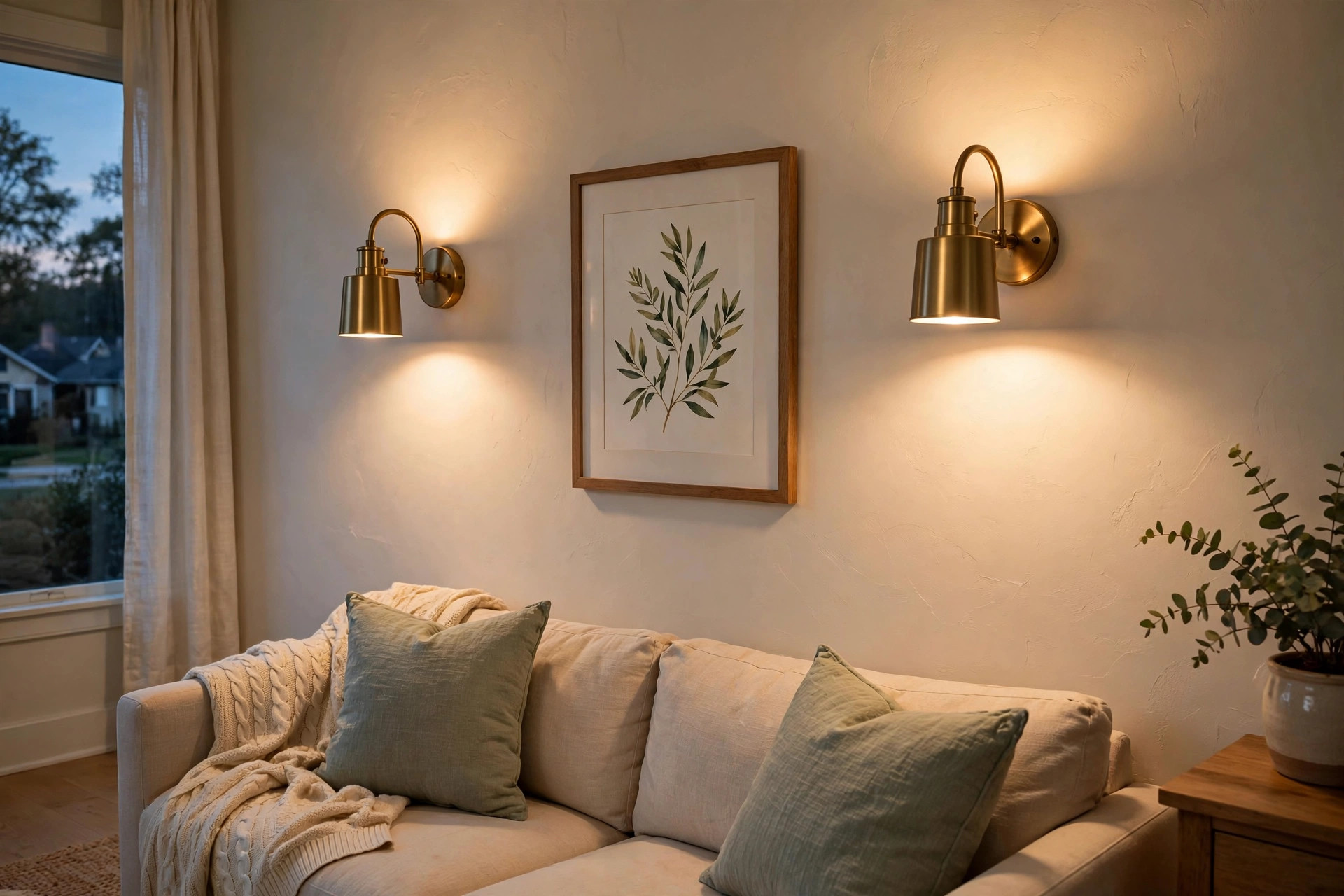
Indoor wall sconces for California homes are one of the simplest ways to lift a room without a full remodel. A sconce is a small light that fastens to a wall and shines up, down, or in both directions. It fills in the dark corners that ceiling lights leave behind. Many home owners in California add them to hallways, baths, bedrooms, and living rooms where a table lamp would take up too much space. This guide walks through why they work, what kinds exist, what they cost, and how to choose, hang, and care for them. By the end you will know which wall sconces suit your home and your budget.
Why Wall Sconces Matter In The Home
Ceiling lights do most of the heavy work in a house, but they leave gaps. Corners stay dim. Art goes unnoticed. A hallway can feel like a tunnel even with the overhead light on. Wall sconces fix these small problems because they sit at eye level and spread light where it is actually seen.
A sconce adds layers to a lighting plan. Designers often talk about three kinds of light: general, task, and accent. A ceiling fixture gives general light. A desk lamp gives task light. A wall sconce can do the other two. It can light a page beside a bed or draw the eye to a painting in a hall. The room feels finished even when nothing else changes.
Sconces also save floor and table space. In a small bedroom there may be no room for a lamp on the nightstand. A wall light beside the bed frees the whole table top for books, glasses, and a clock. In a narrow bath, a pair of sconces beside the mirror lights the face better than one bright bar above it. That even, side-to-side light flatters faces and makes shaving or makeup easier.
There is also a mood factor that is hard to argue with. A room with one bright ceiling light feels flat. Add two warm sconces and the same room feels calm at night. The effect is simple and costs little once the fixtures are in place.
How To Choose The Right Sconces: Indoor Wall Sconces California Homes Usa
Choice starts with the room and the job you want the light to do. A hallway needs low, even light along the wall. A bathroom needs bright, shadow-free light at the face. A bedroom reading nook needs a small, focused beam. Write down the purpose before you shop. It keeps you from buying a pretty fixture that cannot do the work.
Match The Style Of Your Home
California homes cover a wide range of looks, from coastal cottages to Spanish revivals to plain ranch houses. A sleek metal sconce can look wrong next to a tile-roofed Mediterranean entry, and an old-style lantern may clash with a new white kitchen. Look at the metals and shapes already in the room. Door handles, faucets, and curtain rods give clues. Brushed nickel pairs well with cool greys. Warm brass suits wood tones and cream walls. Black metal works in modern and farmhouse rooms alike. It is fine to mix, but keep one finish as the main theme in each room.
Check The Size Against The Wall
Scale is the most common mistake. A tiny sconce disappears on a tall entry wall. An oversized one crowds a small bath. As a rough rule, a single sconce for a hallway should be about one-tenth of the wall height. A pair flanking a mirror should each be no wider than about one-third of the mirror. When in doubt, cut paper shapes to size and tape them to the wall. Stand back and look from the doorway. The right size feels balanced, not lost and not loud.
Pick The Light Color
Bulbs carry a warmth number called kelvins. Lower numbers look warmer. Most living spaces feel best between 2700K and 3000K, a soft warm white. Bathrooms and work areas can go up to 3500K for a crisper look. Avoid cool daylight bulbs above 4000K in a bedroom or dining room; they feel harsh at night. If the room has dimmers, buy bulbs marked as dimmable so the color stays steady when the light is turned down.
Types And Options To Know
Wall sconces come in a few main forms. Knowing them by name makes shopping faster.
Uplights shine toward the ceiling. They wash the wall and ceiling with soft light and hide the bulb from view. They suit living rooms, entries, and dining rooms where you want glow without glare.
Downlights point at the floor. They give a pool of light for a reading chair or a step. They also suit hallways where you want the light low and contained.
Up-and-down lights do both. A slim bar or tube throws light up and down at once. These are popular in modern homes because one fixture does two jobs.
Swing-arm sconces reach out from the wall on a jointed arm. You can pull them close for reading and push them back when done. They are a strong choice for bedrooms and offices where space is tight but task light matters.
Picture lights and bath bars are special sconces built for one job. Picture lights clip above art. Bath bars sit beside or above a mirror. If you shop for reading floor lamps california homes usa you will see the same logic at work: the best light is the one aimed at the task.
Wiring choices matter too. Hardwired sconces tie into the house wiring and run on a wall switch. They look clean and are the standard for new work. Plug-in sconces run a cord to a nearby outlet and work well in rentals or older homes where opening the wall is not wanted. Battery sconces exist for spots with no wiring at all, though their light is usually weaker and batteries must be changed.
Cost And Price Guide
Prices for indoor wall sconces spread wide. Simple builder-grade fixtures can cost as little as twenty dollars each at a big home store. Mid-range fixtures with nicer finishes run from forty to one hundred fifty dollars. Designer or hand-made pieces can reach three hundred dollars or more per light. Pairs are often sold together, which brings the per-light cost down a bit.
Installation is the other half of the bill. A new hardwired sconce where a box already exists is quick work for an electrician and may cost one hundred to two hundred dollars per fixture. If new wire must be fished through finished walls, expect more, often three to five hundred dollars per location depending on access. Paint touch-up and patching add to that.
Running costs are small now that most sconces use LED bulbs. A ten-watt LED gives as much light as an old sixty-watt bulb and costs pennies per month to run. LED bulbs also last ten to twenty years of normal use, so you rarely climb a ladder to change them. When you compare prices at a retailer site like Home Depot or Lowe’s, look at the bulb type as well as the fixture price. A cheap fixture that needs odd, costly bulbs can end up more costly than a pricier one that takes standard LEDs.
Install Tips For A Clean Result
Most buyers hang sconces at eye level. The center of the fixture should sit about sixty to sixty-five inches from the floor in halls and living rooms. In a bathroom, place the pair so the light centers on the face, usually near the mirror’s vertical middle. Over a bed, sixty inches from the floor to the center works for most reading positions.
Spacing counts. In a long hall, place sconces eight to ten feet apart so the pools of light just meet. Closer spacing makes a busier pattern; wider spacing leaves dark dips. For a pair flanking a mirror or door, set each one about twenty-eight to thirty-six inches apart, center to center, and keep them clear of cabinets that swing open.
If you are not comfortable with house wiring, hire a licensed electrician. A mistake inside a wall can start a fire or fail inspection later. For renters, plug-in sconces with neat cord covers give the same look without touching the wiring. Battery sconces work for closets and odd corners where even an outlet is far away.
Plan the switch before you buy. A dimmer makes sconces far more useful because you can drop the light level at night. Check that the fixture, the dimmer, and the bulb all list each other as compatible. The ENERGY STAR program and the U.S. Department of Energy publish lists of efficient lighting products that are worth a look when you want low running costs.
Care And Upkeep
Wall sconces ask little but reward a bit of care. Dust the shade and fixture every few months with a soft cloth. Dust cuts light output more than most people expect. Glass shades can be taken down and washed in warm soapy water, then dried fully before they go back up.
Check the bulb seats once a year. A bulb that works loose can flicker and wear out early. If a sconce uses a fabric or paper shade, keep it away from very hot halogen bulbs.
Outdoor-rated lights used on covered patios need more care. If your indoor sconces sit near an open door to the yard, wipe them down twice a year and watch for insects building nests inside the shade. Related outdoor choices, like outdoor wall lanterns where to buy usa, face tougher weather and need tougher finishes, but the cleaning routine is the same idea.
Keep spare bulbs on hand. LEDs last long, but a fixture with two matching bulbs looks wrong when one burns out and the store no longer stocks that exact bulb. Buy a spare pair when you buy the fixture and store them in a labeled bag.
Safety Notes To Follow
Lights on a wall are close to hands, heads, and fabric, so safety is worth a short checklist.
– Use the maximum wattage printed on the fixture. Never put in a hotter bulb than the label allows. – Keep fabric shades at least two inches from the bulb, and never let curtains touch a sconce. – Turn off power at the breaker before touching any wiring, not just at the wall switch. – In bathrooms, use fixtures rated for damp locations and keep them the required distance from tubs and showers. – If a fixture feels hot to the touch or smells of burning plastic, switch it off and call an electrician. – The Consumer Product Safety Commission posts recalls of light fixtures, so it is wise to check before buying secondhand.
California buyers should also know the state pushes efficient lighting. Title 24, the state’s energy code, sets rules for new and remodeled homes, including controls like dimmers or vacancy sensors in some rooms. A licensed electrician can tell you what applies to your project. Guides at Philips and Lumens explain bulb ratings, while Lamps Plus carries a wide range of styles to compare. Home lighting ideas from The Spruce can help you picture a layout before you drill a single hole. Outdoor rooms call for their own plan; see our note on patio string lights where to buy usa if you are lighting the yard as well, and HGTV offers room-by-room inspiration that pairs well with a sconce plan.
FAQ: Indoor Wall Sconces For California Homes
How high should indoor wall sconces be mounted? In most rooms, the center of the fixture should be about sixty to sixty-five inches above the floor. This puts the light near eye level for a standing adult. Over a bed or reading chair, the same height usually works, but sit in the chair and test with a paper template before you drill.
Do wall sconces need to be hardwired? No. Hardwired sconces are the cleanest look, but plug-in models work in any home with a nearby outlet. Plug-ins suit rentals and older homes where opening walls is not practical. Battery sconces work where there is no outlet at all, though they give less light.
How many sconces does a hallway need? Space them eight to ten feet apart along the wall. Measure the hall, divide by nine feet, and round to a whole number. A twenty-foot hall takes two or three fixtures. Fewer fixtures leave dark dips between them; more than needed can look busy.
Can I put a dimmer on wall sconces? Yes, in most cases. Buy a dimmer rated for LED use, and buy bulbs that are marked dimmable. Match the dimmer, fixture, and bulb brand lines as closely as you can. An old dimmer built for incandescent bulbs often makes LEDs flicker or hum.
Are wall sconces safe in a bathroom? They are safe when you use a fixture rated for damp locations and keep the right distance from tubs and showers. Sconces beside the mirror give the most flattering light. Do not use a fixture that is not rated for damp areas, and never hang one inside a shower zone.
What is the cheapest way to add sconces to a room? Plug-in sconces are the cheapest path. You buy the fixture, hang it on a hook or bracket, and run the cord to an outlet with a cord cover. There is no electrician bill and no wall patching. Battery sconces are cheaper still per fixture but need battery changes.
Final Word
Indoor wall sconces for California homes are a small change with a large payoff. They add light where ceilings cannot reach, save table space, and make rooms feel warmer at night. Pick the type for the job, size it to the wall, keep the light warm, and respect the wiring rules. Do that and a pair of modest sconces will earn their keep every evening for years.
References
ENERGY STAR. (n.d.). Energy efficient products. https://www.energystar.gov HGTV. (n.d.). Home and garden ideas. https://www.hgtv.com Lamps Plus. (n.d.). Lighting and home decor. https://www.lampsplus.com Lowe’s. (n.d.). Home improvement products. https://www.lowes.com Lumens. (n.d.). Lighting and ceiling fans. https://www.lumens.com Philips. (n.d.). Lighting products. https://www.philips.com The Home Depot. (n.d.). Home improvement products. https://www.homedepot.com The Spruce. (n.d.). Home and garden advice. https://www.thespruce.com U.S. Consumer Product Safety Commission. (n.d.). Product safety information. https://www.cpsc.gov U.S. Department of Energy. (n.d.). Energy efficiency and renewable energy. https://www.energy.gov
Was this guide helpful?

About Robert Taylor
The My Garden US editorial team writes practical, in-depth home and garden guides for American homeowners — tested advice, no fluff.