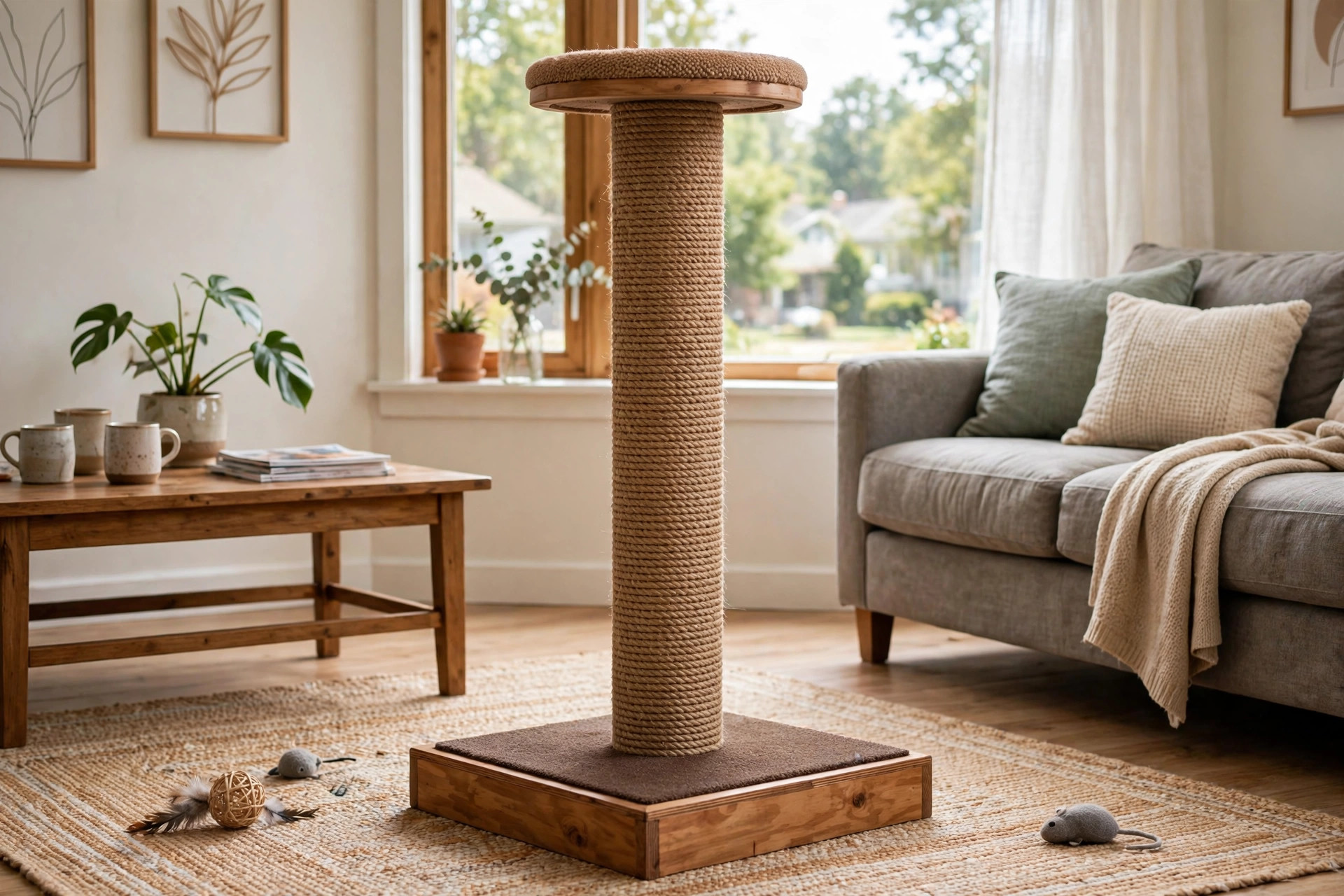

Big cats need tall scratching posts. A Maine Coon or a large tabby can weigh fifteen pounds or more. When such a cat stretches, it needs room. A short post does not serve. The best cat scratching post tall for large cats lets a big animal reach up high, dig its claws in, and pull down in one long motion. This guide explains what makes a tall post work, how to choose one, what it costs, and how to keep it safe and clean for years of use.
Why a Tall Scratching Post Matters for Large Cats
Scratching is a natural act. Cats scratch to shed worn claw sheaths, mark their home with scent, and stretch the muscles of the back and shoulders. Large breeds need more height than small house cats to do this well. A post that is too short forces a big cat to crouch while it scratches. That is poor for its joints and does not satisfy the stretch.
Many owners of large cats find their sofas and door frames suffer. This often happens because the scratching post on hand is too short or too wobbly. The ASPCA explains that scratching is normal feline behavior and that cats prefer posts that are tall enough for a full stretch. A tall post answers the need directly. It keeps claws off the furniture and keeps the cat calm.
Large cats also use a tall post as a lookout. A post of thirty inches or more lets a big cat sit up high and watch the room. This adds comfort. For a full climbing option, some owners pair the post with one of the sturdy cat trees for large cats reviewed in our other guide.
What to Look for in a Scratching Post for Big Cats: Best Cat Scratching Post Tall for Large Cats
Not all posts suit a heavy cat. A post made for a kitten will tip over when a large cat leans on it. Look for these traits when you shop.
Height
Choose a post of at least thirty inches. For very large breeds such as the Maine Coon or Ragdoll, thirty-six inches or more is better. The cat should be able to stand on its hind legs and reach the top with its front paws raised. Measure your cat against the post if you can. A pet care advice article from PetMD notes that cats scratch to mark territory, so height also gives the cat a sense of ownership over its spot.
Base and Stability
The base is the most important part of a tall post. A large cat can weigh as much as a small dog. When it pulls hard on the post, the base must hold. Look for a wide, heavy base of at least eighteen inches across. A square base is steadier than a round one in most cases. Some posts add weight inside the base. If a post wobbles in the store, skip it. A shaky post scares the cat and will be ignored.
Wrapping Material
Most tall posts are wrapped in sisal rope. Sisal is rough and tough, and cats like the feel of it under their claws. Natural sisal lasts longer than paper rope. Some posts use carpet, but carpet can teach cats that all carpet is fair game. That is not a lesson you want to teach. Sisal is the safer choice for most homes. Product guides from Chewy show how many tall posts now pair sisal columns with plush tops, which gives the cat a soft rest spot as well.
Post Diameter
A large cat has big paws. A thin post of two inches feels flimsy under a heavy animal. Look for a column of at least four inches in diameter. A thicker post also holds more sisal rope, which means the rope wears down more slowly.
Types of Tall Scratching Posts
Tall posts come in a few main forms. Each has a use. Choose the one that fits your cat and your space.
Simple Vertical Posts
A single tall column on a wide base is the classic form. It is easy to place in a corner. It takes little floor space. For many large cats, this is enough. It does the main job of scratching and stretching well.
Post With Perch
Some tall posts add a platform or a small bed at the top. The cat scratches, then climbs up to rest. Large cats like high seats. Make sure the perch is wide enough for a big cat to turn around on. A perch of at least sixteen inches across suits a large breed. The Spruce Pets offers care tips that remind owners to give cats vertical space, which these posts provide in one piece.
Post With Condo
A tall post can attach to a small house or condo box. The cat scratches outside and naps inside. These units cost more and take more room. They suit homes where the cat wants both a hideout and a scratching place.
Wall-Mounted Panels
A wall panel is a flat board covered in sisal that mounts to the wall. It does not tip over, so it is very safe for heavy cats. It takes no floor space. The drawback is that the cat cannot climb on it. Some owners use a wall panel plus a tall post together. Pet product options from PetSmart include both free-standing and wall-mounted styles.
Cost and Price Guide
Prices vary with size, material, and brand. A plain tall post of thirty inches wrapped in sisal rope often costs between thirty and sixty dollars. A post with a perch on top may cost sixty to one hundred dollars. Large tower-style units with posts, perches, and a condo can run from one hundred to two hundred dollars or more.
Solid wood posts cost more than posts built on cardboard tubes, but they last longer under a heavy cat. Sisal rope will wear out with time. Many owners rewrap a post with new rope instead of buying a new post. A roll of sisal rope costs about ten to fifteen dollars at stores such as Petco, which extends the life of a good post for another year or two.
Watch for sales at major retailers. The Home Depot carries pet furniture lines, and prices often drop during seasonal sales. Buying a well-made post once is cheaper than replacing a cheap one twice.
Care and Upkeep
A scratching post needs little care, but it does need some. Vacuum the post each week to remove loose fibers and cat hair. Check the sisal rope for loose strands. Clip frayed threads with scissors so the cat does not catch a claw in them.
Wipe the base with a damp cloth once a month. If the post has a plush perch, wash the cover if it comes off, or vacuum it well. A clean post is more inviting to the cat. Place the post near where the cat already likes to scratch. Cats are more likely to use a post that sits in a main room than one hidden in a spare bedroom.
Keep fresh water near the cat’s favorite spots as well. Many large cats drink more when water is easy to reach. Our guide to pet water fountains for multiple cats lists fountains that suit homes with more than one animal.
Replace the post when the sisal is worn through to the tube. A bare spot will not scratch well, and the cat may turn to the sofa instead. With a solid post and regular rewraps, the base and column can last many years.
Safety Tips
Safety matters most with heavy cats. A tall post can fall on a cat or a child if it is not stable. Test the post before you let the cat use it. Push it hard from the side. If it tips, add weight or choose a better post.
Place the post on a flat floor, away from stairs and sharp furniture edges. Do not place it where a falling post could hit a person or a small pet. If you use a wall-mounted panel, anchor it to a stud, not to drywall alone. The Humane Society of the United States reminds owners that a safe home setup prevents many common pet injuries.
Check the rope for staples or pins. Some cheap posts use metal staples to hold the rope. These can work loose and cut a paw. Choose posts where the rope is glued or tied. Trim the cat’s claws every two to four weeks so they do not snag in the rope. Ask your vet for the right way to trim if you are new to it.
Keep the area around the post clear of cords and small objects the cat might swallow. A large cat at full stretch can knock items off nearby tables. Move breakables away from the scratching zone. The American Kennel Club publishes home safety tips that apply to all pets, and the same rules about stable furniture apply here.
Frequently Asked Questions
How tall should a scratching post be for a large cat?
Thirty inches is the minimum for most large cats. Breeds such as Maine Coons, Ragdolls, and large tabbies do best with thirty-six inches or more. The test is simple: the cat should be able to stand on its hind legs and reach near the top of the post with its front paws up.
Why does my large cat ignore its scratching post?
The post may be too short, too wobbly, or in a bad spot. Large cats refuse posts that tip when they pull. Try a taller, heavier post. Place it near the sofa or chair the cat already scratches. Rub a little catnip on the sisal to draw the cat to it. Adoption and care resources from Petfinder note that cats need time to accept new furniture, so give the cat a week or two.
Is sisal rope better than carpet for a tall post?
Sisal rope is better for most homes. It is rough, it lasts, and it does not teach the cat to scratch carpeted floors. Carpet posts feel like home carpet to the cat. Once a cat learns that carpet is fine to scratch, it is hard to teach it otherwise.
How often should I replace a tall scratching post?
The sisal rope wears out first. With daily use by a large cat, rope may need rewrapping once a year. The post itself can last for years if the base and column are solid. Replace the whole post when the column bends, the base cracks, or the rope will not stay put after a rewrap.
Can I build my own tall scratching post for a large cat?
Yes. Many owners build posts from a wood column, a wide plywood base, and sisal rope. Use a base of at least eighteen inches across and glue the rope firmly. A homemade post can be as sturdy as a store post at a lower cost. Make sure there are no sharp edges, nails, or staples where the cat’s paws touch.
Should the post be near the litter box?
It is fine to keep the post in the same room, but do not place it right next to the box. Cats like their scratching spot in a social area of the home. Keep litter matters separate. Our guide to cat litter for odor control in multi-cat homes covers how to keep the litter area clean and away from play zones.
Final Word
The best cat scratching post tall for large cats is tall, heavy, and wrapped in real sisal. Thirty inches or more of height, a wide stable base, and a thick column give a big cat what it needs. A good post protects your furniture and keeps your cat’s claws and muscles in shape. Pick a solid build, place it where the cat spends its time, and rewrap the rope when it wears. Your large cat will thank you with years of happy scratching.
References
American Kennel Club. (n.d.). Dog care and training resources. https://www.akc.org ASPCA. (n.d.). Pet care and animal welfare resources. https://www.aspca.org Chewy. (n.d.). Pet supplies. https://www.chewy.com Petco. (n.d.). Pet supplies and services. https://www.petco.com Petfinder. (n.d.). Pet adoption resources. https://www.petfinder.com PetMD. (n.d.). Pet health information. https://www.petmd.com PetSmart. (n.d.). Pet supplies and services. https://www.petsmart.com The Home Depot. (n.d.). Home improvement products. https://www.homedepot.com The Humane Society of the United States. (n.d.). Animal protection and care. https://www.humanesociety.org The Spruce Pets. (n.d.). Pet care guides and product reviews. https://www.thesprucepets.com
Was this guide helpful?

About Emily Rodriguez
The My Garden US editorial team writes practical, in-depth home and garden guides for American homeowners — tested advice, no fluff.
You May Also Like

Pet Hair Dryer for Dogs: A Guide to Low Noise Grooming at Home
July 12, 2026 0 views
A Practical Guide to a Pet Ramp for Couch for Small Senior Dogs
May 18, 2026 0 views
A Large Cat Tree Condo for Multiple Cats: What to Know
March 21, 2026 0 views