Introduction
These best garden wagon for kids reviews will help you choose a wagon that is safe, strong, and fun for your child. A garden wagon gives a child a real job in the yard. A child can haul small bags of soil, carry hand tools, or pull cut flowers to the porch. The right wagon turns a slow chore into a game. The wrong wagon tips over, pinches small fingers, or rusts after one season.
Children love to copy what adults do. When a parent works with a garden cart built for heavy loads, a child wants a small version of the same tool. A kid-sized wagon fills that wish. It teaches care for living things. It also builds muscle and balance. This guide looks at what matters in a child’s garden wagon, what to avoid, and how much you should pay.
Why a Garden Wagon Matters for Kids: Best Garden Wagon for Kids Reviews
Real Work Builds Real Skills
A garden wagon is more than a toy. It is a working tool in a child’s size. When a child pulls a wagon full of potting mix to a raised bed, the child learns cause and effect. The wagon is heavy when full and light when empty. The child learns to load it with care so nothing falls out. These small lessons add up over time.
Gardening work also teaches patience. Seeds take days to sprout. A wagon of weeds must be pulled to the compost pile one trip at a time. A child who hauls, loads, and unloads learns that steady work gets results. Many parents report that children who garden eat more of the vegetables they grow.
Time Outside Instead of Time on Screens
A wagon gives a child a reason to go outside. Children aged three to eight are at their peak of outdoor curiosity. A wagon with a few kid-sized tools turns a plain yard into a work site. The child can gather sticks, move mulch, or help plant flowers. Fresh air and movement are good for growing bodies.
What to Look for in a Kids Garden Wagon
Size and Weight Limits
Most wagons made for children are between 24 and 36 inches long. The walls are low so a child can reach in and lift things out. Check the maker’s weight limit before you buy. Many child wagons hold 50 to 75 pounds. A few hold more. Do not let a child ride in a wagon rated only for cargo unless the maker says it is safe. A wagon that flips with a child inside can cause harm.
Handle and Steering
The handle is the part your child will hold the most. Look for a handle that locks up when the wagon is parked. A loose handle can swing and hit a child in the face. A long handle lets an adult pull the wagon too, which helps when the load is heavy. Some wagons have a steering system under the front that turns the wheels when the handle moves. This makes the wagon easier to pull around corners.
Wheel Type
Wagons for children come with plastic wheels or rubber tires. Plastic wheels are light and cheap, but they bump over rough ground. Rubber tires ride smooth and grip grass better. Air-filled tires give the softest ride, but they can go flat and need a pump. For most yards, solid rubber tires are the best mix of comfort and care.
Bed Material
The bed of the wagon holds the load. Wood slats look classic and allow water to drain out. Metal beds are strong but can rust if the paint chips. Heavy plastic beds are light, easy to clean, and do not rust. Each type works well if it is made with care. Check that the bed has no sharp edges or rough spots where paint has peeled.
Removable Sides
Many child wagons have sides that slide out or drop down. This feature lets the wagon carry wide loads like flat trays of seedlings. It also makes it easy for a small child to load and unload. If the sides come off, make sure the pins or latches are too large to be swallowed and have no sharp points.
Guides on tool care from Family Handyman stress that simple designs with fewer small parts tend to last longer in a family setting.
Types of Garden Wagons for Children
Classic Wooden Slat Wagons
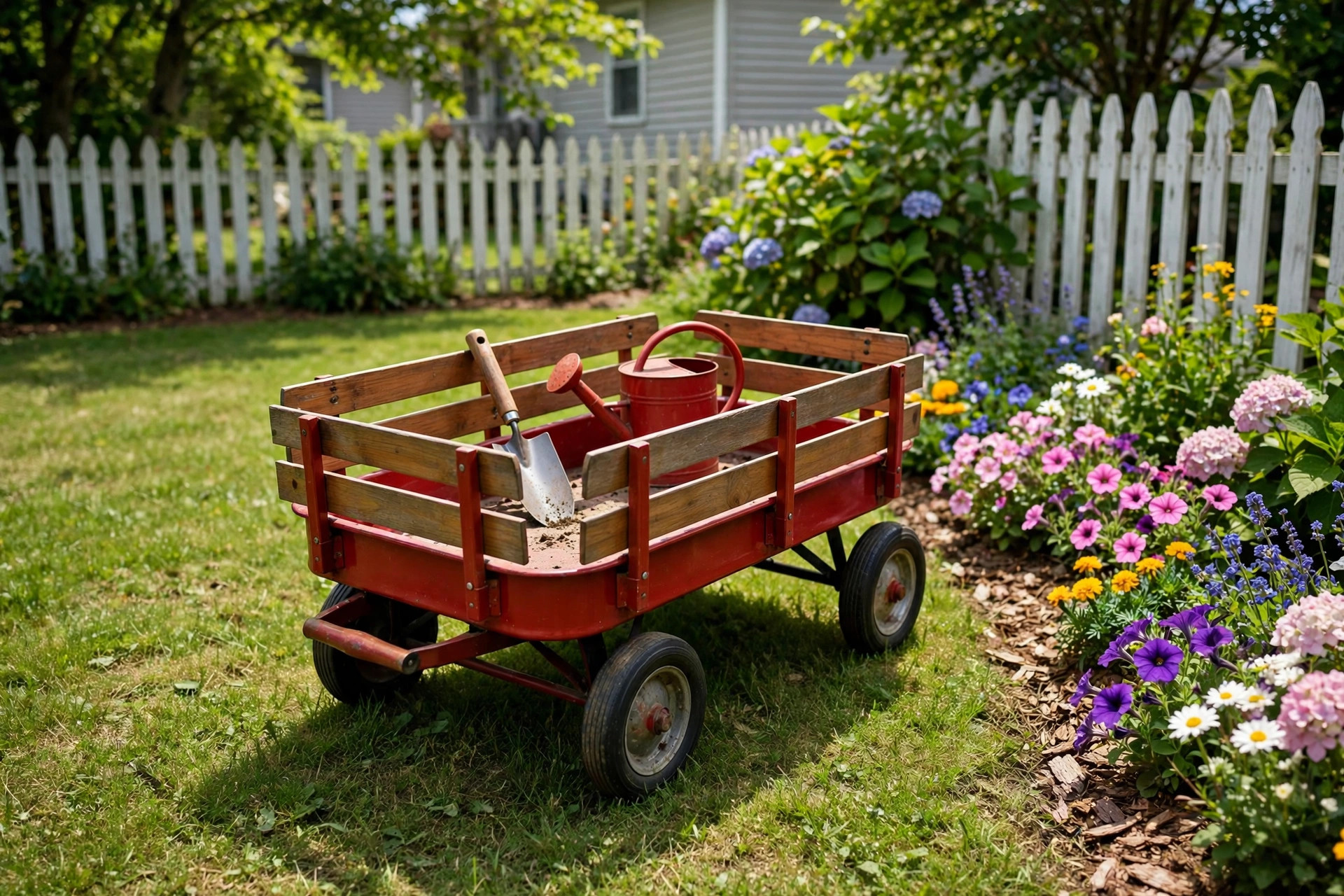
The classic wooden wagon is the model most grandparents remember. It has red or natural wood slats, four wheels, and a long pull handle. These wagons look fine in any yard and often last for years if stored out of rain. They are best for light loads such as flowers, hand tools, and small pots. Wood needs a fresh coat of outdoor paint every year or two.
Metal and Steel Wagons
Steel wagons are the strongest choice for children who haul soil, rocks, or logs. The metal bed can take hard use without cracking. Many have a powder-coat finish that resists rust. The trade-off is weight. A steel wagon can be heavy for a small child to pull when full. Check reviews for the empty weight before you buy one for a young child.
Plastic Garden Carts
Light plastic carts are a good pick for children under five. They weigh very little, so a small child can pull them with ease. Most are molded in one piece, so there are no bolts to rust and no slats to splinter. The downside is that plastic can crack in very cold weather. Store plastic wagons in a shed or garage during winter.
Dump Wagons
Some wagons have beds that tilt to dump the load. This is fun for children and useful for spreading mulch. Make sure the dump latch is easy for an adult to work but not so easy that a child dumps a load by accident. Reviews on Lowe’s often note whether the dump feature works smoothly or sticks.
Ride-On Wagons
A few wagons are made for both cargo and riding. These have seats, seat backs, and sometimes seat belts. They must meet tougher safety rules than cargo-only wagons. If you want a wagon your child can ride in, look for one that is tested for rider use and follow the age limits on the box. Never pull a riding child faster than a slow walk, and never pull near streets or pools.
Cost and Price
Child garden wagons range in price from about twenty dollars to well over one hundred dollars. The cheapest plastic wagons cost the least but may not last more than a season or two. Mid-range wooden and steel wagons, often priced between forty and eighty dollars, give the best value for most families. They are strong enough for real garden work and light enough for a child to pull.
High-end wagons with air-filled tires, dump beds, or rider seats cost more. Some reach one hundred fifty dollars. These can be worth the price if two or three children will share the wagon for years. Watch for sales in spring when garden centers stock new models. Reading the best garden wagon for kids reviews each spring can also reveal which models hold their price and which drop after the season starts.
Compare the price to how the wagon will be used. A wagon that hauls soil every week earns its cost. A wagon used only at parties may not need to be top of the line. As with a pruning shear or any garden tool, you pay for the quality of the materials and the care of the build.
Care and Upkeep
Cleaning After Use
Soil left in a wagon bed can stain and, in metal wagons, start rust. Tip the wagon and brush out loose dirt after each use. Hose it down when it gets muddy. Let it dry in the sun before storing it. A quick clean takes five minutes and adds years to the life of the wagon.
Checking Bolts and Wheels
Once a month, check that all bolts and nuts are tight. Children pull wagons over bumps, and parts shake loose over time. Spin each wheel to make sure it turns freely. Oil the axles once a season with a few drops of light oil. Replace any wheel that wobbles badly, since a loose wheel can make the wagon tip.
Storing for Winter
Store the wagon under cover when the growing season ends. Rain and snow wear down wood and metal fast. If you must leave it outside, turn it upside down so water drains out of the bed. Cover it with a tarp tied down at the corners. Winter storage guides from This Old House apply to wagons just as they do to larger tools.
Teaching Kids to Care for Tools
A wagon is a good first tool for teaching care. Show your child how to rinse it and put it away. Children who care for their wagon learn respect for tools in general. This habit carries over to other garden work, from handling a garden kneeler with handles to storing a garden hose for large yards without kinks.
Safety Tips
Safety comes first with any product a child pulls, climbs in, or rides. Keep these rules in mind.
– Always follow the maker’s age and weight limits. Do not guess. – Teach children to pull the wagon, not push it downhill. A wagon pushed downhill can run over small feet. – Keep fingers away from the folding joints and dump latches when they move. – Do not attach a wagon to a bike, a riding mower, or any motor vehicle. – Park the wagon on flat ground. A loaded wagon can roll on a slope. – Check for splinters on wooden wagons before each spring season and sand them smooth. – Remove the wagon from play areas when not in use so no one trips over the handle.
Product safety resources from the U.S. Consumer Product Safety Commission offer general guidance on children’s outdoor products. Independent test results from Consumer Reports can also help you compare build quality across brands.
When in doubt, an adult should do a test pull with a full load before handing the wagon to a child. If it feels tippy or hard to steer, it is not the right wagon for a young child.
FAQ
What age is right for a garden wagon?
Most child garden wagons suit ages three and up. Children under three lack the balance to pull a loaded wagon safely. Always check the age range on the box, since it reflects the maker’s safety testing.
Can a garden wagon hold an adult’s weight?
No. Child wagons are built for child-sized loads. An adult sitting in a child’s wagon can bend the axles or crack the bed. If you need to haul heavy loads yourself, use a full-size garden cart instead.
Wood or metal: which is better for kids?
Both work well. Wood is lighter and warmer to the touch, but it needs repainting. Metal is stronger and needs less care, but it can be heavy. For a child under five, a light wood or plastic wagon is often the best pick.
How do I stop the wagon from tipping over?
Load heavy items low and in the center of the bed. Keep the load below the top of the walls. Teach your child to take turns slowly. If the wagon still tips, the load is too heavy or too high.
Are dump wagons safe for small children?
Dump wagons are safe when the latch is out of a small child’s easy reach and the bed locks firmly in place. Watch your child the first few times. If the child can flip the latch by accident, choose a fixed-bed model instead.
Where should I store a kid’s garden wagon?
Under a porch roof, in a shed, or in a garage. Any dry spot works. Good storage keeps wood from rotting and metal from rusting, and it keeps the wagon ready for the next garden day. Seasonal storage tips from Bob Vila cover small carts and wagons as well as larger equipment.
Final Word
The best garden wagon for kids reviews all point to the same truth. The right wagon is safe first, strong second, and fun always. Pick a size your child can pull with ease. Choose wheels that suit your yard. Check the build for sharp edges and loose parts. Keep the price in line with how much the wagon will be used.
A child’s garden wagon is a small thing that does big work. It pulls a child outside, teaches real skills, and makes garden chores feel like play. Read the reviews, compare a few models, and then let your child take the handle. The garden, and the child, will both grow.
Retailers such as Home Depot, Gardener’s Supply Company, and Burpee stock a wide range of child-sized wagons each spring, so you can compare models side by side before you buy. Extra growing advice from The Spruce can help you plan garden projects your child can join with the new wagon.
References
Bob Vila. (n.d.). Home improvement advice. https://www.bobvila.com Burpee. (n.d.). Seeds, plants, and gardening supplies. https://www.burpee.com Consumer Reports. (n.d.). Product reviews and ratings. https://www.consumerreports.org Family Handyman. (n.d.). DIY home repair and maintenance. https://www.familyhandyman.com Fiskars. (n.d.). Garden and cutting tools. https://www.fiskars.com Gardener’s Supply Company. (n.d.). Gardening tools and supplies. https://www.gardeners.com Lowe’s. (n.d.). Home improvement products. https://www.lowes.com The Home Depot. (n.d.). Home improvement products. https://www.homedepot.com The Spruce. (n.d.). Home and garden advice. https://www.thespruce.com This Old House. (n.d.). Home renovation guidance. https://www.thisoldhouse.com U.S. Consumer Product Safety Commission. (n.d.). Product safety information. https://www.cpsc.gov
Was this guide helpful?

About Robert Taylor
The My Garden US editorial team writes practical, in-depth home and garden guides for American homeowners — tested advice, no fluff.