Why the Best Garden Cart for Heavy Loads Matters
A good garden cart saves the back. Anyone who has carried heavy bags of soil across a yard by hand knows the strain. One trip with a strong cart can replace ten trips by armful. When you search for the best garden cart for heavy loads, you are looking for a tool that will last for years and spare you pain.
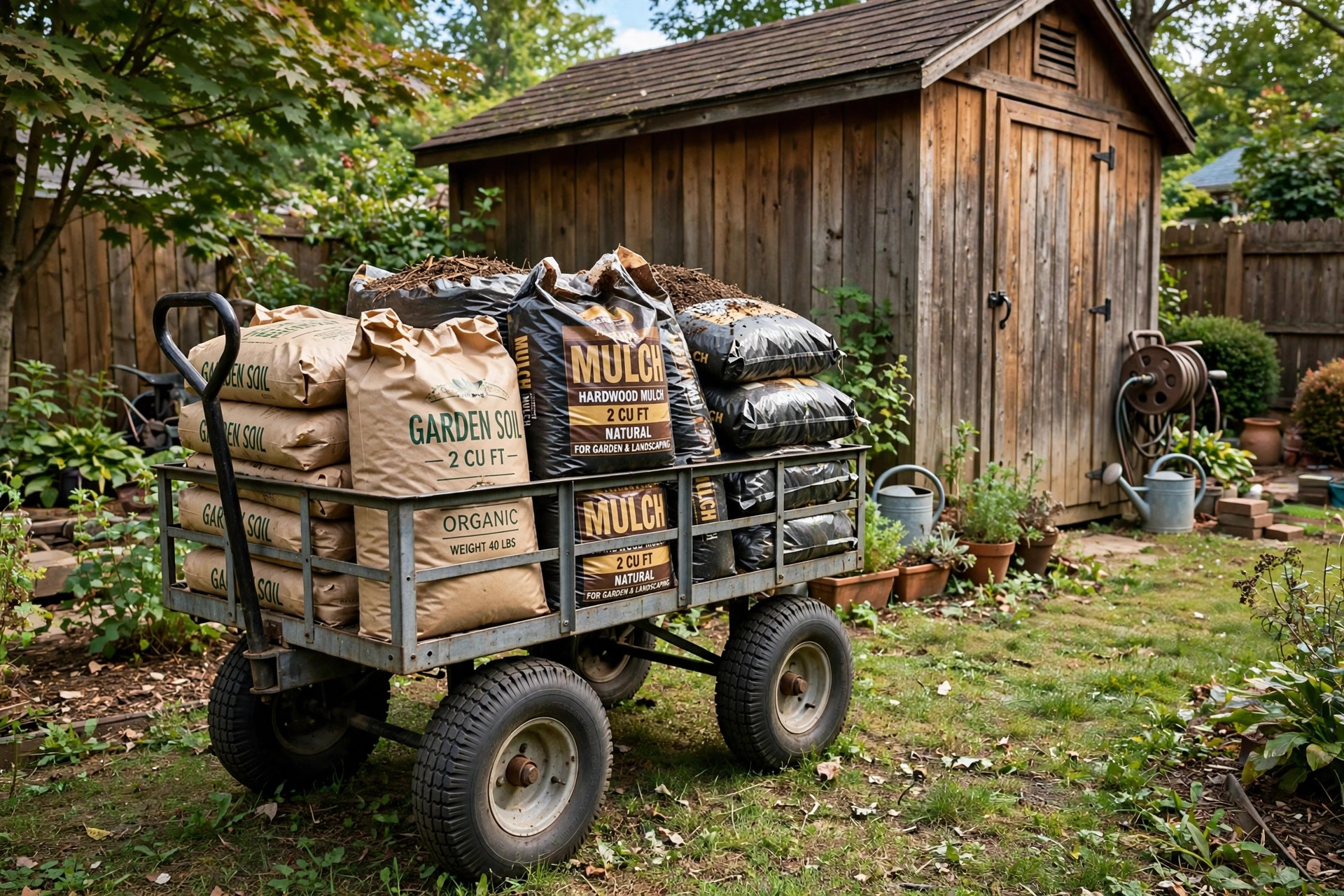
Garden work often means moving weight. A bag of wet soil can weigh forty pounds or more. A load of fieldstone can weigh hundreds of pounds. Wheelbarrows have long done this work, but they tip forward and need balance. A garden cart with four wheels stays level. It does not spill when you stop to rest. That is why so many homeowners now prefer carts over barrows for heavy jobs.
The wrong cart will fail at the worst time. A thin steel bed will bend. Small hard wheels will sink into soft ground. A weak axle will snap under a full load of gravel. The best garden cart for heavy loads avoids all of these problems. It has a strong frame, a deep bed, and wheels made for rough ground.
This guide will help you pick well. It covers the main types, what to check before you buy, how much to pay, and how to keep your cart in good shape. It also answers common questions and notes key safety points.
What to Look for in a Heavy-Duty Garden Cart: Best Garden Cart for Heavy Loads
Load Capacity
Start with the weight rating. Most heavy carts are rated between 600 and 1,400 pounds. A bag of mulch weighs about forty pounds when dry. Ten bags reach four hundred pounds. Stone and wet soil weigh much more, so buy a cart rated well above what you plan to carry. A higher rating also means the frame and wheels were built with more care.
Check how the maker states the rating. Some makers list the weight the bed can hold, while others list only what the wheels can bear. The lower of the two is the true limit. If you plan to haul rocks or firewood on a regular basis, look for a rating of 1,000 pounds or more.
Bed Size and Depth
A deep bed holds more per trip. Look for a bed that is at least twelve inches deep, with a length of forty inches or more. Deep beds keep round items like pumpkins and pots from rolling out. Some carts have sides that fold down flat. That feature turns the cart into a flat platform for wide loads such as plywood or lumber.
Mesh or metal beds both have merits. Metal beds suit soil, mulch, and compost. Mesh beds let water and dirt fall through, which suits hauling garden waste and rinsed produce. Heavy loads need a bed that will not bow in the middle. Thicker steel or reinforced mesh keeps its shape under weight.
Wheels and Tires
Wheels decide how easy the cart feels when loaded. Large pneumatic tires, which hold air, ride soft over rough ground and lawns. They are the best choice for heavy loads on grass or gravel. Wide tires spread the weight and do not sink into soft soil.
Some carts use solid tires that cannot go flat. They need no air and no repair, but they ride harder and can bog down in mud. For a cart that will carry true heavy loads, air-filled tires of at least thirteen inches are a sound choice. Ball-bearing hubs also help; they let the wheels turn smooth under load.
Frame and Axle
Steel frames carry the most weight. A tube steel frame with welded joints is stronger than a frame held with bolts alone. The axle should be thick and run the full width of the cart. Some cheaper carts use thin axles that bend after one season of heavy use.
Look at how the bed joins the frame. A bed that rests on the frame with good support points will last longer than one that hangs from thin tabs. The towing handle should lock in place and feel solid when you pull.
Dump or Fixed Bed
Many heavy carts have a dump feature. A dump bed tilts back so you can drop a load of soil or mulch where you want it. This saves shoveling. The dump lock must be strong and easy to reach. If the lock fails under a heavy load, the bed can tip at the wrong time.
Fixed beds are simpler and often stronger. They have no hinge to wear out. If you mainly move stone, wood, or bagged goods, a fixed bed may serve you best. If you move loose soil and compost often, a dump bed is worth the extra cost.
Types of Heavy Garden Carts
Steel Utility Carts
These are the workhorses. They have steel mesh or solid beds, high weight ratings, and removable or folding sides. They convert between a wagon and a flatbed. Most come with a handle that can be pulled by hand or hitched to a lawn tractor. For heavy loads, these are the most common choice.
Poly Tub Carts
These carts have a large plastic tub bed, often in bright colors. The tub is light, rust-proof, and easy to clean. Good ones can carry 600 to 800 pounds. They suit soil, mulch, and yard waste. They do not suit sharp stone as well, since heavy rock can crack thin plastic over time.
Garden Wagons
Garden wagons look like old farm wagons with four tall wheels. They have high sides and carry bulky loads such as straw bales, pumpkins, and nursery pots. Their weight ratings are often lower than steel utility carts, so check the rating if you plan truly heavy loads.
Powered Carts
Battery-powered carts have a motor that drives the wheels. They are made for people who cannot pull heavy weight or who face hills. They cost more and need charging, but they can move loads of 500 pounds or more with little effort. They are a good answer when strength or slope is a concern.
Cost and Price
Prices vary with strength and features. A simple steel cart rated for 600 pounds may cost between eighty and one hundred fifty dollars. Heavy carts rated for 1,000 pounds or more often cost between one hundred fifty and three hundred dollars. Powered carts start around five hundred dollars and can pass one thousand.
A higher price does not always mean a better cart. Check the tire size, the axle, and the steel gauge before you pay more. Read user reviews with care and give weight to reviews from people who hauled stone, soil, and wood for a full season. Sites such as Consumer Reports and The Spruce publish tested picks for yard tools, and large stores such as Home Depot and Lowe’s list many models with buyer ratings.
Watch for hidden costs. A cart that needs assembly may take an hour to build. Replacement tires, if the cart uses odd sizes, can cost thirty dollars or more. A cart with a good warranty, often two to five years, is worth a little extra.
For readers setting up a full work area, it helps to plan where the cart and other tools will rest. Good garden tool storage ideas for shed keep the cart dry and the wheels off damp ground, which adds years of life.
Care and Upkeep
A heavy cart will last a long time if you care for it. Wash the bed after hauling soil or compost. Wet soil left on steel will cause rust. Dry the cart before you store it, and oil the axle and wheel bearings once a year.
Check tire pressure each spring. Soft tires make a loaded cart hard to pull and can damage the wheel rims. Keep a simple tire gauge in the shed. If the cart has a dump bed, grease the hinge and the latch so they move free.
Store the cart under cover. Sun weakens plastic tubs, and rain rusts steel. A shed, garage, or a fitted cover will do. If you must store it outside, tip the bed so rain runs off.
Tighten bolts and check welds each year. Heavy use loosens fasteners. A few minutes with a wrench in spring can stop a small problem from becoming a broken cart in summer.
Gardeners who also keep a garden hose for large yards know that hose and cart work as a team: the cart moves soil and plants, and the hose keeps them alive. Keeping both in good repair saves time in the busy season.
Safety
Heavy loads can hurt if handled wrong. Never fill the cart above the sides on a slope; the load can shift and tip the cart. Push or pull on level ground when the cart is full, and keep children and pets clear while you move.
Wear gloves when you load rough stone or broken brick. Sturdy garden gloves for thorn protection also guard against sharp edges on metal beds and handle ends. Wear closed shoes, never sandals, when moving a full cart.
Use the dump feature with care. Stand to the side, not behind the bed, when you release the latch. A full bed of wet soil can slam down hard. If you tow the cart with a lawn tractor, keep speed low and never carry people in the bed.
Do not exceed the weight rating. A cart that is rated for 800 pounds should never carry 1,200 pounds, even for a short trip. Overloading bends frames, breaks axles, and voids the warranty.
FAQ
How much weight can a heavy-duty garden cart really hold?
Most heavy carts are rated between 600 and 1,400 pounds. The rating is a guide for safe, repeated use. Stay below the stated limit. For stone and wet soil, choose a rating at least double the weight you expect to carry most often.
Are garden carts better than wheelbarrows for heavy loads?
For most people, yes. A four-wheel cart stays level and does not tip. It needs less balance from the user. A wheelbarrow turns tighter and fits narrow paths, but it demands more strength and care when fully loaded. For heavy, bulky loads over open ground, the cart wins.
Do I need air-filled tires?
For heavy loads on grass, gravel, or dirt, air-filled tires are the better choice. They roll easier and sink less. Solid tires suit smooth pavement and need no air. If you haul across lawns, pick pneumatic tires of thirteen inches or more.
Can I tow a garden cart with a lawn mower or ATV?
Many heavy carts have a hitch pin for towing. Check the manual for the tow rating, which may be lower than the bed rating. Keep speed low, avoid hills, and never tow more than the maker allows.
How long should a good garden cart last?
A well-built steel cart kept dry and oiled can last ten to fifteen years. A plastic tub cart can last eight to twelve years if kept out of harsh sun. Regular cleaning, tire checks, and bolt tightening add years to either type.
What size cart do I need?
For a small yard, a cart with a bed of about four cubic feet is enough. For large yards, acreage, or farm use, look for six to ten cubic feet. Bigger beds mean fewer trips but more effort per trip, so match the size to your strength and your ground.
A Short Final Word
The best garden cart for heavy loads is the one that matches your work. Know what you will haul, how far you will haul it, and what ground you will cross. Pick a strong frame, deep bed, big air tires, and a weight rating with room to spare. Keep it clean, oiled, and under cover, and it will serve you for many seasons. A good cart turns the hardest part of garden work into the easiest.
For more background, see Burpee, Bob Vila, and Family Handyman.
References
Bob Vila. (n.d.). Home improvement advice. https://www.bobvila.com Burpee. (n.d.). Seeds, plants, and gardening supplies. https://www.burpee.com Consumer Reports. (n.d.). Product reviews and ratings. https://www.consumerreports.org Family Handyman. (n.d.). DIY home repair and maintenance. https://www.familyhandyman.com Gardener’s Supply Company. (n.d.). Gardening tools and supplies. https://www.gardeners.com Lowe’s. (n.d.). Home improvement products. https://www.lowes.com The Home Depot. (n.d.). Home improvement products. https://www.homedepot.com The Spruce. (n.d.). Home and garden advice. https://www.thespruce.com
Was this guide helpful?

About Michael Thompson
The My Garden US editorial team writes practical, in-depth home and garden guides for American homeowners — tested advice, no fluff.