
Thorns are small, but they cause real pain. Anyone who has pruned a rose bush or cleared blackberry brambles knows the sharp sting of a thorn pushing through a thin glove. Choosing the best garden gloves for thorn protection saves your hands from punctures, scratches, and the infections that can follow. This guide explains what matters when you shop, which materials hold up best, what you can expect to pay, and how to care for your gloves so they last for many seasons.
Why Thorn Protection Matters
A thorn puncture is more than a minor annoyance. Thorns can carry soil bacteria deep into the skin. Rose thorns in particular can cause a condition called sporotrichosis, a fungal infection that leads to slow-healing sores. Gardeners who work with citrus trees, bougainvillea, hawthorn, or raspberries face the same risk. Good gloves create a barrier between sharp points and your skin.
Thick, puncture-resistant gloves also let you work with confidence. When your hands are safe, you prune more carefully and reach deeper into the plant. You do better work. Many experienced gardeners keep a special pair of heavy gloves just for thorny jobs, separate from their light gloves for planting and weeding.
What to Look for in Thorn-Proof Gloves: Best Garden Gloves for Thorn Protection
Not all gloves resist thorns. A cotton glove will stop dirt, but a rose thorn will pass through it with ease. Here is what to check before you buy.
Material
Leather is the classic choice for thorn protection. Goatskin, pigskin, and cowhide all resist punctures well. Goatskin is soft and flexible, so it gives a good feel for pruning. Cowhide is thicker and tougher, better for heavy clearing. Pigskin handles wet work well and stays soft after it dries.
Some modern gloves use puncture-resistant fabrics such as thick synthetic leather, Kevlar blends, or heavy canvas with reinforced palms. These can work well, but check reviews and ratings. Coated fabric gloves with a thick nitrile or latex palm coating offer a middle ground. They grip well in damp conditions and resist light thorns, though they may not stand up to long rose thorns.
Fit and Cuff Length
A good fit matters more than most people think. Loose gloves snag on thorns and pull off at the worst moment. Tight gloves tire your hands and split at the seams. Try gloves on if you can, or measure your hand and check the maker size chart. You should be able to close your fist fully and spread your fingers wide.
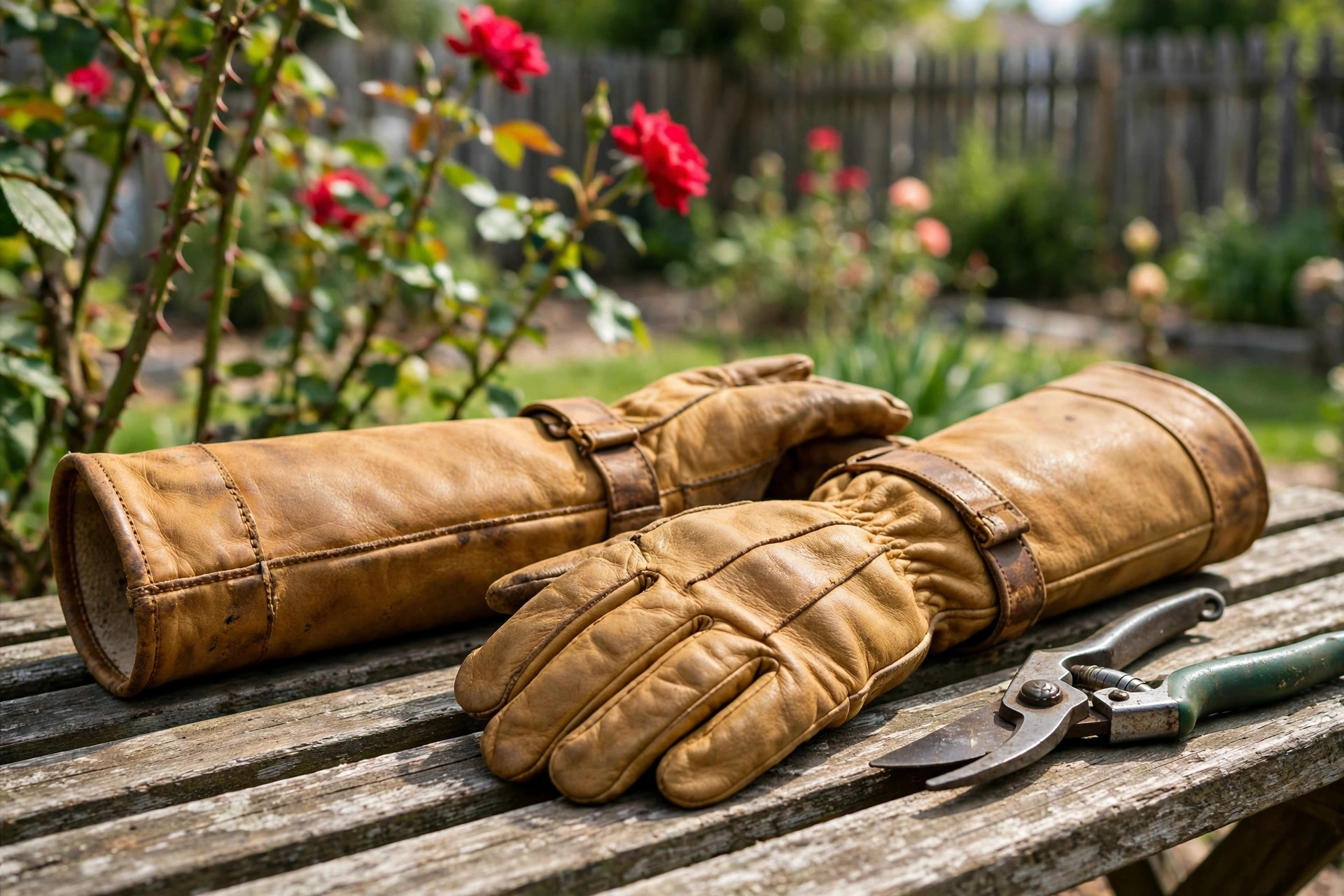
Cuff length is the second key point. Standard wrist-length gloves leave your forearms bare, right where rose canes rake as you reach in. Gauntlet-style gloves extend to the elbow or mid-forearm. For rose pruning and bramble clearing, a long cuff is worth every extra dollar. Corona Tools, a maker of pruning gear, offers gloves and tools built for this kind of hard use.
Types of Thorn-Resistant Gloves
Gardeners can choose from three main styles. Each suits a different kind of work.
Leather Gauntlet Gloves
These are the workhorses of thorn protection. Made from goatskin or cowhide with cuffs reaching to the elbow, they guard both hands and forearms. Rose growers and vineyard workers favor them. They are stiff at first but break in with use. Quality leather gauntlets from makers like Fiskars or specialty garden brands last for years when cared for. Look for double stitching at the thumb and reinforced fingertips, since those areas wear first. Some gauntlets add padding on the back of the hand, which helps when canes snap back against your knuckles.
Puncture-Resistant Fabric Gloves
These gloves blend tough synthetic fibers with reinforced palms. They weigh less than leather and often cost less too. They breathe better on hot days. The trade-off is durability. The fabric can wear through at the fingertips after a season of heavy use. They suit light to medium thorn work, such as handling potted roses or trimming small shrubs.
Nitrile-Coated Gloves
Nitrile-coated gloves have a fabric back with a rubber-like palm coating. The coating improves grip on wet stems and adds a layer of puncture resistance. They are cheap enough to keep a spare pair in the shed. They will not stop the longest thorns, but they handle everyday garden chores well. Many gardeners buy them in packs and use them for general work, saving the leather pair for thorny tasks. Large retailers like Home Depot and Lowe’s stock all three styles side by side, which makes comparison easy. Bring a stem or a thorny clipping with you to the store, if the store allows it. Pressing a thorn gently against the glove palm tells you more than any label. A good glove should stop the point without bending inward.
Cost and Price
Thorn-protective gloves come at every price point. Lightweight coated gloves cost a few dollars a pair. Mid-range synthetic and split-leather gloves run about ten to twenty dollars. Top-quality full-grain leather gauntlets can cost thirty dollars or more.
Price often reflects durability. A cheap pair may last one season. A well-made leather pair, conditioned and stored dry, can last five years or longer. Think about how often you work with thorny plants. If roses fill your garden, the expensive pair is the cheaper choice over time. Gloves with longer gauntlets cost a little more than wrist-length styles, usually five to ten dollars extra. That small difference pays for itself the first time a cane rakes your forearm. Independent testing groups such as Consumer Reports review work gloves and rate them for durability and comfort, which can help you decide before you spend.
Care and Upkeep
Leather gloves need basic care. Let them air dry after use, away from direct heat. A radiator or a hot dashboard will crack the leather. Once dry, rub in a small amount of leather conditioner or neatsfoot oil. This keeps the hide soft and stops seams from drying out.
Fabric and nitrile gloves are easier. Rinse off dirt and sap with cold water and mild soap. Let them dry fully before storing. Never store damp gloves in a closed shed bin. Moisture breeds mildew and rots stitching.
Inspect your gloves at the start of each season. Flex each finger and look for thin spots or small holes. A pinhole in the fingertip will find a thorn sooner or later. Replace gloves when the palm wears thin. A fresh pair costs less than a doctor visit for an infected puncture.
Storage matters too. Hang gloves by the cuffs or lay them flat in a dry spot. Crushing them under heavy pots bends the leather and weakens creases. A simple pegboard hook near the door keeps them handy and in shape. The garden editors at The Spruce recommend keeping separate pairs for wet and dry work to extend their life.
Safety Tips
Wear your thorn gloves every time you handle thorny plants, even for quick jobs. Most injuries happen during a fast trim that did not seem worth suiting up for. Keep the gloves near your pruning tools so the habit sticks.
Check your tetanus shot status. Thorns push soil and rust into small wounds. Doctors advise a tetanus booster every ten years for adults. If a puncture looks red, swells, or forms a hard lump after a few days, see a doctor. Sporotrichosis from rose thorns starts as a small sore that grows slowly. Early treatment works well.
Keep sharp tools in good shape. Clean pruners make clean cuts and reduce the force you need. Less force means fewer slips into thorns. Guides from Bob Vila and Family Handyman offer clear steps for cleaning and oiling hand tools.
Children need protection too. Kid-sized garden gloves are sold by Gardener’s Supply Company and other garden shops. Teach young helpers to wear gloves when they pick berries or help with roses. Make it a house rule: no gloves, no pruning. The habit forms fast when the whole family follows it.
Frequently Asked Questions
Can I use regular work gloves for roses?
You can, but most regular work gloves are too thin. Rose thorns are long and stiff. They pierce thin cotton or light synthetic gloves easily. Use gauntlet-style leather gloves or gloves rated for puncture resistance when you prune roses.
Are leather or synthetic gloves better for thorn protection?
Leather still leads for heavy thorn work. Full-grain goatskin and cowhide stop most thorns and last for years. Synthetics weigh less and cost less, and they work fine for light thorns. For clearing thick brambles, leather wins.
How do I pick the right size?
Measure around your knuckles with a tape measure, not counting the thumb. Match that number to the maker size chart. The glove should fit snug but let you make a full fist. If you are between sizes, choose the smaller one for leather, which stretches, and the larger one for synthetic fabric, which does not.
Can thorn-resistant gloves be washed?
Fabric and nitrile gloves can be hand-washed in cold water with mild soap. Leather gloves should not be soaked. Wipe leather clean with a damp cloth, let it air dry, and condition it. Soaking leather strips its oils and makes it stiff and brittle.
Do I need long cuffs?
For roses, bougainvillea, and blackberry work, yes. The forearm takes most of the scratches when you reach into a thorny plant. Wrist-length gloves protect your hands only. Gauntlet cuffs that reach the elbow guard the rest. If your main plants are thorn-free, wrist-length is fine.
Where can I buy good thorn-protection gloves?
Garden centers, hardware stores, and online shops all carry them. Burpee, known for seeds and garden supplies, also stocks quality hand tools and gloves. Try gloves on in a store when you can, then buy your size from any trusted seller.
A Final Word
The best garden gloves for thorn protection are the ones you will actually wear. Fit, material, and cuff length all matter, but the habit matters most. Keep a sturdy pair beside your pruners, put them on for every thorny job, and care for them between seasons. Your hands do the real work in the garden. Protect them, and they will serve you for years.
For readers expanding their garden tool kit, see also our guides on a garden trowel for rocky soil, a garden sprayer for weed control, and tips on attracting pollinators to your garden.
References
Bob Vila. (n.d.). Home improvement advice. https://www.bobvila.com Burpee. (n.d.). Seeds, plants, and gardening supplies. https://www.burpee.com Consumer Reports. (n.d.). Product reviews and ratings. https://www.consumerreports.org Corona Tools. (n.d.). Garden and landscape tools. https://www.corona-tools.com Family Handyman. (n.d.). DIY home repair and maintenance. https://www.familyhandyman.com Fiskars. (n.d.). Garden and cutting tools. https://www.fiskars.com Gardener’s Supply Company. (n.d.). Gardening tools and supplies. https://www.gardeners.com Lowe’s. (n.d.). Home improvement products. https://www.lowes.com The Home Depot. (n.d.). Home improvement products. https://www.homedepot.com The Spruce. (n.d.). Home and garden advice. https://www.thespruce.com
Was this guide helpful?

About Lisa Anderson
The My Garden US editorial team writes practical, in-depth home and garden guides for American homeowners — tested advice, no fluff.
You May Also Like
How to Grow Potatoes in Containers: A Plain and Practical Guide
July 18, 2026 0 views
Best Garden Stool for Elderly Gardeners
January 3, 2026 0 views
Raised Bed Corners for Easy Assembly: Build a Sturdy Garden Bed in an Afternoon
August 16, 2026 0 views