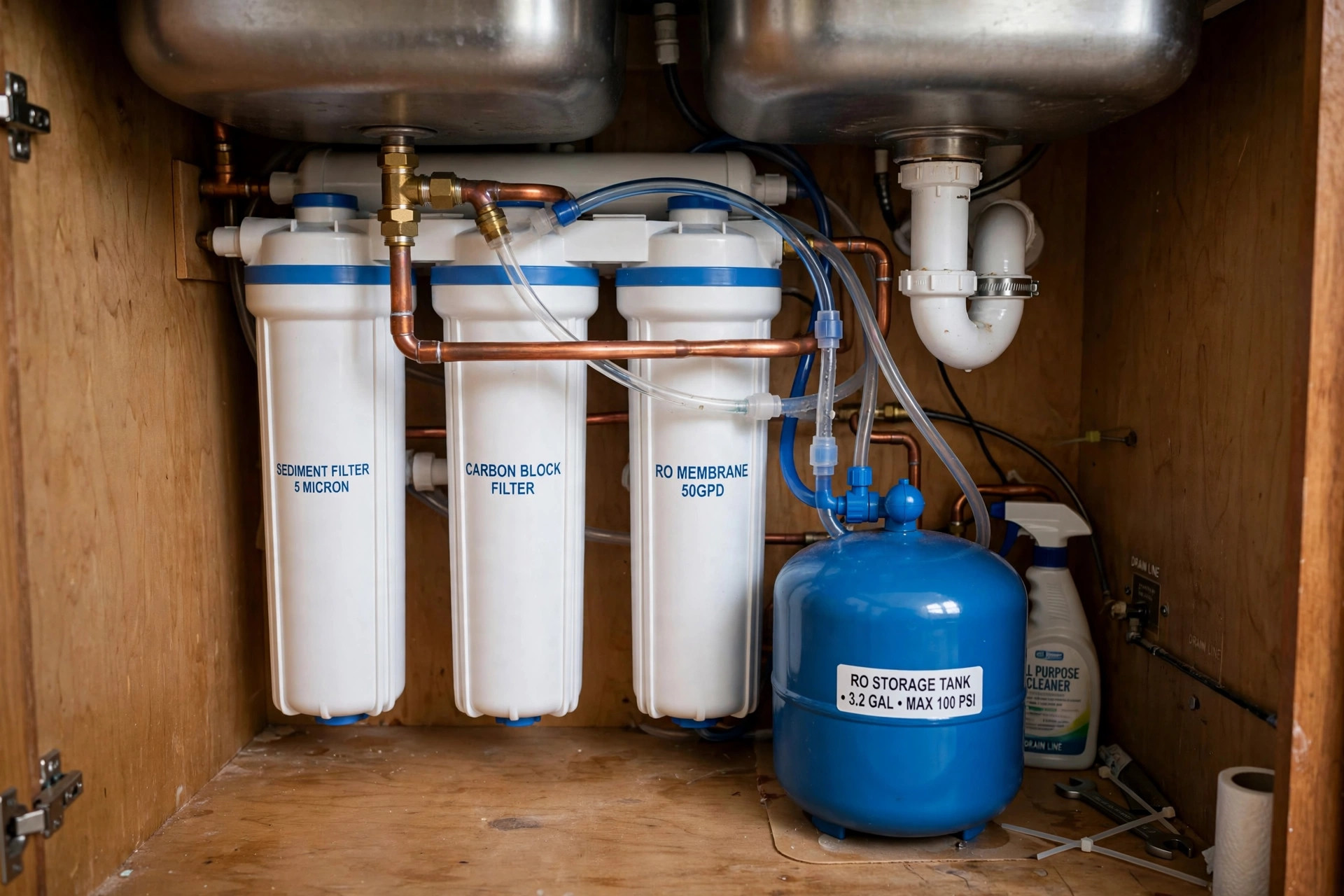

Reverse osmosis is one of the most trusted ways to make clean drinking water at home. Yet many owners are surprised by one fact. Their unit sends water down the drain for every glass it makes. This is normal. It is how the system stays clean. The key question is how much water goes to waste. That is what the waste water ratio tells you. In this guide, the ro system waste water ratio explained usa readers need is given in plain, simple words. You will learn what the ratio means, why it happens, what changes it, and how to keep waste low in your own home.
Why the Waste Water Ratio Matters
Water is not free. In many parts of the United States, water bills rise each year. Some states face dry years and strict rules on water use. When your drinking water system wastes several gallons for each gallon it makes, you feel it on the bill and on your mind.
The ratio matters for three plain reasons. First, it tells you the true cost of your clean water. Second, it helps you pick a better unit when you shop. A unit with a 1-to-1 ratio wastes far less than one with a 1-to-4 ratio. Third, it tells you when your unit may need care. If the ratio grows worse over time, a filter or membrane may be old and worn.
Many homes now buy an under-sink reverse osmosis system for clean water at the kitchen tap. Knowing the waste ratio helps you run that system in a smart way. The United States Environmental Protection Agency (https://www.epa.gov) gives public facts on home water quality and use. It is a good place to start when you want plain facts about water in your town.
What the Waste Water Ratio Means: Ro System Waste Water Ratio Explained Usa
The Basic Idea
The waste water ratio is a simple number pair. It compares the water you drink with the water that goes down the drain. A ratio of 1 to 4 means this: for every 1 gallon of clean water the system makes, about 4 gallons flow to the drain. The first number is clean water. The second number is waste water.
Some makers write the ratio as a single number. They may say “400 percent waste.” That means the same as 1 to 4. Four gallons are wasted for each gallon made. Do not let the wording confuse you. Both forms say the same thing.
Common Ratios in American Homes
Most older units in American homes run at about 1 to 3 or 1 to 4. That was the common design for many years. Newer units are much better. Many now run at 1 to 2, and the best run at 1 to 1. That means one gallon of waste for each gallon of clean water.
Your true ratio may differ from the label. The label shows the ratio under test conditions. Your home water is not test water. Pressure, heat, and mineral level all change the real number. You can measure your own ratio at home with two simple tools: a measuring cup and a bucket. Run the system, catch the drain water in the bucket, and note how much clean water you collect in the same time. Then compare the two amounts.
Why Reverse Osmosis Makes Waste Water
How the Membrane Works
Reverse osmosis pushes water through a very fine membrane. The holes in the membrane are so small that most salts, metals, and other matter cannot pass. Clean water comes through one side. The trapped matter stays on the other side.
That trapped matter must go somewhere. If it stayed on the membrane, it would clog the pores in a short time. So the system sends a steady stream of water across the face of the membrane. This stream sweeps the trapped salts away and carries them to the drain. That stream is the waste water. Without it, the membrane would foul and fail.
This is why no reverse osmosis unit can run with zero waste. The drain flow is part of the cleaning cycle. Homeowner guides at Family Handyman (https://www.familyhandyman.com) explain this basic care idea well. The drain line is not a flaw. It is a working part of the machine.
What Changes the Ratio
Four main things change how much waste your unit makes.
Water pressure. High pressure pushes water through the membrane with ease. Low pressure makes the unit work harder and waste more. Many homes need 40 to 80 pounds per square inch for good results. A booster pump can raise low pressure.
Water heat. Warm water passes through the membrane more easily than cold water. Winter water in the northern states is colder and can raise the waste ratio. This change is small but real.
Mineral level. Water with high total dissolved solids gives the membrane more to reject. Well water often has higher mineral levels than city water. Makers of reverse osmosis drinking water systems (https://www.aquasana.com) note that feed water quality shapes how hard the unit must work.
Membrane age. A new membrane works at its best ratio. An old membrane wastes more as it wears out. This is why regular upkeep matters so much.
Types of Systems and Their Waste Ratios
Standard Units
The standard under-sink unit has a storage tank. It makes water slowly and stores it for use. These units are common, fair in price, and easy to service. Their waste ratio is often 1 to 3 or 1 to 4. Replacement parts are sold at most plumbing and filtration supplies stores (https://www.homedepot.com), so care is simple.
High-Efficiency Units
High-efficiency units use better membranes and smarter flow controls. Many reach a 1 to 1 or 1 to 2 ratio. They cost more at first. Over years of use, the water savings can pay back the higher price. Home improvement guidance (https://www.thisoldhouse.com) often points buyers toward these units when water bills are high.
Tankless Units
Tankless units make water on demand. There is no tank to fill and no standing water to keep fresh. Many tankless designs run at low waste ratios. They need good water pressure to work well. They also use power to run pumps and controls.
Units With a Permeate Pump
A permeate pump is a small add-on device. It uses the energy of the waste stream to push clean water into the tank. This cuts back pressure on the membrane. The result is less waste and a fuller tank. A permeate pump can lift an old unit from a 1-to-4 ratio toward a 1-to-2 ratio. It is one of the cheapest upgrades you can buy.
How to Choose a System With Less Waste
Check the Ratio on the Label
When you shop, look for the waste water ratio on the box or the maker’s page. Compare units side by side. A 1-to-1 unit will waste half as much as a 1-to-2 unit over the same months. Do not guess. Ask the seller if the number is not shown.
Match the Unit to Your Water
Test your water first. A simple home test kit will tell you the hardness and mineral level. City water is often soft and clean enough for a basic unit. Well water may need a pre-filter or softener before the reverse osmosis unit. When the unit faces cleaner feed water, it wastes less. Makers of kitchen faucets and fixtures such as Moen (https://www.moen.com) and Kohler (https://www.kohler.com) also sell filtration parts that fit well with these systems.
Think About Your Whole Home
Some buyers want more than a drinking water tap. A whole-house water filter system treats all the water that enters the home. Reverse osmosis is rarely used for whole-home treatment because the waste would be very high. A simple under-sink water filter may be enough for taste and smell, with no drain water at all. Pick the tool that fits the job. Faucet makers like Delta (https://www.deltafaucet.com) offer filter options that pair with these choices.
Cost and Price of Waste Water
Water Bill Impact
Let us do simple math. Say your family drinks and cooks with 3 gallons of reverse osmosis water each day. With a 1-to-4 unit, you waste about 12 gallons a day. That is 360 gallons a month. With a 1-to-1 unit, you waste only 3 gallons a day, or 90 gallons a month.
In most American cities, water costs a few dollars per thousand gallons. The extra cost may be only a few dollars a month. But in dry regions with high rates, it can add up. Also, if your home runs on a septic tank, extra drain water adds load to the tank.
Cost of Upgrades
A permeate pump often costs less than one hundred dollars and can be fitted to many older units. A high-efficiency membrane may cost more than a standard one, but it fits the same housing in most cases. A full new high-efficiency unit costs more up front than a basic unit. Over five to ten years, the saved water and fewer filter changes can make up the gap. Replacement filters are easy to find at stores such as Lowe’s (https://www.lowes.com).
Care and Upkeep
Change Filters on Time
The pre-filters catch dirt and chlorine before water reaches the membrane. When they are old, the membrane takes the strain and wastes more water. Most pre-filters last six to twelve months. Write the date on each filter when you fit it. Set a reminder on your calendar.
The membrane itself lasts two to five years in most homes. When clean water output drops and drain flow rises, the membrane is likely worn. Replace it with the size and type your maker lists.
Check the Drain Line
The drain line is a thin tube that runs to the sink drain. It must stay open and free of kinks. A pinched line can back up water into the unit. Check it once or twice a year. Make sure the air gap fitting, if your unit has one, is clean and open.
Sanitize Once a Year
Once a year, sanitize the tank and lines. Makers sell simple kits for this task. It kills germs that can grow in standing water. A clean system runs closer to its rated ratio and gives better tasting water.
Safety
Handling Drain Water
Waste water from a reverse osmosis unit is not poison, but it is not drinking water either. It holds the salts and minerals that the membrane rejected. It is often safe for watering outdoor plants, washing the car, or mopping floors. Do not give it to pets as their main drink, and do not use it on salt-sensitive plants without care.
Safe Use of Waste Water
If you want to reuse the drain water, catch it in a clean bucket or route the drain line to a holding tank. Do not let it sit for weeks in a warm tank, as germs can grow. Use it within a few days. Keep it away from food surfaces and children’s play areas. These are plain safety habits that cost nothing.
FAQ
What is a good waste water ratio for a home RO system?
A ratio of 1 to 2 or better is good for most homes today. A 1-to-1 ratio is very good. Older units at 1 to 4 still work fine, but they use more water. If you buy new, aim for 1 to 2 or lower.
Why does my RO system keep running water to the drain?
Constant drain flow can mean the tank is filling, which is normal. If it never stops, the shut-off valve may be bad, or the membrane may be worn. Check the tank pressure and the drain line. A bad check valve is a common cause.
Does cold water make my RO waste more water?
Yes, a little. Cold water passes through the membrane more slowly. In winter, many owners see more drain water than in summer. The change is often small. Low pressure in winter pipes can add to the effect.
Can I stop the waste water completely?
No. Every reverse osmosis unit needs some drain flow to keep the membrane clean. Makers who claim zero waste usually send the drain water back to the feed line, which still counts as use. Aim to lower the ratio instead of chasing zero.
Is RO waste water safe for plants?
In most cases, yes, for outdoor plants and lawns. The water holds natural salts from your tap water. Use care with potted plants and salt-sensitive species. If your tap water is very hard, the waste water will be harder still.
How do I know when the membrane is worn out?
Signs include slower clean water flow, more drain water than before, and a change in taste. A handheld TDS meter can show if rejection has dropped. Most membranes last two to five years with good pre-filter care.
A Final Word
The ro system waste water ratio explained usa homeowners ask for comes down to one plain fact. Waste water is the price of a clean membrane. A good unit keeps that price low. Pick a unit with a fair ratio, feed it clean water, change filters on time, and check the drain line each year. Small habits like these keep waste down and water tasting fresh. Your bill will thank you, and so will your glass.
References
Aquasana. (n.d.). Water filtration systems. https://www.aquasana.com Delta Faucet. (n.d.). Kitchen and bathroom faucets. https://www.deltafaucet.com Family Handyman. (n.d.). DIY home repair and maintenance. https://www.familyhandyman.com Kohler. (n.d.). Bathroom and kitchen fixtures. https://www.kohler.com Lowe’s. (n.d.). Home improvement products. https://www.lowes.com Moen. (n.d.). Faucets and plumbing fixtures. https://www.moen.com This Old House. (n.d.). Home renovation guidance. https://www.thisoldhouse.com U.S. Environmental Protection Agency. (n.d.). Protecting human health and the environment. https://www.epa.gov
Was this guide helpful?

About Michael Thompson
The My Garden US editorial team writes practical, in-depth home and garden guides for American homeowners — tested advice, no fluff.
You May Also Like
Water Heater Expansion Tank Installation Cost: A Plain Guide
June 5, 2026 0 views
Submersible Well Pump Reviews for Deep Wells
September 27, 2026 0 views
Lead in Drinking Water Filter Reviews USA: What Tests, Types, and Brands to Trust
February 25, 2026 0 views