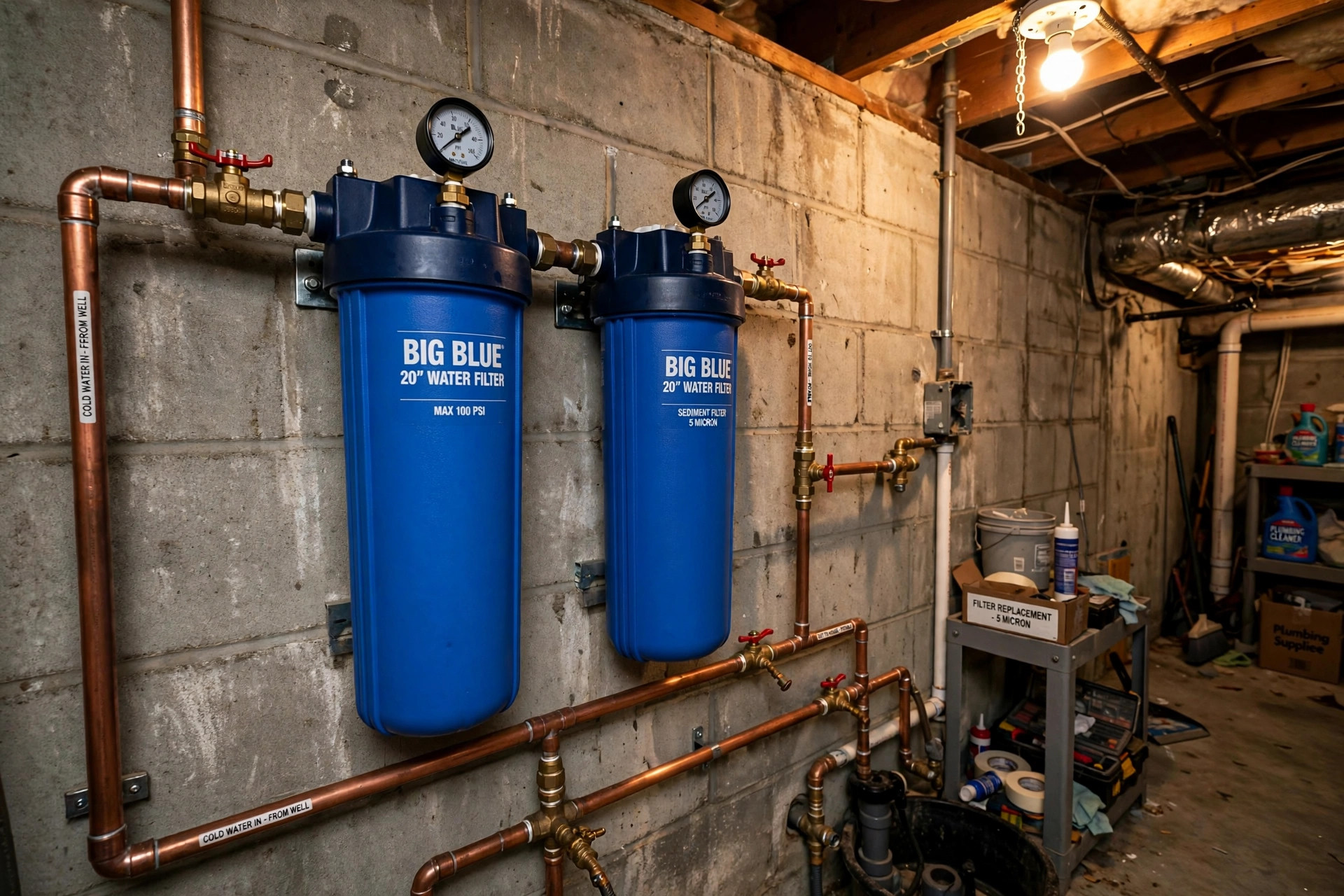

Every day, the average American home uses about 300 gallons of water. It comes in through one main pipe and goes to every tap, shower, and appliance. The best whole house water filter system USA buyers look for treats all of that water at the point where it enters the home. That is the core idea behind these systems. One unit cleans the water for the whole house, not just one faucet.
Finding the right unit takes some study. The market is full of claims. Some units are simple sediment filters. Others are large multi-stage plants that cost as much as a used car. This guide walks through what matters, what to look for, what types exist, what they cost, and how to keep them running for years.
Why a Whole House System Matters
Most people start with a pitcher or a faucet filter. Those help with drinking water. But the water you shower in and wash clothes with is still untreated. Chlorine in city water can dry out skin and hair. Sediment can clog pipes and stain sinks. Hard minerals leave scale on heaters and dishwashers. A whole house unit addresses all of it at once.
There is also a health angle. Tap water in the United States is regulated, but old pipes and local wells can add lead, iron, or bacteria after the water leaves the treatment plant. The Www.epa.gov publishes drinking water standards and testing guidance that any homeowner can review. A filter cannot fix every problem, but the right one removes the most common ones.
For homes on well water, the case is stronger. Well water is not treated at all. It can carry sand, sulfur, iron, and manganese. A unit built for wells handles these where a simple city-water unit would fail. Many buyers who search for the Best well water filtration system reviews usa end up choosing a whole house setup for this reason.
What to Look For When You Choose: Best Whole House Water Filter System Usa
Start with a water test. You cannot pick the best whole house water filter system USA retailers sell if you do not know what is in your water. A basic lab test costs less than one hundred dollars and shows sediment levels, chlorine, pH, hardness, iron, and common metals. Test kits for home use exist too, and guides to the Best sediment filter for well water usa can point you toward a first pass before you pay for lab work.
Flow Rate
Every home needs a filter that can keep up with demand. A small home may need 5 to 7 gallons per minute. A large home with several bathrooms may need 12 to 15. If the unit is too small, water pressure drops when two showers run at once. Check the flow rate on the spec sheet and match it to your home.
Filter Life and Micron Rating
The micron rating tells you how fine the filter catches particles. A 20-micron filter catches sand and rust. A 5-micron filter catches finer silt. A 1-micron filter catches very fine sediment. Finer is not always better. Very fine filters clog fast on dirty well water. Filter life matters for cost. Some cartridges last three months. Some last a year or more. Large tanks can last five to ten years before the media needs replacement.
Certifications
Look for NSF or ANSI certification on the box. These marks show that an independent lab tested the unit for the claims it makes. A certified unit that removes chlorine is a safer buy than one with the same claim and no test behind it. Major plumbing brands such as Www.kohler.com and Www.deltafaucet.com publish certified specs for their fixtures and fittings, which is the habit to expect from any serious filter maker too.
Port Size and Build Quality
Check the inlet and outlet port size. Most homes need 1-inch ports. A 3/4-inch port on a big home will choke flow. Look at the housing material too. Heavy-duty housings with pressure relief buttons last longer and are easier to service. Clear housings let you see when a cartridge is dirty, but they must sit out of direct sunlight to stop algae growth inside. Brass ports beat plastic ports for long service life.
Types of Whole House Systems
Whole house units come in several types. Most homes use a mix of two or three.
Sediment Filters
These are the simplest type. They catch sand, rust, dirt, and other particles. They sit first in line to protect the finer filters behind them. On well water they are almost always needed. A dedicated Best sediment filter for well water usa setup can be the whole answer for homes with only gritty water.
Carbon Filters
Carbon removes chlorine, chloramine, bad taste, and odor. It also takes out many chemicals. Most city-water homes buy a carbon unit as their main filter. Carbon comes as cartridges or as large backwashing tanks. Tanks cost more but last longer and need less attention.
Water Softeners
Softeners remove calcium and magnesium, the minerals that make water hard. They use salt or a salt-free method. Hard water shortens the life of water heaters and leaves spots on glass. If your test shows high hardness, a softener may matter more than a filter. Large home retailers such as Www.homedepot.com and Www.lowes.com carry both types side by side, which makes comparison shopping easy.
Iron and Sulfur Filters
Well water often carries iron and sulfur. Iron stains toilets orange and gives water a metallic taste. Sulfur smells like rotten eggs. Special media tanks oxidize and trap these elements. Standard carbon will not fix them.
UV Purifiers
Ultraviolet light kills bacteria and viruses without chemicals. It is common on wells and in rural homes. UV works only if the water is clear first, so it pairs with a sediment filter. Filter manufacturers such as Aquasana offer combined units that stack sediment, carbon, and UV in one line.
Combination Systems
Many buyers skip single-purpose units and buy a combination. A common city-water stack is a 20-micron sediment pre-filter followed by a large carbon tank. A common well-water stack is a sediment filter, an iron filter, a softener, and a UV lamp in series. Bundles cost more up front but save on fittings and install time. They also take up less wall space than parts bought one by one over the years.
Cost and Price: What to Expect
Price is the first question for most buyers, and it is why so many people search for the Whole house water filtration cost installed before they shop. Here is a fair range for the United States market.
A basic single-cartridge sediment system costs 50 to 200 dollars for the unit. Installed by a plumber, expect 300 to 600 dollars total. A mid-range carbon system for city water costs 400 to 1,200 dollars for the unit. Installed, most homeowners pay 800 to 2,000 dollars.
A large backwashing carbon tank system costs 1,000 to 2,500 dollars. Installed, the total often lands between 1,800 and 3,500 dollars. Full well-water systems with iron filters, softeners, and UV run 2,500 to 6,000 dollars installed. The top end can pass 8,000 dollars for big homes with bad water.
DIY guides from sites like Www.thisoldhouse.com and Www.familyhandyman.com show the steps for a simple install. Handy owners can save several hundred dollars on labor. But gas lines, main shutoffs, and local codes are real concerns. If you are not sure, hire a plumber. A bad install can flood a basement.
Care and Upkeep
A filter only works if you maintain it. Set a schedule when you install the unit.
Cartridge systems need new cartridges on time. Most last three to twelve months depending on water quality. Write the install date on the housing with a marker. When pressure drops across the house, the cartridge is likely full.
Backwashing tanks clean themselves on a timer. They still need the media bed replaced every five to ten years. Check the drain line and the timer once a year. Salt-based softeners need salt added every month or two. Keep the brine tank at least half full.
Test your water once a year after install. A yearly test proves the system still works. If taste or smell returns, the media may be spent. Fixture makers such as Www.moen.com note in their care guides that clean, filtered water also extends the life of faucets and valves, which is a quiet bonus of steady upkeep.
Watch the pressure gauges if your unit has them. A gauge before and after the filter tells you when the cartridge is loading up. When the gap between the two readings grows by 10 to 15 psi, it is time for a change. This simple habit protects both water flow and filter life, and it takes less than a minute during a monthly walk-through.
Safety Notes
Whole house filters are safe when installed right. A few points matter.
Shut off the main water and release pressure before you open any housing. A housing under pressure can spray hard. Use a pressure relief button if the unit has one. Keep a bucket and towels nearby.
Do not skip the bypass valve. A bypass lets water flow to the house while you change filters. Without one, the whole home loses water during every filter change.
UV purifiers use strong light. Never look directly at a lit UV lamp. Follow the maker’s steps for lamp changes. Replace UV lamps once a year even if they still glow, because the killing power fades before the light dies.
On wells, filtration is not a full safety net. Test for bacteria yearly. A filter that removes taste can mask a bacterial problem if you stop testing. The federal water pages at U.S. Environmental Protection Agency explain which tests fit which water source.
Frequently Asked Questions
Do I need a whole house filter if I have city water?
It depends on your water. City water meets federal standards, but chlorine taste, old lead service lines, and hard minerals are common complaints. A test will tell you if a unit is worth the money. Many city homes are fine with a single carbon system.
Can I install a whole house system myself?
A basic cartridge unit is a fair weekend project for a handy homeowner. You cut into the main line, mount the housing, and add shutoff valves on both sides. Larger tank systems with backwash drains are harder. When in doubt, get quotes from two plumbers.
How long do whole house filters last?
The housing can last 15 to 20 years. Cartridges last months. Carbon tank media lasts five to ten years. Softeners last ten to fifteen years with care. The unit is a long-term appliance, not a one-time buy.
Will a whole house filter lower my water pressure?
A right-sized unit drops pressure by a small amount, usually 2 to 5 psi. An undersized or clogged filter drops it much more. Match the flow rate to your home and change cartridges on time, and you will not notice it.
Do whole house systems remove fluoride?
Most do not. Standard carbon and sediment filters leave fluoride alone. Removing fluoride takes reverse osmosis or special media, usually at a single tap rather than for the whole house.
Is soft water the same as filtered water?
No. A softener removes hardness minerals. A filter removes particles, chlorine, and chemicals. Many homes need both. Test first, then buy what your water actually needs.
A Short Final Word
The best whole house water filter system USA homeowners can buy is the one that matches their water. Test first. Size the unit to your home’s flow. Buy certified equipment from makers who publish real specs. Keep up with filter changes. Do that, and every tap in the house runs cleaner for years.
Related guides on this site include whole house water filtration cost installed, reverse osmosis system under sink reviews usa, and best under sink water filter 2026 usa.
References
Aquasana. (n.d.). Water filtration systems. https://www.aquasana.com Best sediment filter for well water usa. (n.d.). Home and garden information. https://www.best-sediment-filter-for-well-water-usa/ Best well water filtration system reviews usa. (n.d.). Home and garden information. https://www.best-well-water-filtration-system-reviews-usa/ Delta Faucet. (n.d.). Kitchen and bathroom faucets. https://www.deltafaucet.com Family Handyman. (n.d.). DIY home repair and maintenance. https://www.familyhandyman.com Kohler. (n.d.). Bathroom and kitchen fixtures. https://www.kohler.com Lowe’s. (n.d.). Home improvement products. https://www.lowes.com The Home Depot. (n.d.). Home improvement products. https://www.homedepot.com This Old House. (n.d.). Home renovation guidance. https://www.thisoldhouse.com U.S. Environmental Protection Agency. (n.d.). Protecting human health and the environment. https://www.epa.gov Whole house water filtration cost installed. (n.d.). Home and garden information. https://www.whole-house-water-filtration-cost-installed/ Www. (n.d.). Home and garden information. https://www
Was this guide helpful?

About Michael Thompson
The My Garden US editorial team writes practical, in-depth home and garden guides for American homeowners — tested advice, no fluff.
You May Also Like
Sewage Ejector Pump Installation Cost USA: What You Will Pay and Why
March 13, 2026 0 views
Whole House Sediment Filter Installation Cost: What You Pay and Why
February 13, 2026 0 views
Low Flow Toilet Rebates by State USA: How to Get Paid to Save Water
April 29, 2026 0 views