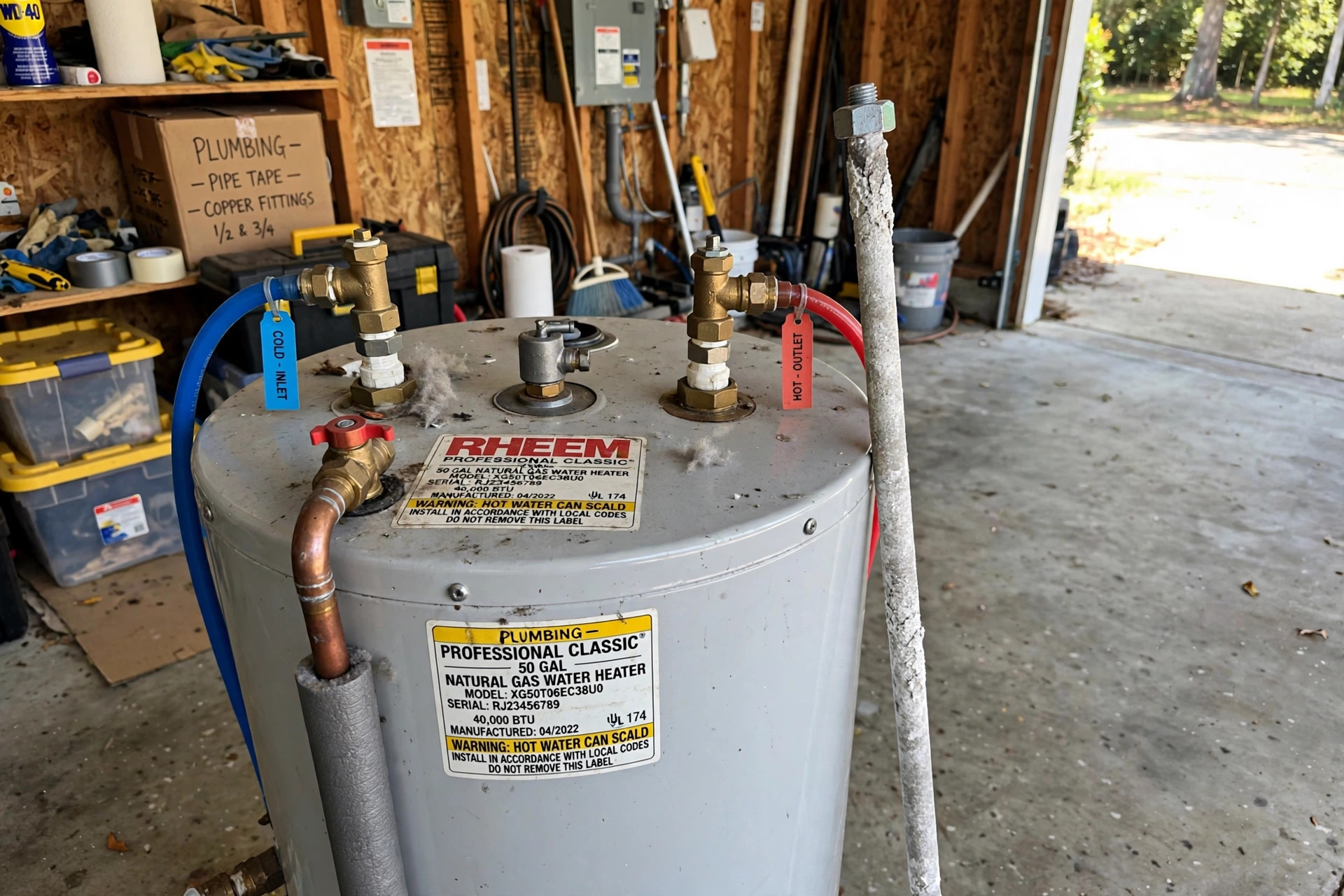

Your water heater has a quiet worker inside it. The worker is a long metal rod called an anode rod. It fights rust so your steel tank does not have to. When the rod wears away, rust starts to eat the tank itself. That is why this small part matters so much.
This guide covers the best anode rod for water heater reviews usa homeowners trust. You will learn what an anode rod does, how the three main types compare, what prices look like, and how to install one. By the end, you will know which rod fits your home and your water.
Why the Anode Rod Matters So Much
A tank water heater is a steel box full of hot water. Steel plus water plus heat equals rust. The tank has a glass lining to slow rust down, but the lining is never perfect. Tiny cracks and bare spots always remain. That is where the anode rod steps in.
The rod works by a process called sacrificial corrosion. The metal of the rod is more willing to corrode than the steel of the tank. So the water attacks the rod first. The rod slowly dissolves over the years while the tank stays safe. It gives itself up to save the heater. Once the rod is gone, the tank is next in line.
Most experts say a water heater maintenance checklist should include a rod check every two to three years. A rod that lasts four to six years is normal in soft city water. In hard well water, a rod may last only two or three years. When it fails early, people are often shocked to learn a new tank can cost over a thousand dollars installed. A replacement rod costs a small fraction of that.
What to Look for When You Shop: Best Anode Rod for Water Heater Reviews Usa
Anode rods are not all the same. Before you buy, you need to know three things: the material, the size, and the style of your tank.
First, the material. Rods come in magnesium, aluminum, and aluminum-zinc. Powered rods use a small electric current instead of raw metal. Each material suits a different kind of water. The wrong choice can cause smell or eat up fast.
Second, the size. Most residential tanks use a 3/4-inch NPT threaded rod that is 32 to 44 inches long. The rod must fit the threaded port on top of your tank. If your ceiling is low, a flexible rod made of jointed sections is easier to install. Measure the clearance above your tank before you order.
Third, check your heater manual. Some brands use special ports or require a specific rod type to keep the warranty valid. A quick look at the best 50 gallon gas water heater reviews usa can also show which rods owners of popular models prefer.
The Three Main Types of Anode Rods
Magnesium Anode Rods
Magnesium rods are the most common choice. They offer the strongest protection of any standard rod. The metal reacts quickly with the water, so it shields the tank very well. Most tanks ship from the factory with a magnesium rod.
These rods work best in soft to normal water. They wear out faster in very hard water. The main downside is the rotten-egg smell. Magnesium can react with bacteria in the water and create hydrogen sulfide gas. If your hot water smells like eggs, the magnesium rod is often the cause. A magnesium rod usually costs between fifteen and thirty dollars.
Aluminum and Aluminum-Zinc Anode Rods
Aluminum rods are cheaper and last longer than magnesium in hard water. They react more slowly, so they wear down at a slower rate. That makes them a popular choice for homes with very hard water.
The classic trade-off is weaker protection. Because aluminum is less reactive, it shields the tank a little less well. Some water quality experts also raise health questions about aluminum in drinking water, though amounts from a rod are small. Aluminum-zinc rods blend the two metals. The zinc helps fight the sulfur smell while the aluminum lasts a long time. Prices run ten to twenty-five dollars.
Powered Anode Rods
A powered anode rod does not dissolve like a metal rod. It uses a low electric current from a wall outlet to protect the tank. It never wears out in the normal way. Many last ten years or more.
Powered rods solve the rotten-egg smell problem for good. They also protect the tank in hard water without wearing away. The catch is the price. A powered rod costs one hundred fifty to two hundred fifty dollars. It also needs an outlet near the tank. For homeowners who hate replacing rods, it is often worth the money.
How Reviews Compare the Top Options
When you read the best anode rod for water heater reviews usa listings, certain patterns come up again and again. Magnesium rods win praise for protection and low price. Owners of city water systems rate them highly. Complaints center on the smell issue and shorter life in hard water.
Aluminum-zinc rods earn praise from well water owners. Reviewers with sulfur problems report that the smell fades after switching. The trade-off is that some buyers feel the protection is not as strong. Still, most reviews call it a fair deal for the price.
Powered rods get the strongest long-term reviews. Owners who fought smell for years say the problem ends on day one. The high price is the main complaint. Many reviewers do the math and note that one powered rod can outlast four or five magnesium rods. For a heater you plan to keep a long time, the numbers work out well.
Retailers like Home Depot and Lowe’s carry all three types. Reading customer reviews on these sites gives a good picture of real results. Many buyers post photos of their old worn rods, which helps you see what to expect.
Cost and Price Guide
An anode rod is one of the cheapest parts in your home. A basic aluminum rod starts near ten dollars. A good magnesium rod runs fifteen to thirty dollars. Flexible rods cost a few dollars more than solid ones. Powered rods are the big jump, at one hundred fifty to two hundred fifty dollars.
Hiring a plumber to install a rod costs extra. A service call often runs seventy-five to one hundred fifty dollars. But many homeowners do it themselves with basic tools. The job takes thirty to sixty minutes for a handy person. You will need a socket wrench, a large socket, and some thread tape.
Compare these prices to the cost of a new tank. A new fifty-gallon gas water heater often costs eight hundred to fifteen hundred dollars installed. Stretching your tank life by three to five years with a twenty-dollar rod is one of the best deals in home care. Guides on how long water heaters last show that cared-for tanks often reach the top end of their range.
How to Check Your Anode Rod
Checking the rod is simpler than most people think. Start by turning off the water heater. For a gas unit, turn the gas valve to pilot. For an electric unit, switch off the breaker. Then turn off the cold water supply to the tank.
Find the rod on top of the tank. It is usually under a plastic cap near the hot water outlet. Loosen it with a socket wrench. You may need a long breaker bar because the fitting is often tight. Lift the rod out and look at it. If the core wire shows through for more than six inches, or the rod is coated in hard white crust, it is time for a new one.
Be ready for some water to come out when you loosen the rod. Keep towels and a bucket near. Wrap the new rod threads with thread tape and tighten it back in. Then turn the water and power back on. Open a hot faucet to let air escape until the flow is steady.
The folks at Family Handyman offer step-by-step photo guides for this job. This Old House also covers tank care in its heating sections. Both are solid places to see the process before you try it.
Care and Upkeep Tips
A rod lasts longer when the rest of the tank is cared for. Flush a gallon or two from the drain valve every few months. This clears sediment that settles on the tank floor. Sediment makes the burner work harder and shortens tank life.
Keep the temperature at one hundred twenty degrees. Higher heat wears the rod faster and wastes energy. The EPA suggests one hundred twenty degrees as a safe and thrifty setting. It also lowers the risk of burns.
Watch for warning signs between checks. Rusty hot water, a metallic taste, or a leak around the tank bottom all point to trouble. A popping or rumbling sound means sediment has built up. These signs do not always mean the rod failed, but they mean the tank needs attention soon.
If you have a water softener, check the rod more often. Softened water is more aggressive and eats rods faster. Homes on softeners should check every two years. Aquasana and other water treatment makers note that water chemistry changes how fast parts wear.
Safety Notes
Water heaters store very hot water under pressure. Always turn off the power or gas before you open anything. Let the tank cool for a few hours before you pull the rod. Hot water can cause serious burns.
Never cap or remove the temperature and pressure relief valve to reach the rod. Some tanks hide the rod under the same port, but do not force it. If the rod will not loosen, call a plumber instead of breaking the tank top. A cracked tank fitting turns a small job into a full replacement.
Powered rods need a grounded outlet nearby. Do not run an extension cord across a wet floor to power one. If no outlet is near the tank, have an electrician add one. Keep the rod’s control box dry and off the floor.
Frequently Asked Questions
How often should I replace my anode rod? Most homes need a new rod every three to five years. Check it at year three and again every two years after that. Homes with hard or softened water should check more often.
Which rod is best for well water? Aluminum-zinc rods are a common pick for well water. They last longer in hard water and help control sulfur smell. Powered rods are the top choice if smell is a big problem.
Why does my hot water smell like rotten eggs? The smell usually comes from bacteria reacting with a magnesium anode rod. It is common in well water systems. Switching to an aluminum-zinc or powered rod often fixes it. Flushing the tank with a peroxide mix can clear the bacteria too.
Can I install an anode rod myself? Yes, most homeowners can do it with a socket wrench and basic care. Turn off the power and water first. If the old rod is stuck tight or your ceiling is too low for a solid rod, a plumber can help.
Do powered anode rods really last longer? Yes. A powered rod does not dissolve the way metal rods do. Many last ten years or more. They cost more up front but can outlast several standard rods.
Will a new rod fix a leaking tank? No. A leak from the tank body means the steel has already rusted through. A new rod cannot repair a failed tank. If your tank leaks, plan for a replacement.
A Short Final Word
The anode rod is the cheapest insurance your water heater has. Twenty dollars and an hour of work can add years to a tank that would otherwise rust from the inside out. Read the best anode rod for water heater reviews usa buyers leave, match the rod to your water type, and check it on schedule. Your tank will thank you with a longer life and fewer surprises.
Buying guides are also published by Delta Faucet and Kohler.
References
Aquasana. (n.d.). Water filtration systems. https://www.aquasana.com Delta Faucet. (n.d.). Kitchen and bathroom faucets. https://www.deltafaucet.com Family Handyman. (n.d.). DIY home repair and maintenance. https://www.familyhandyman.com Kohler. (n.d.). Bathroom and kitchen fixtures. https://www.kohler.com Lowe’s. (n.d.). Home improvement products. https://www.lowes.com The Home Depot. (n.d.). Home improvement products. https://www.homedepot.com This Old House. (n.d.). Home renovation guidance. https://www.thisoldhouse.com U.S. Environmental Protection Agency. (n.d.). Protecting human health and the environment. https://www.epa.gov
Was this guide helpful?

About David Wilson
The My Garden US editorial team writes practical, in-depth home and garden guides for American homeowners — tested advice, no fluff.
You May Also Like

Best Water Dispenser for Home Office USA: A Practical Buyer’s Guide
August 30, 2026 0 views
Thermostatic Shower Valve Pros Cons USA Homeowners Should Know
May 10, 2026 0 views
Toilet Auger vs Plunger Comparison: Which Tool Clears Clogs Best in USA Homes
June 3, 2026 0 views