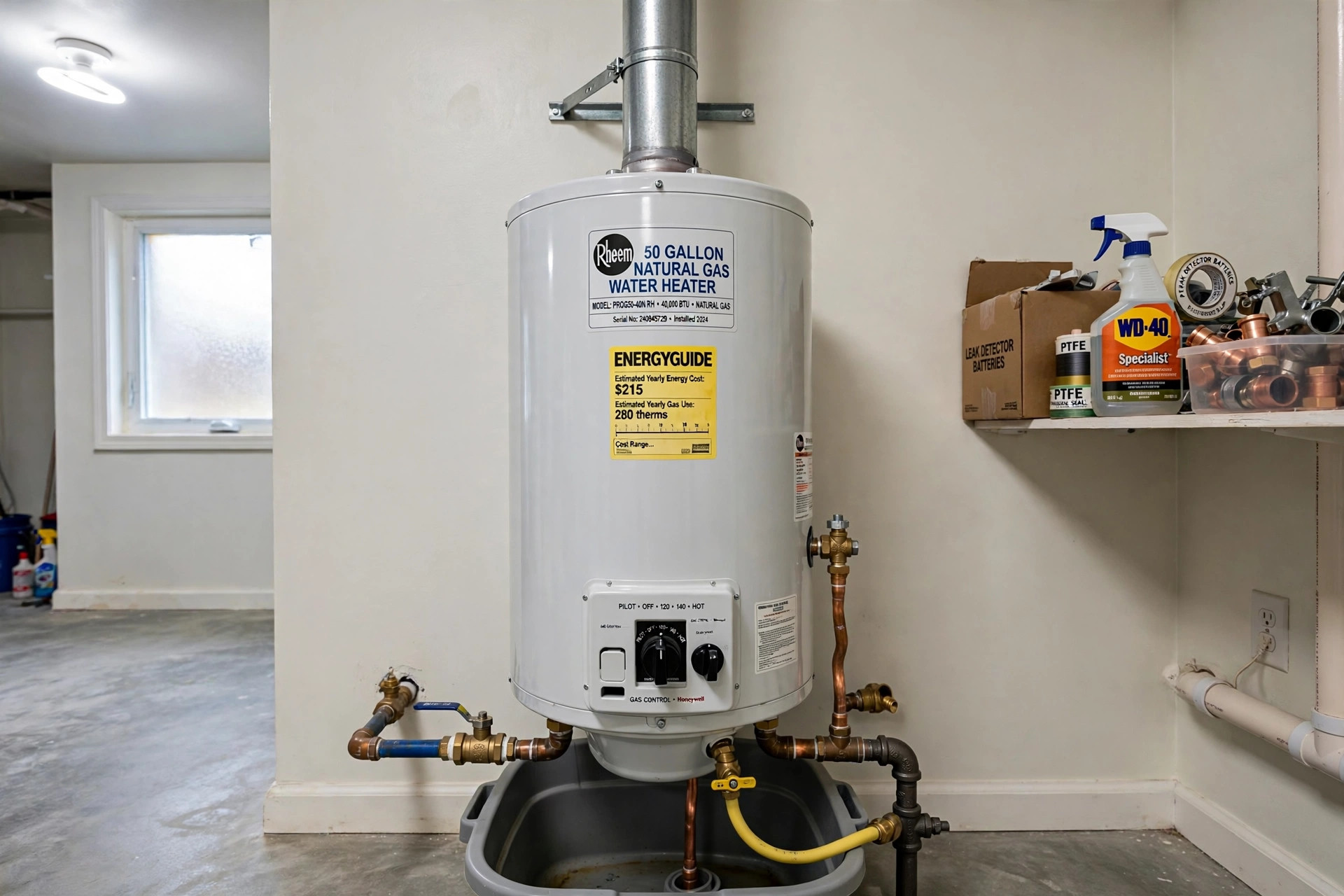

The best 50 gallon gas water heater reviews usa shoppers read agree on one point. A 50 gallon gas tank is still the most common choice in American homes. It serves a family of three to five. It heats water fast. It costs less to run than an electric tank in most regions. This guide gathers what the reviews say and what you need to know before you buy.
Why This Size Matters
A 50 gallon tank hits a sweet spot. Smaller tanks run out during morning showers. Larger tanks cost more to buy and more to heat. The 50 gallon unit holds enough hot water for back to back showers, a load of laundry, and a dishwasher cycle. Most reviews call it the standard for a three to five person home.
Gas models add speed. A gas burner recovers about twice as fast as electric elements. That means hot water returns sooner after heavy use. In homes with teenagers or guests, that speed matters. Reviews often praise gas tanks for this reason.
Shoppers should also weigh peak demand. A family rarely uses hot water all at once, but mornings come close. Two showers, a running dishwasher, and a washing machine can test any tank. The 50 gallon gas unit handles these peaks better than most electric tanks of the same size. This is why plumbers still recommend it as the default choice.
Gas also tends to cost less to run. In many states, natural gas costs less per unit of heat than electricity. Over ten to twelve years, the fuel savings add up. The Energy Star program from the U.S. Environmental Protection Agency tracks these savings. Their data helps buyers compare operating costs across models. Many utility bills show a clear gap between gas and electric water heating.
How to Choose the Right Model: Best 50 Gallon Gas Water Heater Reviews Usa
Start with your fuel type. Most homes already have a natural gas line for heating or cooking. A few areas use propane. Check your gas supply before you shop. The best 50 gallon gas water heater reviews usa models are built for natural gas unless stated otherwise.
Next, check your vent type. Older homes use atmospheric vent units. Newer and tighter homes may need power vent or direct vent models. The vent must match your flue and your local code. Reviews warn that a wrong vent choice causes installation problems.
Look at the recovery rate. This number shows how many gallons of hot water the unit makes per hour. Higher numbers mean faster recovery. A typical 50 gallon gas model recovers 40 to 50 gallons per hour. Reviews favor units with strong recovery for busy homes.
Check the first hour rating too. This tells how much hot water you get in one hour when the tank starts full. A good 50 gallon gas tank delivers 80 to 90 gallons in the first hour. That number matters more than tank size alone.
Uniform Energy Factor, or UEF, measures efficiency. Higher UEF means less wasted fuel. Standard gas tanks rate around 0.60 to 0.65 UEF. Some newer models reach 0.70 or more. Reviews note that a small gain in UEF saves real money over a decade.
The warranty tells you what the maker expects. Most tanks carry a six year warranty on the tank and parts. Some carry nine or twelve years. Longer warranties often mean thicker tank walls and better anode rods. They also cost more up front.
Finally, measure your space. A 50 gallon tank stands about five feet tall and two feet wide. It needs clear space around the burner and vent. Tight closets may need a shorter model. Check the door swing of your utility room before delivery day.
Types and Options on the Market
Standard atmospheric vent tanks are the most reviewed. They use a simple draft hood and a metal flue. They cost the least. They suit homes with a proper chimney or vent. Most Home Depot and Lowe’s displays feature these models. Reviewers like their simple design and low price.
Power vent tanks add a fan. The fan pushes exhaust through PVC pipe out a side wall. This helps homes without a chimney. It also adds electric cost and moving parts. Reviews say the fan adds some noise but solves venting problems.
Direct vent tanks pull combustion air from outside. They seal the burner from indoor air. This is safe for tight homes and garages. Reviews praise the safety. The price runs higher than standard models.
Some buyers compare tanks with tankless vs tank water heater cost comparison before they decide. Tankless gas units save floor space and never run out. They cost far more to install. For most families, a tank still wins on price and simplicity.
Condensing gas tanks are a newer option. They capture extra heat from exhaust. Their UEF runs higher than standard tanks. Reviews call them efficient but note the higher price and the need for a drain for the condensate.
Cost and Price
A standard 50 gallon gas water heater costs 600 to 900 dollars at retail. Mid tier models with longer warranties run 900 to 1,200 dollars. Power vent and condensing models run 1,100 to 1,800 dollars. Prices vary by region and brand.
Installation adds more. A simple swap of an old unit runs 500 to 1,000 dollars. This covers the plumber, fittings, and disposal of the old tank. If the vent or gas line needs work, the cost rises. See gas tankless water heater installation cost usa for comparison points on venting work.
Total installed cost for a standard swap usually lands between 1,200 and 2,000 dollars. Power vent installs run 1,800 to 3,000 dollars. Reviews advise getting three quotes. Prices differ more than buyers expect.
Operating cost depends on gas prices. A typical family spends 250 to 400 dollars per year on gas for hot water. A high efficiency model can cut that by ten to fifteen percent. Over a twelve year life, the better model can save 300 to 500 dollars.
Rebates help. Some gas utilities offer rebates for efficient models. Check your utility before you buy. The money is real and the forms take ten minutes.
Care and Upkeep
A water heater lasts longer with simple care. Most tanks live eight to twelve years. Good care can push that to fifteen. Read how long do water heaters last usa guide for full detail on service life.
Drain sediment once a year. Sediment settles at the bottom of the tank. It wastes fuel and shortens tank life. Attach a hose to the drain valve. Run the water until it flows clear. The job takes thirty minutes.
Check the anode rod every three years. The rod corrodes so the tank does not. A spent rod means the tank rusts faster. New rods cost 30 to 60 dollars. Reviews of long lasting tanks often mention rod care.
Test the temperature and pressure relief valve once a year. Lift the lever and let it snap back. Water should flow out the discharge pipe. If nothing comes out, replace the valve. This part protects against pressure buildup.
Inspect the vent pipe at the same time. Look for rust, loose joints, or white powdery residue. These signs point to poor draft. A vent that leaks exhaust into the home is a serious hazard. Fix it before the heating season starts.
Keep the area clear. Never store paint, solvents, or fuel near the burner. Gas units need clean combustion air. Dust the burner area when you do your yearly drain. A vacuum with a soft brush attachment works well for this task.
Set the temperature to 120 degrees Fahrenheit. This is hot enough for showers and dishes. It is safer for children. It also saves fuel. The Delta Faucet and Moen guides note that mixing valves at fixtures add extra scald protection.
Watch for warning signs. Rusty water, rumbling sounds, and water at the base all signal trouble. Call a plumber before a small leak becomes a flood. This Old House keeps clear guides on spotting these signs early.
Safety
Gas water heaters are safe when installed right. They are dangerous when installed wrong. Carbon monoxide is the main risk. A bad vent lets this odorless gas into the home. Hire a licensed plumber for the install. Pull a permit when your town requires one.
Install a carbon monoxide detector near the utility room. Test it monthly. This small device saves lives. Reviews rarely mention it, but inspectors always do.
The relief valve needs a proper discharge pipe. The pipe must run down to within six inches of the floor. It must not be capped or blocked. This is code in every state.
Keep the temperature at 120 degrees to prevent scalds. Water at 140 degrees burns skin in seconds. Homes with small children or older adults should treat this as a firm rule. Kohler and other fixture makers echo this advice in their safety notes.
Know how to shut off the gas. Find the shutoff valve on the gas line to the heater. Teach every adult in the home where it is. In a gas smell emergency, leave the house and call the gas company from outside.
The Family Handyman repair guides stress one more point. Never try to repair a gas control valve yourself. That part belongs to a licensed technician. A mistake can leak gas into the home.
FAQ
How big a home suits a 50 gallon gas water heater? A 50 gallon tank suits most homes with three to five people. Two bathroom homes run fine on it. Larger families may want to check the first hour rating before they buy.
Are gas water heaters cheaper than electric ones? In most regions, yes. Gas costs less per unit of heat in many states. A gas tank also recovers faster. Check your local gas and electric rates to be sure.
How long does a 50 gallon gas water heater last? Most last eight to twelve years. Tanks with longer warranties and good maintenance can reach fifteen. Flush sediment yearly and check the anode rod to get the most years.
Can I install a water heater myself? Some skilled owners do. Most towns require a permit and an inspection. Gas line work and venting must meet code. Most buyers hire a licensed plumber for safety.
What does UEF mean on the label? UEF stands for Uniform Energy Factor. It measures how well the unit turns fuel into hot water. Higher numbers mean better efficiency. Compare UEF across models you are considering.
Do I need a water softener with a new heater? Hard water leaves scale inside the tank. Scale wastes fuel and shortens life. If your water tests hard, a softener helps. Aquasana and other water treatment guides explain testing options for home water.
A Short Final Word
The best 50 gallon gas water heater reviews usa buyers write point to the same advice. Buy the size your family needs. Check the vent type and the UEF. Get three install quotes. Then take care of the tank with yearly flushing. A good gas tank gives a decade or more of steady hot water. That is money well spent.
References
Aquasana. (n.d.). Water filtration systems. https://www.aquasana.com Delta Faucet. (n.d.). Kitchen and bathroom faucets. https://www.deltafaucet.com Family Handyman. (n.d.). DIY home repair and maintenance. https://www.familyhandyman.com Kohler. (n.d.). Bathroom and kitchen fixtures. https://www.kohler.com Lowe’s. (n.d.). Home improvement products. https://www.lowes.com Moen. (n.d.). Faucets and plumbing fixtures. https://www.moen.com The Home Depot. (n.d.). Home improvement products. https://www.homedepot.com This Old House. (n.d.). Home renovation guidance. https://www.thisoldhouse.com U.S. Environmental Protection Agency. (n.d.). Protecting human health and the environment. https://www.epa.gov
Was this guide helpful?

About James Carter
The My Garden US editorial team writes practical, in-depth home and garden guides for American homeowners — tested advice, no fluff.
You May Also Like
Low Well Water Pressure Solutions for Homes
February 24, 2026 0 views
Running Toilet Fix Step by Step: A Practical USA Guide
April 11, 2026 0 views
Sewer Line Replacement Cost Per Foot USA: What Homeowners Pay in 2026
April 23, 2026 0 views