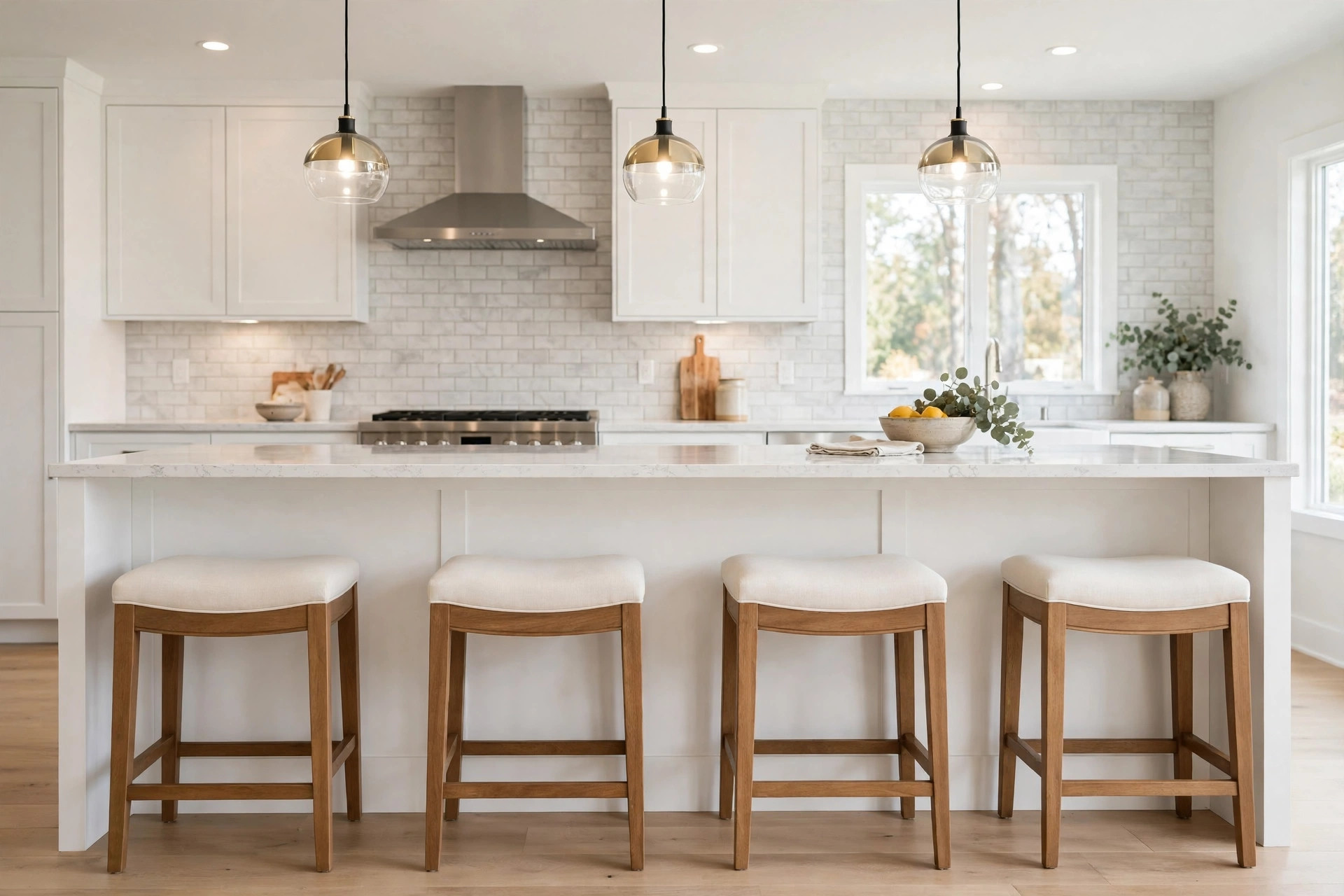

Introduction
A kitchen island works as the heart of the home. It serves as a place to eat, work, and gather. This kitchen island seating buying guide USA will help you pick seats that fit your island, your family, and your budget.
Many homes in the United States now center on the kitchen island. Children do homework there. Guests sit there with a cup of coffee. The cook can chat while the meal is on the stove. The right seating makes all of this possible. The wrong seating makes the island hard to use.
Good island seating starts with size. Stools that are too tall or too short make meals uncomfortable. Stools that are too wide crowd the walkway. Stools that lack backs tire the back after an hour. This guide walks through each choice step by step. By the end, you will know what to measure, what styles exist, what to pay, and how to keep the seats safe and clean.
The market offers hundreds of options. Www.homedepot.com fill the shelves of big stores. Www.bobvila.com also helps shoppers compare looks. But you do not need to guess. A few plain rules will lead you to the right purchase.
Why the Right Island Seating Matters: Kitchen Island Seating Buying Guide Usa
An island without seating is a wasted surface. It becomes a place to drop mail and pile dishes. With the right stools, the same surface becomes the busiest seat in the house.
Comfort is the first reason. Family meals last longer when the seats feel good. Guests stay in the kitchen when the stools invite them to rest. Www.thisoldhouse.com remind buyers that a few inches of seat width change the whole feel of a meal.
Function is the second reason. The island may need to serve as a homework desk in the afternoon and a dinner table at night. Adjustable stools help here. Www.lowes.com let sitters turn to face the cook or the room.
Look is the third reason. The stools set the tone of the kitchen. Wood stools warm a white kitchen. Metal stools suit an industrial space. Upholstered seats add a soft touch. The Spruce show how stool color and shape change the mood of a whole room.
How to Measure Your Island
Before you shop, get out the tape measure. Three numbers matter most: height, width, and depth.
Seat Height
Seat height is the distance from the floor to the top of the seat. It must match the counter height. Most American kitchen counters stand about 36 inches tall. Islands often match at 36 inches. Some islands rise to 42 inches, which is called bar height.
For a 36-inch counter, choose stools with a seat height of 24 to 26 inches. These are called counter stools. For a 42-inch bar, choose stools of 28 to 30 inches. These are called bar stools. The rule is simple: leave 10 to 12 inches between the seat top and the counter top. This gives room for the legs.
Width Per Stool
Plan for 24 to 26 inches of width per stool along the counter edge. A 60-inch overhang seats two people in comfort. A 72-inch overhang can seat three. A 96-inch overhang can seat four. If you crowd more seats in, elbows bump and people feel boxed in.
Also mind the overhang depth. The counter should extend 12 to 15 inches past the cabinet base on the seating side. This gives room for the knees. Less than 12 inches forces sitters to sit sideways.
Walkway Clearance
Leave 36 inches of clear floor space behind the stools. This is the path people walk. In a busy kitchen, 42 inches is better. Pull the stool out, sit on it, and walk behind it. If you must squeeze past, the layout is too tight.
Types of Island Seating
Shoppers will find four main types of island seating in stores across the country.
Counter Stools
Counter stools are the classic choice. They stand 24 to 26 inches tall. Most have four legs. They come in wood, metal, and plastic. The Home Depot show how wide this group is. Counter stools with backs cost more but feel better for long meals.
Bar Stools
Bar stools suit raised islands at 42 inches. They stand 28 to 30 inches tall. Many swivel. Some have footrests built into the frame. Tall sitters like them, but small children find them hard to climb.
Adjustable Stools
Adjustable stools rise and fall with a lever or a gas lift. One stool can serve a low table and a high counter. They suit families whose needs change through the day. The moving parts wear with time, so check the weight limit before you buy.
Backless Stools and Benches
Backless stools slide fully under the counter. This keeps the walkway clear. They suit small kitchens. They do not support the back, so they tire sitters on long evenings. Some families use one long bench on one side of the island instead of separate stools. Benches seat more people for less money.
Materials: What to Look For
The material sets the price, the weight, and the care routine.
Wood
Wood stools fit farmhouse and traditional kitchens. Oak, maple, and rubberwood are common. Solid wood lasts for years. Check that the joints feel tight. Wood can scratch, but most scratches sand out. A coat of oil once a year keeps the finish fresh. For related storage tips, see kitchen pantry cabinets for sale usa.
Metal
Metal stools suit modern and industrial kitchens. Steel is strong and cheap. Aluminum is light. Many metal stools stack for storage. Look for a footrest ring that is welded, not bolted. Powder-coated finishes resist chips.
Upholstered Seats
Upholstered seats add comfort and color. Leather and faux leather wipe clean. Fabric feels soft but stains fast in a kitchen. Many buyers pick stools with removable covers so they can wash them. Www.consumerreports.org help compare how different fabrics hold up to daily use.
Plastic and Molded Shells
Molded plastic stools are light, cheap, and easy to wash. They suit homes with small children. They do not match fine wood cabinets, but they cost little to replace. Look for thick shells that do not flex when you sit.
What to Look For When You Shop
Keep a short checklist in hand when you visit the store.
First, test the weight limit. Most stools list a limit of 250 pounds. Heavy-duty stools hold 300 to 350 pounds. Sit on the display model and shift your weight.
Second, check the footrest. A footrest that sits too low leaves the legs hanging. A footrest that sits too high feels cramped. The rest should meet the feet where they fall naturally.
Third, test the swivel. Swivel seats should turn with ease and stop without a wobble. A wobbly swivel wears out fast.
Fourth, look at the floor glides. Hard legs scratch tile and wood floors. Felt or rubber glides protect the floor and make the stool quiet. Replace worn glides once a year.
Fifth, check the assembly. Some stools come fully built. Others need an hour with an Allen wrench. Read the reviews before you buy. Www.geappliances.com also carry user reviews that tell the truth about assembly time.
Sixth, think about cleaning. Kitchen stools catch spills, flour dust, and sticky fingers. Wipeable surfaces save hours of work over the years.
Cost and Price Ranges
Prices vary widely. The numbers below reflect typical United States retail prices in recent years.
Basic plastic or metal backless stools cost 25 to 60 dollars each. They work fine in rental homes and first apartments.
Mid-range wood or upholstered counter stools cost 80 to 180 dollars each. This is the sweet spot for most families. The frames are solid and the finish holds up.
Designer stools with backs, fine wood, or leather cost 200 to 400 dollars each. They suit renovated kitchens where the stools are part of the design. Some buyers in large homes pay more; see kitchen island seating texas homes usa for regional style notes.
A full set of four mid-range stools often runs 400 to 700 dollars. Sales at big retailers cut this by 20 to 30 percent. Lowe’s and The Home Depot are worth watching.
Do not forget hidden costs. Floor protectors, assembly tools, and shipping can add 50 to 100 dollars to the total. Whirlpool remind shoppers to plan the whole kitchen budget, not just the big items.
Matching Stools to Your Kitchen Style
The stools should speak the same language as the rest of the kitchen.
In a farmhouse kitchen, pick wood stools with a distressed finish. Ladder backs and turned legs fit the look. Warm oak tones match butcher-block counters.
In a modern kitchen, pick clean lines. Metal frames with molded seats work well. Black, white, and gray keep the look sharp. Chrome legs add shine.
In a traditional kitchen, pick upholstered seats with nailhead trim. Dark wood frames match cherry cabinets. Bob Vila help pair stool finishes with door styles.
In a coastal kitchen, pick light wood or whitewashed finishes. Woven rattan seats add texture. The Spruce show how pale stools keep the room bright.
For buyers updating the whole cooking space, the shaker cabinet doors reviews buying guide usa pairs well with this guide. The cabinets and the stools should age at the same pace.
Care and Upkeep
Good care doubles the life of island seating.
Wipe wood stools with a damp cloth once a week. Dry them right away. Water left on wood leaves rings. Tighten bolts every six months. Joints loosen with daily use.
Vacuum fabric seats monthly. Blot spills at once with a clean cloth. Do not rub. Rubbing pushes the stain deeper. Keep a fabric cleaner made for upholstery on hand.
Wipe leather with a damp cloth and a mild soap. Treat it with a leather conditioner twice a year. Keep leather away from direct sun. Sun dries and cracks the hide.
Check metal frames for rust spots. Touch up chips with matching paint. Tighten the footrest ring. Replace plastic glides when they wear thin. A five-minute check each season saves a costly replacement.
For homes with children, pick seats that wash with soap and water. Slipcovers that go in the washing machine are worth the extra cost. Www.bosch-home.com stress washable surfaces in busy kitchens.
Safety Tips
Stools are furniture, but they still need care in use.
Anchor tall stools away from the stove edge. A stool that tips can send a hot pan flying. Keep a clear zone around the cooktop.
Teach small children to sit still on stools. Swivel stools tempt children to spin. A stool with a back and arms gives young children more support. Www.energystar.gov pages also carry general home safety checklists worth a look.
Do not stand on stools to reach high shelves. Use a step ladder. Stools are not built for standing loads.
Check weight limits before guests arrive. Older stools may have worn joints. A quick rock test shows looseness before it fails.
Keep the floor under the island dry. Wet tile under a metal stool is a slip hazard. Wipe spills at once.
FAQ
How many stools fit on my kitchen island?
Count the overhang length and divide by 24 inches. A 48-inch overhang seats two. A 72-inch overhang seats three. A 96-inch overhang seats four. Round down. Comfort beats crowding.
What is the best seat height for a kitchen island?
Most islands stand 36 inches tall. For these, buy counter stools with seats 24 to 26 inches high. For raised 42-inch bars, buy bar stools with seats 28 to 30 inches high. Leave 10 to 12 inches between seat and counter.
Should I buy stools with backs or without?
Stools with backs suit long meals and older sitters. They cost more and take more space. Backless stools slide under the counter and suit small kitchens. Many families mix: backed stools for the ends, backless for the middle.
How much should I spend on island stools?
Plan 80 to 180 dollars per stool for solid mid-range quality. A set of four runs 400 to 700 dollars. Cheap stools under 50 dollars work for short-term use but wear fast. Designer stools over 200 dollars each suit high-end kitchens.
What is the easiest stool material to clean?
Molded plastic and faux leather wipe clean with a damp cloth. Metal frames need only soap and water. Fabric and real leather need more care. In homes with small children or pets, pick wipeable surfaces.
Can I mix and match stool styles?
Yes. Many designers mix two styles on one island. Keep one trait in common, such as the same wood tone or the same seat height. Two colors can work if they share the same shape. Test the mix with samples before you buy the full set.
A Final Word
The best island seating is the set you forget about. It holds you through breakfast, homework, and late talks without a thought. Measure first. Test in the store. Pick materials that match your life. Spend a little more for the seats you will use every day. This kitchen island seating buying guide USA has given you the rules. Now trust your eye and your comfort. The right stools will serve your home for years to come.
References
Bob Vila. (n.d.). Home improvement advice. https://www.bobvila.com Bosch. (n.d.). Home appliances. https://www.bosch-home.com Consumer Reports. (n.d.). Product reviews and ratings. https://www.consumerreports.org ENERGY STAR. (n.d.). Energy efficient products. https://www.energystar.gov GE Appliances. (n.d.). Kitchen and home appliances. https://www.geappliances.com Lowe’s. (n.d.). Home improvement products. https://www.lowes.com The Home Depot. (n.d.). Home improvement products. https://www.homedepot.com The Spruce. (n.d.). Home and garden advice. https://www.thespruce.com This Old House. (n.d.). Home renovation guidance. https://www.thisoldhouse.com Whirlpool. (n.d.). Home appliances. https://www.whirlpool.com Www. (n.d.). Home and garden information. https://www
Was this guide helpful?

About James Carter
The My Garden US editorial team writes practical, in-depth home and garden guides for American homeowners — tested advice, no fluff.
You May Also Like

Kitchen Island Seating for Florida Homes USA: A Plain Guide
July 16, 2026 0 views
Stainless Range Hoods for Texas Homes: A Plain Guide
August 26, 2026 0 views
French Door Refrigerators for Florida Homes: A Buyer Guide
March 8, 2026 0 views