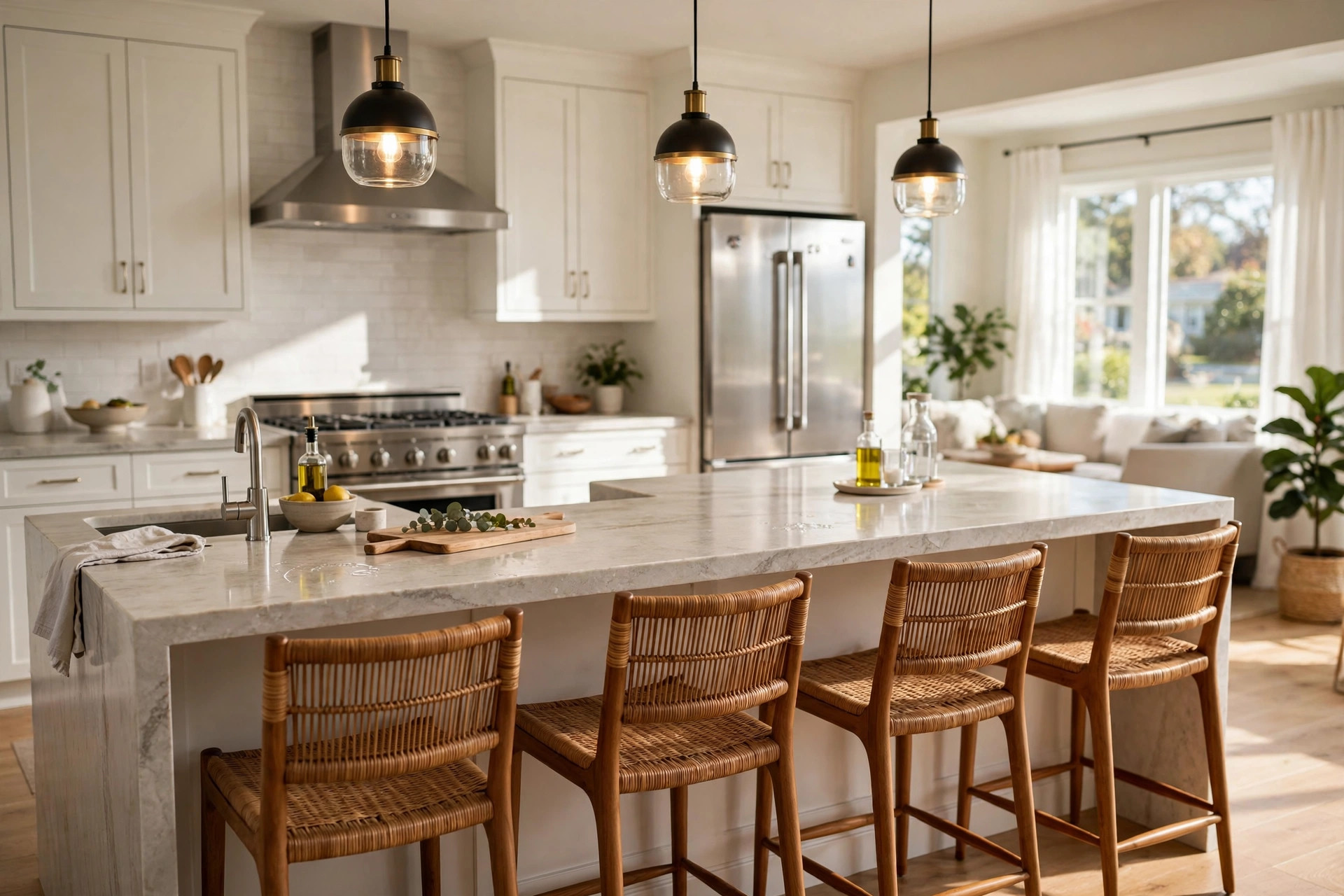

Texas kitchens tend to run big. New homes in the suburbs of Houston, Dallas, San Antonio, and Austin often have open floor plans, and the kitchen island sits at the center of daily life. Homeowners across the state who look up kitchen island seating texas homes usa usually ask the same questions: how many stools fit, which height is right, and what will last through years of daily use. This guide answers those questions in plain terms.
You will learn how to measure your island, how to pick the right seat height, which materials hold up best, what the seats cost, and how to care for them. By the end you will know exactly what to buy for your own kitchen.
Why Island Seating Matters in a Texas Kitchen
In many Texas homes the island is not just a work top. It is where breakfast is served on school mornings. It is where children do homework while a parent cooks. It is where guests gather with a drink while the host finishes dinner. Because the island carries so many jobs, the seating around it matters as much as the counter itself.
Comfort comes first. A stool that is the wrong height makes people perch and fidget. A stool with no back may be fine for a quick cup of coffee, but it grows tiring during a long meal. When the seats fit the people who use them, the island becomes the favorite spot in the house.
Flow comes second. Texas kitchens are often open to the living room, and the island marks the line between the two spaces. Stools that stick out too far block the walkway. Stools that tuck neatly under the counter keep the room open. Renovation guides from This Old House remind readers that traffic paths around an island need clear space on every side, and seating is part of that plan.
Style comes third. The island is the largest piece of furniture in most kitchens. Its stools set the tone for the whole room. Wood stools give a warm farmhouse feel. Black metal stools give a clean modern look. Upholstered chairs add softness. The right choice ties the kitchen together.
How to Choose the Right Seating: Kitchen Island Seating Texas Homes Usa
Good choices start with facts, not taste. Measure first, then shop. Three facts decide almost everything: the size of your counter, the height of your counter, and the way your family lives.
Measure the Counter and the Room
Take a tape measure to the island before you look at a single stool. Allow 24 to 28 inches of width for each seat. A six-foot island, which is 72 inches long, fits three stools with room to spare. A very long island of nine or ten feet can fit four or five.
Check the overhang, the part of the counter that extends past the cabinets. Knees need about 15 inches of space under the counter for comfortable sitting. If your island has only a small overhang, stools will feel cramped no matter how nice they look.
Leave room to walk. Plan for 36 inches of clear floor between the island stools and any wall, cabinet, or appliance behind them. In a busy kitchen with two cooks, 42 to 44 inches feels better. Step-by-step measuring advice from Bob Vila covers these clearances in detail and is worth a look before you order.
Pick the Correct Seat Height
Seat height is the most common mistake buyers make. The rule is simple. Measure the counter from the floor to the top. Then subtract 10 to 12 inches. That number is your seat height.
Most American kitchen counters stand 36 inches high. For these, choose counter stools with seats 24 to 26 inches from the floor. Some islands are built to bar height, which is 42 inches. For these, choose bar stools with seats 28 to 30 inches from the floor. Guides from The Spruce show photos of both heights side by side, which helps if you are unsure what you have.
When in doubt, measure twice and write the number down. Adjustable-height stools exist and can solve the problem in homes where two different counters need seats. They cost more, but they remove all doubt.
Choose a Material That Fits Your Life
Wood stools look warm and classic. They suit farmhouse and traditional kitchens. Solid wood lasts for decades, but it needs care. Spills should be wiped up fast, and the finish may need fresh oil or wax every year or two.
Metal stools are tough and easy to clean. They fit modern and industrial kitchens. Powder-coated steel resists chips and rust. A damp cloth is usually all the care they need. They can feel hard during long meals, so many owners add a cushion.
Upholstered stools are the most comfortable. Fabric or leather seats invite people to stay. They need more care. Performance fabrics resist stains far better than plain cotton. Leather wipes clean but needs conditioner to stay soft. Independent durability reviews from Consumer Reports compare how common seat materials hold up over time.
Think about who will sit there. Homes with small children or dogs do best with wipeable surfaces. Homes where the island hosts long dinners do best with backs and padding. Home centers such as Home Depot carry all of these materials, so you can sit on each type before you decide.
Types of Island Seating
Once the measurements are set, the fun part begins. Four main types cover nearly every kitchen.
Backless Bar Stools
Backless stools are the simplest choice. They slide fully under the counter when not in use, which keeps the kitchen looking clean. They cost less than stools with backs. They work well in small kitchens and in homes where the island is used for quick meals. The trade-off is comfort. Without a back, long sits grow tiring.
Stools With Backs
Stools with low or full backs give real support. They suit families who eat full meals at the island every day. They take up more visual space and need more room to pull out, so measure your walkways. For the best island seating for large Texas kitchen islands, many designers pick stools with backs because the island often serves as the main dining spot.
Swivel Chairs
Swivel seats turn, which makes talk easy. Guests can face the cook, then turn to face the room. Swivel counter chairs feel a little more formal and are popular in open-plan Texas homes where the island faces the living area. Look for a smooth, quiet swivel and a sturdy base. Many owners plan the island together with new cooking appliances from major makers such as GE Appliances and Whirlpool, so the seating and the appliance suite share one clean style.
Benches and Built-In Banquettes
A long bench on one side of a big island seats many people at a low cost per seat. Built-in banquettes, which are fixed benches with backs, turn one side of the island into a cozy nook. Both need a long island, at least seven feet, to look right. They are a strong choice for big households. If your island also holds extras such as an under-counter wine fridge or sits near double wall ovens, plan the bench length around those fixtures so doors can still open.
Lighting matters too. The seats should sit under good light, and pendant lights over the island are the classic answer. Hang them so the bottoms sit 30 to 36 inches above the counter, high enough to see under but low enough to light the seats.
Cost and Price
Kitchen island stool prices in the USA cover a wide range. Knowing the bands helps you set a budget.
Backless metal stools are the least costly. Expect 50 to 150 dollars each. They are a smart pick when you need five or six seats and want to keep the total down.
Wood stools run 100 to 250 dollars each. Price moves with the wood species and the joinery. Solid hardwood with screwed and glued joints lasts far longer than softwood held with staples.
Upholstered and swivel stools run 150 to 400 dollars each. The fabric grade and the swivel hardware drive the price. Top-grain leather and commercial-grade mechanisms sit at the high end.
Custom and designer pieces can pass 500 dollars each. Most families do not need them. Mid-range stools from national retailers give the best mix of comfort and value.
Buy in sets when you can. Sets of two or four often cost less per seat than single stools. Check current prices at large retailers such as Lowe’s, since sales move often. Do not forget shipping. Six heavy stools can add real freight cost, so factor it into the budget.
Count the full set before you shop. Four stools at 150 dollars each is 600 dollars, not 150. Write the total down. It keeps the project honest.
Care and Upkeep
Good stools last a decade or more with simple care. The routine is short.
Dust wood and metal weekly with a soft cloth. Wipe spills at once, since liquid is the enemy of every seat material. For wood, use a damp cloth and dry right away. Once a year, feed the wood with oil or wax made for furniture. Texas sun is strong, so keep wood stools out of direct afternoon sun when you can. Heat and light dry the finish and fade the color.
Vacuum upholstered seats with a brush head every week or two. Crumbs grind into fabric if left alone. Treat stains fast with a cleaner made for the fabric type. Test any cleaner on a hidden spot first. For leather, wipe with a damp cloth and apply leather conditioner two or three times a year.
Tighten the hardware twice a year. Stools loosen with daily use, and a wobbly stool wears out fast. A few turns of a wrench add years of life. Cleaning guides from The Spruce list gentle cleaners that are safe for mixed materials.
When you remodel the whole kitchen, think about the full project. New lighting and seats pair well with efficient appliances, and the ENERGY STAR program marks models that use less power. A planned kitchen refresh, planned all at once, usually costs less than piecemeal changes.
Safety at Home
Stools are simple furniture, but a few safety points matter, above all in homes with children.
Choose stools with wide, stable bases. Narrow bases tip. This matters most for tall bar-height stools. If a stool rocks on your floor, fix the levelers or return it. Never let a child stand on a stool to reach a cabinet.
Watch the edges. Metal stools with sharp corners can hurt small heads at just the wrong height. Rounded frames and smooth welds are kinder. If you own stools with hard edges, felt pads or edge guards help.
Keep stools clear of the hot zone. Seats should not sit right against the cooktop side of the island. Hot pans, steam, and splatter reach further than people think. Leave the cooking side of the island for work, and put the seats on the other side.
Lock what should not move. Some swivel stools have a lock or a brake. Use it when small children are around. Store step stools elsewhere so children do not drag them to the island. Safety-minded buying advice from Consumer Reports covers stability tests worth knowing before you buy.
Frequently Asked Questions
How many stools fit on a standard island? A six-foot island fits three stools with comfort. Allow 24 to 28 inches of width per seat. A longer island fits more. Measure the usable length, not the whole cabinet run.
Should I buy counter-height or bar-height stools? Measure your counter. Standard counters are 36 inches high and need 24 to 26 inch seats. Bar-height counters are 42 inches high and need 28 to 30 inch seats. This is the single most important measurement in the project.
What are the best bar stools for kitchen islands in Texas homes with kids? Pick wipeable seats, sturdy frames, and backs for support. Avoid light fabrics that stain. Metal or performance fabric cleans fast. Skip tall swivel models for very young children unless the swivel locks.
Can I mix different stool styles at one island? Yes, as long as the seat heights match. Mixed styles look planned when they share a color or a material. Keep heights equal or the table will look and feel uneven.
How much should a family spend on island seating? For four good stools, most families spend 400 to 1,000 dollars in total. Counter height seating for Texas kitchens at this level buys solid frames and comfortable seats. Spending less is fine for backless metal. Spending more buys better fabric and smoother swivels.
Do I need a professional to install island seating? No. Freestanding stools need no install. Built-in banquettes are carpentry work and suit a skilled hand. If your project also moves plumbing or wiring for the island, hire licensed pros, a point that Bosch and other appliance makers echo in their kitchen planning guides.
A Short Final Word
The right island seating is measured, not guessed. Measure the counter, pick the true seat height, choose a material that fits your daily life, and buy the best frame your budget allows. Do that, and the island becomes what it should be: the warm center of a Texas home, ready for breakfast, homework, and long talks late into the evening.
References
Bob Vila. (n.d.). Home improvement advice. https://www.bobvila.com Bosch. (n.d.). Home appliances. https://www.bosch-home.com Consumer Reports. (n.d.). Product reviews and ratings. https://www.consumerreports.org ENERGY STAR. (n.d.). Energy efficient products. https://www.energystar.gov GE Appliances. (n.d.). Kitchen and home appliances. https://www.geappliances.com Lowe’s. (n.d.). Home improvement products. https://www.lowes.com The Home Depot. (n.d.). Home improvement products. https://www.homedepot.com The Spruce. (n.d.). Home and garden advice. https://www.thespruce.com This Old House. (n.d.). Home renovation guidance. https://www.thisoldhouse.com Whirlpool. (n.d.). Home appliances. https://www.whirlpool.com
Was this guide helpful?

About Emily Rodriguez
The My Garden US editorial team writes practical, in-depth home and garden guides for American homeowners — tested advice, no fluff.
You May Also Like

Undermount Stainless Sinks for Florida Homes: A Plain Buyer’s Guide
May 11, 2026 0 views
Gas Kitchen Ranges Deals Near Me: A Plain Guide to Buying
August 17, 2026 0 views
Pot Filler Faucets for Texas Homes: A Practical Guide
April 2, 2026 0 views