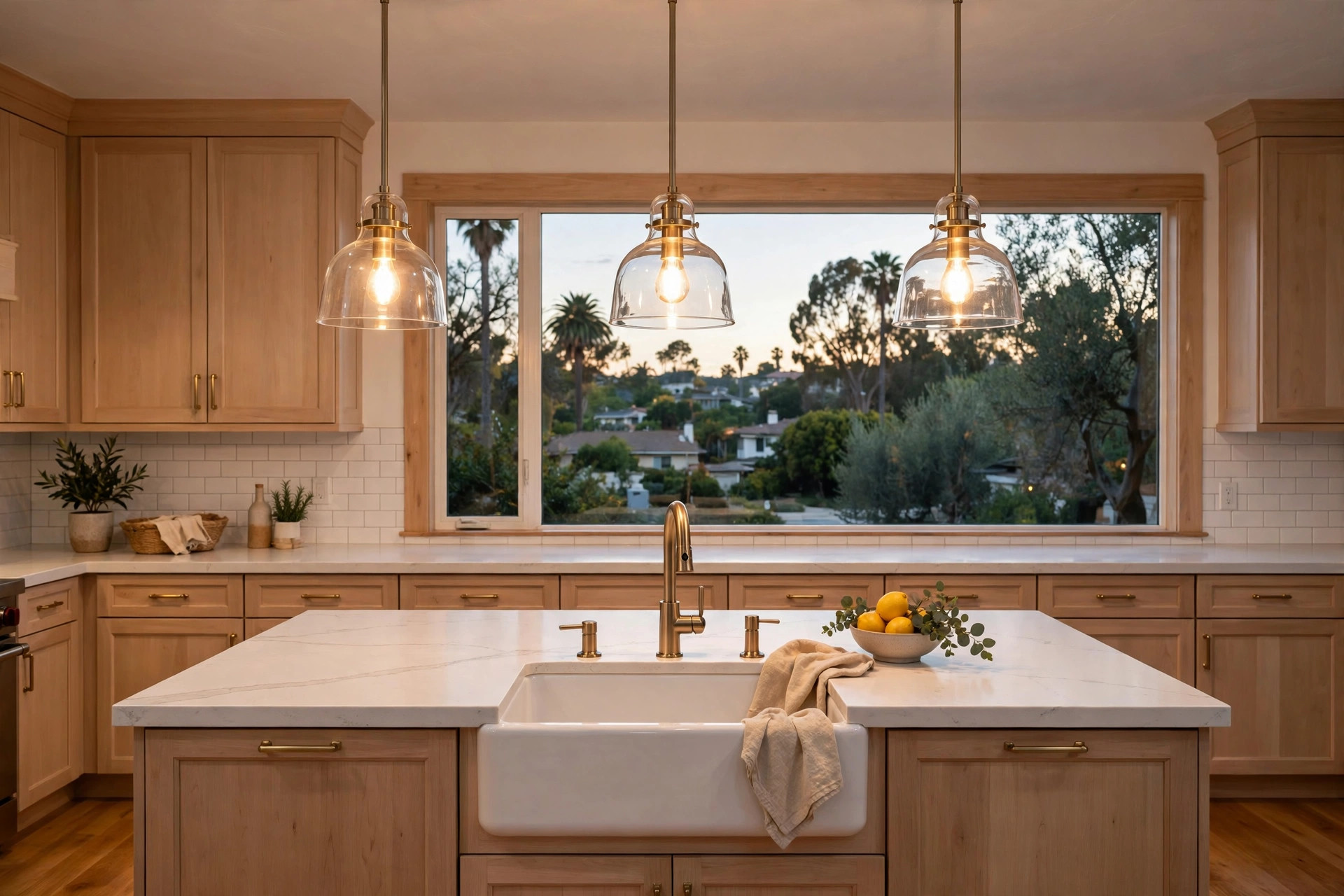

Kitchen island hanging lights california homes usa is a phrase many homeowners type when they want the right look for the busiest room in the house. The kitchen island has become the center of home life in California. Families gather there in the morning. Friends sit there at night. Children do their homework there after school. Good light above that island makes the room safer, warmer, and easier to use. This guide walks through what matters, how to choose, what it costs, and how to keep the fixtures working well.
Why It Matters
The kitchen island does many jobs at once. It is a work counter. It is a dining table. It is a desk. Each job needs light. Hanging lights, also called pendants, give light exactly where it is needed. They put a pool of light on the countertop below. They cut shadows from your hands and body. That makes chopping, reading, and writing easier.
Pendant lights also set the mood of the room. They hang at eye level. They catch the eye the moment someone walks in. A well-chosen row of pendants makes a kitchen feel finished and welcoming. A poor choice can make the room feel dark or harsh.
In California homes, kitchens often run long hours. Morning sun comes in early. People cook late. Open floor plans join the kitchen to the living room. The island becomes the room’s anchor. The right hanging lights mark that anchor and give it presence.
Good lighting also saves money. Modern pendant fixtures use efficient bulbs. They sip power compared with old recessed cans. Over years of use, the savings add up. Energy-efficient lighting choices are a smart step for any home, as energy guides from ENERGY STAR explain.
How to Choose: What to Look For: Kitchen Island Hanging Lights California Homes Usa
Choosing island pendants is not guesswork. A few plain rules guide the decision.
Size and Scale
Measure the island first. The fixtures should match its length. A good rule is that the row of pendants should span about two-thirds to three-quarters of the island’s length. For a six-foot island, that means roughly four to four and a half feet of fixtures.
Width matters too. A single pendant should not be wider than about 12 to 15 inches in most kitchens. Oversized fixtures block the view across the island. They also crowd the space.
For a long island, three pendants often work best. For a short island, two may do. One large linear fixture can also suit a very long island. A full buying guide for kitchen island hanging lights walks through sizing in more detail.
Hang Height
Height is the most common mistake. Hang pendants too low and they block sight lines. Hang them too high and they throw light on the ceiling instead of the counter.
The bottom of the pendant should sit 30 to 36 inches above the island countertop. Standard counters are 36 inches tall. That puts the bottom of the light about 66 to 72 inches off the floor. People of average height can talk across the island without the fixture in their eyes.
If the island has a raised bar or a seating area, measure from the higher surface. Keep the same 30 to 36 inch gap. Consistent height gives an even look.
Spacing
Space pendants evenly. A good gap between fixtures is about 24 to 30 inches from center to center. Leave at least 6 inches between the end pendant and the island’s end. Even spacing looks calm and professional.
Bulbs and Brightness
Look at the bulb type before you buy. Most new pendants take LED bulbs. LED bulbs last years and use little power. They also run cool, which matters under cabinets and near food.
Choose a warm color temperature for a kitchen. Look for 2700K to 3000K on the bulb box. That gives a warm, natural glow like old incandescent bulbs. Cooler light above 4000K feels cold and clinical. It makes food look unappetizing.
Check brightness too. A single pendant over a work island should give roughly 300 to 500 lumens. Three pendants then give 900 to 1500 lumens over the island. That is enough for most kitchen tasks.
Style and Finish
Match the pendants to the kitchen’s style. A farmhouse kitchen suits glass shades with oil-rubbed bronze. A modern kitchen suits sleek metal domes or clear globes. A coastal California kitchen suits woven rattan or white ceramic shades.
Finish ties the room together. Repeat a finish already in the kitchen: the faucet, the cabinet pulls, or the door handles. Two metals can work, but they should be used with care. One strong metal plus one quiet one is a safe mix.
Shade Type
Shade shape changes how light behaves. Downlight shades push light straight down to the counter. That is best for task lighting. Up-and-down shades give a softer spread. Clear glass shades show the bulb and give sparkle, but they can glare. Frosted or fabric shades soften the light and hide the bulb.
Types and Options
Single Pendants
Single pendants are the classic choice. You hang two or three in a row. Each one is its own unit. This gives even light and a neat rhythm. It also lets you adjust spacing to fit the island.
Linear Chandeliers
A linear chandelier is one long bar with several lights built in. It suits very long islands. It gives a strong modern statement. One unit is easier to wire than three separate pendants.
Cluster Pendants
A cluster hangs several small pendants at different heights from one ceiling mount. This looks artful and casual. It works well in eclectic kitchens. The varied heights add movement.
Lantern Pendants
Lantern pendants have a frame around the light, like an old lantern. They suit farmhouse and traditional kitchens. They look substantial over a large island. Homeowners in Texas often pick bold lantern styles for the same reason.
Drum Pendants
Drum pendants have a wide fabric shade shaped like a drum. They give soft, diffused light. They look calm over a seating area. Fabric shades need cleaning, since kitchen grease can stain them.
Mini Pendants
Mini pendants are small, often under 10 inches wide. You hang more of them: four or five over a long island. They suit small kitchens and low ceilings. Many styles also appear in American homes across the country.
Cost and Price
Prices range wide. A basic mini pendant can cost 40 to 80 dollars. A mid-range glass or metal pendant often runs 100 to 250 dollars each. Designer fixtures can cost 400 dollars or more per light. For a row of three, most California homeowners spend 300 to 750 dollars on the fixtures themselves.
Installation adds cost. A simple swap where a box already exists may run 100 to 150 dollars per fixture from an electrician. A new install with new wiring and a new ceiling box can run 200 to 400 dollars per fixture. If your ceiling is high or the work needs a permit, expect more.
Total project cost for three new pendants over an island often lands between 500 and 1,500 dollars. High-end fixtures in a large remodel can push past 2,000 dollars.
Bulbs cost little now. A good LED bulb costs 5 to 12 dollars and lasts many years. Buying in bulk from a home improvement store like The Home Depot or Lowe’s keeps the price down.
Set a budget before you shop. Decide what matters most: style, brightness, or price. It is hard to get all three at the lowest cost. A consumer review site can help compare brands on quality and value.
Care and Upkeep
Kitchen pendants collect grease and dust. The heat from cooking sends a thin film of grease into the air. It settles on every surface, including light fixtures. Clean the pendants once a month to keep them bright.
Turn the light off and let the bulb cool. Wipe shades with a soft cloth and mild soap. Glass shades can soak in warm soapy water. Dry them fully before they go back. Metal finishes need only a damp cloth. Avoid harsh cleaners that strip the finish.
Check bulbs once or twice a year. LED bulbs last long, but they do fade slowly over time. Replace bulbs in a set so the color matches. A fresh bulb next to an old one can look oddly different.
Tighten hardware once a year. Pendants hang from rods or cords. Vibration from slamming cabinets can loosen them. A gentle check keeps everything safe and level.
Dimmers extend bulb life. A dimmer switch lets you lower the light for dinner and raise it for work. Make sure the bulbs are marked as dimmable. Not all LEDs are. Pairing the right bulb with the right dimmer is a topic that home repair guides and DIY project sites cover well.
Safety
Safety comes first with any electrical fixture. The rules are simple and firm.
Turn off the breaker before any work. Do not trust the wall switch alone. Test the wires with a voltage tester. If you are unsure, call a licensed electrician.
Pendants must hang from a rated ceiling box. A standard light box rated for 50 pounds suits most pendants. Heavy fixtures may need a fan-rated box. Never hang a light from drywall alone.
Keep pendants away from cooking grease zones. Do not hang them directly over a gas cooktop unless the fixture is rated for that spot. Heat and flame damage fixtures and can cause fires.
Follow local code. California cities follow the state electrical code, which is based on the national code with extra rules. Some areas require permits for new circuits. Check with your city before you start. The appliance makers also publish useful safety guidance — brands like Whirlpool and GE Appliances include installation manuals worth reading.
Check the weight rating on old boxes when you replace fixtures. An old box may suit a light fixture but not a heavy new pendant. An electrician can swap the box through the ceiling hole.
FAQ
How many pendant lights do I need over my kitchen island?
Two pendants suit islands up to about five feet long. Three pendants suit islands five to eight feet long. Islands longer than eight feet may need four pendants or one long linear fixture. Keep the row to about two-thirds of the island’s length.
What size pendant is best for a kitchen island?
Most kitchens do best with pendants 10 to 15 inches wide. Very large islands can carry pendants up to 18 inches wide. The key is proportion. The fixture should look like it belongs over the counter, not like it is swallowing it.
How high should kitchen island hanging lights hang?
The bottom of the shade should sit 30 to 36 inches above the island counter. That keeps the light out of your sight line and close enough to light the work surface. Measure from the counter, not the floor.
What is the best bulb for kitchen island pendants?
A warm LED bulb at 2700K to 3000K is the best pick for most kitchens. It gives natural light that flatters food and skin. Make sure it is dimmable if you plan to use a dimmer. Look for high CRI ratings, 90 or above, for true colors.
Do pendant lights use a lot of electricity?
No. A typical LED pendant uses 8 to 12 watts. Three pendants running three hours a day use about one dollar of electricity per month in most areas. They are among the cheapest lights to run in the home.
Can I install kitchen island pendants myself?
You can replace an existing fixture if you are comfortable with basic wiring. Turn off the breaker first. New wiring, new ceiling boxes, or any doubt means hiring a licensed electrician. Electrical mistakes can cause fires. Professional help is worth the cost.
A Short Final Word
Kitchen island hanging lights california homes usa may be a mouthful of a search phrase, but the idea behind it is simple. People want light that works hard and looks good over the busiest counter in the house. Measure the island. Hang the lights 30 to 36 inches above the counter. Pick warm, dimmable LEDs. Keep the style in tune with the room. Do these things, and the island will earn its place as the warm center of a California home. For more kitchen ideas, browse design and how-to articles and appliance buying advice.
References
Bob Vila. (n.d.). Home improvement advice. https://www.bobvila.com Bosch. (n.d.). Home appliances. https://www.bosch-home.com Consumer Reports. (n.d.). Product reviews and ratings. https://www.consumerreports.org ENERGY STAR. (n.d.). Energy efficient products. https://www.energystar.gov GE Appliances. (n.d.). Kitchen and home appliances. https://www.geappliances.com Lowe’s. (n.d.). Home improvement products. https://www.lowes.com The Home Depot. (n.d.). Home improvement products. https://www.homedepot.com The Spruce. (n.d.). Home and garden advice. https://www.thespruce.com This Old House. (n.d.). Home renovation guidance. https://www.thisoldhouse.com Whirlpool. (n.d.). Home appliances. https://www.whirlpool.com
Was this guide helpful?

About James Carter
The My Garden US editorial team writes practical, in-depth home and garden guides for American homeowners — tested advice, no fluff.
You May Also Like

Garbage Disposal Installation Deals Near Me: A Plain Guide for Homeowners
August 3, 2026 0 views
A Guide to Shaker Cabinet Doors for Sale in the USA
July 9, 2026 0 views
Dual Fuel Ranges: An American Homes Guide
July 23, 2026 0 views