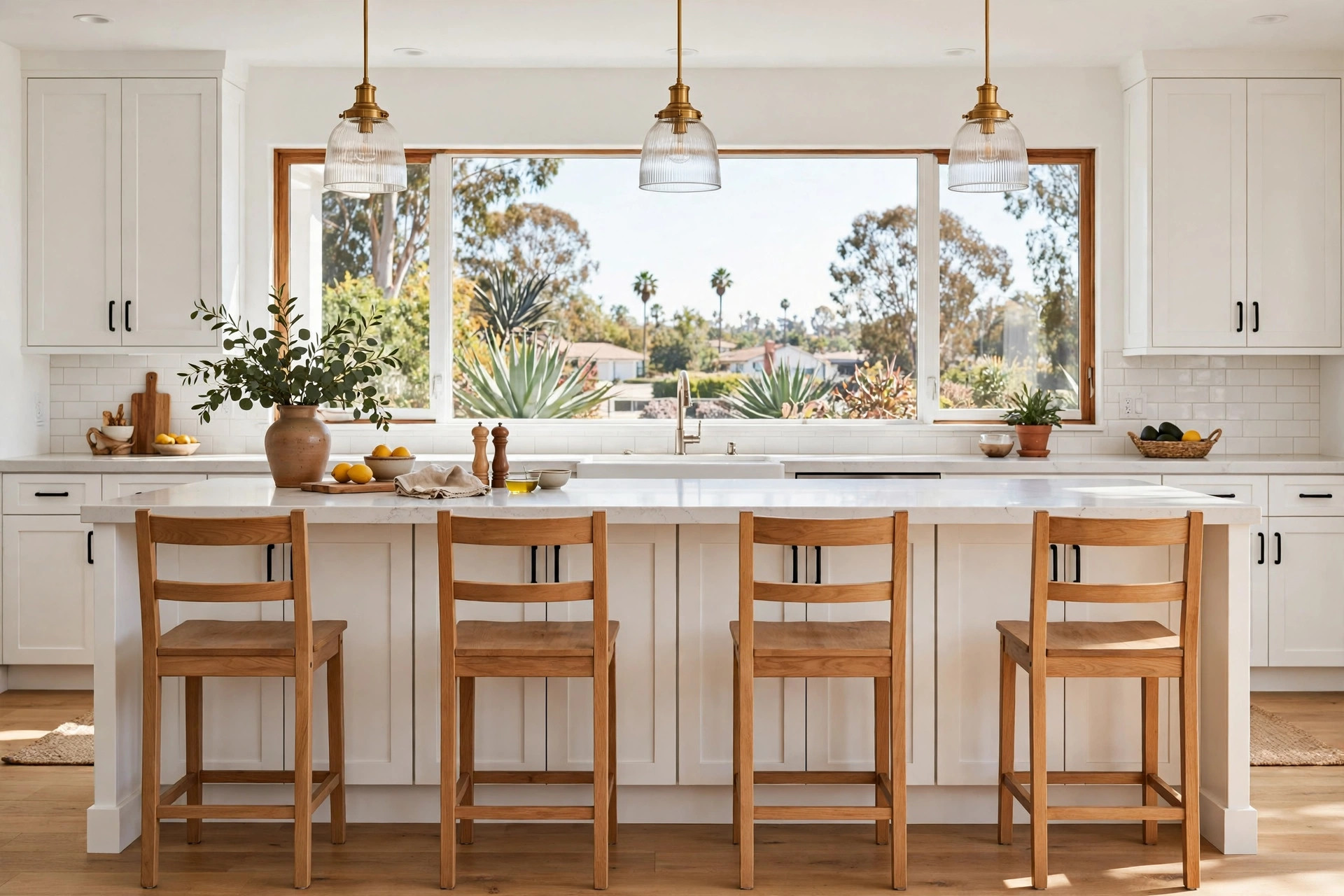

The kitchen island has become the center of the home. In many California houses, the island is where the family eats breakfast. It is where children do homework. It is where guests gather when friends come to visit. Good seating makes the island work well. Bad seating makes it cramped and uncomfortable. This guide explains kitchen island seating for California homes in the United States. It covers how to choose stools, how to measure space, what types to buy, and what it costs. It also covers care and safety. Read it before you buy. A little planning now will save money and regret later.
Why Kitchen Island Seating Matters
A kitchen island is more than a work table. In California homes, it often replaces the old dining nook. Open floor plans put the kitchen next to the living room. The island sits between them. It acts as a bridge. People eat there. They talk there. They watch the cook at work. Seating turns a plain counter into a place where life happens.
Good seating also protects your back and knees. A stool at the wrong height forces you to sit too high or too low. Over time, this strains the body. A stool that is too wide crowds the person next to you. A stool with no footrest leaves your legs hanging. Each small problem adds up. After a few months, a family may stop using the island at all. Then the seating money was wasted.
California homes add their own needs. Many homes in the state have large windows and bright sun. Light-colored stools can fade in strong sun. Some materials crack in heat near a sliding door. Many California families entertain outdoors. Seating should let people move from the kitchen to the patio with ease. A light stool is easier to carry outside than a heavy one.
Seating also affects resale value. Home buyers in California look for a finished kitchen. An island with good seating looks complete. It helps the kitchen photograph well. It gives the room a sense of purpose. When you sell, small details like matching stools can lift the price. They signal care.
How to Choose the Right Seating: Kitchen Island Seating California Homes Usa
Start with measurements. Do not buy stools first and measure later. That order leads to trouble. Measure the island first. Write down the counter height. Write down the length of the seating side. Note how far the counter top sticks out past the cabinets. This is the overhang. The overhang must fit your knees.
For a counter height of 36 inches, choose counter stools with a seat height of 24 to 26 inches. For a bar height of 42 inches, choose bar stools with a seat height of 30 inches. The rule is simple. Leave 9 to 12 inches between the seat and the counter top. This gap lets you sit with ease. If the gap is smaller, your knees hit the top. If it is larger, you sit too low to eat.
The overhang needs care too. A standard seat overhang is 12 to 15 inches. This gives your knees room under the counter. Some islands have less. Some have more. Before you order stools, check the overhang depth. If it is under 12 inches, your knees will push against the cabinet face. That is a sign the island was not built for seating. You may need a new top or a different plan.
Count how many seats fit. Allow 24 inches of width per person. A six-foot island side fits three stools with comfort. Four will squeeze. Measure twice. Leave two inches between each stool so people can slide in and out.
Think about who will use the seats. Small children need stools they can climb. Older adults need stools with backs and armrests. People with bad knees need swivel seats that turn. If the family changes over time, pick stools that adjust in height. Adjustable stools cost more at first. They last longer because they fit more people.
Match the style to the home. California houses run from Spanish revival to modern ranch to beach cottage. A sleek metal stool suits a modern kitchen. A wood stool suits a farmhouse kitchen. The stool need not match the cabinets exactly. It should sit well with the room. Many homeowners read a buying guide for kitchen island seating before they decide on a style.
Also plan the light above the island. Stools sit under the pendants. The height of the light matters when you sit down. Many owners pair seating plans with island pendant lighting choices so the two work as one.
Materials That Hold Up
Wood is the classic choice. Hardwoods like oak and maple last for years. They can be sanded and refinished. They feel warm in a kitchen. Wood stools weigh more. They are harder to move.
Metal is strong and light. Steel and aluminum frames hold heavy loads. Metal suits modern rooms. It can feel cold. It may scratch tile floors, so check for plastic feet.
Upholstered seats add comfort. Fabric or leather makes long meals easier. Fabric stains from food and drink. Leather can crack in dry heat. Some families use performance fabric. It resists stains. It costs more.
Plastic and molded seats are cheap and light. They clean with a wipe. They scratch over time. They can look cheap in a high-end kitchen.
Wicker and rattan give a coastal look. They fit California beach homes well. They need dry air. Too much sun can dry the fibers.
Types of Kitchen Island Stools
Counter stools are made for 36-inch counters. The seat sits about 24 to 26 inches high. This is the most common island height in the United States. Most new California kitchens use it.
Bar stools are made for 42-inch counters. The seat sits about 30 inches high. These are less common now. Many remodels lower the old raised bar to one level.
Spectator stools split the gap. They fit counters between 36 and 42 inches. They are a safe pick when you are not sure of the height.
Backless stools slide under the counter. They save floor space. They look clean. They offer no back support. They tire people who sit for a long time.
Low-back stools give some support. They still slide under most overhangs. They are a middle path.
Full-back stools with armrests give the most comfort. They act like dining chairs. They need more floor space. They do not slide under the counter. Plan for extra room behind them.
Swivel stools turn. They let people face the cook and then turn to the room. They need care around small children, who spin them like toys.
Adjustable stools move up and down. Gas-lift models change height with a lever. They fit many users. The lift parts can wear out in a few years. Read product test reports from independent product testing organizations to learn how long lifts last.
What Kitchen Island Seating Costs in California
Prices vary wide. A basic metal backless stool can cost 50 to 120 dollars. A wood counter stool with a back runs 150 to 400 dollars. An upholstered stool from a designer brand can run 400 to 1,200 dollars each. Most families buy three or four. The total adds up fast.
In California, prices run higher than the national average. Delivery fees add cost. Sales tax in the state ranges near 7 to 10 percent. Assembly may cost extra. Some stores charge for white-glove delivery. Check the full price before you order.
The island itself may need work. If the overhang is too short, a new counter top can cost thousands. Many California owners pick quartz when they replace the top. Guides on quartz countertop installation explain the steps and costs. If the floor is uneven, shimming may add labor cost.
Set a budget before you shop. Decide the total for all stools. Include tax and delivery. Stick to it. Home improvement guides often suggest spending more on two daily-use stools and less on the rest. The seats you use each morning should be the most comfortable.
Watch for hidden costs. Stools may need floor pads to protect hardwood. Shipping may take weeks. Some items ship from far away. Order early if a holiday or a party sets your deadline.
Care and Upkeep
Clean stools often. Wipe wood with a damp cloth. Do not soak it. Oil wood seats once a year to keep them from drying out. California air can be dry inland. Oiled wood resists cracks.
Wipe metal frames with a damp cloth and mild soap. Dry them at once. Water left on steel can leave spots. Check screws every few months. They loosen with use. Tighten them with a wrench.
Vacuum fabric seats each week. Treat stains at once. Blot, do not rub. Rubbing pushes the stain deeper. Test cleaners on a hidden spot first. Leather seats need conditioner twice a year. It keeps the hide soft.
Plastic seats clean with soap and water. Do not use harsh chemicals. They can dull the finish.
Place stools out of direct sun when you can. Strong sun fades fabric and dries wood. Near a big California window, draw a shade in the afternoon. This one habit doubles the life of the finish.
Keep floor pads on the legs. Pads protect tile and wood floors. Replace them when they wear thin. Worn pads can scratch.
Safety Around the Island
Kitchen islands carry real risks. Stools tip over. Children climb. Hot pans sit near the edge. Plan for safety from the start.
Choose stools with a wide base. Four legs beat a single round base for steadiness. The stool should hold at least 250 pounds. Check the weight rating on the product page.
Keep walkways clear. Leave at least 36 inches behind the stools for traffic. In a busy kitchen, leave 44 to 48 inches. People carry hot food through these gaps. A tight gap invites spills and burns.
Teach children not to stand on stools. A stool is not a ladder. Keep step stools in a closet for reaching high shelves. Store cleaning products away from the island seats. Curious children explore.
Watch the counter edge. A sharp stone edge can hurt a child at head height. Rounded edges cost a little more. They are safer for young families. Public product safety agencies publish tips on home furniture safety.
Anchor tall stools if they wobble. Check that adjustable lifts lock in place. Keep cords from pendant lights out of reach.
Frequently Asked Questions
How many stools fit a standard kitchen island?
A six-foot seating side fits three stools at 24 inches per person. An eight-foot side fits four. Measure the true seating length. Do not count the part over cabinets with no overhang.
What is the correct stool height for a 36-inch island?
Choose a seat height of 24 to 26 inches. This leaves 10 to 12 inches between the seat and the counter top. That gap is the comfort zone.
How much overhang does a kitchen island need for seating?
Plan for 12 to 15 inches of knee space. This is the depth the counter top extends past the cabinet face. Less than 12 inches crowds the knees.
Can I use dining chairs at a kitchen island?
Standard dining chairs are 18 inches high. They fit a 30-inch table. They are too low for a 36-inch island counter. Use counter stools made for the height.
What stools work best in a sunny California kitchen?
Pick fade-resistant fabric or sealed wood. Avoid dark leather in strong sun. Performance fabrics hold color well. Home design reference sites review fade-resistant options each year.
Should island stools match the kitchen cabinets?
They do not need to match exactly. They should share a tone. A dark wood stool works with dark cabinets. A light stool works with light cabinets. Mix with care. Too many styles in one room look messy.
A Final Word
Kitchen island seating shapes daily life in California homes. Measure first. Choose the right height. Allow room for knees and traffic. Spend within a budget. Clean and check the stools through the years. Keep safety in mind for children and guests. Do these things, and the island will serve the family well for a long time. It will be the place where mornings start and evenings end. That is worth doing right.
Homeowners planning a full remodel can learn more from renovation advice columns and a large home improvement retailer with kitchen planning tools. Major appliance makers and appliance brands also publish kitchen layout guides, while large hardware retailers carry most stool types in stock. For energy-smart kitchens, energy efficiency programs set the standard, and appliance manufacturers show how quiet dishwashers pair with open island plans.
References
Bob Vila. (n.d.). Home improvement advice. https://www.bobvila.com Bosch. (n.d.). Home appliances. https://www.bosch-home.com Consumer Reports. (n.d.). Product reviews and ratings. https://www.consumerreports.org ENERGY STAR. (n.d.). Energy efficient products. https://www.energystar.gov GE Appliances. (n.d.). Kitchen and home appliances. https://www.geappliances.com Lowe’s. (n.d.). Home improvement products. https://www.lowes.com The Home Depot. (n.d.). Home improvement products. https://www.homedepot.com The Spruce. (n.d.). Home and garden advice. https://www.thespruce.com This Old House. (n.d.). Home renovation guidance. https://www.thisoldhouse.com U.S. Consumer Product Safety Commission. (n.d.). Product safety information. https://www.cpsc.gov Whirlpool. (n.d.). Home appliances. https://www.whirlpool.com
Was this guide helpful?

About Michael Thompson
The My Garden US editorial team writes practical, in-depth home and garden guides for American homeowners — tested advice, no fluff.
You May Also Like
Dual Fuel Ranges for California Homes USA: A Practical Buyer’s Guide
July 9, 2026 0 views
Kitchen Backsplash Tiles Deals Near Me: A Plain Guide to Smart Buying
July 1, 2026 0 views
Kitchen Island Seating for Florida Homes USA: A Plain Guide
July 16, 2026 0 views