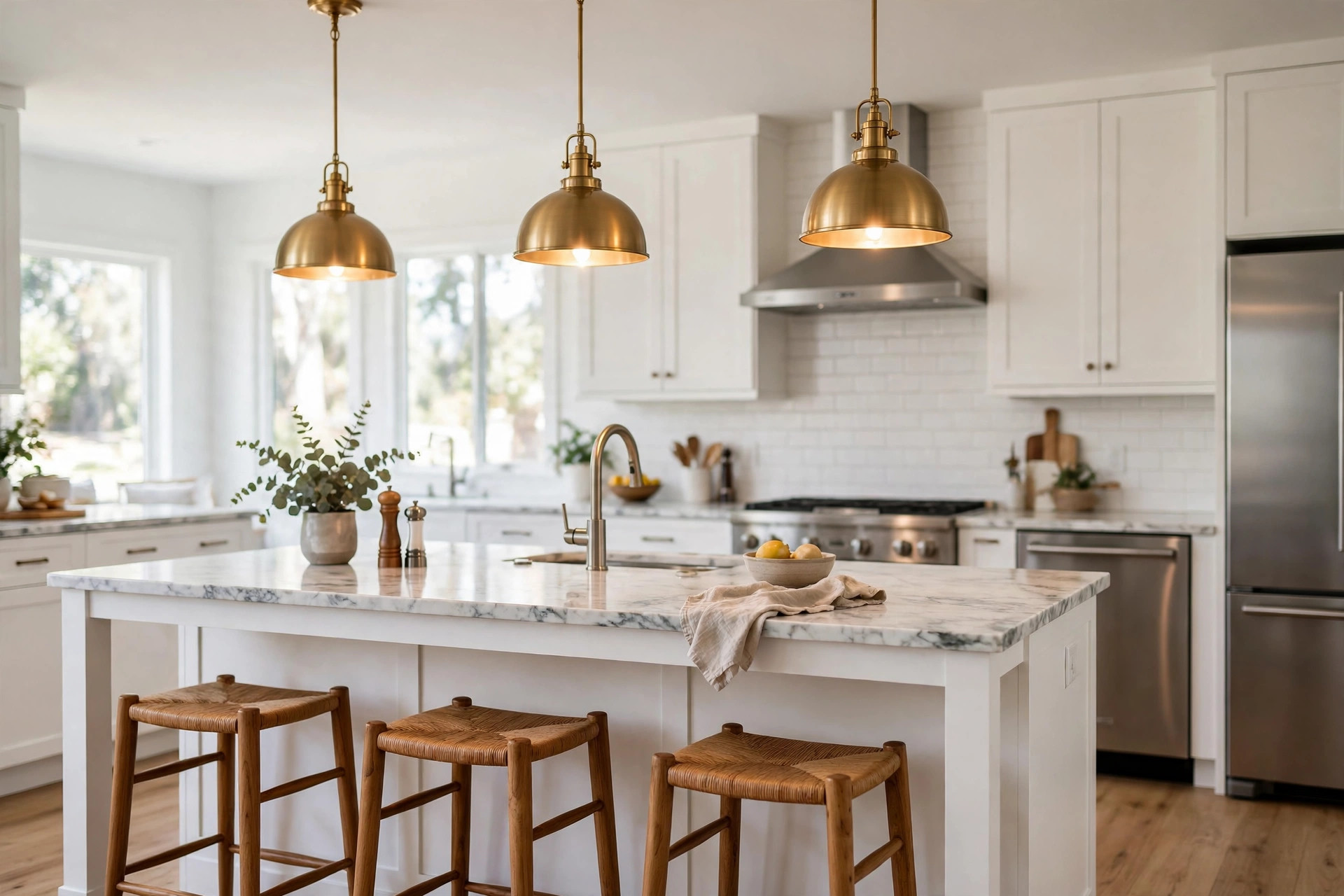

This kitchen island hanging lights american homes guide begins with a simple truth. The kitchen island is now the center of the American home. Families eat there. Children do homework there. Guests gather around it. Good light over the island makes all of these tasks easier. This guide explains how to choose, size, hang, and care for hanging lights above a kitchen island. It is written for home owners in the United States. By the end, you will know exactly what to buy and how to install it.
Why Kitchen Island Lighting Matters
Light shapes how a kitchen feels. A kitchen with strong, even light feels clean and open. A kitchen with dim or uneven light feels dull and cramped. The island sits at the center of this. It is where food is prepared. Knives are used there. Hot pans rest there. Clear task light helps prevent accidents.
Hanging lights also set the style of the room. The lights over the island are visible from the dining and family rooms. They act like jewelry for the room. Choose them well, and the whole house looks more polished.
Good island lighting also adds value to the home. Buyers notice kitchens first. A row of well-chosen pendant lights over the island photographs well. If you plan to sell your home in the future, this upgrade pays back in interest.
Energy use matters too. Older kitchens used large recessed lights that wasted power. Modern pendant lights use LED bulbs. They use far less electricity. The Energy Star program certifies bulbs and fixtures that meet strict efficiency rules. Buying certified products lowers your power bill.
How to Choose the Right Lights: Kitchen Island Hanging Lights American Homes Guide
Choosing kitchen island hanging lights starts with measurement. Measure the length and width of your island. Write down the ceiling height. Check the distance from the ceiling to the top of the island counter. These three numbers guide every other choice.
Count and Size
A common rule works for most homes. For islands under six feet long, two pendant lights are enough. For islands between six and eight feet, three lights work well. For very long islands over eight feet, four lights may fit. Space the lights evenly across the island.
Each pendant should be between ten and fourteen inches wide for standard islands. This is for bell, dome, or globe styles. Do not buy lights that are too small. Small lights look lost over a large island. Do not buy lights that are too large. They crowd the space and block views across the room.
Hanging Height
Height is the most common mistake. Hang the lights too high and the light spreads too far. Hang them too low and people hit their heads. The standard rule is clear. The bottom of the pendant should sit thirty to thirty-six inches above the island countertop.
Standard American countertops sit thirty-six inches high. Add the thirty-inch gap. The bottom of the shade lands near sixty-six inches from the floor. This keeps the light clear of sight lines. People sitting on bar stools can see across the island without strain.
If your ceiling is very high, over nine feet, use longer down rods to reach the ceiling. Keep the shades within the thirty to thirty-six inch range above the counter. If your ceiling is low, at eight feet, use shorter fixtures. Flush pendants or slim shades work best in low ceilings.
Style and Finish
Match the finish of your lights to the hardware already in the kitchen. If your faucet and cabinet handles are brushed nickel, choose nickel lights. If they are matte black, choose black lights. If they are brass, choose brass. Mixed metals can work, but it takes skill. Most home owners do better with one metal throughout.
Pick a style that fits the look of your home. Farmhouse kitchens suit lantern pendants or seeded glass shades. Modern kitchens suit slim cylinders or black domes. Traditional kitchens suit small chandeliers or glass schoolhouse shades. Look at home design sites such as The Spruce for photos of each style in real rooms.
Consider shade material. Clear glass shades show the bulb. They give bright, direct light. Frosted glass or fabric shades soften the light. Metal shades push light down in a cone. This is good for task work.
Types of Kitchen Island Hanging Lights
Pendant Lights
Pendants are the most popular choice in American homes. One cord or rod holds one shade. They come in hundreds of shapes. Glass globes, metal domes, woven rattan baskets, and brass bells are common. Pendants are easy to install and easy to replace. This is the safest choice if you are unsure. It is also the most affordable.
Chandeliers
A chandelier over the island makes a strong statement. Modern island chandeliers are long, linear fixtures with many small lights. They spread light evenly across the whole surface. They cost more than pendants. They also weigh more. The ceiling box must be rated for the weight. Check the box rating before you buy.
Lantern and Cage Lights
Lantern lights have a frame around the bulb. The frame may be wood, metal, or both. The bulb sits open inside the frame. These lights suit farmhouse and rustic kitchens. They give warm, casual light. They are larger than simple pendants. Measure carefully so they do not overwhelm the island.
Mini Chandeliers and Clusters
Some fixtures hang several small lights from one canopy. These clusters create a dramatic look. They work well over round or square islands. They are harder to clean because they have many parts. They suit high ceilings best.
Track and Rail Systems
Track systems let you aim each light head. They are useful when the island has an odd shape. They look more modern and less decorative. Most home owners choose pendants instead for style.
Cost and Price Guide
Prices vary widely. A simple glass pendant from a home improvement store may cost twenty to sixty dollars. Most home owners spend between eighty and two hundred dollars per pendant. A good three-light set for a standard island often costs three hundred to six hundred dollars total.
Installation adds cost. If you replace old fixtures in the same spot, you may do it yourself. If new wiring is needed, hire an electrician. Electricians in most American cities charge between one hundred fifty and four hundred dollars to install island lights.
Bulbs add a small cost. LED bulbs cost more up front than old bulbs. They last much longer. They use about one-quarter of the power. Over five years, LEDs save money. Buy dimmable LEDs if your switch is a dimmer.
Total project cost for most homes runs between four hundred and one thousand dollars. This includes three pendants, LED bulbs, and professional installation. This is a modest price for a change that affects the whole kitchen.
Installation Basics
Turn off the power at the breaker before you start. This is the first and most important step. Test the wires with a voltage tester. Never trust the wall switch alone.
Mark the center points on the ceiling above the island. Use a tape measure. The lights should be evenly spaced. For three lights over a six-foot island, place them at roughly one-foot, three-foot, and five-foot marks from one end. Adjust so the end lights sit about twelve inches from each edge.
Most pendants hang from a rod or cord. Thread the wires through the rod. Connect black to black, white to white, and green or bare copper to ground. Follow the instructions that come with the fixture.
Secure the mounting bracket to the ceiling box. The box must be rated to hold the fixture weight. Standard boxes hold up to fifty pounds. Heavy chandeliers need a fan-rated box. If the old box is weak, replace it before you hang the light.
Set the hanging height before you finish. Most rods can be cut to length. Most cords can be adjusted. Measure thirty to thirty-six inches from the countertop to the bottom of the shade. Lock the height in place. Then restore power and test the lights.
Big retailers like Home Depot and Lowe’s sell the bulbs, dimmers, rods, and mounting parts you need for the job.
If you are not comfortable with wiring, hire an electrician. Bad wiring causes fires. A professional job takes one to two hours for a simple swap. It is worth the cost for safety.
Care and Upkeep
Hanging lights over a kitchen island collect grease. Cooking sends fine oil into the air. It settles on shades and bulbs. Wipe the shades once a month with a damp cloth. Use mild dish soap for stubborn film. Do not use harsh cleaners on metal finishes. They can strip the coating.
Clean glass shades inside and out. Remove the shade if the design allows. Wash it in warm soapy water. Dry it fully before you put it back. Wet shades near bulbs can crack from heat.
Dust the bulbs too. A dusty bulb gives less light. Turn off the light and let the bulb cool. Wipe it with a dry cloth. Replace LED bulbs when they dim or flicker. Most good LEDs last ten to fifteen years in home use.
Check the hanging hardware once a year. Rods can loosen. Cords can fray. Tighten any loose canopy screws. If a cord looks worn, call an electrician.
If you change the kitchen style, you can often keep the lights. New shades may fit old pendants. Many brands sell replacement shades. This is cheaper than buying whole new fixtures.
Coordinating With the Rest of the Kitchen
Island lights look best when they fit the whole kitchen. Think about the other metal finishes. The faucet, the range hood, and the cabinet pulls should share the same finish family. If you are shopping for a stainless range hood, pick lights in a matching stainless or nickel tone.
Large appliance brands shape kitchen style as well. Companies such as Whirlpool, GE Appliances, and Bosch set the tone for modern American kitchens. If your appliances are sleek and black, black pendants tie the room together. If your appliances are white or stainless, light metal shades work better.
Small appliances below the island should match too. A microwave drawer unit near the island should share the same handle finish as the lights above.
Advice sites such as Bob Vila publish step-by-step guides for kitchen updates. They help home owners plan the full project, not just the lights. Reading a few guides before you buy saves mistakes.
Safety Notes
Keep all hanging lights clear of heat sources. Do not hang pendants directly over a cooktop built into the island. Grease and heat damage the fixtures. If the island holds a cooktop, use a range hood instead of pendants over that section. Place pendants over the seating or prep area only.
Use bulbs rated for the fixture. The fixture label states the maximum wattage. With LEDs, the real wattage is low. Still, respect the label. Do not put a high-heat bulb in a small enclosed shade.
Make sure the lights are secure. A pendant that sways in a draft may have a loose mount. Tighten it. In homes with low ceilings, check head clearance. Tall family members should not brush the shades.
Water and electricity do not mix. If your island has a sink, keep light wiring well above the splash zone. Standard hanging height handles this. Never work on the wiring with wet hands.
Follow local electrical codes. Most American cities follow the National Electrical Code. Some cities add local rules. A licensed electrician knows these rules. Permits may be needed for new wiring. Check with your city before major work.
Frequently Asked Questions
How many pendant lights do I need over my kitchen island?
Count the island length. Islands under six feet need two pendants. Islands from six to eight feet need three. Islands over eight feet need four. Space them evenly. Each pendant should be ten to fourteen inches wide for standard islands.
How high should kitchen island hanging lights be?
The bottom of the shade should sit thirty to thirty-six inches above the countertop. Measure from the counter surface, not the floor. This height clears sight lines for seated people. It also spreads light well across the work surface.
Can I hang pendant lights from a low eight-foot ceiling?
Yes. Choose slim or short fixtures. Use flush-mount pendants or short down rods. Keep the bottom of the shade at least thirty inches above the counter. Avoid large lantern styles in low ceilings. They crowd the space.
What is the best bulb for island pendant lights?
Dimmable LED bulbs work best. They use little power. They last many years. They let you set the mood with a dimmer switch. Choose a warm color temperature near 2700K to 3000K. This gives a welcoming glow that flatters food.
Should island lights match the dining room chandelier?
They do not need to match exactly. They should share a finish or style family. If the dining chandelier is black metal, black island pendants tie the rooms together.
Can I install island pendant lights myself?
You can if you replace existing fixtures in the same location. Turn off the breaker. Follow the fixture instructions. Hire an electrician if new wiring is needed. Hire one too if the ceiling box is old or weak. Safety comes first.
Final Word
Kitchen island hanging lights are one of the smartest upgrades in an American home. They improve task light. They set the style of the room. They add value when you sell. Choose the right count and size. Hang them at the right height. Match the finish to your kitchen. Use efficient LED bulbs. An under counter wine fridge in the island base pairs well with warm light above it. Follow basic safety rules. Do these things, and your island will serve your family well for many years.
References
Bob Vila. (n.d.). Home improvement advice. https://www.bobvila.com Bosch. (n.d.). Home appliances. https://www.bosch-home.com ENERGY STAR. (n.d.). Energy efficient products. https://www.energystar.gov GE Appliances. (n.d.). Kitchen and home appliances. https://www.geappliances.com Lowe’s. (n.d.). Home improvement products. https://www.lowes.com The Home Depot. (n.d.). Home improvement products. https://www.homedepot.com The Spruce. (n.d.). Home and garden advice. https://www.thespruce.com Whirlpool. (n.d.). Home appliances. https://www.whirlpool.com
Was this guide helpful?

About James Carter
The My Garden US editorial team writes practical, in-depth home and garden guides for American homeowners — tested advice, no fluff.
You May Also Like

Undermount Stainless Sinks: Finding the Best USA Online Deals
July 6, 2026 0 views
French Door Refrigerators for Florida Homes: A Buyer Guide
March 8, 2026 0 views
Gas Kitchen Ranges Reviews Buying Guide USA
May 28, 2026 0 views