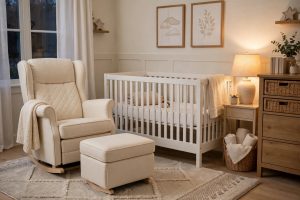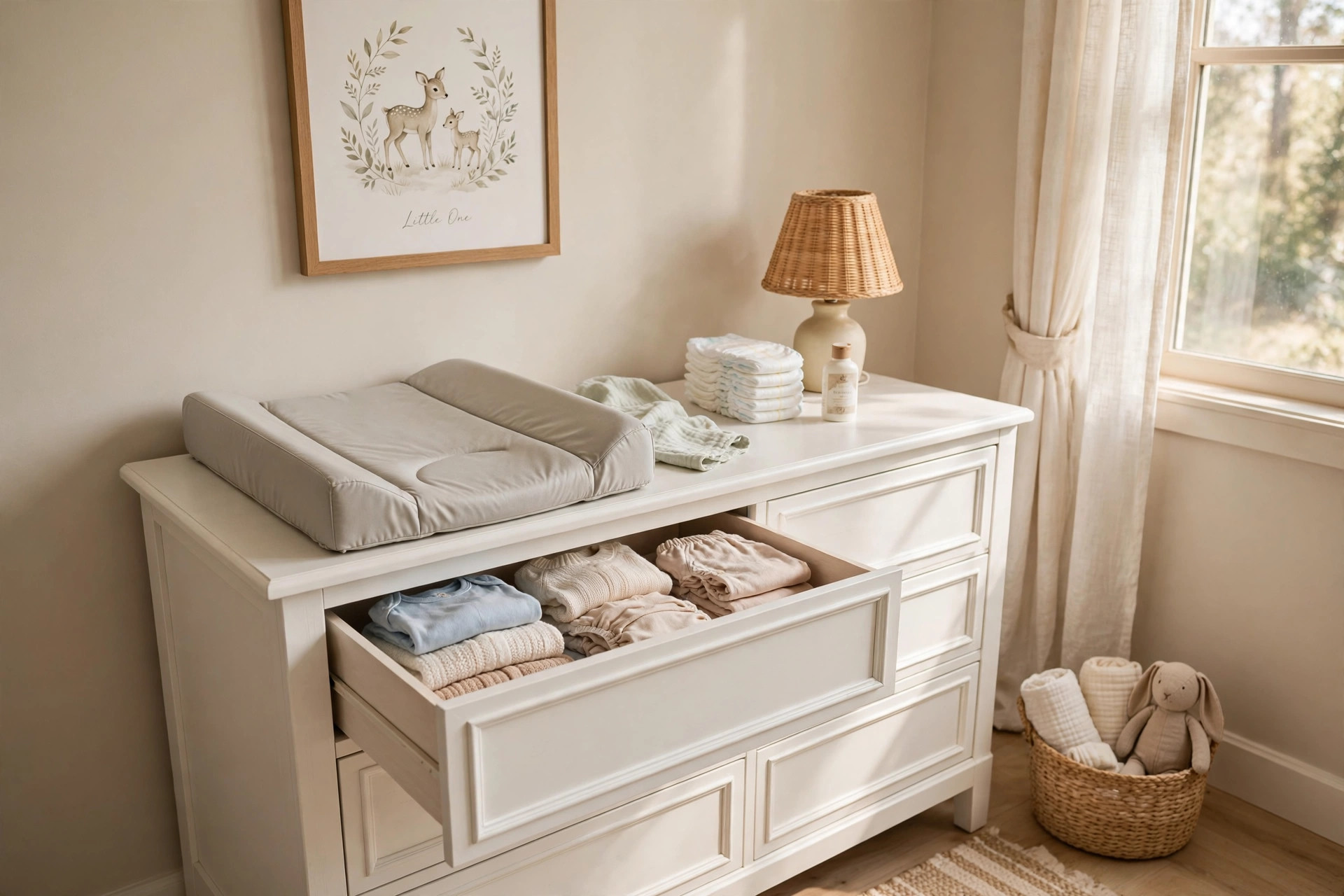

A small baby room asks a hard question of every piece of furniture: does it earn its place? The search for the best nursery dresser for small baby room starts with this truth. A dresser must hold clothes, diapers, and blankets. It must fit through the door and leave space to walk. It must stay steady when a toddler pulls on an open drawer. It should also look calm and neat, because a peaceful room helps a tired parent. This guide walks through size, safety, types, and cost so you can choose well the first time.
Why the Right Dresser Matters in a Small Baby Room
A baby room is often the smallest bedroom in the house. Many are ten feet by ten feet or smaller. In such a room, one wrong piece of furniture can block the door swing, crowd the crib, or leave no space for a feeding chair. The dresser is usually the largest storage piece in the room. Choosing it well sets the tone for the whole space.
A good dresser does three jobs at once. It stores folded clothes, spare sheets, and diaper supplies. It serves as a changing station when you add a contoured pad on top. And it anchors the room visually, giving the eye a steady place to rest. A poor choice does the opposite. Drawers stick. The top is too narrow for a changing pad. The unit wobbles on the floor.
Small rooms also grow crowded fast. New parents receive more clothes, blankets, and gear than they expect. A dresser that holds only two shallow drawers fills up in a month. Then piles move to the floor. Choosing the best nursery dresser for small baby room means planning for what is coming, not just what fits today. The editors who test nursery gear at Good Housekeeping often note that storage is the number one regret among new parents, and a dresser with real drawer depth solves it better than extra bins.
How to Choose the Best Nursery Dresser for a Small Baby Room: Best Nursery Dresser for Small Baby Room
Measure the Space First
Take a tape measure to the room before you shop. Measure the wall where the dresser will stand. Note the width of the door and the swing of the door. Write down the space between the crib and the wall. In a small room, an inch matters. A dresser that is 34 inches wide may fit while one that is 36 inches wide will not. Sketch the room on paper and mark the dresser, crib, and chair. This simple step prevents the most common mistake: buying furniture that fits the catalog but not the room.
Drawer Depth and Count
Drawers are the heart of a dresser. Look for drawers that are at least 15 inches deep from front to back. Shallow drawers hold folded onesies but not much else. Deeper drawers swallow stacks of sleepers, diaper covers, and receiving blankets. Three wide drawers often work better than six small ones in a compact nursery. Fewer, larger drawers are easier to organize with dividers. They also cost less than a tall chest with many small drawers.
Check that drawers glide on smooth tracks. Ball-bearing glides last longer than wooden runners. Full-extension glides let you reach the back of the drawer without fishing. Soft-close glides are a bonus. They stop a toddler from slamming a drawer shut on small fingers. The independent testers at Consumer Reports advise parents to open and close every drawer in the store when that is possible.
Height and the Changing Top
A dresser that doubles as a changing table saves the space of a separate unit. For this to work, the top should sit between 36 and 40 inches from the floor. That height lets most adults change a diaper without stooping. The top surface must be flat and deep enough for a standard changing pad, which is about 32 inches long and 16 inches wide. A raised lip or a removable changing tray keeps the pad from sliding.
If you plan to use the top for changing, skip dressers with decorative raised edges in the center or split tops. A nursery dresser changing table combo for small space is the most space-smart option on the market. It merges two pieces of furniture into one footprint. Many parents who start with a plain dresser later add a separate changing table and wish they had combined them from the start.
Materials and Finish
Solid wood costs more but lasts through years of daily use. Pine is the common choice for nursery dressers. It is light, sturdy, and takes paint well. Hardwoods like birch and beech cost more and resist dents better. Engineered wood with a laminate finish costs the least. It can work fine if the frame is thick and the joints are tight.
Whatever the material, the finish must be non-toxic. Look for dressers labeled lead-free with low or no volatile organic compounds. A painted white or soft gray finish suits most nursery styles and hides scuffs. Water-based finishes dry fast and smell less than oil-based ones. Baby gear guides at Babylist remind parents to check finish claims on the label rather than trusting marketing words alone.
Types and Options for Compact Nurseries
Standard Three-Drawer Dressers
The classic three-drawer dresser is the most popular choice. It is usually 34 to 48 inches wide and 32 to 36 inches tall. In a small room, pick the narrower end of that range. A 36-inch wide dresser gives generous storage while leaving wall space for a hamper or a small bookshelf. Many models come with a removable changing tray, which is ideal. You use it for the first two years and lift it off when the child outgrows diapers.
Tall Narrow Dressers
A tall chest of drawers stands 44 to 54 inches high and only 28 to 32 inches wide. It saves floor space by going up instead of out. This works in a room with an empty narrow wall. But there are trade-offs. A tall dresser cannot serve as a changing surface because the top is too high. It also tips more easily, so wall anchoring is not optional. Retailers like Target and Walmart carry many tall narrow styles at modest prices, and both list dimensions clearly so you can check the fit before you buy.
Dresser and Changing Table Combos
Combination units are built for small rooms from the start. They join a dresser with a raised changing area in a single frame. The changing side often has open shelves for diapers, wipes, and creams within arm’s reach. The dresser side holds clothes. A kids dresser with changing top for nursery is a close cousin and worth comparing. Both styles put everything for a diaper change in one spot, which matters at three in the morning. When shopping online, large catalogs such as Amazon let you filter by width so you can see only units that fit a tight space.
Convertible and Long-Life Styles
Some dressers convert or adapt as the child grows. A model with a removable changing topper becomes a plain dresser for a toddler’s room. A dresser with a flat, finished top works later as a nightstand-height storage piece in a big-kid room. Shoppers who prefer classic design often look at Crate & Barrel and IKEA, where simple lines and solid construction suit a nursery that will change style over the years. Spending a little more on a piece that lasts eight years beats buying twice.
Cost and Price
Nursery dressers span a wide price range. Budget models in engineered wood run from about 120 to 250 dollars. Mid-range solid pine dressers with a changing topper run from about 250 to 500 dollars. High-end hardwood pieces from specialty brands run from 500 to over 900 dollars.
Price often follows material and joinery. A 180-dollar dresser may use thin panels and cam-lock fasteners. It can still serve well if you anchor it to the wall and treat it gently. A 400-dollar pine dresser usually has thicker sides, dovetail drawer joints, and smoother glides. For a small room where the dresser works hard every day, the mid-range often gives the best value. Watch for seasonal sales at large stores, and check open-box listings for floor models in good shape. Pregnancy and nursery planning articles at What to Expect suggest setting the nursery furniture budget before the baby shower, since grandparents often offer to buy the big pieces.
Care and Upkeep
A nursery dresser faces spills, scratches, and sticky hands. Wipe the top with a damp cloth and mild soap once a week. Dry it right away so moisture does not lift the finish. Tighten screws and cam locks every few months. Wood joints loosen with daily use, and a wobble that starts small grows worse.
Keep the changing pad covered with a washable cover and change it often. Diaper cream stains finishes if it sits. Place a small tray or basket on the top for creams and lotions so bottles do not ring the surface. Drawer dividers or small fabric boxes keep clothes sorted and stop drawers from jamming. A nursery closet organizer for baby clothes can take overflow, but a well-kept dresser handles most of the daily load on its own. Every year, check the wall anchor and the anti-tip strap. Children climb, and anchors stretch or loosen over time.
Safety Comes First
Safety rules for dressers are strict for good reason. Tip-over accidents send thousands of children to emergency rooms each year. The U.S. Consumer Product Safety Commission sets stability standards for clothing storage units, and every dresser you buy should meet them.
Anchor every dresser to the wall, no matter its size or weight. Use the anti-tip kit that comes in the box or buy a steel cable kit. Attach it to a wall stud, not just drywall. Place heavy items in the bottom drawers to lower the center of gravity. Never let a child climb on open drawers or hang from the top.
Check drawer stops so drawers cannot be pulled all the way out and dropped. Keep small items like coins, buttons, and loose batteries out of top drawers once the child can reach them. If the dresser has a changing topper, confirm that it locks or bolts to the dresser. A loose topper can slide under a squirming baby. The child health experts at HealthyChildren.org publish plain guides on nursery safety that every new parent should read before the baby arrives.
Frequently Asked Questions
What size dresser fits a small nursery?
For most small nurseries, a dresser 32 to 38 inches wide and 32 to 40 inches tall works best. Measure your wall first. Leave at least 24 inches of clear floor in front of the drawers so they open fully. A tall narrow chest can fit a 28-inch wall, but it cannot double as a changing table.
Can a dresser replace a changing table?
Yes, if the top is flat, sturdy, and 36 to 40 inches high. Add a contoured changing pad with a safety strap and a raised lip or tray to hold it in place. A combo unit with built-in changing shelves is even better for small rooms. Stop using the top for changing once the child can roll or push up strongly and the space feels tight.
How many drawers does a nursery dresser need?
Three deep drawers suit most families. Use the top drawer for daily diapers, wipes, and creams. Use the middle drawer for current-size clothes. Use the bottom drawer for the next size up and spare bedding. If you own many clothes, a four or five drawer model helps, but each drawer should still be deep.
Is a used dresser safe for a nursery?
A used dresser can be safe if it is sturdy and complete. Check for lead paint on pieces made before 1978 and skip them. Tighten all hardware. Confirm the drawers have stops. Most important, anchor it to the wall with a new anti-tip kit. Old kits may be missing or worn. When in doubt, buy new from a maker that meets current safety standards.
When should the changing topper come off?
Remove the topper when your child outgrows diapers or when the top feels crowded, usually between ages two and three. Keep the screws and hardware in a labeled bag taped inside a drawer. Many families keep the dresser itself for years after the topper is gone.
A Short Final Word
The best nursery dresser for small baby room is not the priciest one or the prettiest one. It is the one that fits your wall, holds a month of clothes, stands rock steady, and still leaves room to rock a baby to sleep. Measure first. Anchor it always. Choose deep drawers over many small ones. Do that, and this one piece of furniture will serve your family from the first night home to the first day of school.
References
Amazon. (n.d.). Online shopping. https://www.amazon.com American Academy of Pediatrics. (n.d.). HealthyChildren.org. https://www.healthychildren.org Babylist. (n.d.). Baby registry and gear guides. https://www.babylist.com Consumer Reports. (n.d.). Product reviews and ratings. https://www.consumerreports.org Crate and Barrel. (n.d.). Furniture and home decor. https://www.crateandbarrel.com Good Housekeeping. (n.d.). Product reviews and home advice. https://www.goodhousekeeping.com IKEA. (n.d.). Home furnishings. https://www.ikea.com Target. (n.d.). Retail store. https://www.target.com U.S. Consumer Product Safety Commission. (n.d.). Product safety information. https://www.cpsc.gov Walmart. (n.d.). Everyday low prices. https://www.walmart.com What to Expect. (n.d.). Pregnancy and parenting guidance. https://www.whattoexpect.com
Was this guide helpful?

About Michael Thompson
The My Garden US editorial team writes practical, in-depth home and garden guides for American homeowners — tested advice, no fluff.
You May Also Like
Nursery Sound Machine for Baby Sleep Aid: A Calm Guide for New Parents
August 2, 2026 0 views
Choosing a Crib Mattress Waterproof Organic for Newborns
June 26, 2026 0 views
Nursery Hamper With Lid for Odor Control: What Parents Need to Know
June 16, 2026 0 views