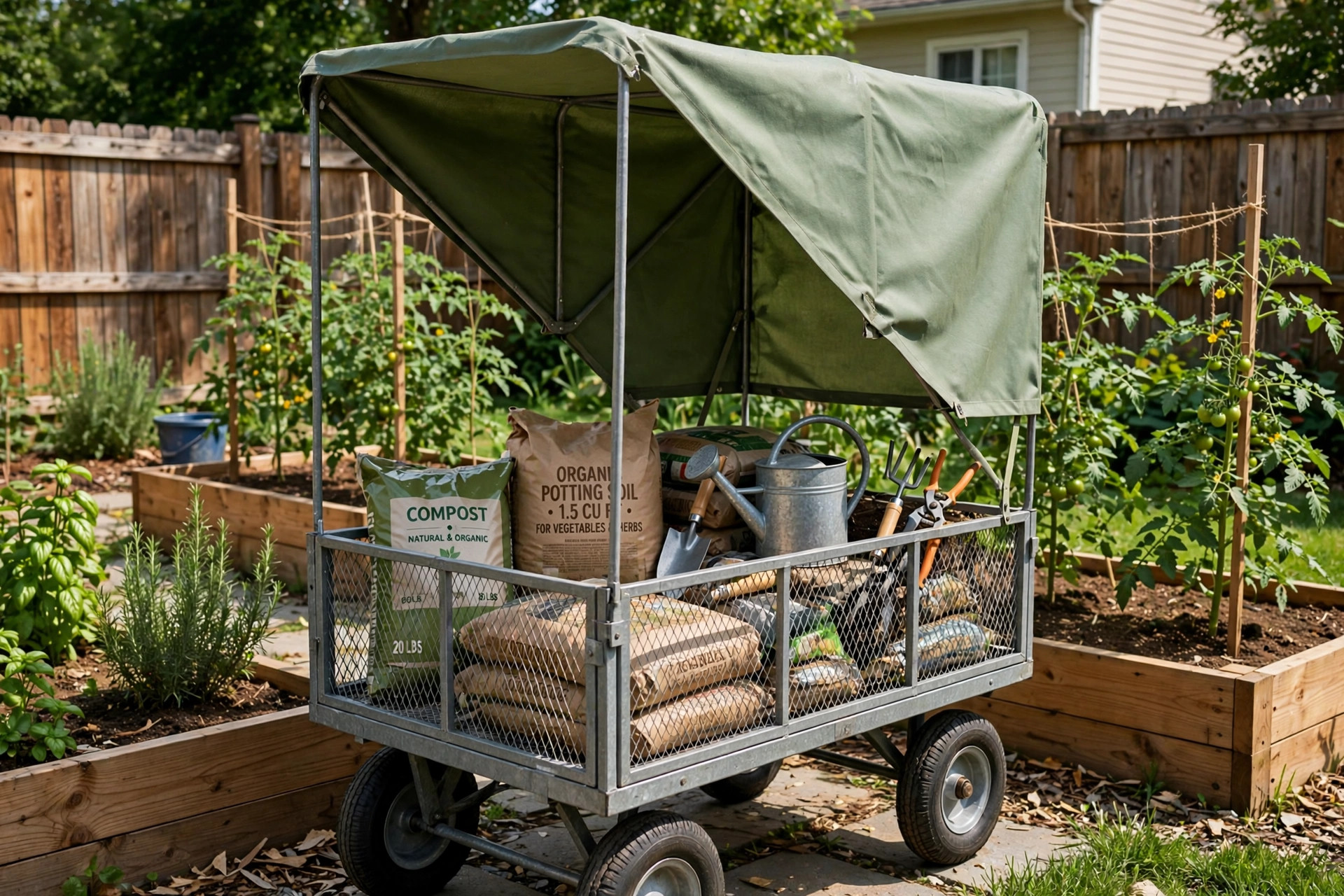

A garden wagon is one of the most useful tools a home gardener can own. It carries bags of soil, flats of seedlings, tools, and harvest loads that would otherwise take many trips by hand. When the wagon comes with a canopy, it does one more job. It gives shade. This guide to the best garden wagon with canopy reviews will help you compare the main models, understand what the canopy does and does not do, and pick the right covered wagon for your yard.
Most gardeners buy a plain wagon and learn its limits on a hot afternoon. Seedlings wilt in an uncovered bed. Bagged compost gets so hot you cannot touch the plastic. Tools left in the sun grow too warm to hold. A simple fabric top solves all of these problems at once. It costs little more than a standard wagon. It folds down when you do not need it. And it turns the wagon into a small rolling shade station you can park anywhere in the garden.
Why a Garden Wagon With a Canopy Matters
The main value of a canopy is protection from the sun. Young plants dry out fast. A flat of tomato seedlings can wilt in twenty minutes on a July afternoon. Gardeners who haul plants from the store to the far corner of the yard know this well. With a canopy over the wagon bed, transplants ride in shade the whole way. That one detail can save a whole flat of young peppers.
Soil and bagged products benefit too. A dark bag of potting mix left in the sun can reach temperatures that damage the roots of plants set inside it. Covered garden cart designs keep the load cool while you work through your list of chores. The same shade helps bags of mulch, fertilizer, and grass seed stay in good shape.
There is a comfort gain as well. A garden wagon with canopy for shade lets you work at your own pace. You do not have to rush the load inside before the sun does its damage. You can leave the wagon parked beside the bed while you plant, water, and stake. The load waits under cover.
Canopies also give light rain cover. They are not waterproof roofs, and buyers should not treat them as such. But a fabric top will shed a passing shower long enough for you to finish a row of planting. Many gardeners park the wagon under a tree or eave during real storms, which is the right habit.
What to Look For When You Choose: Best Garden Wagon with Canopy Reviews
The best garden wagon with canopy reviews all agree on a few key points. Bed size comes first. A bed of about four feet long and two feet wide fits most garden jobs. Smaller beds force extra trips. Larger beds grow heavy and hard to pull on soft ground. Measure your garden paths before you buy. A wagon that cannot turn in your gate is no help at all.
Load capacity is next. Makers often print numbers like 600, 800, or even 1,200 pounds on the box. Treat these as limits, not goals. A load of wet soil or stone is far heavier than it looks. Most home gardeners never need more than 400 to 600 pounds of true capacity. Buyers who read independent product testing results often learn that real world loads and printed claims do not always match, so leave a margin.
The canopy itself deserves close study. Cheap tops are thin canvas that fade and tear in one season. Better canopies use UV rated fabric with sealed seams. Look for a top that tilts or removes easily. You will want it off when hauling tall plants or a load of long stakes. A detailed tool buying guide can show you how to judge fabric quality from product photos and listings before you order.
Wheels decide how the wagon feels in use. Pneumatic tires roll softly over lawns and absorb bumps. They can go flat, so keep a pump nearby. Flat free tires never puncture but ride harder on rough ground. Ten inch wheels handle garden paths better than small ones. A steering handle that converts to a hitch pin is a bonus if you own a riding mower.
Frame and bed material round out the list. Powder coated steel frames last longer than plain painted ones. Mesh beds drain water and shed dirt, which keeps them light. Solid beds hold small items like bulbs and seed packets without loss. Some models offer a dump feature that tips the bed forward. It helps with mulch and soil but adds joints that can wear, as noted in many DIY project and tool reviews.
Types and Options
Heavy duty steel wagons are the classic choice. They have a deep mesh bed, high sides, and a rated load of 600 pounds or more. The canopy mounts on a simple pole frame. These are the workhorses for hauling soil, stone, and firewood. They are heavy to pull when full, so they suit gardeners with flat, firm paths.
Folding fabric wagons are a newer style. They fold flat for storage and weigh much less. Many now come with a canopy option. They suit gardeners with small yards or a garage that is short on space. They are not built for heavy loads. A folding wagon with canopy reviews best for gardeners who move plants and hand tools, not tons of gravel.
Utility carts with solid beds sit between the two. They roll on four pneumatic tires and often include a padded handle. The bed holds soil without sifting through mesh. A canopy fits over the top on a raised frame. These carts cost more than basic wagons. They repay the price with many years of steady service.
For brand shopping, the large home improvement retailers and garden supply stores stock several canopy models each spring. Seeing the frame in person helps you judge weld quality and fabric weight. Specialist gardening supply companies often carry models built for serious vegetable growers, with deeper beds and stronger frames.
Cost and Price
Prices fall into three clear bands. Basic mesh wagons with a simple canopy cost between 60 and 100 dollars. The frames are light. The fabric tops are thin. They serve well for two or three seasons of light work.
The middle band, from about 100 to 180 dollars, holds the best value for most buyers. Frames are thicker. Beds are deeper. Canopies use heavier fabric with better UV blocking. Many of the best garden wagon with canopy reviews focus on this band, because it gives the most wagon for the money.
Heavy duty models run 200 dollars and up. They carry 800 pounds or more. Their canopies are often removable shade sails on steel frames. Buyers with large properties, orchards, or market gardens should look here. For a small city garden, this band is more wagon than you need.
Watch for extras that raise the price without adding value. Decorative trim, built in cup holders, and licensed colors add cost but do not help the garden. Spend the difference on a better canopy fabric or larger tires. Those two upgrades change daily use more than any gadget. Seasonal sales at major home stores often drop prices by twenty percent or more.
Care and Upkeep
A covered wagon lasts longest when it stays clean and dry. Hose out the bed after hauling soil or mulch. Wet dirt left in the mesh will rust a steel bed in a single damp season. Let the wagon dry in the sun before you park it under cover.
The canopy needs the same care. Brush off leaves and dust. Wash the fabric with mild soap once or twice a season. Never fold a wet canopy for storage. Mildew grows fast in a damp fold and weakens the cloth. A canopy left to dry fully will last years longer.
Oil the wheel axles each spring. Check tire pressure before the first heavy job of the season. Tighten bolts on the handle and frame after the first month of use, since new hardware settles under load. Replace frayed canopy straps before they snap. A strap that breaks on a windy day can send the top sailing across the yard.
Winter storage matters. Park the wagon in a shed or garage. Remove the canopy and store it indoors if you can. If the wagon must stay outside, tip the bed to drain water and cover the whole unit with a tarp. Gardeners who follow seasonal garden shutdown steps often add the wagon to the same checklist, which keeps everything ready for spring.
Safety
A loaded wagon is heavy. Never let children ride in the bed. Never pull a full wagon down a slope at speed. On hills, load less and walk beside the wagon with a firm hand on the handle. Wet grass and loose gravel are the two most common causes of tip overs.
Watch for pinch points. Folding frames and dump beds can catch fingers. Keep hands clear of hinges while you fold or tip. Read the manual before the first use. It takes five minutes and prevents most injuries.
Tie the canopy down in wind. Most canopies catch wind like a small sail. A gust can tip a light wagon or tear the fabric from its poles. Remove the top entirely on storm days. Store it where the wind cannot find it. Buyers of pruning and hauling gear learn the same lesson with tall ladders and pole saws, and the rule holds for any tall garden gear.
Load the wagon low and even. Place the heaviest bags over the axle, not at the ends. A tail heavy wagon lifts its handle and runs away downhill. A nose heavy wagon strains your arms. Balance the load and the pull feels easy. Secure loose tools so they cannot slide and shift the weight.
FAQ
Do garden wagon canopies block UV rays? Most do, to a degree. Better models use fabric rated for UV protection. Cheap canvas tops give shade but let some UV through. If plant protection is your goal, look for canopies that list a UV rating in the product details. Even a plain top cuts most direct sun, which is enough for a short haul across the yard.
Can the canopy stay on during rain? Light rain is fine. The fabric will shed a passing shower. Heavy rain pools on flat tops and can bend the poles. High wind is the real danger. Take the canopy off before storms. Treat it as a sun shade first and a rain cover second.
How much weight can a garden wagon with canopy really carry? Printed ratings often run from 600 to 1,200 pounds. Real comfortable loads for home use are lower. Most gardeners find 300 to 500 pounds is the practical limit for pulling by hand on grass. Loads above that need flat firm ground or a mower hitch. When in doubt, make two trips. Your back will thank you.
Are folding wagons with canopies worth it? They suit small yards and gardeners who need storage space. They weigh little and fold flat against a wall. They do not suit heavy soil, stone, or firewood. If your main job is moving plants, tools, and light bags, a folding model serves well. For heavy work, buy a steel wagon instead.
Can I buy a canopy separately for my old wagon? Yes, in many cases. Universal canopy kits fit standard wagon beds. Measure your bed before ordering. Check how the poles attach to your frame. Some gardeners find a separate canopy costs nearly as much as a new wagon with one included. Compare both options before you decide.
How long does a garden wagon canopy last? A good fabric canopy lasts three to five seasons with care. Thin cheap tops may fail in one summer of strong sun. Storage indoors over winter adds a year or more to the life of the fabric. Replace the top when the cloth fades, thins, or tears at the seams.
Final Word
The right covered wagon makes garden work easier and safer for your plants. Start with your real jobs. Hauling soil and stone calls for a heavy steel bed. Moving seedlings and tools calls for something lighter. Match the canopy to your sun. Strong sun needs UV rated fabric. Gentle climates do fine with plain canvas.
Read several reviews before you buy, and give more weight to reviews from gardeners with yards like yours. A model praised by an orchard owner may be too much wagon for a small vegetable plot. Buy the middle band for the best balance of price and life. Care for the frame and the fabric, and the wagon will serve you for many seasons. For more seasonal garden guidance, see our notes on saving seeds from your harvest and choosing the right pruning saw for thick branches. And when spring planting starts, trusted seed and growing guides and general garden advice can help you fill that wagon bed to the brim.
References
Bob Vila. (n.d.). Home improvement advice. https://www.bobvila.com Burpee. (n.d.). Seeds, plants, and gardening supplies. https://www.burpee.com Consumer Reports. (n.d.). Product reviews and ratings. https://www.consumerreports.org Corona Tools. (n.d.). Garden and landscape tools. https://www.corona-tools.com Family Handyman. (n.d.). DIY home repair and maintenance. https://www.familyhandyman.com Gardener’s Supply Company. (n.d.). Gardening tools and supplies. https://www.gardeners.com Lowe’s. (n.d.). Home improvement products. https://www.lowes.com The Home Depot. (n.d.). Home improvement products. https://www.homedepot.com The Spruce. (n.d.). Home and garden advice. https://www.thespruce.com
Was this guide helpful?

About Jennifer Lee
The My Garden US editorial team writes practical, in-depth home and garden guides for American homeowners — tested advice, no fluff.
You May Also Like
Best Garden Hose Reel Cart Reviews: Which One Is Worth Your Money
January 11, 2026 0 views
Best Garden Shears for Hedges Reviews: What Homeowners Should Know
February 22, 2026 0 views
Best Garden Apron for Harvesting Reviews
April 7, 2026 0 views