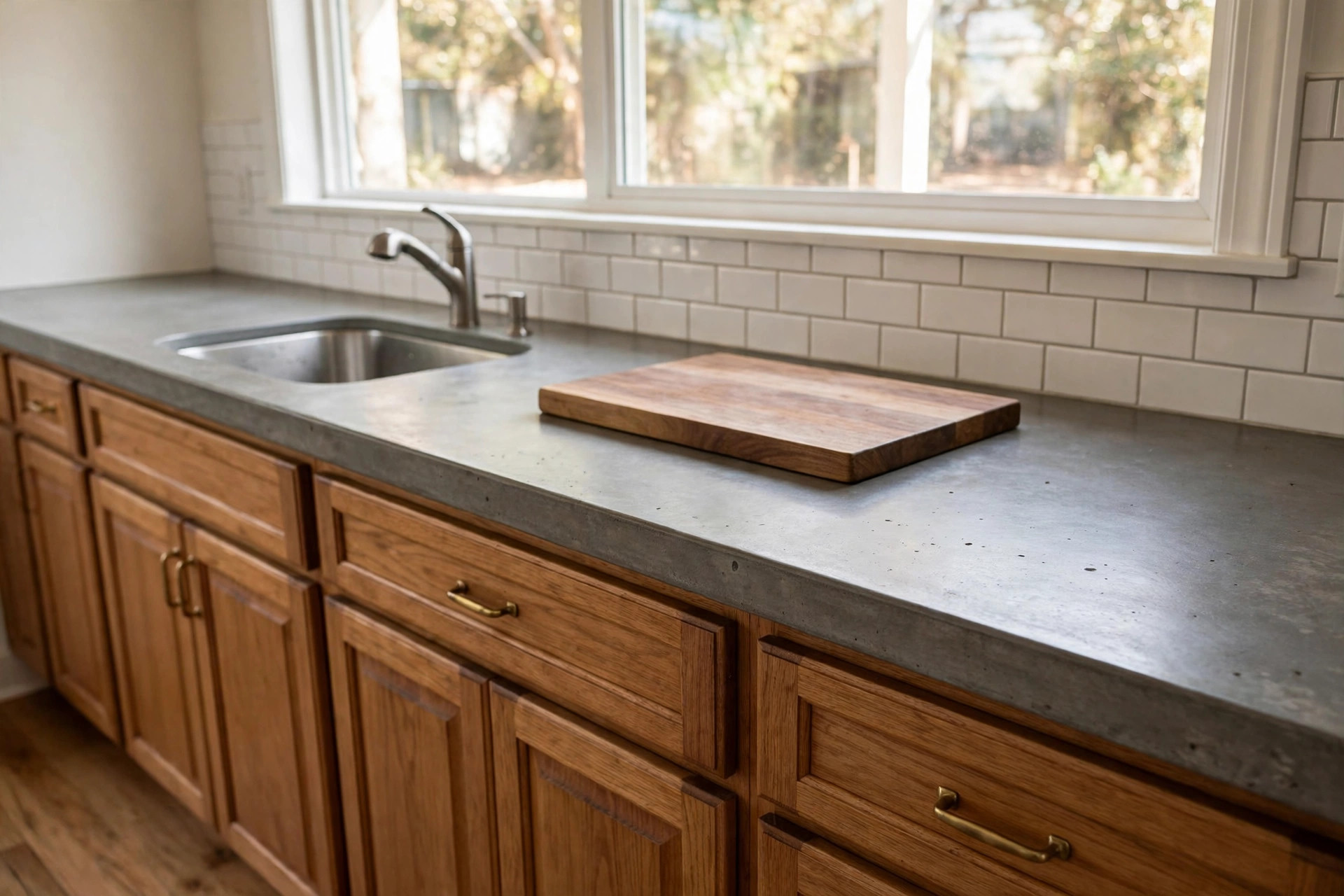

Concrete countertops have found a firm place in American kitchens over the past three decades. They offer a look that stone and laminate cannot copy. Each slab is poured, troweled, and cured by hand, which gives it a one-of-a-kind surface. But raw concrete is porous. It drinks up oil, wine, coffee, and lemon juice. Without a good sealer, a new countertop can stain within days. That is why concrete countertop sealer reviews USA shoppers read matter so much. A sealer is the difference between a surface that lasts twenty years and one that looks tired in two.
This guide gathers what American homeowners report from real use. It explains the kinds of sealers on the market, what to look for before you buy, and how much you should expect to spend. It also covers care, upkeep, and safety, so the surface you pour keeps its looks for years.
Why Sealing Concrete Countertops Matters
Concrete is made of cement, sand, aggregate, and water. Once it hardens, tiny pores and hairline cracks remain through the whole slab. These openings give the surface its warm, matte charm. They also give spills a path straight down into the body of the counter.
An unsealed top will ring under a coffee cup. A splash of red wine can leave a mark that no scrubbing removes. Tomato sauce, olive oil, and mustard are worse. They soak in and set. Acids cause a second problem. Vinegar and citrus juice can etch the surface, leaving dull spots where the shine once was.
A sealer closes those pores. Some soak deep into the concrete and bond with it from within. Others form a thin film on the surface that acts as a shield. Either way, the goal is the same. Spills sit on top long enough to be wiped away. Cleaning gets easier. The color stays true.
Reviews from USA homeowners repeat one point again and again. The sealer, not the concrete mix, decides how happy you will be five years later. A cheap or wrong sealer peels, yellows, or turns milky in the heat of a kitchen. A good one fades so far into the background that you forget it is there. That is the sign of a job well done.
How to Choose a Sealer: Concrete Countertop Sealer Reviews Usa
Shopping for a sealer can feel confusing. Labels use terms like penetrating, topical, water-based, and solvent-based. They all promise the best result. Use the simple rules below to cut through the claims.
Penetrating Sealers
Penetrating sealers soak into the concrete and harden inside the pores. They do not change how the surface feels. The top keeps its natural matte look and cool touch. Water beads up, and oils have a harder time soaking in.
Homeowners who like the raw, stone-like look of concrete tend to choose these. They are popular in modern farmhouse and industrial kitchens. The trade-off is that they do not stop acids as well as film-forming products. They also need reapplication more often, often every one to three years.
Most concrete countertop sealer reviews USA readers write praise the ease of touch-ups. You clean the surface, let it dry, and wipe on a fresh coat. There is no peeling to scrape and no film to strip.
Topical Sealers
Topical sealers form a thin coating over the surface. Think of them as a clear armor layer. They give strong protection against stains and acids, which is why busy cooks often prefer them. They come in finishes from flat matte to high gloss.
The risk is that a film can scratch. Cutting boards and sliding pots across the top can mark it. Heat can cloud some products. This Old House notes that thick topical coats may peel at the edges if the concrete was not fully cured before application.
Many USA reviewers report good results with water-based polyurethane and epoxy topcoats, as long as they follow the cure times on the label. Patience during application pays off more than brand loyalty.
Water-Based vs Solvent-Based
Water-based sealers have a mild smell and clean up with soap and water. They are friendlier for indoor jobs, especially in homes with children or pets. They tend to dry clear and stay clear.
Solvent-based sealers often penetrate deeper and can last longer between coats. The smell is strong, so you need open windows and a fan. Some states limit their sale under air quality rules. Check your local rules before you order online, as noted in guides from Bob Vila.
Types and Options on the Market
Most sealers sold in the United States fall into a few clear families. Reviews from American buyers describe the strengths and weak points of each.
Acrylic sealers are the most common topical choice. They dry fast, cost less, and come in matte or gloss. They are easy for a beginner to apply with a foam roller. The downside is that they are the least durable family. In a hard-working kitchen, they may need a fresh coat every year.
Polyurethane sealers give a tougher film than acrylic. Water-based versions are the current favorite in many reviews. They resist hot pans better and keep their clarity. They cost more, and brush marks show if you rush.
Epoxy sealers build the thickest, hardest film. They shine like glass and shrug off stains and chemicals. They are the top pick for bars and workshops. In a kitchen, the high gloss can look too much like plastic for some tastes. Application is less forgiving, and the working time is short.
Silane and siloxane penetrating sealers are the deep soakers. They bond with the minerals in the concrete and leave no film. They keep the natural look. They do not stop strong acids, so they suit kitchens where cooking is light and the look matters most.
Hybrid and wax topcoats combine a penetrating base with a thin sacrificial wax or polish layer. The top layer takes the wear and can be renewed every few months. Many makers of concrete countertops recommend a food-safe wax over their sealer, and reviewers report that this two-step system keeps maintenance simple.
Cost and Price
Price depends on the type, the coverage rate, and the size of your project. A gallon of basic acrylic sealer often costs between 30 and 60 dollars. Water-based polyurethane runs from 60 to 120 dollars a gallon. Epoxy kits cost the most, often 80 to 150 dollars for a kit that covers a standard kitchen.
Coverage matters more than the sticker price. A gallon may cover 200 square feet for a thin penetrating sealer, but only 100 square feet for a thick epoxy. Read the coverage rate on the label and measure your countertop first. A small galley kitchen may need only a quart. A large island and perimeter run can need two gallons.
Tools add a little to the bill. You will want a good foam roller or lint-free applicator, painter’s tape, a plastic drop cloth, and a respirator for solvent-based products. Home improvement retailers such as The Home Depot and Lowe’s carry full kits, and reviewers note that buying the maker’s recommended applicator avoids streaks.
Hiring a professional is the other path. A pro application for a standard kitchen often runs 500 to 1,500 dollars, including surface prep. Many buyers of concrete countertop sealer reviews usa guides say the DIY route works well if you follow the instructions exactly. The most common cause of a bad result is not the product. It is a rushed cure time.
Related projects can stretch the budget. If your kitchen needs more than a sealer, compare the kitchen cabinet refinishing service cost usa before you start, and look at the best paint for kitchen cabinets usa reviews if the cabinets need fresh color too. A full refresh of the room may pair well with wall updates such as peel and stick wallpaper for bedrooms reviews readers browse for adjacent spaces.
Care and Upkeep
A sealed countertop is not a zero-care surface. It is a low-care surface. The habits below come straight from long-term owners.
Wipe spills soon. Even the best sealer has limits. Standing water, oil, and acidic foods should be cleaned within minutes, not hours. Keep a soft cloth and a mild dish soap near the sink.
Use cutting boards. Concrete is hard, but a sealer film is not. Knives cut through topical films. Boards also protect your knife edges, which dull fast on stone.
Use trivets and hot pads. Some sealers cloud under high heat. A hot pan straight from the stove can leave a white ring on an acrylic or polyurethane film. This is one of the most common complaints in reviews.
Clean with pH-neutral soap. Harsh cleaners with bleach, ammonia, or strong acids wear the sealer down. A drop of dish soap in warm water is enough for daily cleaning. For a deeper clean, use a cleaner made for sealed stone.
Reapply on schedule. Watch for signs of wear. Water stops beading. Stains start to linger. The surface looks dry in spots. These are your cues. Penetrating sealers need renewal every one to three years. Topical films last longer but need a full recoat when they start to thin.
A thin coat of paste wax every few months keeps the surface smooth and adds a small layer of protection. Use a food-safe wax if the counter touches food. Buff it by hand for a soft sheen.
Safety
Sealers are safe once they are fully cured. During application, they need respect. Work in a well-ventilated space. Open windows and run a fan that pushes air out. Solvent-based products need a respirator rated for organic vapors, not just a dust mask.
Keep children and pets out of the room while you apply and while the coats cure. Cure times on the label are minimums, not suggestions. A surface that feels dry may not be food-safe yet. Wait the full time the maker lists before you set groceries on it.
Look for products labeled food-contact safe or food-safe once cured. HGTV home guides advise keeping the technical data sheet until the job is done, so you can check cure times and food safety claims in one place. If anyone in the home has asthma or chemical sensitivities, choose a low-VOC water-based sealer.
Store leftover sealer like paint. Keep it sealed, upright, and away from heat and open flame. Solvent-based leftovers may count as hazardous waste in your area, so check your county rules before you toss a can.
Frequently Asked Questions
How long does a concrete countertop sealer last? It depends on the type. Penetrating sealers often last one to three years in a kitchen. Acrylic films last about the same. Polyurethane and epoxy films can last three to five years or more with gentle care. Heat, harsh cleaners, and heavy knife work shorten every sealer’s life.
Can I apply sealer over an old sealer? Sometimes. You can usually renew the same type of sealer after a good cleaning. Switching from one family to another often needs stripping. A topical film will not bond well over a waxed surface, for example. When in doubt, test a small spot on the back edge first.
Is sealed concrete safe for food? Yes, once the sealer is fully cured and the maker rates it food-contact safe. Use cutting boards anyway. They protect both the sealer and your knives. Acidic foods should not sit on the surface for long, even when sealed.
Will a sealer change the color of my countertop? Penetrating sealers change it very little. They may darken the concrete slightly, like wet stone. Topical films can deepen the color more and add shine. Always test in a hidden spot, such as under the overhang, before you coat the whole top.
Why is my sealer turning white or cloudy? Cloudiness usually means moisture was trapped under a topical film, or the sealer was applied too thick. Heat can also cloud some products. Light cases sometimes clear as the surface dries. Heavy cases need stripping and a fresh start with thinner coats.
Do I need a professional to seal my countertops? Most homeowners can do it. The steps are simple: clean, dry, apply thin coats, and wait. The hard part is patience. Professionals earn their fee on large or complex jobs, and on fixes where an old sealer failed and must be stripped first.
A Final Word
Concrete countertop sealer reviews USA buyers share point to a clear lesson. The sealer is not an afterthought. It is half the countertop. Pick the type that fits your kitchen habits, apply it with care, and keep up with maintenance. Do that, and the surface you poured will serve you well for many years.
Start with small tests. Try two products on sample boards and live with them for a week. Spill coffee on one and lemon juice on the other. The winner will be obvious. Guides from Behr and Benjamin Moore also stress testing before full application, and that advice holds for concrete as much as for paint.
A sealed concrete countertop asks little and gives much. It stays cool under your hands on a summer day. It takes a hot dish without complaint when the sealer is sound. It looks better at year ten than most surfaces look at year two. Read the reviews, choose with care, and enjoy the years ahead.
References
Behr. (n.d.). Paints, primers, and stains. https://www.behr.com Benjamin Moore. (n.d.). Paints and stains. https://www.benjaminmoore.com Bob Vila. (n.d.). Home improvement advice. https://www.bobvila.com Consumer Reports. (n.d.). Product reviews and ratings. https://www.consumerreports.org HGTV. (n.d.). Home and garden ideas. https://www.hgtv.com Lowe’s. (n.d.). Home improvement products. https://www.lowes.com Sherwin-Williams. (n.d.). Paints and coatings. https://www.sherwin-williams.com The Home Depot. (n.d.). Home improvement products. https://www.homedepot.com The Spruce. (n.d.). Home and garden advice. https://www.thespruce.com This Old House. (n.d.). Home renovation guidance. https://www.thisoldhouse.com
Was this guide helpful?

About James Carter
The My Garden US editorial team writes practical, in-depth home and garden guides for American homeowners — tested advice, no fluff.
You May Also Like
Orange Peel Texture Repair Kit Reviews: What Works and What Does Not
August 13, 2026 0 views
Dry Erase Wall Paint Reviews for Offices: What Works and What Does Not
June 23, 2026 0 views
Painting Thermofoil Cabinets Pros and Cons: A Plain Guide for Homeowners
August 16, 2026 0 views