
The question of flat vs eggshell paint for walls comes up in almost every paint aisle in the United States. A home owner stands before a wall of color chips and sample cans, and the sales clerk asks one simple question: which finish do you want? Many buyers have no answer. They know the color they want. They do not know what sheen they want.
Sheen means how much light a painted wall reflects. Flat paint reflects very little. Eggshell reflects a soft, low glow, like the shell of an egg. The choice sounds small, but it changes how a room looks, how long the paint lasts, and how easy it is to clean. This guide compares the two finishes side by side so you can pick the right one with confidence.
Why the Choice of Finish Matters
Paint is not only color. Two gallons of the same paint color can look like different paints once they dry. One may look soft and even. The other may look a little brighter and show every small bump in the wall. The difference is the finish.
The finish also decides how much work the walls will need in the years ahead. A busy hall with children and pets will wear paint down fast. A quiet guest room will not. Pick the wrong finish for a busy room, and you may find yourself painting again in two years. Pick the right one, and the walls can look fresh for a decade.
Cost matters too. Flat paint is often a little cheaper per gallon, but eggshell can last longer in many rooms. The true cost of paint is not the price on the can. It is the price of the paint plus the price of your time and labor when you must repaint. Knowing the strengths of each finish before you buy will save money and work.
What Flat Paint Is: Flat vs Eggshell Paint for Walls Usa
Flat paint, also called matte paint, has the lowest sheen of any standard finish. When it dries, it looks dull and soft, with no shine at all. Light spreads evenly across it, which is why walls painted in flat look calm and smooth.
Paint makers describe sheen in numbers. Flat paint reflects almost no light, often measured at less than five percent. This low reflection hides small flaws in a wall. Dents, patches, rough tape lines, and uneven drywall all become less visible under flat paint. That is why painters often choose flat for ceilings and for older homes with rough walls.
Flat paint goes on easily. It touches up well, which means a small repair with a brush often blends into the old paint without a mark. It also dries to a deep, rich color. Many people feel that flat paint makes colors look truer and softer.
The weakness of flat paint is cleaning. Most flat paints do not wash well. A damp sponge can leave a shiny spot or take off some of the paint film. In rooms where walls are often touched, rubbed, or splashed, flat paint will show wear fast. Some brands now sell “washable flat” or “matte” paints that clean a little better, but they still do not match eggshell for scrub resistance.
What Eggshell Paint Is
Eggshell paint has a low but visible sheen. It reflects a soft glow, like the shell of a hen’s egg. It sits between flat and satin on the sheen scale. It is the most popular wall finish in the United States, and for good reason.
Eggshell paint looks a little more lively than flat. Colors appear slightly brighter and deeper because the sheen gives the surface some life. In a room with good natural light, eggshell walls can make the space feel warm and clean.
The big strength of eggshell is that it cleans better than flat. Most eggshell paints stand up to washing with a damp cloth and mild soap. Fingerprints, light scuffs, and dust can be wiped away without harming the finish. In homes with children, pets, or busy halls, this makes a real difference.
Eggshell also resists moisture a little better than flat. It is not waterproof, but it holds up better in kitchens and bathrooms where steam and splashes are common. Many paint stores across the country suggest eggshell as the default finish for interior walls, and trusted guides such as This Old House and The Spruce treat it as the workhorse finish for most rooms.
The weakness of eggshell is that it shows flaws more than flat. Any bump, dent, or rough patch in the wall will catch the light and stand out. Walls must be prepared well before eggshell goes on. Small holes should be filled, rough spots sanded smooth, and patches primed. If the wall is in poor shape and you cannot fix it fully, flat may be the kinder choice.
Flat vs Eggshell: Head to Head
| Feature | Flat | Eggshell | |—|—|—| | Sheen level | None, matte look | Low soft glow | | Hides wall flaws | Excellent | Fair to good | | Washability | Poor to fair | Good | | Durability in busy rooms | Low | Good | | Moisture resistance | Low | Moderate | | Touch-up blending | Excellent | Good | | Cost per gallon | Often a little lower | Often a little higher | | Best for | Ceilings, low-traffic rooms | Living rooms, halls, kitchens |
Appearance and light
Flat paint drinks in light. Walls look calm and even from corner to corner. Eggshell gives back a little light, so the same color looks a touch brighter and warmer. But under a strong side light, eggshell can show roller marks if the paint was not applied well.
Cleaning and durability
This is where the two finishes part ways. Flat paint marks easily and cleans poorly. Eggshell stands up to gentle washing and light scrubbing. For a family with small children, the difference can mean repainting every three years instead of every seven.
In a kitchen, where grease and steam drift onto the walls, eggshell is the clear winner. Grease can soak into flat paint and leave a stain that no cleaning will lift.
Hiding flaws
Flat wins this round by a wide margin. Old plaster, patched drywall, and rough textures all look better under flat paint.
Eggshell needs smooth walls. Before you roll it on, walk the wall with a work light held at an angle to show every bump. Fill, sand, and prime those spots. This extra work takes time, but the result looks far better.
Cost
A gallon of interior paint in the United States often costs between 30 and 70 dollars, based on brand and line. Flat is often the cheaper of the two by a few dollars per gallon, but the gap is small enough that cost should not drive the choice. What matters is how long the paint will last in that room. An eggshell gallon that survives seven years in a hall costs less per year than a flat gallon that needs new paint after three.
You can compare current prices and product lines at large retailers such as The Home Depot and Lowe’s, where both finishes are sold side by side in every major brand.
Best Rooms for Flat Paint
Flat paint works best where walls are rarely touched and where you want a soft, quiet look: ceilings, bedrooms, formal dining rooms, studies, and older homes with rough walls. In a child’s room, think twice about flat. For paint that stands up to small hands, read about the best washable paint for kids rooms before you decide. A deep color in flat also makes a fine accent wall in a low-traffic spot, since it dries deep and even with no hot spots from sheen.
Best Rooms for Eggshell Paint
Eggshell is the safe default for most of the house: living rooms, family rooms, hallways, stairs, kitchens, and bathrooms with good air flow. These rooms get daily use, and eggshell stands up to it while still looking elegant. For a full view of how paint holds up on masonry in the home, see the discussion of painting brick house pros and cons. If you are also refreshing a fireplace, a look at limewash brick fireplace kit reviews shows how finish choice changes the look of brick.
How to Choose Between Them
Start with the room, not the paint. Ask three questions. First, how much traffic will the walls see? High traffic points to eggshell. Low traffic lets you use flat. Second, what shape are the walls in? Rough or patched walls point to flat. Smooth walls can take eggshell. Third, will the walls need washing? Kitchens, baths, halls, and children’s rooms need washing, so choose eggshell there.
Many homes end up with a mix: flat on ceilings and quiet bedrooms, eggshell in living areas, halls, kitchen, and baths. Also think about light. A room with strong side light will show more flaws in eggshell, so flat may look better on rough walls even in a busy room.
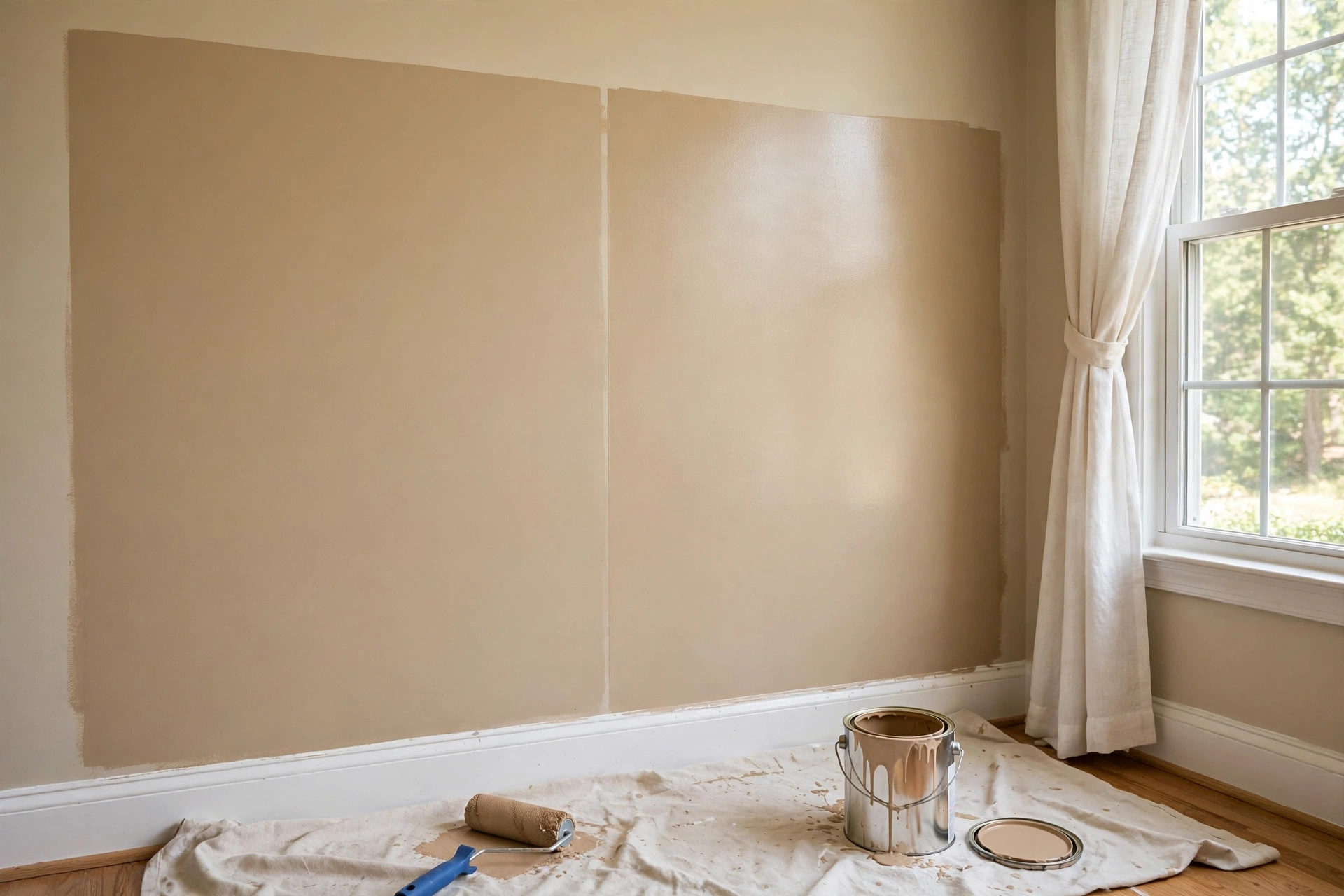
Test before you commit. Buy small sample cans of both finishes in your color, paint two large squares side by side, and live with them for a few days. Try wiping each with a damp cloth. The test will teach you more than any guide.
Cost and Price Breakdown
Paint cost in the United States depends on brand, line, and store. A fair range for a gallon of good interior paint is 30 to 70 dollars. Contractor grades cost less. Top lines from makers such as Behr and Benjamin Moore sit at the higher end.
Flat is often the cheaper of the two by a few dollars per gallon. For a whole house, that gap can add up to fifty dollars or more. But remember the cost of labor. If you hire a painter, labor often costs far more than the paint. A finish that lasts longer saves a full repaint, which is worth far more than a few dollars per gallon.
Supplies add to the bill. Good rollers, brushes, tape, drop cloths, filler, sandpaper, and primer can add 100 to 200 dollars to a room project. Primer matters most when you paint over a dark color or a damaged wall. Many paints now claim to include primer, but on bare drywall or heavy patches, a separate primer still gives a better result.
A typical 12 by 12 foot room needs about two gallons for two coats on the walls, plus one gallon for the ceiling. Doing it yourself saves the labor, which a painter might charge at 300 to 800 dollars per room based on the market.
Care and Upkeep
Both finishes last longer with simple care.
Dusting. Dust walls once or twice a year with a soft dry mop or a vacuum brush head. This keeps dust from working into the paint film.
Spot cleaning. For eggshell, use a soft cloth or sponge with warm water and a drop of mild dish soap. Wring the cloth well so it is damp, not wet. Rub gently and rinse the spot with a clean damp cloth. For flat, be more careful. Test in a hidden spot first. Many flat paints will show a mark where you scrubbed.
What to avoid. Do not use harsh cleaners, bleach, or rough scrub pads on either finish. They can dull the sheen or take off paint. On eggshell, harsh scrubbing can polish a spot to a higher shine that stands out from the rest of the wall.
Touch-ups. Flat paint touches up the best. Keep a small jar of the leftover paint, labeled with the room, color, and finish. For a small mark, dab a little paint on with a small brush and feather the edges. It will blend in. Eggshell touches up well too, but a touched spot may show a slight sheen difference if the wall has aged. For large marks on eggshell, repaint the whole wall from corner to corner for an even look.
Repainting. With good care, eggshell walls in normal rooms last seven to ten years. Flat walls in quiet rooms can last as long, but flat in busy rooms may need fresh paint in three to five years. When you repaint, wash the walls first, fill any new holes, sand lightly, and prime bare spots. For more color ideas and upkeep tips, the home guides from Bob Vila and HGTV publish regular paint advice.
Safety
Painting is safe work when you take a few simple steps.
Air flow. Open windows and use fans. Even low-odor paints release fumes as they dry. Keep fresh air moving through the room.
Ladders. Most painting falls happen on ladders. Use a steady ladder, keep three points of contact, and do not overreach. Move the ladder instead of leaning.
Lead paint. Homes built before 1978 may have lead paint under the surface. Sanding or scraping it can release lead dust, which is harmful, above all to children and pregnant women. If your home is old, test for lead before you sand. Federal guidance on this topic is worth reading before any work begins.
Skin and eyes. Wear gloves and safety glasses when sanding or using cleaners. Wash brushes and hands with soap and water. Keep paint away from open flames and heaters.
FAQ
Can I put eggshell paint over flat paint?
Yes. Clean the wall, sand it lightly with fine sandpaper so the new paint can grip, wipe off the dust, and prime any bare or patched spots. Then roll on two coats of eggshell. The light sanding is the key step.
Can I put flat paint over eggshell paint?
Yes, with the same prep. Sand lightly, clean off the dust, and prime. Flat over eggshell works well when you want a softer look in a quiet room.
Which finish is better for hiding flaws?
Flat, by far. Its lack of sheen hides dents, patches, and rough texture. If your walls are rough and you cannot fix them fully, flat is the kind choice.
Which finish lasts longer in a hallway?
Eggshell. Halls take daily contact from hands, bags, and shoes. Eggshell washes clean and resists scuffs far better than flat.
Is flat paint cheaper than eggshell?
Often yes, by a few dollars per gallon within the same product line. But the price gap is small. Choose based on the room, not the price tag. A finish that must be repainted sooner is the more costly choice in the end.
A Short Final Word
The debate of flat vs eggshell paint for walls in the USA has no single winner. Each finish has a job it does well. Flat gives a soft, calm look and hides flaws, which makes it right for ceilings and quiet rooms. Eggshell gives a gentle glow, washes clean, and stands up to daily life, which makes it right for living rooms, halls, kitchens, and baths.
Walk through your home room by room. Note the traffic, the light, and the shape of the walls. Test both finishes on the wall before you buy gallons. Take your time with prep, and either finish will reward you with walls that look good for years.
References
Behr. (n.d.). Paints, primers, and stains. https://www.behr.com Benjamin Moore. (n.d.). Paints and stains. https://www.benjaminmoore.com Bob Vila. (n.d.). Home improvement advice. https://www.bobvila.com HGTV. (n.d.). Home and garden ideas. https://www.hgtv.com Lowe’s. (n.d.). Home improvement products. https://www.lowes.com The Home Depot. (n.d.). Home improvement products. https://www.homedepot.com The Spruce. (n.d.). Home and garden advice. https://www.thespruce.com This Old House. (n.d.). Home renovation guidance. https://www.thisoldhouse.com
Was this guide helpful?

About Jennifer Lee
The My Garden US editorial team writes practical, in-depth home and garden guides for American homeowners — tested advice, no fluff.
You May Also Like

Sage Green Paint for Living Room: A Complete USA Guide
August 9, 2026 0 views
Driveway Sealer Buying Guide for USA Homes
May 18, 2026 0 views
Best Paint for Garage Walls USA: A Plain Guide to Durable Choices
September 26, 2026 0 views