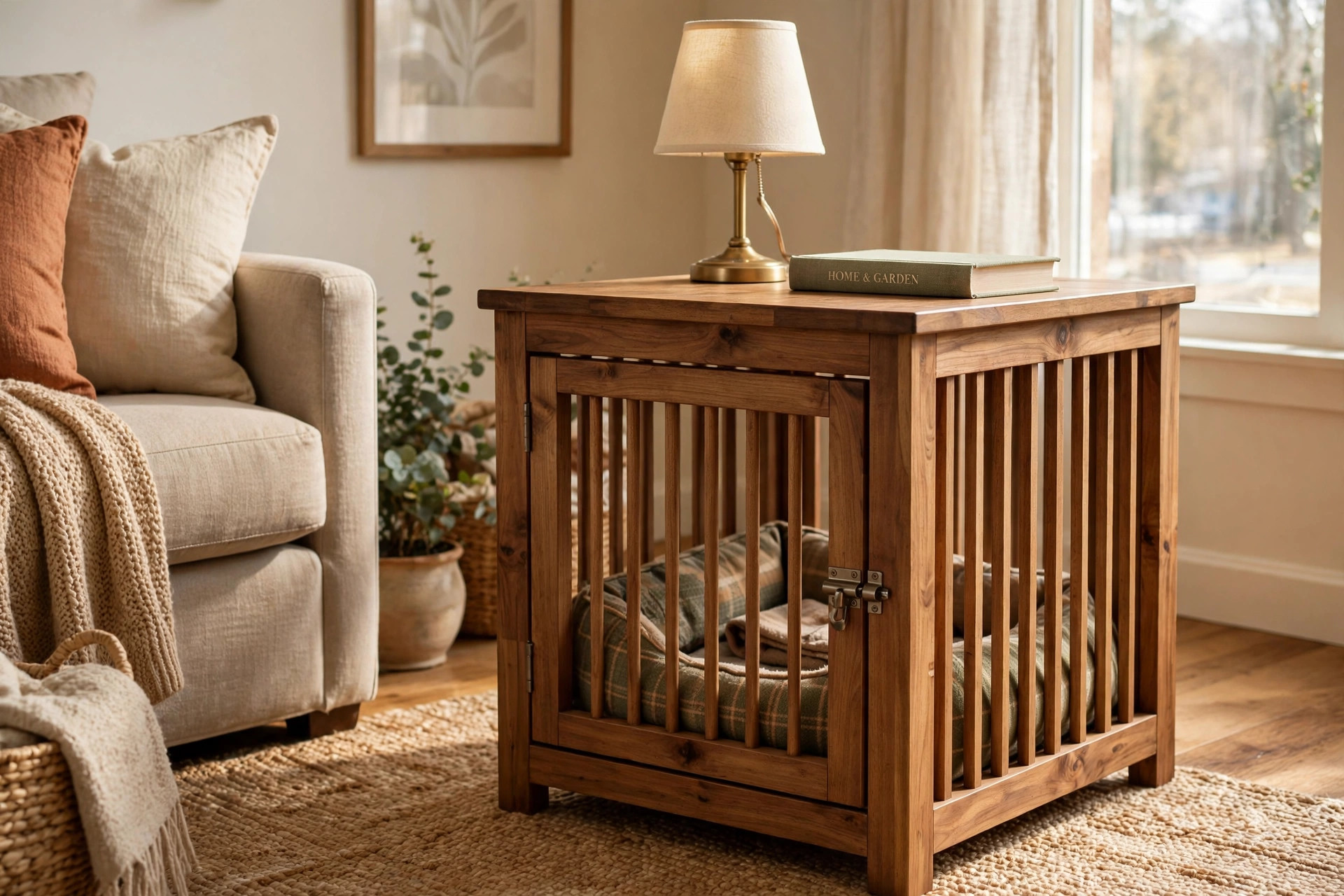

A dog crate furniture end table for living room use solves two problems at once. It gives your dog a safe den to rest in, and it gives you a table that looks like ordinary furniture. No more wire crate standing in the corner of your best room. The crate hides inside a wooden frame with slats or bars, and the top holds a lamp or a cup of tea like any end table.
Many families want a tidy living room and a calm dog. This guide explains how these pieces work, what to look for, how much they cost, and how to keep both the dog and the table safe. It also covers care, style choices, and common questions from buyers.
Why a Crate End Table Works Well in a Living Room
Dogs are den animals. Most dogs feel calmer in a small, closed space of their own. A crate gives them that space. It also keeps them out of trouble when you cannot watch them. A puppy cannot chew the sofa if it is resting safely in its crate.
The problem is that wire crates are ugly. They do not match the sofa or the chairs. They take up floor space and make a room feel crowded. That is why furniture style dog crates have become popular. A dog crate furniture end table for living room use looks like a side table. It has a flat top, wooden sides, and a door for the dog.
This design helps in small homes and apartments. You do not need room for both a crate and an end table. One piece of furniture does both jobs. It also helps guests feel at ease. Visitors see a nice wooden table, not a metal cage.
There is another benefit. A furniture crate is more private than a wire crate. The wooden sides block much of the view. Many dogs sleep better when they cannot see every move in the room. Animal welfare groups note that a quiet, dark den helps dogs rest, and the ASPCA offers guidance on calm resting places for dogs on its site at ASPCA.
What to Look for When You Choose One: Dog Crate Furniture End Table for Living Room
A good crate table is both a crate and a table. It must serve the dog and the room. Judge it on both sides before you buy.
Size and Fit
Size matters more than anything else. The crate must be big enough for your dog. Your dog should be able to stand up, turn around, and lie down with ease. If the crate is too small, the dog will be unhappy and stiff. If it is far too large, a puppy may soil one end of it.
Measure your dog from nose to tail base, and from floor to top of head. Add several inches to each number. Then check the inside of the crate, not just the outside. Wooden frames are thick, so the inside is smaller than the outside. Pet advice sites such as Www.thesprucepets.com publish sizing charts that help match crate size to breed.
Also measure the spot in your living room. Leave room for the door to swing open. Leave a few inches of air space around the crate for ventilation.
Materials and Build
Most of these tables are made from wood or engineered wood. Solid hardwood lasts the longest, but it costs more. Engineered wood with a good finish works well for most families. Avoid thin panels that bow when the dog leans on them.
The top should be strong. A table top that holds a lamp and books must not sag. Look for tables rated to hold at least fifty pounds. Check how the slats or bars are fixed. They should be part of the frame, not held by glue alone.
Finish matters too. A smooth, sealed finish resists scratches and stains. Water-based finishes are safer for pets than some older oil-based types. If you shop at large retailers, you can compare finishes side by side, and Lowe’s carries several furniture crate models with listed load ratings.
Doors and Latches
The door is the most used part of the crate. It should open smoothly and close with a firm latch. The latch must be strong enough that the dog cannot push it open from inside. Some tables have two doors, one on the front and one on the side. Two doors make it easier to place the table in a corner.
Check that the bars or slats are spaced safely. Gaps wider than three inches can trap a paw or a jaw. Bars should run up and down, not side to side, so a small dog cannot climb them.
Common Types and Styles
Not all wooden dog crate end tables look the same. The right style depends on your room and your taste.
Wooden End Table Crates
This is the classic type. It looks like a small wooden cabinet with slatted sides. The door has vertical bars. Finishes include oak, walnut, white, and gray. These pieces fit well in traditional and farmhouse rooms. They are the easiest type to find at pet stores and online pet supply retailers such as Www.chewy.com.
Modern and Mid-Century Designs
Modern designs use clean lines and simple shapes. They often have tapered legs and plain panels with a few narrow slots for air. Mid-century styles come in warm wood tones with brass details. These suit living rooms with modern sofas and low coffee tables. You can find modern options at pet stores like Petco as well as at home retailers.
Custom and DIY Options
Some owners build their own. A skilled woodworker can make a crate table that matches existing furniture exactly. Plans are easy to find in home magazines and do-it-yourself guides. Home experts at Bob Vila cover furniture projects with clear steps for beginners. A custom piece costs more, but it fits your space and style perfectly.
One more trend worth a look is the litter box enclosure for cats. It uses the same idea: hide the pet item inside furniture. Our guide to the best litter box enclosure furniture for cats shows how the idea works for cat owners.
Cost and Price: What to Expect
Prices vary widely. A small engineered-wood crate table may cost around one hundred dollars. A medium table from a known brand may cost two to three hundred dollars. A large solid-wood piece can cost five hundred dollars or more. Custom work starts higher still.
What makes the price move? Size is the main factor. Wood type comes next. Extras like two doors, a storage drawer, or a chew-proof finish add to the cost. Brand name adds some too.
Do not buy on price alone. A cheap table with weak latches can break or injure a dog. It is better to pay more for a safe, sturdy piece than to replace a broken one. Check return policies before you buy. Many large retailers, including Walmart, list clear return terms for pet furniture.
Set a budget before you shop. Include the cost of bedding. A soft pad or mat makes the crate inviting, and our notes on the best dog crate pad for anxious chewers can help you pick one that lasts.
Care and Upkeep
Wooden furniture needs care. Wipe the top with a damp cloth each week. Dust the slats so air moves freely through them. Clean spills at once so they do not soak into the wood.
Use pet-safe cleaners inside the crate. Harsh chemicals can harm a dog that licks surfaces. A mix of warm water and mild soap is enough for most messes. Rinse well and let the wood dry fully before the dog goes back in.
Check the hardware every month. Tighten loose screws. Test the latch. Look at the bars for chew marks or cracks. Dogs that chew wood may need a tougher crate or more exercise. Veterinary advice on chewing behavior is easy to find at Www.petmd.com.
If the finish wears thin, you can recoat it. Sand lightly, wipe clean, and apply a pet-safe sealant. Let it cure fully before use. Home design guides at The Spruce explain simple refinishing steps for wooden furniture.
Place the table away from direct heat and strong sun. Heat dries wood and can make it crack. Sun fades the finish over time. A spot near the sofa, but not on a heating vent, is ideal.
Safety Comes First
A crate table must be safe for the dog inside it and for the home around it. Keep these points in mind.
Ventilation is vital. Wooden crates are more closed than wire crates. Make sure air flows in from several sides. If the room is warm, add a small fan nearby, but do not point it straight at the dog. Never place the crate in a garage or a car in hot weather.
Lock the door latch every time. An open crate in a busy room can tempt the dog to bolt out the door of the house. Teach children not to open the latch or poke fingers through the slats.
Remove collars before crate time. Collars can catch on bars and strangle a dog. This is standard advice from kennel club safety guides, and the American Kennel Club publishes crate safety notes on its site at American Kennel Club.
Watch for chewing. Some dogs chew wood when they are bored or anxious. A dog that eats wood chips can get sick. If your dog chews the frame, add more daily exercise and chew toys. If chewing does not stop, a furniture crate may not suit that dog. Our guide to the best dog crate for anxious dogs escape proof covers stronger options for determined chewers.
Do not stack heavy items on the top. The table has a weight limit. A lamp and a book are fine. A heavy television is not. Also, keep cords out of reach. A dog that pulls a lamp cord through the bars can knock the lamp over.
Frequently Asked Questions
Are furniture dog crates as safe as wire crates? A well-made furniture crate is just as safe as a wire crate. Look for strong joints, safe bar spacing, and a firm latch. Poorly made ones are not safe. Read reviews and check the build before you buy.
Can I use a dog crate furniture end table for living room puppy training? Yes. It works like any other crate for house training. The den feel can even calm a nervous puppy. Make sure the size fits the puppy now, and plan for a larger size as the dog grows. Some tables come in two sizes for this reason.
Will my dog chew through the wood? Some dogs will. Heavy chewers can damage soft wood. Harder woods resist better. If your dog is a strong chewer, give it safe chew toys and plenty of exercise. If it still chews the frame, switch to a metal crate for safety.
How do I clean inside a wooden crate? Take out the bedding first. Wipe all inside surfaces with warm water and mild soap. Rinse with a damp cloth. Dry fully to protect the wood. Wash bedding in the machine on a hot cycle. Repeat the inside wipe each week.
Can two dogs share one furniture crate? No. Each dog needs its own crate. Sharing causes stress and can lead to fights in a tight space. If you have two dogs, buy two tables or pair one table with a separate crate.
Where should I place the crate table in the living room? Put it where the family spends time. Dogs rest better near their people. Keep it out of direct sun and away from heating vents. Leave space for the door to open and for air to move around it.
A Final Word
A dog crate furniture end table for living room use is a simple idea done well. Your dog gets a quiet den. You get a handsome table. The room stays neat, and the dog stays safe.
Take time to choose the right size and build. Spend what you need to get safe hardware and solid wood. Keep the crate clean, check it often, and place it with care. Done right, this one piece of furniture serves your home and your dog for many years.
References
American Kennel Club. (n.d.). Dog care and training resources. https://www.akc.org ASPCA. (n.d.). Pet care and animal welfare resources. https://www.aspca.org Bob Vila. (n.d.). Home improvement advice. https://www.bobvila.com Chewy. (n.d.). Pet supplies. https://www.chewy.com Lowe’s. (n.d.). Home improvement products. https://www.lowes.com Petco. (n.d.). Pet supplies and services. https://www.petco.com PetMD. (n.d.). Pet health information. https://www.petmd.com The Spruce. (n.d.). Home and garden advice. https://www.thespruce.com The Spruce Pets. (n.d.). Pet care guides and product reviews. https://www.thesprucepets.com Walmart. (n.d.). Everyday low prices. https://www.walmart.com Www. (n.d.). Home and garden information. https://www
Was this guide helpful?

About Robert Taylor
The My Garden US editorial team writes practical, in-depth home and garden guides for American homeowners — tested advice, no fluff.
You May Also Like
Best Slow Feeder Bowl for Cats Whisker Friendly: A Complete Guide
January 13, 2026 0 views
The Best Covered Litter Box for Small Apartments: A Practical Guide
June 8, 2026 1 views
Dog Crate With Wheels for Easy Transport: A Complete Buyer’s Guide
October 2, 2026 0 views