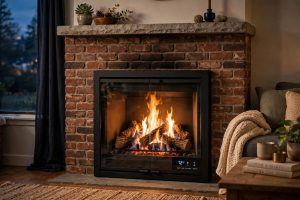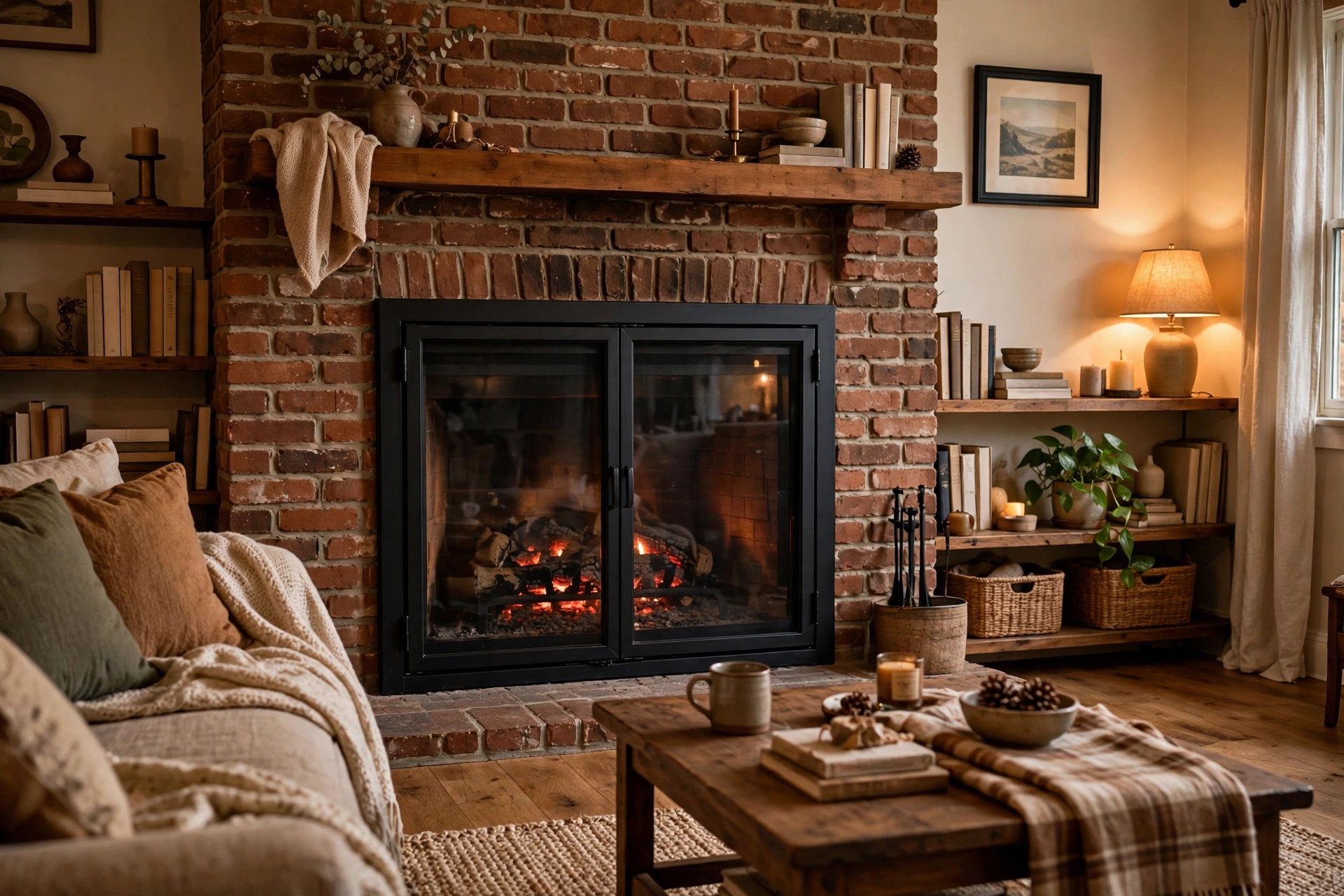

A fireplace can warm a room in winter, and it can also let cold air stream into the room all year long. Many older fireplaces have an open front. When no fire is lit, warm room air moves up the chimney, and the heater must work harder. When a fire is lit, sparks can pop out and land on the rug. Glass doors solve both problems. That is why many home owners look for the best fireplace glass doors for sale before the cold season starts.
Shopping for these doors takes some care. The doors must fit the opening. The glass must stand up to heat. The frame should match the room. The price range is wide, from simple flat screens to custom doors that cost as much as a new heater. This guide explains what matters, what types you can buy, what you can expect to pay, and how to keep the doors clean and safe.
Why Glass Doors Matter
An open fireplace is a fine thing to look at, but it is not a good way to heat a room. Studies of home heating have long shown that an open hearth pulls heated air from the room and sends it up the flue. Glass doors slow that loss. They close off the firebox when the fire is out, which cuts the draft. They also keep sparks and ash inside the firebox when the fire is lit, which protects the carpet and the wood floor in front of the hearth.
There is a safety gain as well. Small children and pets can wander close to an open flame. A set of glass doors forms a barrier. The glass gets hot, so it does not remove all risk, but it does stop a hand or a tail from reaching the logs.
Glass doors also change the look of the fireplace. Many older fireplaces have dark, stained openings that look worn. A new set of doors with a clean frame gives the hearth a finished face. For people who plan to sell a home, this is a small change that can help the living room look cared for.
What to Look for When You Buy: Best Fireplace Glass Doors for Sale
The first thing to check is size. Measure the width and height of the fireplace opening, top to bottom and side to side. Many doors are sold as “overlap fit” units, which means the frame is larger than the opening and sits against the face of the fireplace. Others are “inside fit” units that sit within the opening. Know which type your opening will take before you order. An opening with a raised hearth or a stone face that is not flat may need an overlap unit.
Next, look at the glass. The best doors use tempered glass or ceramic glass. Tempered glass stands up to high heat and is used in most factory-built fireplaces. Ceramic glass costs more, but it handles still higher heat and stays clear longer. Thin or plain glass has no place on a fireplace. Ask what type the doors carry.
The frame finish matters too. Common choices are black, bronze, brass, nickel, and pewter. Black fits most brick and stone. Bronze suits older homes with wood trim. Brass gives a formal look but shows fingerprints and needs more polishing. Pick a finish that matches the hardware and light fixtures in the room.
Check how the doors close. Bi-fold doors fold to the sides and are easy to open for loading wood. Cabinet-style doors swing open like small gates. Sliding doors work well on wide openings. Try to find a unit where the doors close with a firm latch so they do not drift open when the fire burns.
Look at how the unit mounts. Most doors come with hardware that screws into the fireplace face or into the firebox walls. Some sit in place with no drilling. If you rent your home or you do not want to drill into stone, look for a freestanding or clamp-style unit.
Air wash is a feature worth knowing. Some doors have vents that let a thin sheet of air flow across the inside of the glass. This keeps soot from building up as fast. It also lets you control the draft a little better. Not every unit has it, so read the product notes.
Types and Options
Most of the best fireplace glass doors for sale fall into a few groups.
Flat panel doors are the simplest. A single flat frame holds one or two glass panels. They cost the least and fit most standard openings. They suit homes where the fireplace is used now and then.
Cabinet-style doors look like a pair of small gates with glass panes. They open wide, which makes it easy to add logs. They give the fireplace a more built-in look. They cost more than flat doors.
Bi-fold doors have panels that fold back against the sides of the opening. They are a good pick when the room is small and swing-out doors would hit furniture. Many units in this style come in standard sizes that fit common masonry openings.
Arched and custom doors fit fireplaces with curved tops or odd sizes. These are made to order. They cost more and take longer to arrive, but they fit openings that standard units cannot.
Some doors are sold as part of a larger hearth set. If you are also buying a fireplace tool set or a new log holder, look for a dealer that sells matching finishes so the whole hearth looks planned. Home owners who are outfitting a new living room sometimes pair doors with gas log sets when the fireplace has a gas line, since the glass then stays clean far longer.
Cost and Price
Prices vary a great deal. A basic flat set of tempered glass doors for a standard opening can cost as little as one hundred to two hundred dollars. Mid-range cabinet-style doors in common finishes run from two hundred fifty to six hundred dollars. Custom or arched doors can run eight hundred dollars or more, plus freight.
A few things drive the price. Ceramic glass costs more than tempered glass. Heavier frames and better latches cost more. Custom sizes cost more. A known brand name can add to the price, though many lesser-known makers build fine doors.
Installation is a separate cost. Most units are made for home owners to install with basic tools in an hour or two. If you hire a handyman, expect to pay for an hour or two of labor. Masonry fireplaces with uneven stone faces can take longer, since the frame may need shims or extra sealant.
Do not forget freight. Glass is heavy and breaks in shipping. Good dealers pack it well and ship it with care, but the shipping cost on a large unit can be high. Some dealers offer free shipping on larger orders, which helps. Check the return policy before you buy, since a door that does not fit is a costly thing to send back.
Care and Upkeep
Glass doors need regular cleaning to stay clear. Soot builds up on the inside of the glass with each fire. Let the doors cool fully before you touch them. Wipe the glass with a damp cloth and a cleaner made for fireplace glass, or use a paste of wood ash and water on the inside face. Stay away from rough pads, which scratch the glass.
Clean the frame with a soft cloth. Do not use strong chemicals on brass or nickel finishes, since they can strip the coating. A mild soap and water is enough. Dry the frame after cleaning so water spots do not form.
Check the seals and gaskets once a year. Many doors have a rope or flat gasket around the frame that keeps smoke from leaking into the room. If the gasket is flat, torn, or missing in spots, replace it. Gasket kits are sold by most fireplace dealers and are not hard to install.
Look at the mounting hardware each fall before the first fire. Screws can loosen over time as the metal heats and cools. Tighten what is loose. If a door no longer latches shut, adjust the hinges or the latch before the burning season starts.
Burn dry, seasoned wood. Wet wood makes more smoke and more soot, which dirties the glass fast and leaves more creosote in the flue. Dry wood burns hotter and cleaner, which is better for the glass and safer for the chimney.
Safety
Glass doors add a layer of protection, but they do not make a fireplace childproof. The glass gets very hot while the fire burns and stays hot for a while after. Keep small children and pets away from the hearth when a fire is lit. A freestanding screen in front of the doors can add distance during a long burn.
Make sure the doors are fully open before you light the fire. Lighting a fire with the doors closed can fill the room with smoke, since the draft needs a clear path to start. Once the fire is burning well and the flue is warm, close the doors but leave any built-in air vents open so the fire gets air.
Never use flammable liquids to start a fire. Use kindling and fire starters made for the purpose. Keep the doors latched while the fire burns so sparks cannot push them open.
Have the chimney swept each year by a trained sweep. Creosote builds up in the flue with use, and a chimney fire is a real risk in homes that burn wood often. The glass doors do not change this need.
When the burning season ends, leave the doors closed to cut the draft, but open the damper only when a fire is lit. Some home owners hang a draft stopper or a chimney balloon in the flue for the summer months. Either way, closed glass doors cut the flow of warm room air up the chimney.
Frequently Asked Questions
Do glass doors make a fireplace heat better? They help a little. An open fireplace loses most of its heat up the chimney. Glass doors cut the loss of room air and direct more heat into the room. They do not turn a fireplace into a furnace, but they make each fire more useful.
Can I install the doors myself? Most units are sold for home installation. You will need a drill, a level, and a screwdriver. Follow the maker’s guide step by step. If your fireplace face is rough stone or the opening is not square, you may want a pro to fit the unit.
Will the glass break from the heat? Doors made for fireplaces use tempered or ceramic glass rated for high heat. Normal fires will not break them. What can break the glass is impact, such as a log thrown against it, or a fire built too close to the glass. Build the fire toward the back of the firebox.
How do I keep the glass from turning black? Burn dry wood, keep the fire hot, and do not close the air vents all the way while the fire is young. An air-wash feature helps. Even so, some soot will form. Clean the glass often so the buildup does not bake on.
Do I need doors on a gas fireplace? Most gas fireplaces come with their own sealed fronts and do not need add-on doors. In fact, adding doors to a gas unit can block its air vents and cause problems. Check the maker’s guide for your gas fireplace before you buy anything.
What size should I order? Measure the opening at the top, middle, and bottom for width, and at both sides for height. Use the smallest width and height you find. Then check whether the unit you want is an overlap fit or an inside fit, and compare your numbers to the maker’s sizing chart.
A Final Word
The best fireplace glass doors for sale are the ones that fit your opening, stand up to the heat, and match your room. Start with careful measurements. Pick tempered or ceramic glass. Choose a finish that suits the house. Plan for freight and check the return policy. Clean the glass often and burn dry wood, and the doors will serve you for many winters. A fireplace should be a pleasure, not a draft or a worry, and a good set of glass doors moves it closer to that.
For more background, see Lowe’s, The Home Depot, and Napoleon. For more background, see Heatilator, This Old House, and Family Handyman. Buying guides are also published by The Spruce and U.S. Environmental Protection Agency.
References
Family Handyman. (n.d.). DIY home repair and maintenance. https://www.familyhandyman.com Heatilator. (n.d.). Fireplaces and fireplace products. https://www.heatilator.com Lowe’s. (n.d.). Home improvement products. https://www.lowes.com Napoleon. (n.d.). Fireplaces, grills, and heating products. https://www.napoleon.com The Home Depot. (n.d.). Home improvement products. https://www.homedepot.com The Spruce. (n.d.). Home and garden advice. https://www.thespruce.com This Old House. (n.d.). Home renovation guidance. https://www.thisoldhouse.com U.S. Environmental Protection Agency. (n.d.). Protecting human health and the environment. https://www.epa.gov
Was this guide helpful?

About David Wilson
The My Garden US editorial team writes practical, in-depth home and garden guides for American homeowners — tested advice, no fluff.
You May Also Like

Top Rated Electric Patio Heaters for Southern States
October 4, 2026 0 views
Reclaimed Wood Mantels Price Comparison USA: What You Should Expect to Pay
September 16, 2026 0 views
Best Electric Fireplace Mantels for Humid Climates: A Buyer Guide
August 13, 2026 0 views