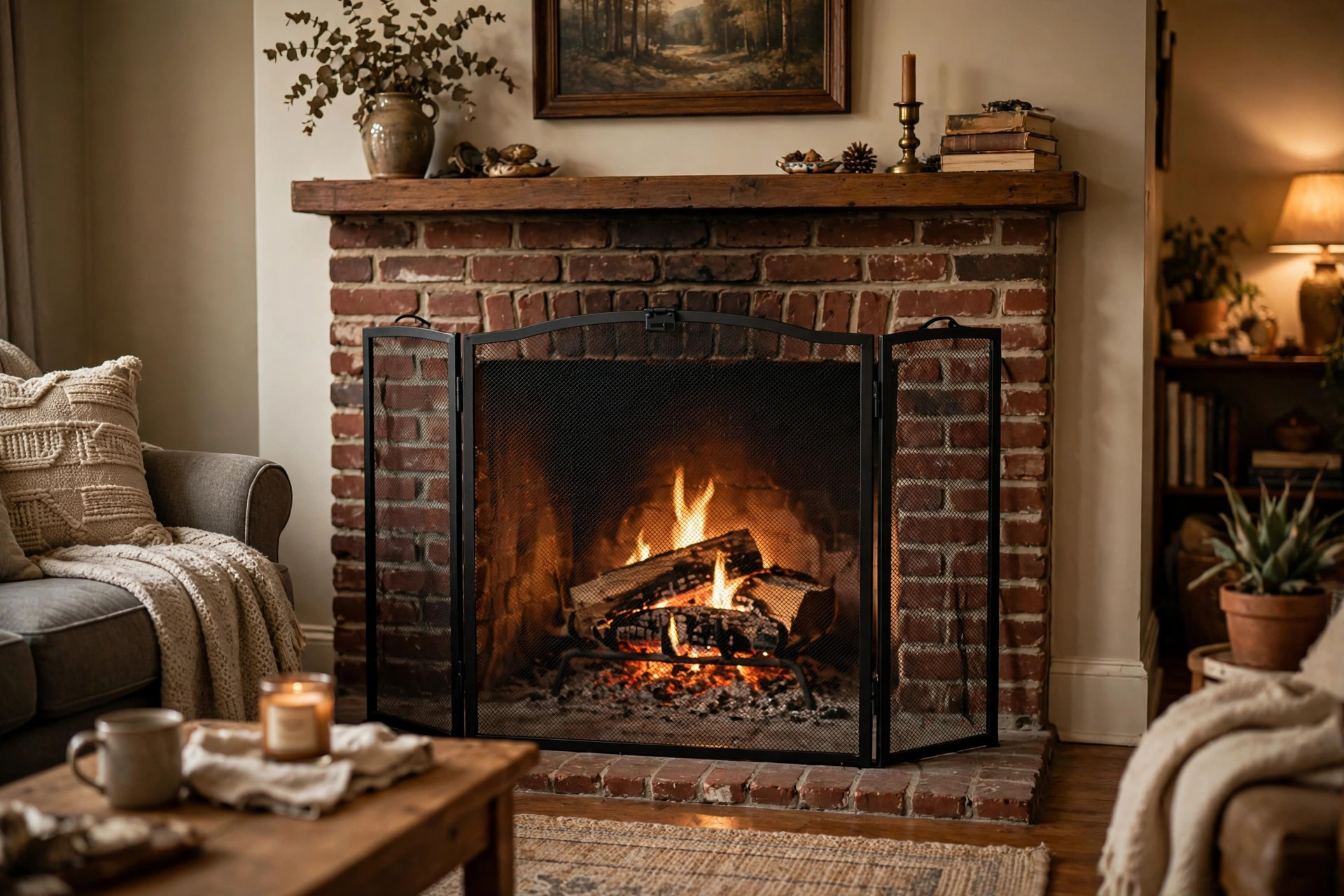
A fireplace warms a home in winter and gathers a family around its glow. It also holds real danger for small children. Hot glass, sharp edges, and stray sparks can injure a curious toddler in seconds. That is why top rated childproof fireplace screens for humid climates have become a smart buy for many American families. These screens keep little hands away from the fire. They also stand up to damp air without rusting or warping. This guide explains what to look for, which types work best, what they cost, and how to keep them in good shape for years.
Why a Fireplace Screen Matters When Children Are in the Home
Children learn by touching. A toddler sees the dancing flames and wants to reach for them. The glass door of a fireplace can reach hundreds of degrees during a burn. A child who touches it can suffer a serious burn in one second.
A fireplace screen is a simple barrier. It stands between the child and the heat. It blocks sparks and embers that might pop out of the firebox. It also stops toys, blankets, and small hands from landing in the fire.
Childproof models go one step further. They are heavier and harder to tip over. They use fine mesh that stops even small embers. Many have a latch or lock on the door. An adult can open the door to tend the fire. A child cannot.
No screen replaces adult supervision. But a good screen buys precious time. It turns a moment of inattention into a moment that stays safe.
Why Humidity Changes Everything: Top Rated Childproof Fireplace Screens for Humid Climates
Damp air is hard on fireplace gear. In humid parts of the country, from the Gulf Coast to the Mid-Atlantic, indoor air can stay moist for months. Moisture attacks metal. Cheap steel screens rust. Paint peels. Mesh weakens. Hinges squeak and then freeze.
Rust is not just ugly. A rusted screen is weaker. The mesh can break and let sparks through. A rusted frame can wobble and fall when a child leans on it. The U.S. Environmental Protection Agency notes that damp indoor conditions can shorten the life of metal home fixtures and recommends keeping metal surfaces dry and well coated.
That is why the best screens for humid homes use powder-coated steel, stainless steel, or aluminum. Powder coating bakes a hard shell onto the metal. It seals out moisture. Stainless steel resists rust on its own. Both materials hold up where bare iron would fail in one season.
Humid air also makes soot and ash stickier. A screen in a damp home may need more frequent cleaning. Creosote and soot build up faster on a cool, damp surface. Regular care keeps the screen strong and the view of the fire clear.
What to Look for in a Childproof Fireplace Screen
Not every screen sold as “childproof” earns the name. Here is what matters most.
A Strong Frame and Tight Mesh
The frame should be heavy. Lift the screen and feel its weight. A screen that a grown man can tip with one hand will not stop a running toddler. Look for thick tubing and welded joints.
The mesh should be fine and even. Hold it up to the light. You should not see large gaps. Fine mesh stops sparks. It also keeps tiny fingers from poking through.
A Locking Door or Gate
Top rated childproof fireplace screens for humid climates almost always include a locking front door. The door lets you add wood or adjust logs without moving the whole screen. The latch should be firm. Test it in the store if you can. A latch that a three-year-old can learn in an afternoon is not enough.
Some models use a magnetic latch. Others use a metal hook or slide bolt. Slide bolts are simple and reliable. They rarely break. Magnetic latches are easier to work with one hand but should still resist a child’s pull.
Heat-Safe and Rust-Safe Materials
Check the product label for the material. Powder-coated steel is the most common choice. It is strong and takes color well. Stainless steel costs more but shrugs off humidity. Avoid screens with thin tin panels or bare iron frames in damp homes.
Feet matter too. The feet should spread wide for balance. Rubber or coated feet will not scratch the hearth. In humid homes, coated feet resist rust where bare metal feet would stain the stone.
Size and Fit
Measure your fireplace opening before you shop. Measure the width and the height. A freestanding screen should be wider than the opening by several inches on each side. It should stand tall enough that a child cannot reach over it.
For glass door enclosures, fit is even tighter. An enclosure that is too small leaves gaps at the sides. A child can slip a hand through a gap. Measure twice and buy once.
Types of Childproof Fireplace Screens
Four main types are sold today. Each has its place.
Freestanding Mesh Screens
These are the classic three-panel or four-panel folding screens. They stand on their own in front of the hearth. They are easy to move aside when you tend the fire. The panels fold for storage in summer.
Freestanding screens are the most affordable option. Their weakness is stability. A determined child can push one aside. Choose the heaviest model you can find. Some owners anchor the feet to the hearth with brackets for extra safety.
Fireplace Gate Guards
Gate guards are low fences that sit on the hearth or the floor around the fireplace. They create a playpen-style barrier. Many can be shaped to fit the room. Some attach to the wall for a firm hold.
Gates work well for very young children. They keep a crawling baby well back from the heat. They do not stop sparks as well as mesh screens. Many families use a gate in front of a mesh screen for double protection.
Glass Door Enclosures
Glass doors mount directly on the fireplace. They close off the firebox behind tempered glass. A mesh screen sits behind the glass for extra spark control. Doors with a childproof latch are among the safest options.
Our fireplace glass doors reviews and buying guide looks at these enclosures in more depth. In humid homes, choose doors with stainless hardware. Plain steel hinges will rust and bind.
Mounted Barrier Screens
These screens bolt to the fireplace surround or the wall. They cannot be tipped over. They are the hardest for a child to defeat. They cost more and need tools to install.
A mounted barrier is a good pick for families with toddlers and an open hearth. Once it is up, it stays up. Make sure the mounting hardware is rated for masonry if you drill into brick.
If you also enjoy fires outside the house, our guide to the best outdoor fire pits for humid climates covers rust-proof picks for the patio too.
Cost and Price: What Top Rated Models Usually Run
Prices vary by type and material. Here are the ranges most shoppers see.
Freestanding mesh screens run from about forty dollars to one hundred fifty dollars. Budget screens use thinner steel. Top rated models use thicker frames and better powder coating. In humid climates, it pays to buy up a notch. A cheap screen that rusts in two years costs more in the end.
Fireplace gate guards run from about sixty dollars to two hundred dollars. Wall-mounted gates cost more than freestanding ones. Extra panels add to the price.
Glass door enclosures run from about two hundred dollars to eight hundred dollars. Custom sizes and high-end finishes push the price higher. Stainless hardware adds to the cost but is worth it in damp homes.
Mounted barrier screens run from about one hundred dollars to three hundred dollars, not counting installation. A handyman can usually mount one in under an hour.
Families on a budget should know that high efficiency childproof fireplace screens for american homes often overlap with the same sturdy models, so shopping across guides can turn up a better price.
Large home improvement stores carry these screens in season. Both The Home Depot and Lowe’s stock fireplace screens, gates, and enclosures, and their sites let you compare frame thickness and latch styles before you visit. Specialty stove makers such as Napoleon and Heatilator also offer screens and doors built to fit their own fireplace models, which can mean a cleaner fit.
Care and Upkeep in Damp Weather
A screen in a humid home needs steady, simple care. These habits will keep it strong.
Clean the mesh every month during fire season. Use a soft brush to knock off ash and soot. Wipe the frame with a dry cloth. Do not soak the screen. Water left on the frame invites rust.
Check for rust spots each time you clean. Catching rust early is easy. Rub the spot with fine steel wool. Touch it up with high-heat paint made for stoves and fireplaces. The hardware guides at This Old House and Family Handyman both recommend high-heat paint for touch-ups, since ordinary paint can peel or smoke when the fire burns hot.
Oil the hinges and latch twice a year. A drop of light machine oil keeps them moving. In humid homes, this small step matters. A stuck latch tempts an adult to leave the door open. That defeats the whole purpose.
In summer, dust the screen and cover it if the room gets damp. Some owners store freestanding screens in a dry closet. If you leave it in place, wipe it down once a month. Air conditioning helps. It lowers indoor humidity and slows rust.
Keep the area around the hearth dry. Do not mop water onto the hearth stone and let it sit. Standing water wicks into metal feet. Sweep up spilled water right away.
Safety Rules Every Family Should Follow
A screen is one layer of safety. These rules add more layers.
Never leave a fire burning without an adult in the room. Screens slow a child down. They do not replace watchful eyes.
Keep the hearth clear. Toys, pillows, and blankets should stay three feet back. A child climbing on a pillow can reach over a low screen.
Teach the rule early. Tell children the fireplace is hot and not for touching. Repeat it often. Rules work best when the screen backs them up.
Check the screen before each fire season. Look for loose joints, torn mesh, and weak latches. Replace a worn screen. A screen that fails is worse than no screen, because it gives false confidence.
Let ashes cool fully before you clean them. Hot ash can stay dangerous for a day or more. Store ash in a metal container with a lid, away from the house.
Have your chimney swept once a year. A clean chimney burns better and throws fewer sparks. The decor and fireplace advice pages at The Spruce offer seasonal checklists that pair well with these safety steps.
Frequently Asked Questions
What is the best material for a fireplace screen in a humid climate? Powder-coated steel and stainless steel hold up best in damp air. Powder coating seals the metal against moisture. Stainless steel resists rust on its own. Avoid bare iron or thin tin screens, which can rust in a single damp season.
Will a childproof screen really stop a toddler? A good one will slow a toddler down and block the most common injuries. Look for a heavy frame, fine mesh, and a latch a small child cannot open. No screen works alone. Keep an adult in the room whenever the fire is lit.
Can I use a freestanding screen with a gas fireplace? Yes. Freestanding screens work with wood, gas, and electric fireplaces. For gas units with glass fronts, a screen adds a second layer of protection against hot glass. Make sure the screen stands far enough back to let the fireplace vent as the maker intends.
How do I stop a fireplace screen from rusting? Keep it dry, clean it monthly, and touch up any paint chips with high-heat paint. Oil the hinges twice a year. Run the air conditioner in summer to lower indoor humidity. Store the screen in a dry spot if you do not use it in warm months.
Are fireplace gates safer than mesh screens? They serve different jobs. Gates keep a crawling baby well back from the hearth. Mesh screens stop sparks and hot glass contact. Many families with toddlers use both. A gate in front of a locked mesh screen is about as safe as it gets.
How much should I spend on a childproof fireplace screen? For a freestanding screen, plan to spend between eighty and one hundred fifty dollars for a top rated model. In humid climates, the extra cost buys thicker steel and better coating. A screen that lasts ten years is cheaper than two screens that each rust out in three.
A Short Final Word
The right screen does two jobs at once. It guards your children. It stands up to damp air year after year. Buy heavy. Buy coated or stainless. Check the latch. Then care for the screen with a monthly wipe and an eye for rust. Top rated childproof fireplace screens for humid climates are not hard to find. They are worth every dollar when the fire is lit and the little ones are near.
References
Family Handyman. (n.d.). DIY home repair and maintenance. https://www.familyhandyman.com Heatilator. (n.d.). Fireplaces and fireplace products. https://www.heatilator.com Lowe’s. (n.d.). Home improvement products. https://www.lowes.com Napoleon. (n.d.). Fireplaces, grills, and heating products. https://www.napoleon.com The Home Depot. (n.d.). Home improvement products. https://www.homedepot.com The Spruce. (n.d.). Home and garden advice. https://www.thespruce.com This Old House. (n.d.). Home renovation guidance. https://www.thisoldhouse.com U.S. Environmental Protection Agency. (n.d.). Protecting human health and the environment. https://www.epa.gov
Was this guide helpful?

About Michael Thompson
The My Garden US editorial team writes practical, in-depth home and garden guides for American homeowners — tested advice, no fluff.