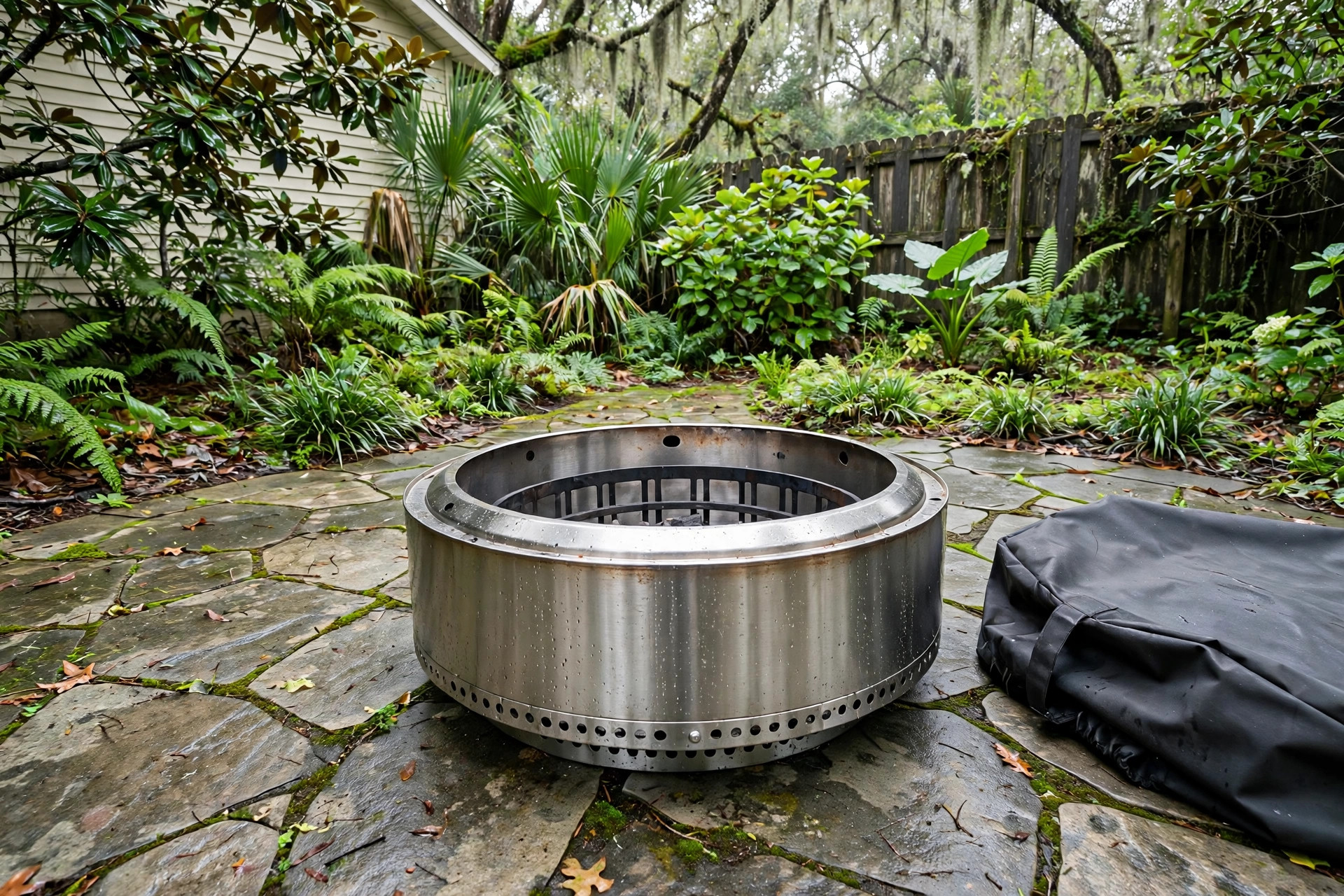

Living near the Gulf Coast, in Florida, or along the mid-Atlantic shore means one thing for your patio. The air stays wet. A summer night can feel warm and still, and by morning the deck is damp again. That constant moisture is hard on metal. A fire pit that would last ten years in dry country can rust through in three seasons here. Finding the best outdoor fire pits for humid climates is not about the prettiest design in the store. It is about choosing a pit that can live in damp air, season after season, without falling apart.
This guide explains what humidity does to a fire pit. It shows which materials stand up to wet weather and which ones fail. It covers cost, care, and safety. With the right choice and a little upkeep, your fire pit can stay solid for many years, even where the air never quite dries out.
Why Humidity Ruins Most Fire Pits
Rust needs three things: iron, oxygen, and water. In a humid climate, water is never far away. Dew settles on the pit every night. Rain blows under the patio cover. Sea breeze carries salt, which speeds the process even more. Each fire heats the metal and drives off moisture. Then the pit cools and soaks it up again. These wet and dry cycles wear out paint, burn off protective coatings, and open the door to rust.
A cheap thin-steel fire pit may look fine the first summer. By the second, orange spots appear at the welds and along the rim. By the third, the legs may be weak and the bottom may have thin spots. In coastal towns this happens faster, because salt in the air eats through metal quickly. Fire pits built for humid climates use metals or heavy coatings that slow this attack. They cost more at first. But they save money over time because they do not need to be replaced so soon.
What to Look For in a Humid-Climate Fire Pit: Best Outdoor Fire Pits for Humid Climates
The Right Material
Material matters more than any other feature. Stainless steel, especially 304 grade, resists rust far better than plain steel. Cast aluminum does not rust at all, because it contains no iron. Copper develops a green patina that protects the metal under it. Heavy cast iron can work, but it must be oiled and kept dry between fires. Thin painted steel is the worst choice for damp regions. Its coating burns off in the heat, and rust starts soon after.
Look for a fire bowl at least two millimeters thick. Thin metal warps with heat and lets rust eat through faster. Welds should be smooth and solid, because rough welds trap water. If you live near the sea, ask about salt-air ratings. Some makers test their products for coastal use, and that is a good sign.
Drainage
Water must have a way out. A fire pit with a sealed bottom will hold rainwater after every storm. That water sits against the metal for days. Over time it eats through the floor of the bowl. The best outdoor fire pits for humid climates have drain holes or a mesh bottom. If your pit lacks them, you can drill a few small holes, as long as the maker allows it. A drain cover that keeps out leaves but lets water pass is a smart extra.
Where the pit sits matters too. Do not set a fire pit in a low spot where puddles form. A paver or stone pad keeps the legs out of standing water. Some owners set the pit on a slightly raised ring of stone so air can flow under it. This small step adds years of life in wet country.
Finish and Coating
High-heat paint helps, but only for a while. The fire burns off coatings near the flame. Powder coating lasts longer than spray paint on the outer shell. For the parts that touch the flame, no coating survives forever. That is why the base metal matters most. A stainless or aluminum pit needs no paint at all. Its surface is its protection.
Size and Clearance
Humid regions often mean tight suburban yards and wood decks. Choose a pit that fits your space with room to spare. Measure your spot before you shop. You need at least ten feet between the fire and any wall, fence, or overhang. Trees matter too. Low branches can dry out and catch sparks.
Types of Fire Pits for Humid Climates
Stainless Steel Fire Pits
Stainless steel is the top pick for damp air. It resists rust without paint. It looks clean and modern. It can handle salt spray better than plain steel. The 304 grade is common and works well. The 316 grade costs more but resists salt even better, which suits coastal homes. Stainless pits are light enough to move for cleaning. Their main drawback is price. A good one can cost two or three times as much as a painted-steel model. Over a decade, though, it often wins on value.
Cast Aluminum Fire Pits
Aluminum cannot rust. This makes it a natural fit for humid regions. Cast aluminum pits are light, easy to move, and come in many styles. They cool quickly after a fire, which is a plus for families with children. The metal is softer than steel, so it can dent if dropped. If you want a pit that you can almost forget about, aluminum is a strong choice.
Powder-Coated Steel Fire Pits
Powder-coated steel is the budget option that can still work in damp air. The coating is tougher than regular paint. It resists chips and moisture on the outer shell. The inside of the bowl will still lose its finish to the flames, so rust will start there first. Look for thick steel and a good fit between parts. Keep the pit covered when not in use. With care, a powder-coated pit can last five to seven years in a humid climate. Without care, it may last only two or three.
Natural Stone and Concrete Fire Pits
Stone and concrete do not rust. A stone fire pit fits a natural yard and handles damp air with ease. Mortared stone pits are heavy and permanent. Stacked kits from the store are easier to build. Concrete bowls look modern and last well. Both need good drainage so water does not pool in the fire area. Use fire-rated materials inside the pit. Regular stone can crack from heat. A steel insert ring protects the inner wall and can be replaced when it wears out.
Wood Burning vs. Gas
Wood fire pits give the classic crackle and smell. They need more care in humid places. Wet wood smokes heavily and burns poorly. You must store firewood under cover and off the ground. The ashes hold moisture against the metal, so you must clean them out after each fire. Gas fire pits burn cleaner and need less daily care. Propane or natural gas lights fast and leaves no ash. The burner and controls cost more, but many owners in wet climates prefer the ease.
Cost and Price
Prices vary widely. A small powder-coated steel pit may cost 80 to 150 dollars. A medium cast aluminum model often runs 200 to 400 dollars. A quality stainless steel pit can cost 400 to 900 dollars or more. Large stone kits run 300 to 600 dollars before you pay for stone or labor. Gas models add 200 to 500 dollars for the burner kit and tank.
Do not forget the extras. A fitted weather cover costs 30 to 80 dollars and is worth every penny in damp regions. A spark screen adds 20 to 50 dollars. Firewood racks, gas tanks, and stone pads add to the total. When you compare prices, look at life span, not just the sticker. A 150-dollar steel pit that lasts three years costs 50 dollars a year. A 500-dollar stainless pit that lasts twelve years costs about 42 dollars a year. The better pit is cheaper over time.
Care and Upkeep
Simple habits keep a fire pit healthy in humid air. First, buy a fitted cover and use it every time the pit cools. A cover that fits snugly keeps out rain and dew. Loose covers flap in the wind and let water in at the edges. Second, clean out ashes after every wood fire. Ashes draw moisture and hold it against the metal. Dump them in a metal can with a lid, away from the house. Wet ash is heavy and messy, so do this while it is dry.
Third, check drainage often. Clear leaves and debris from drain holes. If water stands in the bowl after rain, find out why and fix it. Fourth, inspect the pit each spring and fall. Look for rust spots, loose bolts, and weak legs. Sand small rust spots and touch them up with high-heat paint. Tighten hardware before it works loose. Fifth, store small portable pits in a shed or garage during the wettest months. Even a few months indoors can add a year of life.
Wood storage matters too. Keep firewood stacked off the ground on a rack, with a tarp over the top but open sides. Air must flow around the wood or it will rot. Only burn dry, seasoned wood. Green or wet wood makes more smoke, more creosote, and less heat. For advice on cleaning and yearly upkeep, the guides at This Old House and Family Handyman are useful reading.
Safety
A fire pit is a real fire, and humid weather does not make it safe on its own. Keep the pit at least ten feet from the house, fences, sheds, and trees. Never place it under a porch roof or a low deck. Use a spark screen, especially on dry windy days. Keep a hose or a bucket of water close at hand. Teach children to stay at arm’s length and never leave the fire alone.
Check local rules before you light up. Some cities and counties ban open wood fires during dry spells or air-quality alerts. The EPA offers guidance on cleaner burning and local burn rules. Gas fire pits face fewer bans, which is another reason they suit some areas. If you have small children or pets, a fireplace safety gate style barrier made for outdoor use adds protection. For Florida homeowners, top rated fireplace safety gates for florida homes covers indoor models that share the same idea.
Place the pit on a non-flammable surface. Stone, gravel, or concrete pavers work well. A wood deck needs a heat shield rated for fire pits, with clear space around it. Let the fire burn down fully before you leave or sleep. Douse the embers with water, stir them, and feel for heat. Only cover the pit when it is fully cool.
Frequently Asked Questions
How long should a fire pit last in a humid climate?
A cheap thin-steel pit may last two to four years. A powder-coated steel pit lasts five to seven years with a cover. Stainless steel and cast aluminum pits can last ten to fifteen years or more. Stone pits can last decades if the mortar stays sound. Care habits matter as much as the metal.
Which metal is best for coastal areas with salt air?
Stainless steel in 316 grade is the best common choice for salt air. Cast aluminum also does well because it cannot rust. Keep any pit rinsed with fresh water now and then to wash off salt. Avoid plain steel near the sea. It will rust fast no matter how good the paint is.
Can I leave my fire pit out all year in a wet climate?
Yes, if it is built for it and kept covered. Stainless, aluminum, stone, and concrete pits handle year-round weather. Powder-coated steel pits do better if stored under a roof in the wettest season. Always remove ashes and make sure the cover fits well before a storm.
Is gas or wood better for humid regions?
Gas is easier. It lights in seconds, makes no ash, and the pit stays cleaner. Wood gives a stronger flame and the classic smell, but you must store dry wood and clean out wet ashes often. Many owners in the Southeast choose gas for daily use and keep a small wood pit for weekends.
How do I stop rust from spreading on my steel fire pit?
Sand the rusted spot down to bare metal. Wipe it clean and dry. Apply a thin coat of high-heat paint made for grills and stoves. Repeat each spring. If rust has eaten through the metal or a leg feels weak, it is time to replace the pit. Patching deep rust is not safe.
What should I put under a fire pit on grass?
Use a ring of stone pavers or a bed of gravel at least three inches deep. This keeps the pit level and stops heat from killing the grass. It also keeps the legs out of mud after rain. For advice on matching outdoor features to your home style, see this guide to top rated stone fireplace surrounds for midwest homes, which covers stone choices that work outdoors as well.
A Final Word
Humid air is hard on metal, but it does not have to ruin your fire pit. Choose stainless steel or cast aluminum. Make sure water can drain out. Keep it covered between fires. Clean the ashes and touch up small rust spots before they grow.
Shop around before you buy. Big stores like Lowe’s and Home Depot carry a wide range, and makers like Napoleon and Heatilator build models made for tough weather. Review sites like The Spruce test and compare popular models each year. If you are also shopping for heating gear for colder months, our note on where to buy wood burning stoves in colorado may help. Pick the right pit for your climate, treat it well, and it will give you many warm evenings to come.
References
Family Handyman. (n.d.). DIY home repair and maintenance. https://www.familyhandyman.com Heatilator. (n.d.). Fireplaces and fireplace products. https://www.heatilator.com Lowe’s. (n.d.). Home improvement products. https://www.lowes.com Napoleon. (n.d.). Fireplaces, grills, and heating products. https://www.napoleon.com The Home Depot. (n.d.). Home improvement products. https://www.homedepot.com The Spruce. (n.d.). Home and garden advice. https://www.thespruce.com This Old House. (n.d.). Home renovation guidance. https://www.thisoldhouse.com U.S. Environmental Protection Agency. (n.d.). Protecting human health and the environment. https://www.epa.gov
Was this guide helpful?

About Emily Rodriguez
The My Garden US editorial team writes practical, in-depth home and garden guides for American homeowners — tested advice, no fluff.
You May Also Like
Best Fireplace Mantel Shelves for Humid Climates
September 18, 2026 0 views
Smart Gas Fireplace Inserts for Sale: A Plain Guide for American Homes
July 7, 2026 0 views
A Practical Guide to Smart Indoor Firewood Holders for Southern States
January 7, 2026 0 views