
Winter in Colorado is long and cold. Many families heat their homes with wood. A good stove can cut fuel bills and keep a house warm on the coldest night. If you are asking where to buy wood burning stoves in Colorado, this guide will help. It covers the best places to shop, what to look for, what they cost, and the rules you must follow.
Why It Matters
A wood burning stove is a large purchase. It heats your home for years. The right model keeps rooms warm and burns less wood. The wrong one smokes, wastes fuel, and may break local rules. Colorado has strict air quality rules in many counties. Some areas only allow EPA certified stoves. A good dealer knows these rules. A big online seller may not. That is why where you buy matters as much as what you buy.
What to Look For in a Wood Burning Stove: Where to Buy Wood Burning Stoves in Colorado
Heat Output
Stoves are rated by the square feet they can heat. Measure your rooms first. A small stove works for a cabin or a single large room. A large stove heats a full house. An oversized stove is a common mistake. It forces you to burn small, smoky fires. Pick the size that fits your space.
EPA Certification
The Environmental Protection Agency sets clean air standards for new stoves. Modern stoves burn hot and clean. They use less wood and make less smoke. In many Colorado towns, only certified models may be installed. Ask the seller for the EPA label. You can learn about current rules on the Environmental Protection Agency site.
Steel or Cast Iron
Steel stoves heat up fast and cost less. Cast iron stoves hold heat longer and look classic. Both last for years with care. Pick the style that suits your home and your budget.
Firebox Size and Burn Time
A large firebox holds more wood. It gives longer burns overnight. Small fireboxes need filling more often. Think about how you will use the stove each day.
Types of Wood Burning Stoves
Freestanding Stoves
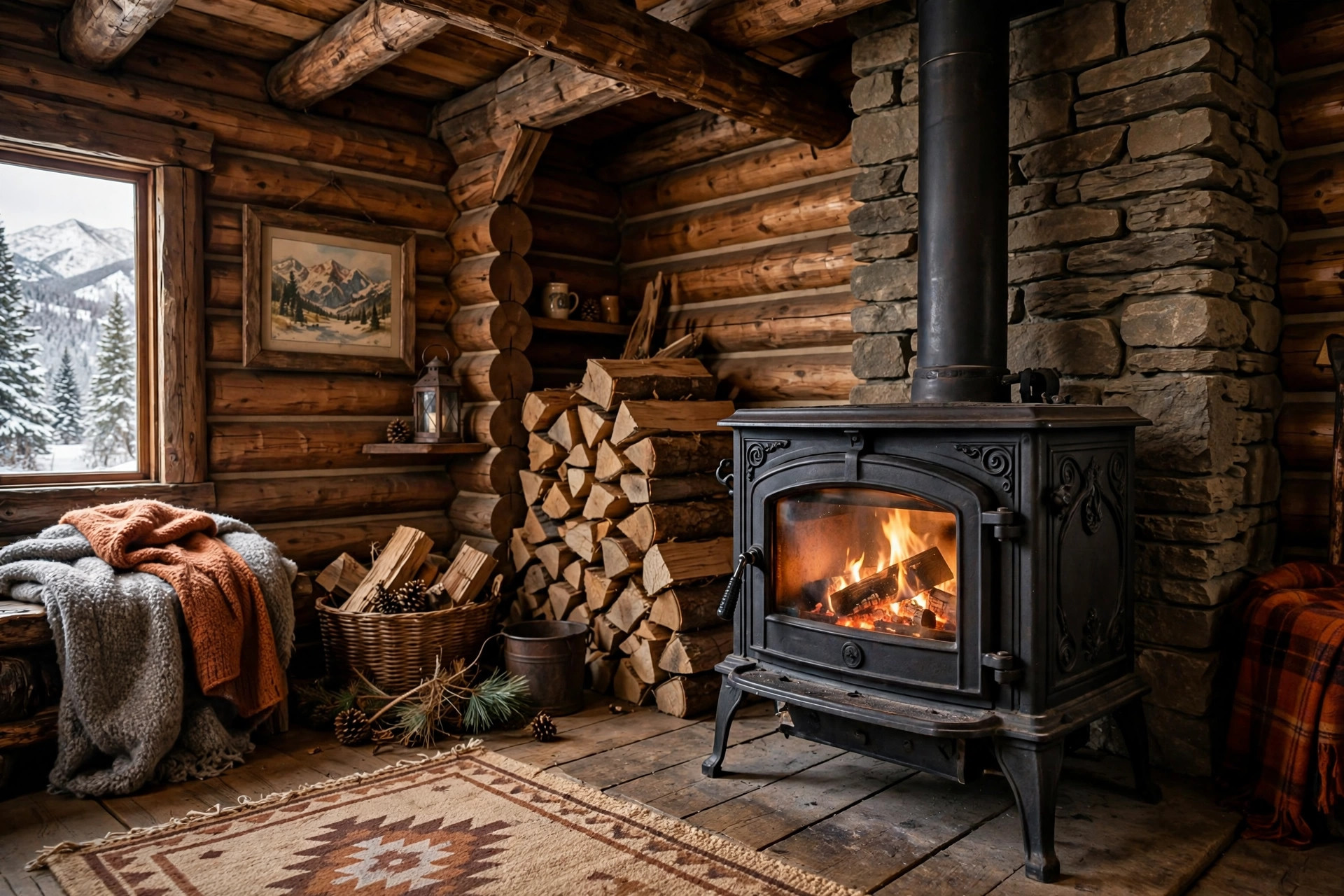
These stand alone in a room. They radiate heat from all sides. They work well in large open rooms. Many Colorado mountain homes use them as the main heat source.
Fireplace Inserts
An insert fits inside an old masonry fireplace. It turns a drafty open fireplace into an efficient heater. If your home already has a fireplace, an insert may be the smart choice. For more on inserts, see our guide to the best wood burning fireplace inserts for Texas homes.
Cookstoves
Some stoves have a flat top or an oven for cooking. They are popular in off-grid cabins. They heat the room and cook meals at the same time.
Pellet Stoves
Pellet stoves burn small wood pellets. They feed fuel on their own and need less work. They are a good option if you do not want to split logs. Read our pellet stoves for heating reviews and buying guide before you decide.
Where to Buy Wood Burning Stoves in Colorado
Specialty Hearth Dealers
A specialty hearth dealer is the best place to start. These shops sell stoves, fireplaces, and chimneys. The staff know local codes and altitude issues. High altitude changes how a stove drafts. A local dealer can size the flue for your elevation. Many dealers also handle permits and installation. Two well-known stove makers, Napoleon and Heatilator, sell through dealer networks. Their sites can help you find a local showroom. Seeing a stove burn in a showroom tells you more than any photo.
Home Improvement Stores
Large home improvement chains carry a few stove models. Prices can be lower than at a dealer. The staff may know less about local codes, though. If you buy here, hire a certified installer on your own. Check current stock at The Home Depot and Lowe’s before you drive out. Mountain stores may carry fewer models than stores in Denver or Colorado Springs.
Online Retailers
Buying online gives you the widest choice. Prices are easy to compare. Delivery to Colorado is common, but freight can cost several hundred dollars. Read our best wood burning stoves buying guide to compare models first. If you want to see how online stove buying works in another state, our guide on buying wood burning stoves online in Florida covers the same steps. Always check the return policy. A stove weighs hundreds of pounds. Sending one back is costly.
Used Stoves and Classified Ads
Used stoves sell for far less than new ones. Local papers and online classifieds list them often in spring and summer. Be careful. Older stoves may not meet current EPA rules. Some counties ban the installation of used non-certified stoves. Check the model against EPA records before you pay. Inspect the firebox and gaskets for cracks.
Buying at High Altitude
Colorado towns sit far above sea level. Thin air changes how a stove works. Chimney draft is weaker at high altitude. This can cause smoky fires and poor heat. Tell your dealer your exact elevation. Many mountain towns sit above eight thousand feet. A taller chimney often fixes draft problems. Some dealers add a foot or two to the flue for high homes. Local dealers in mountain towns deal with this every day. An online seller in another state may not think of it. Ask about it before you order. A stove that works fine at sea level can struggle at ten thousand feet.
Cost and Price
A new wood burning stove costs between eight hundred and four thousand dollars. The stove itself is only part of the cost. A chimney or flue system can add one thousand to three thousand dollars. Professional installation often runs five hundred to fifteen hundred dollars. Permits and inspections add more in some counties.
Small steel stoves sit at the low end. Large cast iron models with soapstone cost more. Fireplace inserts cost about the same as freestanding stoves, plus the liner for the old chimney. Budget for the full job, not just the stove. A cheap stove with a bad chimney is a poor deal. Many dealers offer package prices that include the flue and the install. Compare two or three quotes.
The Best Time to Buy
Timing can save you money. Stove prices often drop in spring and summer. Dealers clear floor models to make room for next year’s line. Installers have open schedules. You avoid the fall rush. Many Colorado chimney sweeps and installers book out by October. Buy in May or June and you get the pick of models. You also get time for the permit and the inspection before the first cold snap. Fall buyers often pay full price and wait weeks for an install slot. Plan ahead and the whole job goes smooth.
Installation Rules in Colorado
Colorado counties set their own burn rules. The Denver metro area and many mountain towns limit wood burning on bad air days. Some areas require a permit before you install. Most require an inspection after. Your installer should know the local rules. If you install it yourself, call your county building office first. A stove installed without a permit can void your home insurance. Keep all paperwork.
Care and Upkeep
A wood stove needs regular care. Clean the ash often, but leave a thin bed of ash to help fires start. Check the door gaskets each fall. Worn gaskets let air leak in and make the stove burn too fast. Clean the chimney at least once a year. Creosote builds up in the flue and can catch fire. Many Colorado chimney sweeps book up by October, so call in late summer. Burn only dry, seasoned wood. Wet wood smokes and clogs the chimney. Practical upkeep tips appear regularly in This Old House and Family Handyman. The Spruce also publishes clear seasonal checklists for stove owners.
Safety
Wood stoves are safe when used with care. Keep furniture, rugs, and curtains at least three feet away. Use a sturdy hearth pad under the stove. Install smoke alarms and a carbon monoxide alarm on each floor. Never leave a fire burning when you leave the house for a long time. Never burn trash, painted wood, or treated lumber. These give off harmful fumes. Teach children to stay clear of the hot surface. A simple safety gate works well. For home energy and heating safety facts, visit Energy.gov. Independent stove ratings and safety tests are published by Consumer Reports.
FAQ
Do I need a permit to install a wood burning stove in Colorado?
In most Colorado counties and cities, yes. Permits and inspections are common. Rules differ by county, so call your local building office before you buy.
Can I use a wood stove during burn bans?
It depends on your area. Some bans exempt EPA certified stoves used as the main heat source. Others ban all wood burning on bad air days. Check your county air quality alerts in winter.
How much wood will I need for one winter?
A typical Colorado home heated mainly by wood uses three to six cords per winter. Mountain homes at high elevation may use more. Buy wood early. Seasoned wood costs less in spring and summer.
Is a pellet stove easier than a wood stove?
Yes. Pellet stoves feed fuel by themselves and need less daily work. They need electricity to run, though. A power cut stops the stove unless you have backup power.
How long does a wood burning stove last?
A well-made stove lasts fifteen to twenty-five years or more. Steel and cast iron both last long with good care. The chimney liner may need replacing sooner than the stove.
What questions should I ask a dealer?
Ask about the EPA rating, the heated area, and the warranty. Ask if the price includes the flue and the install. Ask who pulls the permit. Ask how long the install takes. A good dealer answers all of these without rushing you. If the staff seem unsure, shop elsewhere.
What size stove do I need?
As a rough rule, you need about twenty-five to thirty BTUs per square foot in Colorado’s cold climate. A dealer can size it exactly for your home, your insulation, and your altitude.
As a rough rule, you need about twenty-five to thirty BTUs per square foot in Colorado’s cold climate. A dealer can size it exactly for your home, your insulation, and your altitude.
A Final Word
Knowing where to buy wood burning stoves in Colorado saves time and money. Start with a local hearth dealer for expert advice. Compare prices at big stores and online. Check your county rules before you buy. Size the stove for your home and your altitude. With the right stove and a safe install, you will enjoy warm, low-cost heat for many winters to come.
References
Consumer Reports. (n.d.). Product reviews and ratings. https://www.consumerreports.org Family Handyman. (n.d.). DIY home repair and maintenance. https://www.familyhandyman.com Heatilator. (n.d.). Fireplaces and fireplace products. https://www.heatilator.com Lowe’s. (n.d.). Home improvement products. https://www.lowes.com Napoleon. (n.d.). Fireplaces, grills, and heating products. https://www.napoleon.com The Home Depot. (n.d.). Home improvement products. https://www.homedepot.com The Spruce. (n.d.). Home and garden advice. https://www.thespruce.com This Old House. (n.d.). Home renovation guidance. https://www.thisoldhouse.com U.S. Department of Energy. (n.d.). Energy efficiency and renewable energy. https://www.energy.gov U.S. Environmental Protection Agency. (n.d.). Protecting human health and the environment. https://www.epa.gov
Was this guide helpful?

About David Wilson
The My Garden US editorial team writes practical, in-depth home and garden guides for American homeowners — tested advice, no fluff.
You May Also Like
Propane Fire Pits Price Comparison USA: A Practical Guide to What You Should Pay
September 24, 2026 0 views
Energy Efficient Propane Fire Pits for Sale: A Practical Buying Guide
March 19, 2026 0 views
Premium Fireplace Tool Sets for First-Time Homeowners
February 9, 2026 0 views